
Why Your Furnace Is Making Loud Noises: A Diagnostic Guide
Table of Contents
- Common Furnace Noises and What They Sound Like
- Furnace Banging Noise When Starting: Causes and Solutions
- Furnace Blower Motor Noise: Identifying Motor and Fan Blade Issues
- Noisy Furnace Troubleshooting: Safe Checks You Can Do at Home
- Safety First: When Furnace Noise Signals a Gas or Carbon Monoxide Risk
- When to Call a Technician Versus When to Wait
- New Furnace and Installation-Related Noise
- Frequently Asked Questions
Common Furnace Noises and What They Sound Like
A loud furnace noise can point to anything from a loose panel to a serious ignition problem. For homeowners in Hillsboro, MO, knowing the difference is especially useful during cold winter weather.
Some operating sounds are normal: the blower starts, air moves through the ducts, and metal expands as it heats. New or unusually loud banging, squealing, rattling, or whistling deserves attention. The sound and its timing offer clues, but they don't confirm a diagnosis.
Banging and Booming Sounds
A loud bang or boom when a gas furnace starts may indicate delayed ignition. Gas collects before the burners light, then ignites suddenly.
Ductwork can also pop or bang as pressure and temperature change. It can be hard to tell where the sound originates because ducts carry noise throughout the house.
Don't assume a startup boom is normal just because your furnace is older. Shut the furnace off and have a technician inspect it before using it again.
Rattling and Vibration
Rattling often sounds like loose change shaking in a can. It may come from the furnace cabinet or nearby ductwork.
Loose screws, panels, and duct supports are possible causes. Vibration can work fasteners loose over time.
The rattle may be constant or appear only at certain blower speeds. A loose exterior panel may be a straightforward fix, but rattling inside the furnace needs a closer look.
Squealing and Screeching
High-pitched squealing or screeching can indicate friction or wear in moving parts.
The bearings in the blower motor allow its shaft to spin smoothly. Worn bearings can make noise as the motor runs.
A loose or damaged blower wheel can also scrape against its housing. Older belt-driven blowers may squeal when the belt wears or slips.
Persistent squealing needs professional service. Turn the furnace off rather than continuing to run a blower that may be binding or scraping.
Whistling and Airflow Noise
Whistling often means air is moving through a narrow opening or restriction.
A clogged filter can restrict airflow and cause air to whistle around gaps. Duct leaks, partially closed dampers, and blocked return grilles can make similar sounds.
The noise may change with blower speed. Check the filter and make sure furniture or rugs aren't covering supply registers or return grilles.
Whistling alone usually isn't an emergency, but persistent airflow restrictions can affect heating performance and contribute to overheating.
Furnace Banging Noise When Starting: Causes and Solutions
A furnace that bangs when it starts needs attention. The cause may be in the ignition system or in metal components responding to heat and airflow.
Delayed Ignition and Dirty Burners
Delayed ignition happens when gas reaches the burners but doesn't ignite promptly. When it finally lights, it can produce a loud bang.
Dirty burner ports can interfere with the flame spreading properly. Ignition problems can have other causes, too, so cleaning alone may not solve the issue.
A technician can inspect the burners, clean them as needed, and perform checks that include checking the igniter. Leave work inside the combustion area to a professional.
If you hear a loud startup bang, stop using the furnace until it's inspected. Don't repeatedly restart it to see whether the noise goes away.
Heat Exchanger Expansion
The heat exchanger transfers heat from combustion to your home's air while keeping combustion gases separate. Its metal expands as it warms and contracts as it cools.
Small ticks or pops can occur as metal components change temperature. Ductwork and cabinet panels can make similar noises.
A loud boom should not be dismissed as normal expansion. Sound alone can't tell you whether the heat exchanger is in good condition; that requires a professional inspection.
Furnace Blower Motor Noise: Identifying Motor and Fan Blade Issues
The blower moves heated air through your home. Noise that begins when the blower starts may point to the motor, blower wheel, or airflow through the system.
Worn Motor Bearings and Fan Blade Damage
Motor bearings can wear over time, causing squealing, grinding, or vibration. Excessive play in the shaft may allow the blower wheel to contact its housing.
A loose, dirty, or damaged blower wheel can also become unbalanced and make scraping or rattling sounds.
Note whether the noise occurs only while the blower runs and whether its pitch changes with speed. Those details help a technician narrow down the cause.
Don't reach into the blower compartment or try to adjust the wheel yourself. Continued operation with damaged parts can lead to further damage or loss of heat.
Airflow Restriction and Resonance
Sometimes the motor is working properly, but the system around it creates noise.
A clogged filter, blocked return grille, or crushed duct can restrict airflow. Vibration can also make a cabinet panel or duct resonate, amplifying the sound.
Start by checking the filter and keeping vents clear. Look at accessible ductwork for obvious kinks or damage without crawling into unsafe areas or taking anything apart.
If the noise continues, have a technician check airflow, duct supports, and blower operation.
Noisy Furnace Troubleshooting: Safe Checks You Can Do at Home
If there are no warning signs such as a startup boom, smoke, gas odor, or a carbon monoxide alarm, a few basic checks may help. Turn off the thermostat and furnace power before handling the filter or exterior panels, and follow the manufacturer's instructions.
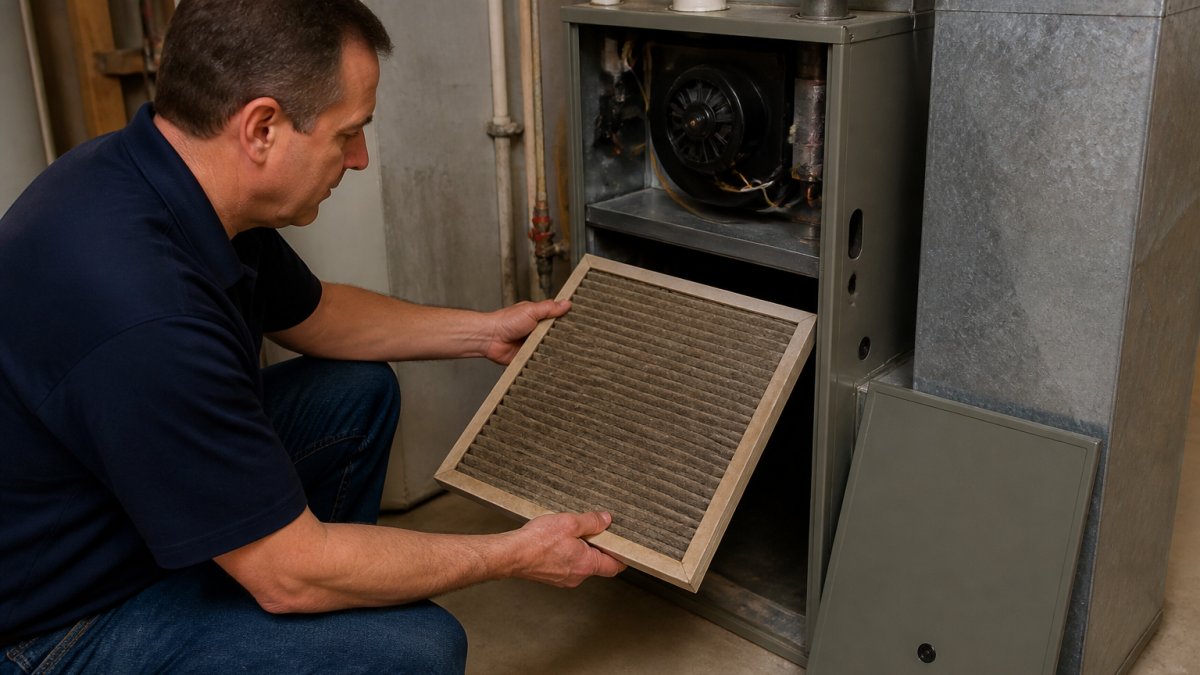
Step 1: Check Your Air Filter
A dirty filter restricts airflow and can contribute to noise. Correct sizing and installation matter, too (HVAC Proper Installation of Filters).
Find the filter location using your furnace manual. It may be beside the furnace, beneath it, or at a return grille.
With the system off, remove the filter and inspect it for dust buildup. Don't rely only on whether light passes through it; filter materials vary.
If it needs replacement, use the size and filter type recommended for your system. Install it with the airflow arrow pointing in the correct direction, and secure the cover before restoring power.
If there are no safety concerns, run the furnace and listen for a change. Check and change your filter according to the manufacturer's guidance and household conditions. Pets, dust, and heavy system use may mean it needs attention more often.
Step 2: Inspect Loose Bolts and Panels
With furnace power off, check that exterior access panels are seated correctly. Look for visibly loose exterior screws or fasteners.
Only tighten accessible cabinet fasteners if the manual allows it and you're comfortable doing so. Don't remove internal covers, touch wiring, or adjust gas components.
Don't force or overtighten a fastener. Stop if it resists or the panel won't fit properly.
Look at nearby duct supports for obvious looseness. Leave damaged supports, internal rattles, and hard-to-reach connections to a technician.
Step 3: Listen During the Full Heating Cycle
If the furnace has no safety warning signs, listen with all panels securely in place. Does the noise happen at startup, while heating, when the blower begins, or at shutdown?
A startup bang may involve ignition, while a noise that follows blower operation may involve moving parts or airflow. Timing helps, but it isn't a diagnosis.
Write down what the sound resembles, when it occurs, and how long it lasts. A recording made from a safe distance can also help explain an intermittent noise.
Stop the furnace if you hear loud banging, grinding, or screeching. Don't keep it running just to complete the observation.
Safety First: When Furnace Noise Signals a Gas or Carbon Monoxide Risk
Noise alone can't confirm or rule out a gas or carbon monoxide hazard.
A damaged heat exchanger is one possible safety concern because it separates combustion gases from household air. A crack can create a risk of carbon monoxide exposure.
Carbon monoxide is colorless and odorless (CDC guidance on carbon monoxide). Exposure can cause headache, dizziness, nausea, and confusion (CDC information on symptoms).
Warning signs that need professional inspection include:
- Loud banging or booming at startup
- An unusual burner flame visible through the intended viewing window
- Visible damage or significant corrosion
- Soot around the furnace or venting
These signs do not prove the heat exchanger is cracked. Don't remove panels or attempt an internal inspection yourself.
If a carbon monoxide alarm sounds or you suspect exposure, get everyone outside immediately and call 911 from a safe location. Don't stay inside to ventilate the house or troubleshoot the furnace.
If you smell gas or suspect a gas leak, leave immediately without operating switches, appliances, or phones inside. From a safe location, call your gas utility's emergency number or 911. Don't reenter until responders say it's safe.
If you suspect a furnace fault but there is no gas odor, alarm, or sign of exposure, stop using the equipment and arrange a professional inspection. Maintain working carbon monoxide alarms according to their manufacturer's instructions.
When to Call a Technician Versus When to Wait
Some noises can wait for routine service; others mean the furnace should stay off until it's checked.
Stop using the furnace and seek prompt help for:
- Loud banging or booming at startup
- Persistent squealing, grinding, or scraping
- Persistent burning smells or smoke; leave and call 911 if you suspect a fire
- A gas or rotten-egg odor; leave first and call the gas utility or 911 from outside
- Visible damage, significant rust, or soot around the furnace
- Repeated unexpected shutdowns
You can generally arrange routine service for the following, provided there are no safety warning signs and the furnace heats normally:
- A mild rattle clearly traced to an exterior panel
- Whistling that stops after replacing a dirty filter
- Familiar, quiet ticking as metal warms or cools
- A steady airflow sound during longer heating cycles in cold weather
Cold Missouri winters can mean longer furnace run times, but new or louder noises shouldn't be dismissed as weather-related.
If you're unsure, describe the sound and any other symptoms to a technician. In-person inspection may be needed to determine whether the furnace is safe to operate.
Regular maintenance can catch worn parts and airflow problems. Annual tune-ups are an opportunity to check the system before heating season.
New Furnace and Installation-Related Noise
A new furnace may sound different from the old one. Blower speeds, startup sequences, and airflow can all change with new equipment.
That doesn't mean loud or persistent noise is part of a normal break-in period. Ask the installer about banging, rattling, whistling, or unusual vibration rather than waiting for it to settle down.
Duct sizing, loose supports, panel fit, and blower settings can contribute to installation-related noise. The installer can check those items and explain which operating sounds are normal.
If you hear a loud startup boom or notice a persistent burning smell, stop using the furnace and seek help. Follow the emergency guidance above for gas odors, smoke, or carbon monoxide alarms.
When you hear your furnace making loud noises, note the sound, check only what you can safely access, and leave internal repairs to a professional. Ricotta Heating & Air serves homeowners throughout Jefferson County and can help identify what needs attention.
Frequently Asked Questions
Why does my furnace make a banging noise when it turns on?
A loud startup bang can indicate delayed ignition, when gas collects before the burners light. Dirty burners or other ignition problems may be involved. Ductwork can also bang as pressure or temperature changes, but you shouldn't assume that's the cause. Turn the furnace off and have a technician inspect it before using it again.
What does a dying blower motor sound like?
A failing blower motor may squeal, grind, hum, or rattle. A loose or damaged blower wheel can make similar noises, so the sound alone doesn't confirm that the motor needs replacement. Turn the furnace off if you hear persistent grinding, scraping, or squealing, and arrange a professional inspection.
Is it safe to run my furnace if it's making loud noises?
You can't determine safety from noise alone. Stop using the furnace if it makes loud startup bangs, grinding, or screeching sounds. If you smell gas, leave without operating electrical switches and call the gas utility or 911 from a safe location. If a carbon monoxide alarm sounds or you suspect exposure, get everyone outside and call 911. A mild exterior rattle or familiar expansion tick may be less urgent, but have unfamiliar or worsening noises checked.
Can I fix a noisy furnace myself, or do I need a technician?
With the thermostat and furnace power off, you can check the filter and confirm that exterior panels are seated properly, following the manufacturer's instructions. Keep registers and return grilles clear. Leave burner cleaning, electrical work, blower repairs, and heat exchanger inspection to a technician. If the noise persists after basic checks, arrange service rather than taking the furnace apart.
This article was written with AI assistance and edited for Hillsboro and Jefferson County homeowners by Ricotta Heating & Air. For advice about your own system, call (314) 333-5900.