
St. Louis Furnace Tune Up Checklist: Demand CO, Temp Rise, Amp Draw
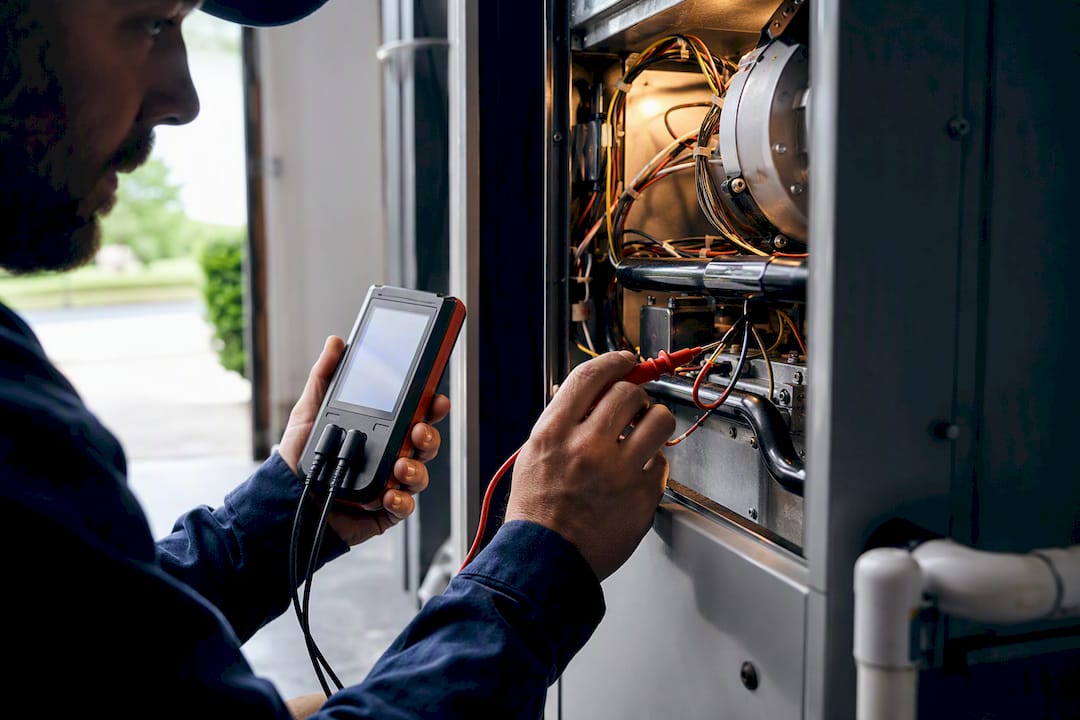
A real furnace tune-up checklist covers three jobs: safety verification, hands-on cleaning and calibration, and documented performance testing. That means a technician checks your heat exchanger, burners, filter, blower, and thermostat, then runs a combustion and carbon monoxide test before writing anything down. Done right, you get a safer furnace, lower operating costs, and a written report you can hand to a warranty department if you ever need to.
TL;DR:
- A thorough furnace tune-up includes safety checks such as heat exchanger and carbon monoxide testing, alongside performance measurements like temperature rise and blower amp draw.
- Expect to spend 60 to 90 minutes on a complete service that covers cleaning, calibration, and documented readings, with costs typically ranging from $125 to $200.
- Technicians should provide written reports of key readings, including CO levels, temperature differences, and electrical measurements, to ensure accurate tracking over time.
- Homeowners can handle simple tasks like filter replacement and vent cleaning between professional visits but should leave combustion and electrical inspections to trained technicians.
- Scheduling an annual tune-up before the cold weather starts helps prevent safety hazards and ensures optimal furnace performance during winter.
Table of Contents
- What’s on a Complete Furnace Tune-Up Checklist?
- Which Safety Checks Actually Protect Your Family?
- How Do Technicians Test Furnace Performance?
- Which Furnace Maintenance Tasks Are Safe for Homeowners?
- When Should You Schedule a Furnace Tune-Up?
- What Does a Furnace Tune-Up Cost?
- What Should You Expect When You Hire a Professional?
- Why Local Experience Matters for Furnace Tune-Ups
- Maintenance Is a Safety Line Item, Not a Luxury
- Keep Your Furnace Running Right All Winter
- Sources
- FAQ
What’s on a Complete Furnace Tune-Up Checklist?
A furnace tune-up checklist isn’t a five-minute filter swap. It’s a sequence, and the order matters, because you don’t want a technician poking around burner assemblies before confirming gas and power are safely isolated. Here’s the step-by-step furnace maintenance checklist that matches what a thorough technician actually does during a 60 to 90 minute visit, based on the process Carrier outlines for a proper tune-up.
- Shut down and verify power/gas isolation. The technician kills power at the furnace switch and confirms the gas valve is accessible before touching anything internal.
- Inspect the heat exchanger. This is the single most important visual and mechanical check in the whole furnace inspection checklist, since a cracked exchanger can leak combustion gases into your air supply.
- Run a combustion analysis and carbon monoxide reading. A combustion analyzer measures oxygen, carbon dioxide, and CO levels right at the source, not just in the room air.
- Remove and clean the burners. Dirty burners produce uneven, yellow-tipped flames instead of the steady blue you want to see.
- Check the flame sensor and ignitor. A weak sensor reading is one of the most common reasons furnaces short cycle or fail to stay lit.
- Clean the blower wheel and inspect the motor. Built-up dust on a blower wheel throws it off balance and forces the motor to work harder than it should.
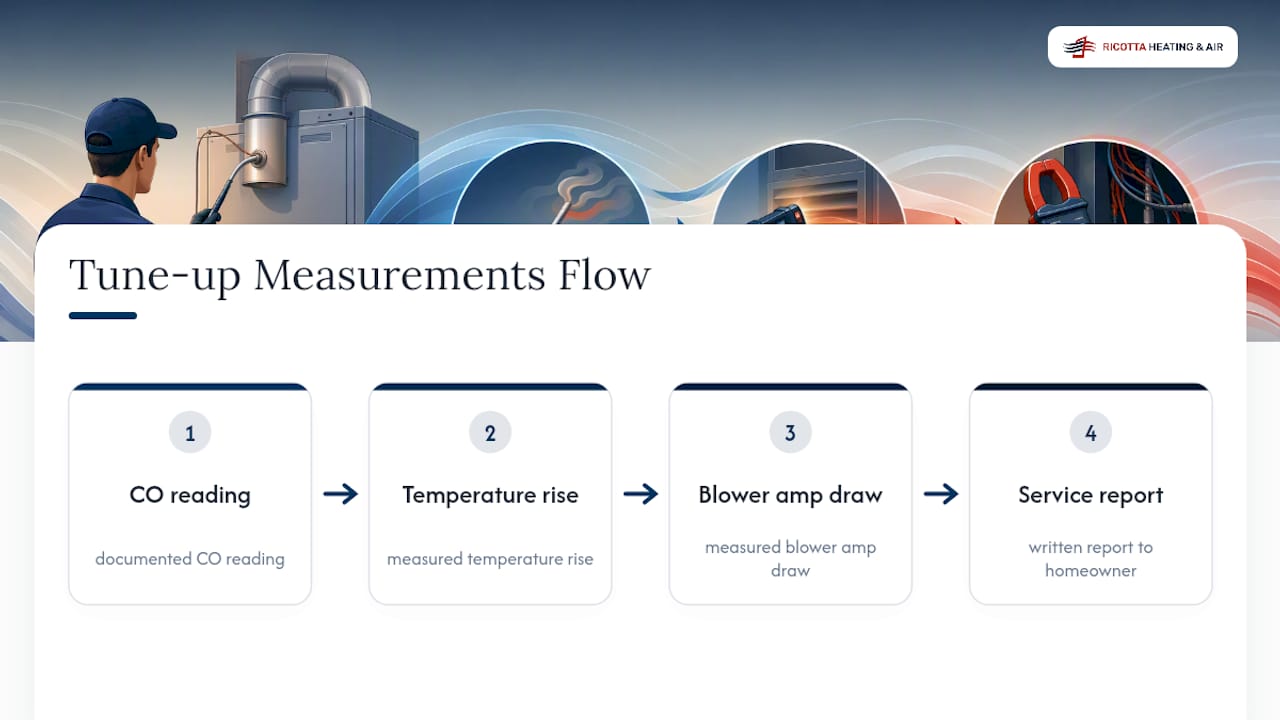
- Take a blower motor amp draw reading. This single number tells a technician whether the motor is straining, which usually predicts failure weeks or months before it happens.
- Replace the filter. This is the one step most homeowners already know, but the MERV rating and swap schedule matter more than people assume.
- Lubricate bearings and inspect belts. Older furnace models with belt-driven blowers need this every season; newer direct-drive units skip it.
- Tighten electrical connections and test capacitors. Loose connections cause intermittent failures that are maddening to diagnose later, so this gets checked every visit.
- Calibrate the thermostat and run a cycle test. The tech confirms the thermostat’s reading matches actual air temperature and watches a full heating cycle start to finish.
- Inspect the flue, venting, and connected ductwork. Blocked or poorly pitched venting is a safety issue, not a cosmetic one.
- Measure temperature rise (delta-T). This confirms the furnace is heating air within the range the manufacturer designed it for.
- Deliver a written technician report. Readings, recommendations, and a cost estimate for any needed repairs, all in writing.
That last step separates a real furnace service guide from a rushed once-over. If a technician packs up without handing you numbers, you have no way to compare this year’s visit to next year’s, and no paper trail if a warranty claim ever comes up.
Pro Tip: Ask your technician to write the CO reading, temperature rise, and blower amp draw directly on your invoice or a service tag on the furnace itself. Future technicians, and future you, will thank you when it’s time to compare readings year over year.
Which Safety Checks Actually Protect Your Family?
Every furnace inspection checklist has a handful of checks that aren’t about comfort or efficiency. They’re about whether the appliance in your basement or utility closet is safe to keep running.
- Heat exchanger inspection: technicians look for hairline cracks, rust streaks, and corrosion, often using a camera or mirror to see surfaces that aren’t visible from outside the cabinet.
- Carbon monoxide testing: readings are taken at the flue and sometimes in the surrounding air; anything trending upward from a prior visit is a red flag even if it’s technically below a hazard threshold.
- Gas line and valve checks: technicians look for corrosion at fittings and use a leak detection solution or electronic sniffer rather than guessing by smell alone.
- Flue and vent inspection: blockages, incorrect pitch, corrosion, and even animal nests in the vent pipe are common enough that this step catches real problems every season.
- Safety control tests: limit switches, pressure switches, and roll-out switches all get manually tested to confirm they’ll shut the furnace down if something overheats or drafts incorrectly.
A cracked heat exchanger is the scenario that should worry you most, because it can let combustion byproducts, including carbon monoxide, mix with the air your blower pushes through the house. Technicians who provide numeric readings and a written report make it far easier to track whether a borderline reading is getting worse, according to Apex Clean Air’s breakdown of what a real tune-up includes.
How Do Technicians Test Furnace Performance?
Performance checks answer a different question than safety checks. They tell you whether your furnace is burning fuel efficiently and moving air the way it was designed to.
- Burner cleaning and flame inspection: a healthy gas flame burns steady and blue with maybe a small orange tip; yellow, flickering, or uneven flames point to dirty burners or airflow trouble.
- Combustion analyzer readings: the analyzer reports oxygen, carbon dioxide, and CO percentages, and a tech comparing these against manufacturer specs can tell you if the furnace is burning rich, lean, or right where it should be.
- Blower motor amp draw: measured against the nameplate rating, this tells you whether the motor is working within its designed range or straining toward early failure.
- Temperature rise (delta-T): measured between the return air and supply air, most furnaces are designed for a specific delta-T range, often listed right on the furnace’s rating plate.
- Thermostat calibration and cycle timing: a miscalibrated thermostat can cause short cycling, where the furnace turns on and off more often than it should, wasting fuel and wearing down components faster.
These numbers matter because a furnace can look fine and still be operating inefficiently. A blower drawing more amps than its rating suggests early motor wear well before you’d notice a change in comfort. If your thermostat needs recalibration or outright replacement, a certified thermostat swap resolves the cycling issue at the source instead of masking it with settings adjustments.
Which Furnace Maintenance Tasks Are Safe for Homeowners?
Plenty of this checklist is off limits without training and the right test equipment, but a few tasks are genuinely yours to handle between professional visits.
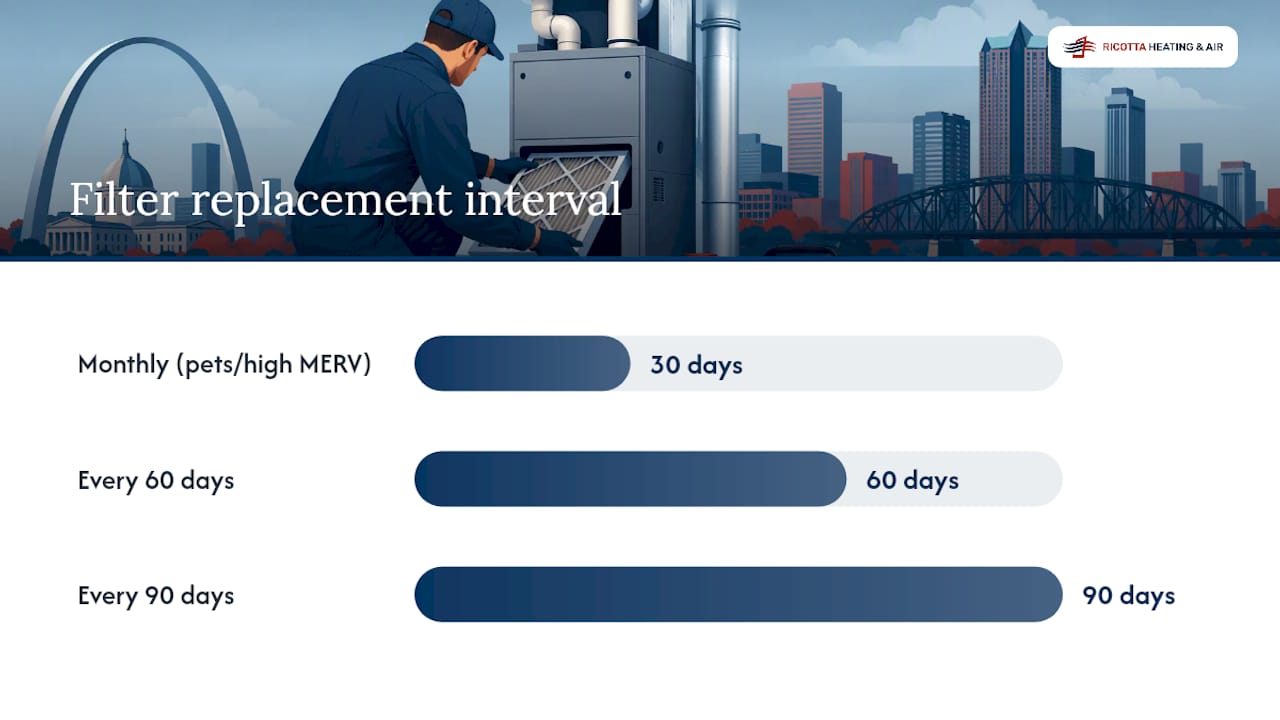
- Replace the filter every 60 to 90 days, or monthly if you have pets or run a high MERV-rated filter that catches finer particles. Slide out the old one, check the airflow arrow on the frame, and slide the new one in facing the same direction.
- Keep the area around the furnace clear. A furnace crowded by storage boxes doesn’t breathe properly, and it’s a fire hazard besides.
- Vacuum supply and return vents to clear surface dust, which helps airflow even though it doesn’t touch the equipment inside the furnace itself.
- Check your thermostat batteries if it runs on them, and confirm the display responds when you adjust the setting.
Combustion testing, heat exchanger inspection, and tightening live electrical connections aren’t DIY territory, and that’s not a liability disclaimer. It’s that the equipment and training to interpret those readings correctly cost real money and take real practice to use safely.
Pro Tip: A clogged filter forces your blower to work like it’s breathing through a pillow. If you can’t remember your last filter swap, that’s already your answer.
When Should You Schedule a Furnace Tune-Up?
Annual service, timed before the cold sets in, is the standard manufacturers and HVAC professionals recommend for good reason: it catches problems while there’s still time to fix them before you actually need the heat.
- Early fall (September through October) beats waiting until the first cold snap, when every HVAC company in St. Louis County and Jefferson County is booked solid.
- Don’t wait for a full year if something feels off. Strange smells, no heat at all, or uneven heating between rooms all warrant an immediate call, not a spot on next month’s calendar.
- Older furnaces (12+ years) benefit from a mid-season check too, especially if you noticed any warning signs during the pre-season inspection.
What Does a Furnace Tune-Up Cost?
Pricing swings more than most homeowners expect, mostly based on what’s actually included in the visit.
Those national figures come from Thumbtack’s 2026 cost data and Angi’s furnace inspection pricing guide, and the spread mostly reflects whether combustion analysis and a full cleaning are actually part of the visit or not.
If you’re weighing a tune-up against a bigger repair decision, the $5,000 Rule offers a rough gut check: multiply your furnace’s age in years by the estimated repair cost, and if that number tops $5,000, replacement usually makes more financial sense than another repair. It’s a useful shortcut, not a substitute for a technician actually looking at your specific unit, since a young furnace with one failing part is a very different situation than an aging system nickel-and-diming you every winter.
Bundling your furnace tune-up with your AC service in the same year is one of the simplest ways to cut your annual HVAC spending, since many companies offer a discount for scheduling both visits together.
What Should You Expect When You Hire a Professional?
- Ask for your CO reading, temperature rise, and blower amp draw in writing. These three numbers tell you more about your furnace’s health than anything else on the visit.
- A written service report should follow every visit, not just a verbal “you’re all set.” Manufacturers frequently require documented annual service to keep parts warranties valid, so that paper trail isn’t optional if something fails down the road.
- Watch for high-pressure sales tactics. A technician who spends more time pitching a full system replacement than showing you readings from your current furnace is worth a second opinion.
- Short visits under 30 minutes are almost always inspection-only or lead-generation visits, according to TopAirHVAC’s breakdown of typical tune-up timing, not the full multi-point service you’re paying for.
Why Local Experience Matters for Furnace Tune-Ups
Experienced local technicians have worked on furnaces across St. Louis County and Jefferson County for many years, giving them insight into how local winters, older housing stock, and older ductwork specifically stress heating systems here. Backed by extensive positive customer reviews, the approach leans on honest diagnostics over upselling, meaning a tune-up visit focuses on what your furnace actually needs, not a pitch for a system you don’t.
Every professional tune-up includes documented CO readings, temperature rise, and blower amp draw, handed to you in a written report, along with straightforward advice about indoor air quality if your filtration setup needs attention. You leave the visit with numbers, not just a “looks good.”
Maintenance Is a Safety Line Item, Not a Luxury
I’d rather see a homeowner skip the cosmetic extras and insist on the combustion analysis and heat exchanger check every time. Those two items are where the real risk lives, and they’re too easy to skip when a company is racing through visits during the fall rush that hits every furnace tune-up checklist in St. Louis County and Jefferson County.
Keep your receipts and your readings. A folder with three years of temperature rise and CO numbers tells you more about your furnace’s trajectory than any single visit ever will.
— Alan Ricotta
Keep Your Furnace Running Right All Winter
Maintenance plans offer benefits beyond a one-off tune-up, including priority scheduling before the fall rush hits and a documented service history useful if a warranty question ever comes up. Every visit comes with honest diagnostics focused on accurate assessment, with no pressure toward a repair or replacement that is not actually needed.
Our HVAC maintenance plans cover your furnace and AC on one schedule, with the readings and written report every step of this checklist calls for. If your furnace has been acting up or it’s simply been more than a year since its last real tune-up, schedule your visit now so it’s handled before the first cold week hits your street.
Sources
FAQ
What Should a Furnace Tune-Up Include?
A complete tune-up includes heat exchanger inspection, combustion and carbon monoxide testing, burner cleaning, filter replacement, blower motor and amp draw checks, thermostat calibration, and a written technician report with readings and recommendations.
How Much Does It Cost to Tune Up a Furnace?
Costs typically run $125 to $200 for a standard tune-up, with full-service visits that include combustion analysis ranging up to $693 depending on region and scope.
What Is the $5,000 Rule for Repairing a Furnace?
The $5,000 Rule multiplies your furnace’s age in years by the estimated repair cost; if the result exceeds $5,000, replacement usually makes more sense than continued repairs.
Is a Furnace Tune-Up Necessary Every Year?
Yes, annual service is widely recommended to catch safety issues, maintain efficiency, and keep parts warranties valid.