
AC Tune-Up Cost: What Homeowners Pay and What’s Included
A professional AC tune-up typically costs within a moderate range for a one-time visit, with most homeowners paying a mid-range price. If your system is older or hasn’t been serviced in a while, booking a tune-up before summer is usually worth it. You’ll catch small problems before they become expensive repairs, and your system will run more efficiently through the hottest months. For homeowners in St. Louis and Jefferson County, Ricottaheatingandair is a locally trusted option with over 50 years of experience and 150+ five-star Google reviews. If your system is newer and in good shape, a single annual visit usually makes more financial sense than committing to a maintenance plan right away.
Table of Contents
- How much does an AC tune-up cost across the U.S.?
- What does a professional AC tune-up include?
- What factors push your tune-up price up or down?
- What does a typical tune-up bill actually look like?
- Are AC tune-ups actually worth the money?
- Maintenance plans vs. one-time tune-ups: which makes sense for you?
- How do you choose a trustworthy HVAC provider?
- When should you schedule your annual tune-up?
- Key Takeaways
- What honest tune-up pricing actually looks like
- Ricottaheatingandair keeps it straightforward for St. Louis homeowners
- Useful sources
How much does an AC tune-up cost across the U.S.?
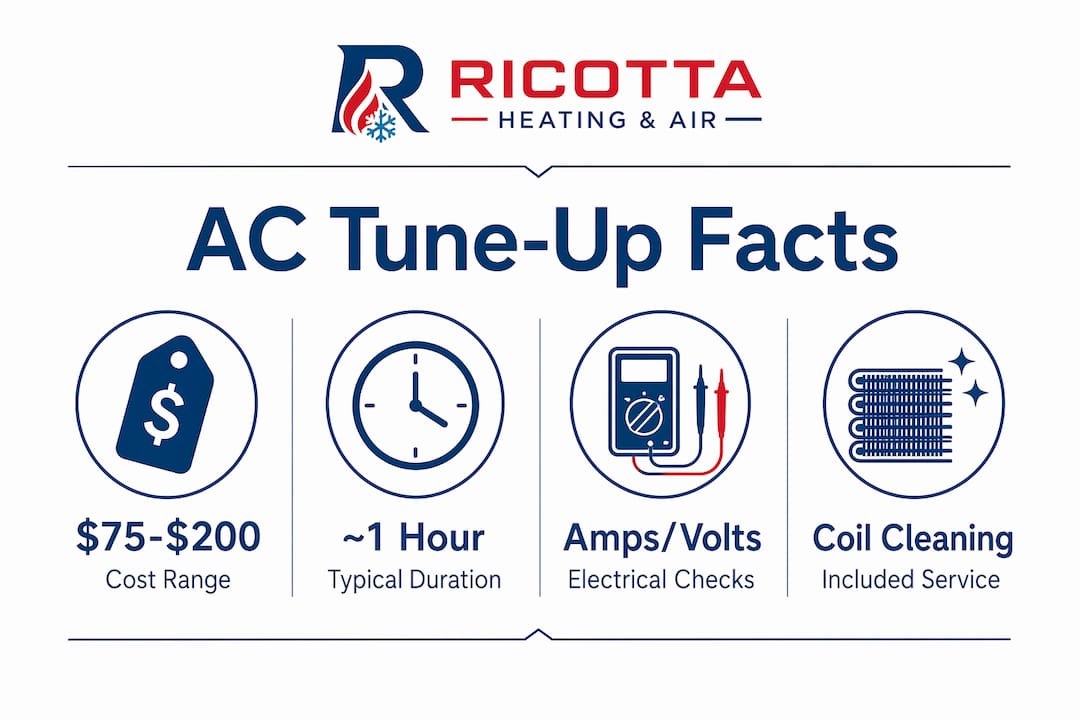
National pricing for a standard AC tune-up sits in the $75–$200 range for a single visit. Angi data puts overall HVAC maintenance at roughly $250 on average when you factor in all unit types, including mini-splits and packaged systems that tend to cost more to service. Annual maintenance plans, which typically cover two visits per year, generally run in a moderate price range nationally.
In the St. Louis metro area, pricing generally aligns with national averages, with local contractor quotes varying by service specifics. Higher-cost coastal markets such as San Francisco and New York City tend to have higher prices for basic tune-ups, influenced by elevated labor rates.
| Service | Typical National Range |
|---|---|
| Single AC tune-up | $75–$200 |
| Furnace tune-up (one visit) | $75–$200 |
What does a professional AC tune-up include?
A real tune-up is not a 20-minute visual check. A trustworthy technician works through a multi-point inspection and records actual measurements. Here’s what a thorough visit covers:
- Electrical connections tightened and inspected for wear or corrosion
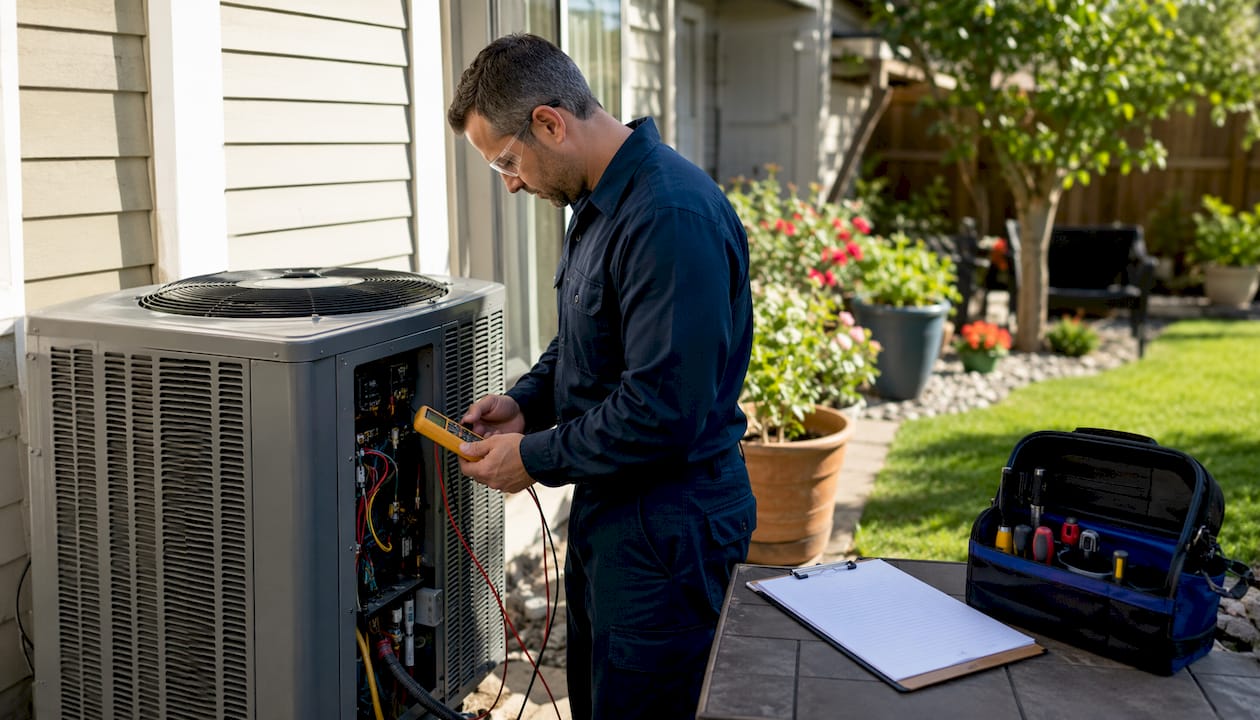
- Voltage and amperage measured on the compressor and fan motors
- Moving parts lubricated (blower motor bearings, fan motors)
- Refrigerant levels checked and pressures recorded
- Condensate drain line flushed and inspected for blockages
- Evaporator and condenser coils inspected; cleaned as needed
- Blower wheel and air handler inspected for buildup or damage
- Thermostat calibrated and operation verified
- Filter condition assessed with guidance on replacement schedule
- Overall system performance evaluated (temperature split across supply and return)
Ask your technician to share the recorded numbers: amps, volts, supply/return temperature split, and refrigerant pressures. A professional AC maintenance visit should produce a written record of these readings, not just a verbal “looks good.” That paper trail is what separates a genuine inspection from a loss-leader quick check.
A standard single-system visit often takes under or about an hour, with time varying depending on the system condition and accessibility. Additional time may be required for units in cramped spaces, coil deep-cleaning, or troubleshooting; homes with multiple systems or heat pumps may require significantly more time.
What factors push your tune-up price up or down?
Several variables move the final number well beyond the base service fee:
- System age and condition. Older equipment often needs more time to inspect and may have worn parts that require attention during the visit.
- Refrigerant type. R-22 (the older refrigerant phased out of production) is significantly more expensive to recharge than R-410A. If your system still uses R-22, expect a much higher bill for any refrigerant work.
- Accessibility. A rooftop unit or a system tucked into a tight attic space can add $50–$150 to the final price because of the extra time and safety equipment required.
- System size and tonnage. Larger systems take longer to service and may require more refrigerant.
- Coil condition. If the evaporator or condenser coil is heavily fouled, a standard rinse won’t cut it. A chemical deep-clean costs more but is sometimes necessary.
- First visit after years without service. A system that hasn’t been touched in three or four years will take longer to bring up to standard.
- Local labor rates. Midwest markets like St. Louis tend to run lower than coastal cities.
Common add-on costs to budget for:
- Coil deep-cleaning (indoor evaporator): $214–$451 in the St. Louis area
- Refrigerant recharge (R-410A): $100–$320 depending on how much is needed
- Capacitor or contactor replacement: typically $75–$200 for parts and labor
- Condensate pump replacement: $100–$200
Pro Tip: If a technician recommends a repair costing more than $300 during a tune-up, ask to see the measurement that supports the diagnosis. Legitimate recommendations come with numbers. If they can’t show you the amps, pressures, or temperature readings that justify the repair, get a second opinion before agreeing.
What does a typical tune-up bill actually look like?
Breaking the invoice into line items helps you spot whether a quote is fair.
| Line Item | Typical Range |
|---|---|
| Base tune-up / service call | $75–$150 |
| Separate diagnostic fee (if charged) | $50–$100 |
| Small parts (capacitor, contactor) | $75–$200 |
| Refrigerant recharge (R-410A) | $100–$320 |
Two real-world scenarios illustrate how totals add up. A simple tune-up on a well-maintained five-year-old system might run $120 total: a $100 base fee plus a $20 filter. A tune-up on a 12-year-old system that needs a coil cleaning and a small refrigerant top-off could land at $400–$500 once you add the base fee, coil service, and refrigerant charge.
One thing worth knowing: many HVAC companies apply the diagnostic fee as a credit toward any repair completed the same day. Ask about this policy before the visit. Transparent pricing means a written estimate before work begins, not a verbal ballpark after the technician has already opened the unit.
Are AC tune-ups actually worth the money?
The short answer is yes, especially for a one-time visit before summer on a system that’s five or more years old. Industry guidance puts a one-time tune-up at $65–$200, which is a fraction of what a mid-season compressor failure or refrigerant leak repair costs. A failed compressor on a mid-size residential system can run $1,200–$2,500 or more, and an emergency service call on a 95-degree July afternoon in St. Louis adds a premium on top of that.
The efficiency argument is real too. The U.S. Department of Energy notes that a well-maintained AC system can operate significantly more efficiently than a neglected one, which translates directly to lower monthly utility bills. Even modest efficiency gains on a system running through a St. Louis summer add up over three or four months of heavy use.
The caveat on maintenance plans: Routine annual plans are often not cost-effective for newer systems. If your equipment is under five years old and running without issues, a single pre-summer tune-up is usually the smarter spend. Plans make more sense once a system ages past the warranty period or if you’ve had recurring repair calls.
Maintenance plans vs. one-time tune-ups: which makes sense for you?
| One-Time Tune-Up | Annual Maintenance Plan | |
|---|---|---|
| Cost | $75–$200 per visit | —/year (two visits) |
| Coverage | Single visit, single season | Spring AC + fall furnace check |
| Priority scheduling | No | Usually yes |
| Repair discounts | No | Typically 10–15% off parts/labor |
| Best for | Newer systems, healthy equipment | Older systems, heavy-use climates, frequent repairs |
Plans earn their keep when your system is aging, when you’ve had more than one repair call in the past two years, or when you want the peace of mind of priority dispatch during a heat wave. For a newer system still under manufacturer warranty, a single annual tune-up keeps the warranty requirements satisfied without the recurring plan cost.
Pro Tip: Before signing a maintenance agreement, read the cancellation terms. Some plans auto-renew and charge a fee to cancel mid-term. Look for plans with no long-term lock-in and a clear list of what each visit includes in writing.
Ricottaheatingandair’s service agreements cover both heating and cooling visits with priority dispatch and repair discounts, which is worth comparing against a pay-per-visit approach if your system is more than eight years old.
How do you choose a trustworthy HVAC provider?
Not every company offering a $79 tune-up special will deliver the same scope of work. Here’s what to look for before you book:
- Licensed and insured in Missouri (ask for proof)
- NATE-certified technicians or manufacturer-trained staff
- Written estimate policy before any work begins
- Parts warranty on any components replaced during the visit
- Measurement-based tune-ups (they record amps, volts, temperature split)
- Clear explanation of what’s included in the quoted price
Once you’re on the phone with a provider, ask these questions directly:
- What specific tasks are included in your tune-up, and do you provide a written checklist?
- Do you measure and record voltage, amperage, and refrigerant pressures?
- Is the diagnostic fee credited toward repairs if I approve the work?
- Can I get the measurements in writing after the visit?
- What’s your parts warranty on anything replaced today?
Red flags to watch for: a quoted price under $75 with no explanation of what’s included; a technician who recommends a major repair within the first ten minutes without showing you the supporting measurements; vague scope (“we’ll check everything out”); and no written estimate before work starts. Loss-leader specials priced at $49–$89 are often designed to get a technician in the door, not to deliver a comprehensive inspection.
When should you schedule your annual tune-up?
Annual professional tune-ups are the industry standard for maintaining efficiency and extending system life. If you can only do one visit per year, prioritize the fall furnace inspection. It includes safety-critical checks like the heat exchanger that simply don’t apply to a cooling-only visit. For AC, schedule in March or April and furnace visits in September or October to avoid peak demand and get a more thorough inspection before extreme seasonal use.
For St. Louis homeowners, that timing is especially practical. Booking your AC tune-up in March means you’re ahead of the May rush, technicians aren’t stretched thin by emergency calls, and you have time to address any issues before the first 90-degree week hits. A technician who isn’t racing between emergency calls can also spend more time on a thorough inspection, which is a real advantage you don’t get when you call in July.
Proper air ventilation cleaning is worth considering alongside your annual tune-up, particularly if coil or condensate issues have affected your indoor air quality.
Key Takeaways
A one-time AC tune-up costs $75–$200 for most homeowners, and booking before summer on a system older than five years is almost always the most cost-effective move you can make.
| Point | Details |
|---|---|
| Typical cost range | Most homeowners pay $100–$150 for a single AC tune-up. |
| Ask for measurements | A real tune-up records amps, volts, temperature split, and refrigerant pressures in writing. |
| One-time vs. plan | One-time visits suit newer systems; plans pay off for equipment older than eight years or with repeat repairs. |
| Red-flag pricing | Specials under $75 with no written scope are often loss leaders, not comprehensive inspections. |
| Ricottaheatingandair | Serves St. Louis and Jefferson County with measurement-based tune-ups, transparent estimates, and no-pressure recommendations. |
What honest tune-up pricing actually looks like
Most homeowners have been burned at least once by a low-price tune-up special that turned into a $600 repair recommendation within 20 minutes of the technician arriving. That pattern is common enough that it’s worth naming plainly: a $49 or $59 special is rarely a loss for the company. It’s a calculated entry point.
What actually protects you isn’t a higher price. It’s asking for the measurements. A technician who hands you a written sheet showing your compressor amps, supply/return temperature split, and refrigerant pressures has done real work. One who says “everything looks fine” and hands you a filter recommendation has done a visual check. Both might charge $120. Only one is worth it.
The other thing most guides understate: the fall furnace visit is often more valuable than the spring AC visit, not because cooling doesn’t matter, but because a cracked heat exchanger is a carbon monoxide risk. That’s not a comfort issue. It’s a safety issue. If you’re choosing between the two, start with the furnace.
Ricottaheatingandair keeps it straightforward for St. Louis homeowners
Transparent pricing and no-pressure diagnostics are harder to find than they should be in the HVAC industry. Ricottaheatingandair has been serving St. Louis and Jefferson County for over 50 years as a family-owned operation, and the 150+ five-star Google reviews reflect what that kind of local accountability looks like in practice.

When you schedule a tune-up with Ricottaheatingandair, you get a measurement-based inspection, a written estimate before any repair work begins, and a technician who explains what they found and why it matters. No surprise charges, no pressure to approve same-day repairs you didn’t ask about. Their maintenance plans for Jefferson County and St. Louis cover both heating and cooling visits with priority dispatch and repair discounts, which is worth a look if your system is aging or you want to skip the summer wait times. Ready to get your AC ready before the heat hits? Schedule your tune-up with Ricottaheatingandair today.
Useful sources
- U.S. Department of Energy: Home Cooling Systems
- Energy Star: HVAC Maintenance Checklist
- Angi: How Much Does HVAC Maintenance Cost?
- Trane: What Does Home AC Maintenance Cost?
- Thermostating: AC and Furnace Tune-Up Cost
- SaveOnMyQuote: Is an AC Tune-Up Worth It?
- PickComfort: Average Cost Air Conditioner Tune-Up
- Ricottaheatingandair: HVAC Maintenance Plans Jefferson County
- Ricottaheatingandair: Oakville HVAC Services