
Homeowners’ Furnace Filter Schedule: 30–90 Days to 6–12 Months
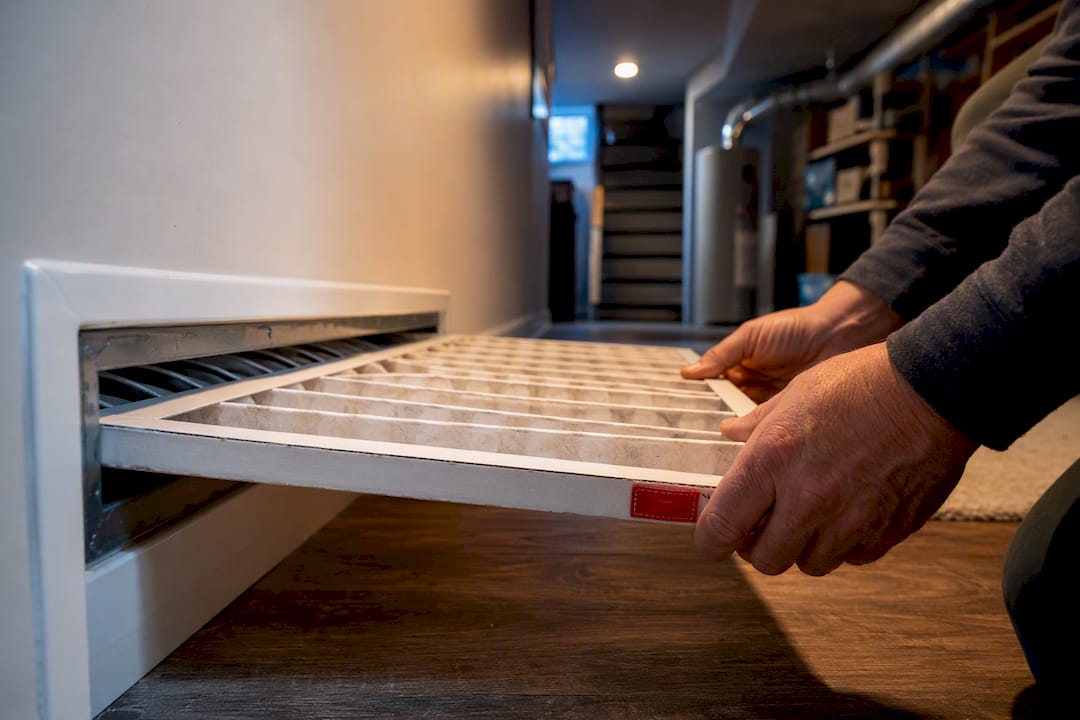
Check your filter every month, but the replacement calendar depends on what type you have. A standard 1 inch filter needs a fresh one every 30 to 90 days, while a deep 4 to 5 inch media filter can go 6 to 12 months between swaps. Pets, allergies, and heavy furnace runtime tend to require more frequent replacements within the typical intervals.
TL;DR:
- Pets, allergies, and heavy furnace use typically shorten the recommended replacement interval for filters by about a quarter to half.
- Higher MERV filters with less surface area tend to clog faster, requiring more frequent changes than lower-rated models.
- During peak seasons or after dusty events, filters may need replacement sooner than the standard ranges indicate.
- Visually inspecting and feeling for airflow are quicker, more reliable methods to determine if a filter needs replacing than strictly following a calendar.
- Regularly checking and tracking your filter’s condition, along with seasonal routine replacements, prevents system strain and improves indoor air quality.
Table of Contents
- Furnace Filter Frequency at a Glance by Filter Type
- What Changes How Often You Should Replace It?
- How Can You Tell When a Filter Needs Replacing?
- Does a Dirty Filter Really Cost You Money?
- Your Monthly and Seasonal Filter Checklist
- When Should You Call a Professional Instead of Just Swapping Filters?
- Where This Guidance Comes From
- Why Homeowners Overthink Filter Timing
- Sources
Furnace Filter Frequency at a Glance by Filter Type
Furnace filter frequency isn’t one number. It’s a range that shifts based on the filter’s thickness, the air quality in your home, and how hard your system runs. Here’s the breakdown you can pin to the fridge:
- 1" fiberglass: Replace about every month. These are thin, inexpensive, and accumulate dirt quickly.
- 1" pleated: Replace every 1 to 2 months. Better filtration than fiberglass, but the small surface area still clogs relatively quickly.
- 2" pleated: Replace approximately every 2 to 3 months. More pleats provide greater surface area to catch debris before airflow is affected.
- 4 to 5" media filters: Replace every 6 to 12 months. Consumer Reports notes disposable filter lifespans vary from roughly three to 12 months depending largely on this thickness factor.
- Washable/electrostatic: Inspect monthly, clean as needed. Performance varies a lot by model, and Consumer Reports found many washable units underperformed in independent testing.
| Filter type | Typical replacement window |
|---|---|
| 1" fiberglass | 30 days |
| 1" pleated | 30 to 60 days |
| 2" pleated | 60 to 90 days |
| 4 to 5" media | 6 to 12 months |
| Washable/electrostatic | Clean monthly |
Households with pets or smoke exposure should aim for the shorter end of each range, no matter the filter type.
What Changes How Often You Should Replace It?
The chart above is a starting point, not a promise. Several variables push your actual furnace filter change schedule shorter or longer, and knowing which ones apply to your house is how you stop guessing.
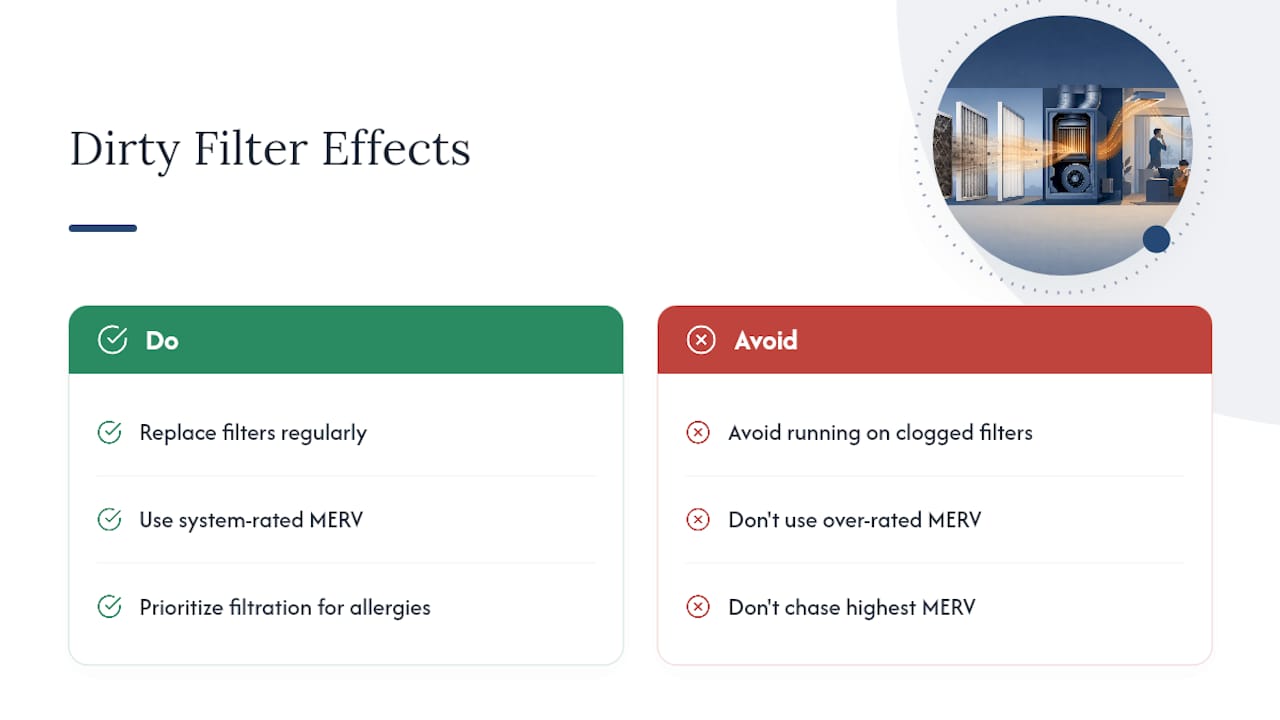
- Filter media and MERV rating: A higher MERV filter catches finer particles, but if it’s crammed into a small 1 inch slot, it can load up faster than a lower MERV filter with more surface area.
- Pets: Dogs and cats that shed heavily can cut filter life by a quarter to half, according to industry estimates. Multiple pets compound the effect.
- Allergies or asthma: Homes with sensitive residents should replace filters on the more frequent end. Allergens show up in nearly every American home according to NIH research, and a loaded filter recirculates rather than catches them.
- Runtime and season: During peak summer and winter, blower runtime increases and filters load faster.
- Dusty events: Renovations, gardening seasons, or smoke events can clog filters much faster than usual.
Pro Tip: Write the install date on the filter frame with a marker the day you put it in. It turns “I think I changed it recently” into an actual answer.
How Can You Tell When a Filter Needs Replacing?
You don’t need to memorize a calendar if you know how to read the filter itself. Run through these checks:
- Hold it up to a light. If light struggles to pass through, or you see an even gray coating, replace it now.
- Feel for airflow. Weak airflow from your vents, especially compared to a month ago, often means the filter is choking the system.
- Watch for short-cycling. A furnace that kicks on and off more than usual may be struggling to pull air through a clogged filter.
- Notice odd smells. A musty or burning odor near vents can mean dust buildup is baking on a hot component.
- For washable filters: Rinse gently, let it dry completely (usually 24 hours) before reinstalling. A damp filter breeds mold inside your ductwork.
A filter that’s been visibly clogged for weeks can strain your blower motor. If airflow doesn’t improve after a swap, that’s a sign to call a technician rather than replace filters repeatedly.
Does a Dirty Filter Really Cost You Money?
A clogged filter forces your blower motor to work harder to push air through, and that shows up on your energy bill. One industry estimate puts the added cost from running on a dirty filter at tens to low hundreds of dollars a year, on top of added wear on system components.
The indoor air quality payoff matters just as much, especially for allergy and asthma households, since a fresh, appropriately rated filter traps more of what’s floating through your ducts. Just don’t chase a MERV rating higher than your system supports. A filter rated beyond your furnace’s limit restricts airflow so much it can cause the same short-cycling and strain problems a clogged filter does.
Your Monthly and Seasonal Filter Checklist
Building a simple habit beats hunting for the “right” answer every time. Here’s a routine you can put on repeat:
- Every month: Pull the filter and check it against a light. Replace if it’s visibly gray or clogged.
- Start of heating season (fall): Install a fresh filter regardless of how the last check looked. Energy Star and This Old House both recommend this as a baseline reset.
- Start of cooling season (spring): Same rule applies before your AC runs daily.
- Replace immediately if: you spot visible clogging, live through a wildfire smoke event, or notice allergy symptoms flaring indoors.
A few buying and tracking habits make this easier:
- Keep two to three spare 1 inch filters on hand, or one spare media filter if you run a deep-pleated system.
- Double-check your exact filter size (printed on the old filter’s frame) before buying replacements. Sizes like 16x20x1 and 16x25x1 look similar but aren’t interchangeable.
- Confirm your furnace’s maximum MERV rating before upgrading filter quality.
- Track how many days it actually takes your filter to look dirty over one or two cycles. Consumer Reports points to this kind of hands on observation as the most reliable way to personalize your own schedule instead of relying on a generic number. If a coworker’s fall maintenance routine for other systems interests you, this seasonal home maintenance guide covers broader seasonal tasks worth pairing with your filter checks.
When Should You Call a Professional Instead of Just Swapping Filters?
Most filter maintenance is something you can handle yourself with a flashlight and a spare filter on hand. That said, some signs point to a bigger issue than a dirty filter alone.
A local HVAC company serving homeowners in St. Louis and Jefferson County for many years, technicians often see the same pattern: a homeowner keeps replacing filters faster and faster without relief. That usually points to a duct or static pressure problem, not just a filter issue.
Call a technician if odors persist after a fresh filter, if filters clog unusually fast repeatedly, or if you suspect airflow problems beyond the filter itself. A quick indoor air quality evaluation can also catch issues a filter alone won’t fix.
Where This Guidance Comes From
These recommendations draw on the Department of Energy’s Energy Saver guidance, EPA indoor air quality maintenance advice, Consumer Reports testing summaries, and practical checklists from This Old House and Energy Star. Each source points to the same baseline: check monthly, replace by condition, and adjust for your household.
Why Homeowners Overthink Filter Timing
The biggest mistake homeowners make isn’t forgetting to change their filter. It’s treating the interval as fixed when it’s actually a range that depends entirely on their specific house. I’ve seen the same 90 day rule quoted for a household with two shedding dogs as for a single person with no pets and light allergies, and that’s backwards. The dog owner probably needs 30 days. The single occupant might genuinely stretch to 90.
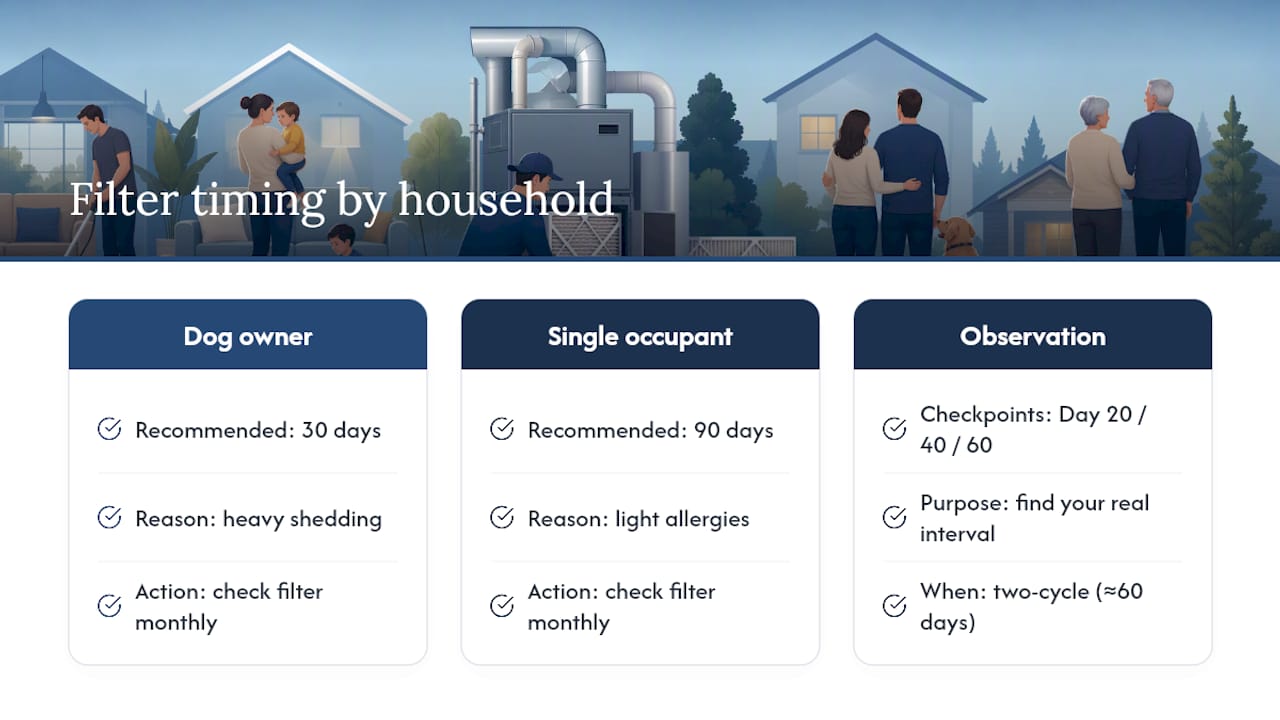
What gets underestimated is how much a two month observation window beats any chart. Pull your filter at day 20, day 40, and day 60 for two cycles. You’ll know your real number faster than any article, including this one, can tell you. The chart is a starting point for people who’ve never checked. It’s not a substitute for watching your own filter load up in your own house, with your own dust, your own pets, and your own furnace runtime.
The other underrated point: a filter that clogs unusually fast every single time isn’t a filter problem. It’s a house problem, usually duct leakage pulling in unconditioned attic or crawlspace dust, or a static pressure mismatch from an oversized filter slot. No replacement schedule fixes that. Only a technician looking at your actual ductwork does.
— Alan
Sources
- Guide to air cleaners in the home | EPA
- How Often Do You Need to Change Your HVAC Air Filters? | Consumer Reports
- How Often Should You Change Your HVAC Filter? (2026 Guide) | HVAC Base