
5 Furnace Carbon Monoxide Signs Homeowners Can Spot Before an Emergency
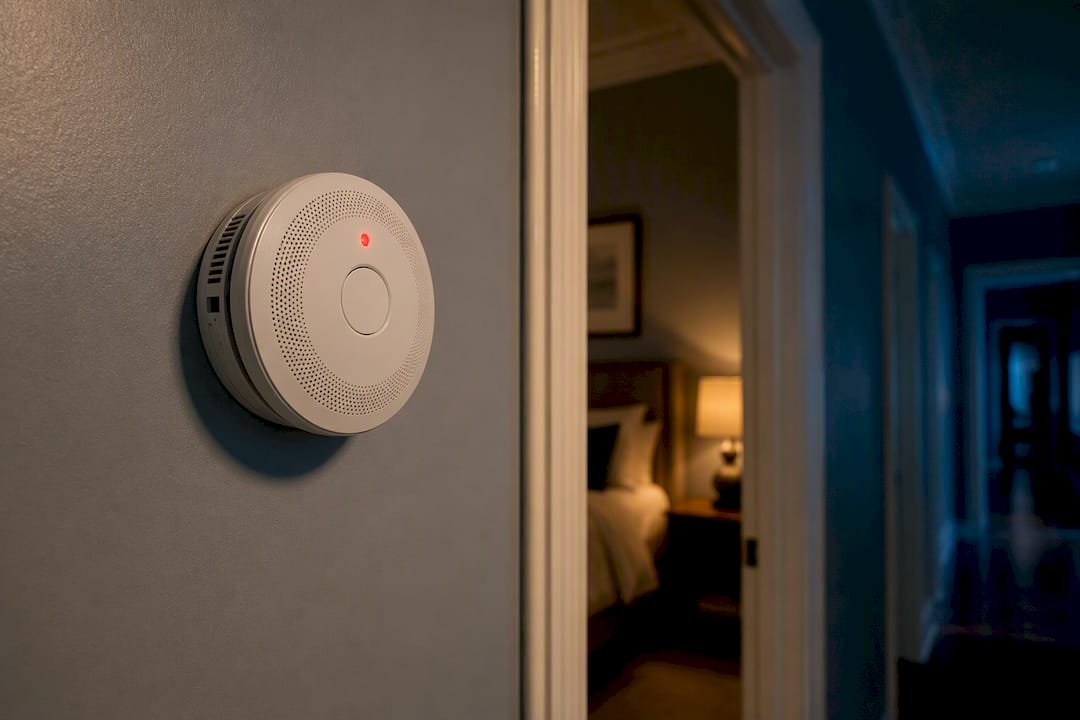
Yes, a furnace can leak carbon monoxide, even one that’s heating your house just fine. If you notice a CO detector alarm, a yellow or flickering flame, soot or rust near the vents, or symptoms that ease up when you leave the house, treat it as real. Get everyone (pets included) outside immediately, call 911 or your local emergency line, and do not go back in until responders or a licensed HVAC technician say it’s safe.
TL;DR:
- Yellow, flickering flames, soot near vents, or rust indicate incomplete combustion and potential CO buildup in your furnace system.
- Symptoms like headaches or fatigue that improve outside the house suggest a furnace-related carbon monoxide leak, especially if multiple people are affected simultaneously.
- Visual signs include rusted vents, excess condensation, and flame rollout, but avoid opening panels or adjusting the furnace yourself.
- An aging furnace over 15 years with recurring ignition issues or a cracked heat exchanger can intermittently emit dangerous levels of CO during normal operation.
- Immediate action involves evacuating everyone, calling emergency services from outside, and delaying furnace restart until a professional confirms safety.
Table of Contents
- Signs of a Carbon Monoxide Leak in People and Pets
- Visual Warning Signs Near Your Furnace
- Why Furnaces Leak Carbon Monoxide in the First Place
- What to Do Immediately if You Suspect a Furnace CO Leak
- Preventing Furnace CO Problems Before They Start
- How Ricotta Heating & Air Diagnoses a Suspected Furnace CO Leak
- Talking to Your Family About Furnace CO Risk
- A Technician’s Take on Waiting Too Long
- Get Your Furnace Checked Before It Becomes an Emergency
- Sources
- FAQ
Signs of a Carbon Monoxide Leak in People and Pets
Carbon monoxide poisoning mimics the flu, and that overlap is exactly what makes furnace leaks so dangerous during a St. Louis winter. Nobody suspects gas poisoning when everyone in the house has a headache and feels tired, especially in January when half the neighborhood has a cold anyway.
The symptom list itself won’t tell you much on its own, since it overlaps heavily with common illness:
- Headache (reported in roughly 25% of symptomatic CO poisoning cases)
- Nausea (around 14% of cases)
- Dizziness or vertigo (about 12%)
- Fatigue or drowsiness (roughly 6%)
- Confusion, shortness of breath, or chest tightness in more severe exposure
The real tell isn’t the symptom, it’s the pattern. If two or more people in the house feel sick at the same time, or if the headache lifts the moment you step outside and returns once you’re back home, that’s a strong signal you’re dealing with an indoor combustion source, not a bug going around.
Statistic: Unintentional CO exposure sends more than 100,000 people to emergency rooms every year in the United States, with roughly 14,000 hospitalizations and around 400 deaths. Diagnosis usually hinges on a carboxyhemoglobin blood test, since there’s no way to eyeball CO poisoning from symptoms alone.
Don’t overlook the dog. Pets often act sick before humans notice anything, partly because they’re smaller and spend more time low to the floor where CO can settle. If your dog or cat is suddenly lethargic alongside a family member feeling off, that’s not a coincidence worth ignoring. Call a doctor and mention suspected CO exposure so they can order the right test rather than treating it as a stomach bug.

Visual Warning Signs Near Your Furnace
You don’t need to pull the furnace cabinet apart to spot trouble. Most of the warning signs that matter are visible from a few feet away, and a phone camera works fine for documenting them before a technician arrives.
- Check the flame color. A healthy gas furnace burns a steady blue flame. Yellow, orange, or flickering flames point to incomplete combustion, which produces excess CO as a byproduct.
- Look for soot. Dark, sooty residue around the burner compartment, the front panel, or nearby registers usually means combustion isn’t clean.
- Inspect the flue and vent pipe for rust. Rust streaking or flaking on the vent connector often signals moisture from a venting problem, which can mean exhaust gases aren’t escaping the way they should.
- Watch for excess condensation. Puddling or dripping near the furnace, especially on a system that isn’t a high-efficiency condensing model, can point to combustion or venting issues.
- Treat pilot light problems as urgent. A pilot that won’t stay lit, burns unevenly, or shows flame rollout (flame licking out around the burner instead of staying contained) is not a wait-and-see issue.
These observable signs come up repeatedly in furnace safety guidance from HVAC professionals, and they’re worth photographing from a safe distance. What you shouldn’t do is open panels, adjust the burner, or poke around the heat exchanger yourself. That’s a job for someone with a combustion analyzer, not a phone flashlight.
Why Furnaces Leak Carbon Monoxide in the First Place
Most furnace-related CO problems trace back to a small number of mechanical failures, and understanding them explains why a furnace can seem perfectly normal right up until it isn’t.
- A cracked or corroded heat exchanger. This is the big one. The heat exchanger separates combustion gases from the air blowing through your ducts. A crack lets exhaust mix directly into your conditioned air supply.
- Venting failures. Blocked, disconnected, or undersized flue pipes trap exhaust instead of carrying it outside. Tightly sealed, energy-efficient homes make this worse by creating negative pressure that pulls exhaust back down the flue, a phenomenon called backdrafting.
- Dirty burners or a bad air-to-gas mixture. Dust, debris, or a poorly tuned burner changes how fuel burns, pushing combustion toward the incomplete, CO-heavy kind.
- Simple age. Furnaces past 15 to 20 years old accumulate wear on exactly the components that keep combustion clean and exhaust contained.
Here’s the part that catches homeowners off guard: a cracked heat exchanger can open up only when the metal heats and expands, then close again as it cools. That means the furnace runs, blows warm air, and seems fine, while still leaking CO intermittently during heating cycles. It’s one of the reasons furnace-related CO exposure doesn’t always match a simple “the furnace is broken” story.
What to Do Immediately if You Suspect a Furnace CO Leak
Speed matters more than precision here. You don’t need to diagnose anything, you just need to get out and get help.
- Get everyone outside, including pets. Don’t stop to open windows on your way out or gather belongings.
- Call 911 or your local emergency line from outside the home. Tell the dispatcher you suspect a carbon monoxide leak from your furnace.
- Ventilate only if it’s safe to do so without staying inside, such as propping a door open on your way out.
- Shut off the furnace only if you can do it from outside, at the breaker or the gas shutoff valve. Never go back in to do this.
- Do not re-enter the home until emergency responders test the air or clear you to return.
- Tell any treating clinician you suspect CO exposure so they can order a carboxyhemoglobin test rather than assuming flu or food poisoning.
- Leave the furnace off until a licensed technician confirms it’s safe to restart. Don’t take a chance just because the alarm stopped or the symptoms faded.
Pro Tip: Save your local emergency number and a 24-hour HVAC contractor’s number in your phone under a name like “CO Emergency” so nobody in the house has to search for it while feeling foggy or panicked.
Preventing Furnace CO Problems Before They Start
Prevention here isn’t complicated. It’s three habits, done consistently, that catch problems long before they become a 2 AM evacuation.
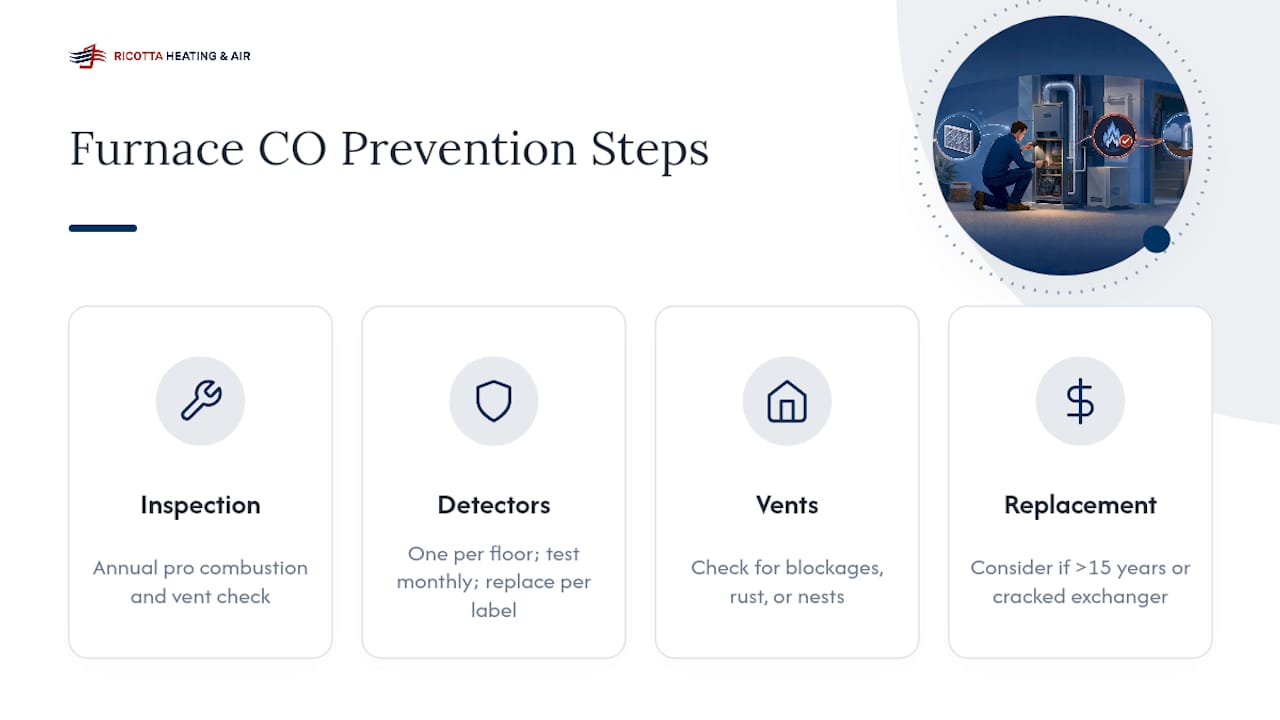
Start with annual professional inspection. A qualified technician runs combustion testing, checks the heat exchanger for cracks or corrosion, and verifies the vent system is drafting correctly, catching issues you’d never spot by looking at the furnace yourself. This one visit does more to reduce CO risk than any other single step.
Second, get serious about CO detectors. Place one on every floor of the home and near sleeping areas, test them monthly, and replace them on the schedule printed on the unit, typically every 5 to 10 years depending on the model. A CO detector that’s dead or expired is functionally the same as having none.
Third, keep an eye on vents and the chimney. Watch for blockages, rust, or animal nests in vent terminations, especially after storms or in fall when critters look for winter shelter. A blocked vent turns a healthy furnace into a CO risk overnight.
Statistic: Emergency departments see over 100,000 CO-related visits annually, a number that tracks closely with heating season and aging equipment across the country, including plenty of furnaces here in the St. Louis area that are well past their expected service life.
Finally, know when repair stops making sense. A furnace over 15 years old with a cracked heat exchanger, recurring ignition problems, or repeated combustion failures usually isn’t worth continuing to patch. A maintenance plan that catches these issues early can help you decide on your own timeline instead of during an emergency.
How Ricotta Heating & Air Diagnoses a Suspected Furnace CO Leak
A proper inspection starts with a calibrated CO meter, both in the ambient air and inside the flue itself, followed by a full combustion analysis to check the fuel and air mixture. From there, a technician visually inspects the heat exchanger for cracks or corrosion and checks the venting and burner assembly for blockages or wear.
Ask your technician for the actual readings, not just a thumbs up. A straight answer about what was tested, what the numbers showed, and whether you need a repair or a full replacement is the standard you should expect, without pressure toward the more expensive option. Family-owned shops with decades of local history tend to earn trust exactly this way. Don’t let anyone restart your furnace without documented readings in hand first.
Talking to Your Family About Furnace CO Risk
A CO safety plan only works if everyone in the house knows it before there’s an emergency, not while someone’s head is spinning at 2 AM. Take ten minutes this week to walk through it together.
Make sure every person old enough to understand knows what the detector alarm sounds like and what it means: everybody outside, no exceptions, no stopping to investigate. Assign a meeting spot outside, like the mailbox or a neighbor’s driveway, so nobody wastes time in a crisis wondering where everyone else went.
Talk through the symptom pattern too. Kids and teenagers can absolutely tell you if a headache showed up at home and vanished at school, and that observation might be the detail that gets your family out of the house sooner rather than later. Older relatives or anyone with breathing or heart conditions should know they’re at higher risk and should never wait around to see if symptoms pass on their own.
If you have a babysitter, elderly parent living with you, or anyone else who might be home when you’re not, make sure they know the plan too. A written note on the fridge with the emergency number and the words “if the CO alarm sounds, everyone outside now” takes two minutes to make and could matter far more than that.
A Technician’s Take on Waiting Too Long
The homeowners who wait the longest are usually the ones who feel “mostly fine,” not the ones with obvious symptoms. That hesitation is what costs time when it matters most. Before a technician arrives, jot down when symptoms started, whether they improved away from home, any detector readings, and photos of visible signs like soot or rust if it’s safe to get them. A thorough inspection will tell you exactly where you stand and what happens next.
— Alan Ricotta
Get Your Furnace Checked Before It Becomes an Emergency
If you’ve spotted any furnace safety warning signs, getting a straight answer from a local HVAC company can help you avoid upsell pressure. If you’ve spotted any of the signs covered here, an emergency furnace repair visit gets a technician to your door with a CO meter and combustion analyzer, not guesswork.

Beyond emergencies, Ricotta Heating & Air handles the full range of what keeps a furnace safe over the long haul: combustion testing, heat-exchanger inspections, and maintenance plans that catch small problems before they turn into a 2 AM evacuation. Honest diagnostics and local expertise are key expectations when choosing a trusted HVAC service provider. If your furnace shows any of the warning signs above, contact a licensed HVAC technician today to schedule an inspection and find out exactly where you stand.
This article is general information, not a substitute for advice from a qualified doctor. Consult a qualified healthcare professional about your own circumstances before acting on anything here.
Sources
Not every CO problem in a home comes from the furnace, and figuring out the source matters for both safety and repair costs. Water heaters, gas ranges, fireplaces, generators, and attached garages are the other usual suspects.
A few clues point specifically at the furnace. If symptoms and detector alarms track with the heating cycle, worse when the furnace has been running a while, better once it shuts off, that’s a strong furnace signal. Visual clues near the furnace cabinet itself, like the soot, rust, and flame color issues covered earlier, also point that direction rather than toward a stove or water heater across the house.
Location matters too. A CO detector near the furnace or utility closet that alarms before one in the kitchen or near a gas range suggests the heating system is the source. Conversely, if the kitchen detector goes off first and the furnace isn’t running, look at the range or oven instead.
Generators deserve a special warning, because they’re the source most likely to be misread as a furnace problem. A generator running in a garage or too close to windows can push CO into a home fast, even with the furnace completely off. If you use a portable generator during a winter power outage, treat it as a separate, high-risk CO source and run it well away from the house regardless of what your furnace is doing.
When in doubt, don’t try to play detective. Evacuate first, and let responders with proper meters trace the source. Sorting out which appliance caused it matters for the repair, not for the decision to get everyone outside.
- Protect your family and yourself from carbon monoxide poisoning | US EPA
- Carbon Monoxide Toxicity - StatPearls - NCBI Bookshelf
- Carbon monoxide poisoning - Symptoms and causes | MedlinePlus
- Carbon monoxide (CO) | CDC
FAQ
How Do I Know if My Furnace Is Leaking Carbon Monoxide?
Watch for a CO detector alarm, a yellow or flickering furnace flame, soot or rust near the vents, and flu-like symptoms in household members or pets that ease up when you leave the house.
What Are Two Warning Signs of Carbon Monoxide in a House?
A sounding CO detector and household members with headaches, nausea, or dizziness that improve away from home are two of the clearest warning signs, especially when several people or pets are affected at once.
What Are the Odds of a Carbon Monoxide Leak From a Furnace?
There’s no single published rate for furnace-specific leaks, but unintentional CO exposure overall sends more than 100,000 people to U.S. emergency rooms every year, and aging or poorly maintained furnaces are a common contributor.
Can a Cell Phone Detect Carbon Monoxide?
No. Standard smartphones have no sensor capable of detecting carbon monoxide, so a dedicated CO detector installed on every floor and near sleeping areas remains the only reliable way to catch a leak early.