
Noisy Furnace? What Every Sound Means and What to Do
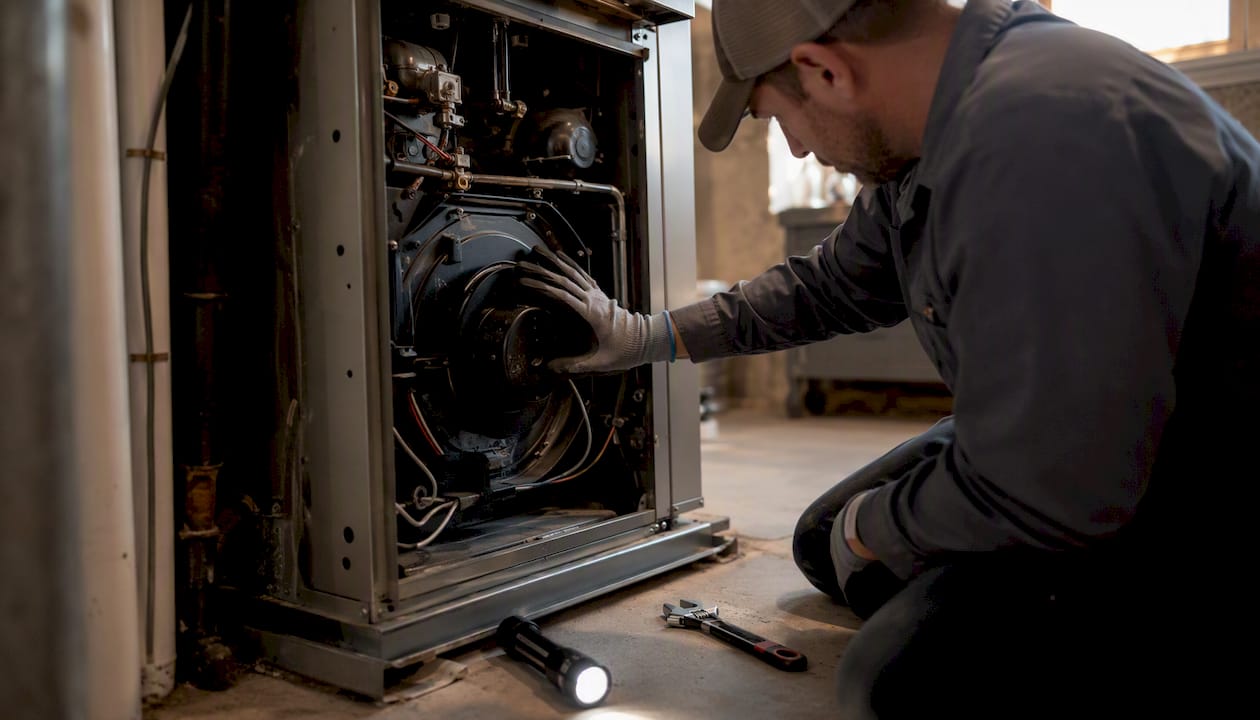
A noisy furnace is usually harmless, but a handful of sounds signal real danger and mean you should shut the system off now. If you hear a sharp bang at startup, smell gas, or notice your carbon monoxide alarm going off, turn the furnace off at the thermostat or breaker and call for emergency furnace repair right away. Everything else on the noisy-to-normal spectrum, like a soft pop from the ductwork or a low hum while it runs, usually just means your furnace is doing what furnaces do.
Here’s how to sort the two apart fast:
- Probably harmless: A single soft pop or ping when the blower kicks on, a steady low hum during the run cycle, or a quiet click at ignition. These are the normal sounds of a modern furnace cycling on and off.
- Worth a service call soon: Repeated rattling, a rising squeal, buzzing that wasn’t there last week, or grinding that comes and goes.
- Call a pro now, no DIY: A loud bang right at ignition, any gas odor, a burning or electrical smell, a yellow (not blue) burner flame, or a CO alarm sounding. National HVAC Parts flags startup bangs as a signal that deserves immediate professional inspection, especially when they repeat.
Do this in the next five minutes: If you’re in the “call now” category, switch the thermostat to off, flip the breaker for the furnace if you can access it safely, open a window if you smell gas, and step outside while you call your gas utility or an HVAC technician. Don’t relight a pilot, don’t investigate the burner compartment yourself, and don’t wait until morning.
Pro Tip: Note exactly when the noise happens, right at startup, during the run cycle, or as the furnace shuts down, before you call anyone. That single detail often points a technician straight to the cause and saves you a callback.
Key Takeaways
A noisy furnace is safe to leave running in most cases, but a bang at startup, a gas smell, or a CO alarm means shutting it off and calling a technician immediately.
| Point | Details |
|---|---|
| Sort by timing first | Note whether the sound happens at startup, mid cycle, or shutdown before deciding how urgent it is. |
| Startup bangs are high urgency | A sharp bang right at ignition often signals delayed ignition and needs prompt professional inspection. |
| Some signs mean evacuate | Gas smell, burning odor, yellow flames, or a CO alarm mean shut off, get outside, and call for help. |
| Simple checks come first | Replace the filter, secure panels, and clear vents before assuming the worst. |
| Ricotta offers safety-first diagnosis | Ricottaheatingandair inspects burners, blower, and ductwork with honest pricing and no upsell pressure. |
Table of Contents
- Noisy Furnace Sounds and What They Usually Mean
- Safe Checks You Can Do Before Calling for Service
- Warning Signs That Mean Shut It Off Now
- What a Technician Checks and What Repairs Typically Cost
- How to Describe the Noise So a Technician Can Diagnose It Fast
- Maintenance That Keeps a Furnace Running Quiet
- A Local Pro’s Take on Furnace Noise Calls
- Get a Straight Answer From Someone Who Will Actually Show Up
- Sources
Noisy Furnace Sounds and What They Usually Mean
Every furnace sound tells a story, and the story usually comes down to timing and location. A noise that happens the instant the burners fire is a different animal than one that rattles through your ductwork ten minutes into the cycle. Here’s how to read the most common ones.
- Loud bang or boom at startup. Likely cause: delayed ignition, where gas builds up before catching. Urgency: high. Takeaway: stop using the furnace and call a technician; repeated delayed ignition events can crack a heat exchanger over time.
- Popping or pinging from ducts. Likely cause: sheet metal expanding and contracting as air heats it. Urgency: low. Takeaway: usually harmless, though frequent loud pops can mean undersized returns or blocked airflow worth mentioning at your next tune-up.
- Whistling near vents or the furnace cabinet. Likely cause: a gap around a loose panel or a restricted airflow path. Urgency: low to medium. Takeaway: check that supply and return vents aren’t blocked; tighten the access panel if it’s the source.
- Rattling that comes and goes. Likely cause: loose panel screws, a vibrating duct joint, or debris near the blower. Urgency: low. Takeaway: a quick check of panel screws and nearby objects often solves this yourself.
- Humming or buzzing during operation. Likely cause: an aging capacitor, transformer issue, or blower motor drawing more effort than it should. Urgency: medium. Takeaway: persistent buzzing rarely fixes itself and tends to get louder until a part fails.
- High-pitched squeal. Likely cause: worn blower bearings or a belt losing tension. Urgency: medium to high. Takeaway: squeals usually mean a part is close to failing; scheduling service before it seizes saves you a motor replacement.
- Grinding or scraping. Likely cause: metal-on-metal contact from a damaged blower wheel or shot bearings. Urgency: high. Takeaway: shut it down. Continuing to run a grinding blower can turn a $200 repair into a full motor swap.
- Repeated clicking without ignition. Likely cause: the igniter or flame sensor is trying and failing to start the burners. Urgency: medium to high. Takeaway: if the furnace clicks several times and doesn’t fire, stop trying to force it and call for diagnosis.
- Rumbling during the burn cycle. Likely cause: dirty burners producing incomplete combustion, or airflow restriction. Urgency: medium. Takeaway: rumbling paired with any smell of exhaust means it’s time for a professional burner inspection.
- Noises when the furnace is off. Likely cause: ductwork settling as temperatures shift, or a stuck damper. Urgency: low. Takeaway: normal in most homes, but note the timing in case it correlates with something else going on.
Pro Tip: Combustion noises happen inside the furnace cabinet within seconds of the burners firing. Duct noises are hollow, echo through walls or floor registers, and show up as the blower ramps up or down. If you can’t tell which is which, CenterPoint Energy’s rundown of furnace sounds is a solid reference for sorting cabinet noise from duct noise.
Safe Checks You Can Do Before Calling for Service
Not every strange sound needs a service call right away. A short walkthrough can rule out the easy stuff and, if it doesn’t fix things, gives your technician a head start.
- Confirm the thermostat settings. Make sure it’s calling for heat and not stuck in a mode that’s cycling the system oddly.
- Pull the air filter and look at it. A filter clogged with dust forces the blower to work harder, and that extra strain often shows up as a hum or a whistle. If you can’t see light through it, replace it.
- Check that access panels are seated and screwed in. A loose panel vibrates against the cabinet and can sound far worse than it is.
- Walk your vents. Open any that are closed and clear furniture, rugs, or boxes blocking supply or return grilles.
- Look for anything loose near the unit. Storage items leaning against ductwork or the furnace itself can rattle once the system starts moving air.
What’s safe to inspect and what isn’t matters here. Looking at the filter, panels, and nearby vents is fine for anyone. Opening the burner compartment, touching the heat exchanger, or poking around gas lines is not. That’s a technician’s job, and for good reason: a short list of homeowner checks covers everything you should safely handle before calling a pro.
Before you dial, jot down three things: when the noise happens (startup, mid cycle, or shutdown), where it seems loudest, and whether you’ve noticed any smell or a drop in heating performance. That short note turns a guessing-game service call into a focused visit.
A technician can often narrow down the likely cause before ever touching a screwdriver, just from knowing exactly when a sound occurs and whether anything else changed at the same time, like a smell, a lockout, or weaker airflow.
Warning Signs That Mean Shut It Off Now
Some sounds are just noise. Others are a furnace telling you something is actively wrong, and those deserve a different response entirely.
- A sharp bang right when the burners ignite, especially if it repeats every cycle.
- Any smell of gas, rotten eggs, or sulfur near the unit or in the house.
- A burning smell, an electrical or “hot plastic” odor, or visible smoke.
- Burner flames that look yellow or orange instead of steady blue.
- A carbon monoxide alarm sounding anywhere in the home.
- Soot, rust streaks, or visible cracks around the furnace cabinet.
Any one of those means you turn the system off at the thermostat, and if it’s a gas smell or CO alarm, get everyone outside before you do anything else. Call your gas utility’s emergency line from outside the house, then call an HVAC technician. Don’t try to relight a pilot, don’t open the burner compartment, and don’t attempt any repair involving the gas line yourself. That work belongs to a licensed technician with combustion analysis equipment, not a homeowner with a flashlight.
A cracked heat exchanger can look like nothing more than a loud bang from the next room, but it’s one of the few furnace problems that puts carbon monoxide directly at risk of entering your ductwork, and it’s almost always a replace, not repair, situation.
What a Technician Checks and What Repairs Typically Cost
Once a pro is on-site, the visit follows a pretty consistent pattern. They’ll ask when and where the noise happens, run the system through a full cycle while listening at the cabinet and the ductwork, then move into a hands-on inspection.
That typically includes the burners and igniter assembly, the inducer motor and blower motor, belts and bearings, the capacitor and transformer, duct connections at the plenum, and a combustion check on the heat exchanger. Grinding sounds send them straight to the blower wheel and motor bearings. Buzzing points them toward electrical components like the capacitor. A bang at ignition means a close look at the burner assembly and heat exchanger for stress damage.
- Tightening a loose panel or duct connection is often resolved same-visit at minimal cost.
- Cleaning dirty burners restores smoother combustion and usually clears rumbling noises.
- Lubricating or replacing worn bearings stops squealing before it becomes a full motor failure.
- Replacing a blower motor is a bigger job, but far cheaper than letting a grinding motor destroy itself.
- A cracked heat exchanger almost always points toward furnace replacement rather than repair, since patching one isn’t considered a safe long-term fix.
These ranges vary by furnace brand, part availability, and how accessible your unit is, so treat them as ballpark figures rather than a quote. A technician who checks brands like Trane, Carrier, Lennox, and Rheem regularly can usually confirm part costs on the spot.
How to Describe the Noise So a Technician Can Diagnose It Fast
The single best thing you can do before a service visit is pay attention like a witness, not a bystander. Technicians say precise timing and a short recording can cut diagnostic time significantly, because it lets them prioritize the most likely cause before they even open a panel.
- Note whether the sound happens at startup, sometime during the run cycle, or right as the furnace shuts off.
- Time roughly how long it lasts, a split-second bang versus a sound that continues for minutes.
- Identify where you hear it loudest: at the furnace itself, at a specific register, or throughout the ductwork.
- Write down anything else you noticed at the same time, a smell, reduced heat, or the system locking out and refusing to restart.
- Record 10 to 15 seconds of audio or video on your phone from a few feet away, capturing at least one full cycle if you can safely wait for it.
- Label the file with the date and time so you’re not scrolling through old videos trying to find it later.
A useful description sounds specific, not vague. Compare “the furnace is making a weird noise” with something like: “Sharp bang inside the furnace cabinet right at ignition, happens every time on the first startup of the day, hasn’t happened mid-cycle.” That second version tells a technician almost exactly where to start looking before they’ve even parked in your driveway.
Maintenance That Keeps a Furnace Running Quiet
Most of the noises on this list are preventable, not inevitable. A furnace that gets regular attention rarely surprises you with a 6 a.m. bang.
- Replace the air filter on the schedule your manufacturer recommends, typically every one to three months depending on filter type and household dust load.
- Schedule an annual tune-up that includes cleaning the burners, inspecting the igniter, checking blower balance, and lubricating bearings before they start squealing.
- Have duct supports and connections checked periodically, since loose duct sections are a common source of rattling and popping.
- Keep humidity in a healthy range; extreme dryness or moisture can affect how ductwork expands and contracts.
One thing worth knowing: a too-restrictive filter can cause more noise problems than a dirty one. Think of airflow the way you’d think of breathing through a straw versus breathing through a pillow. A high-MERV filter designed for hospital-grade filtration forces your blower to work harder than it was built for, and that extra strain often shows up as humming or whistling. Stick with the MERV rating your furnace manufacturer specifies rather than assuming higher is automatically better.
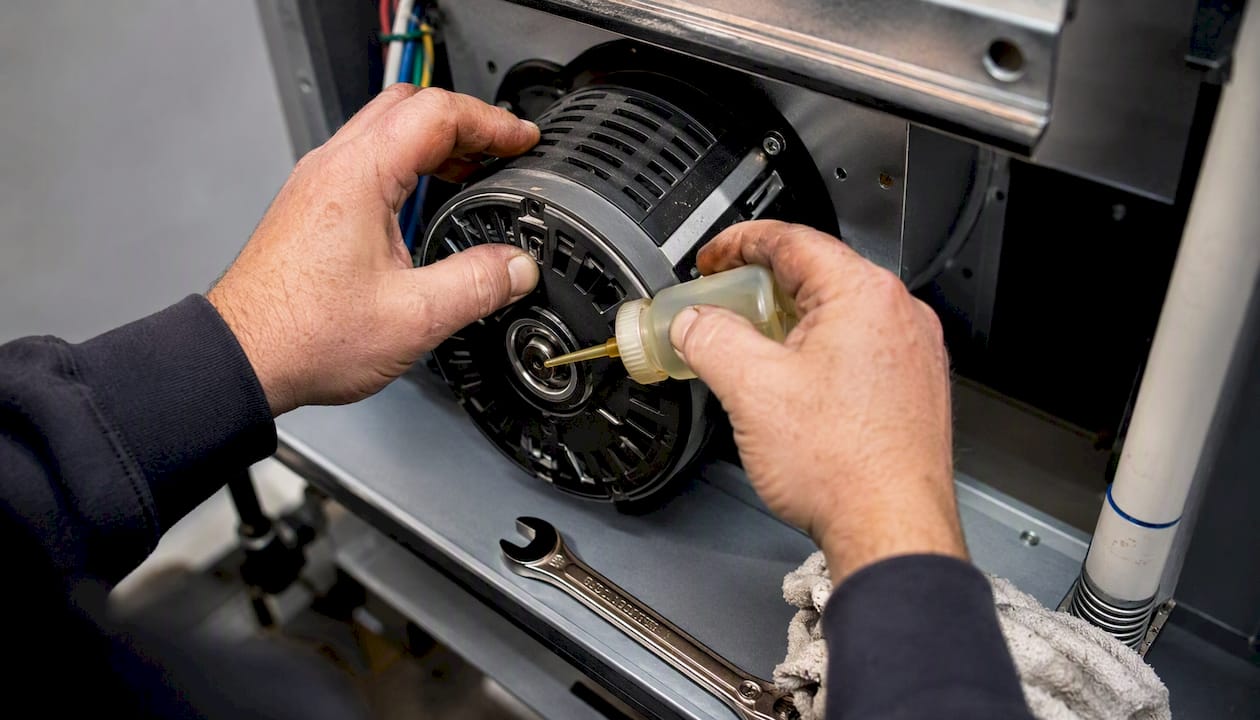
Enrolling in a maintenance plan is really the difference between catching a worn bearing at your spring tune-up and discovering it at 11 p.m. on the coldest night of the year. Annual visits catch the small stuff, a loose panel, a dirty burner, a bearing that’s starting to dry out, before it turns into an emergency call.
A Local Pro’s Take on Furnace Noise Calls
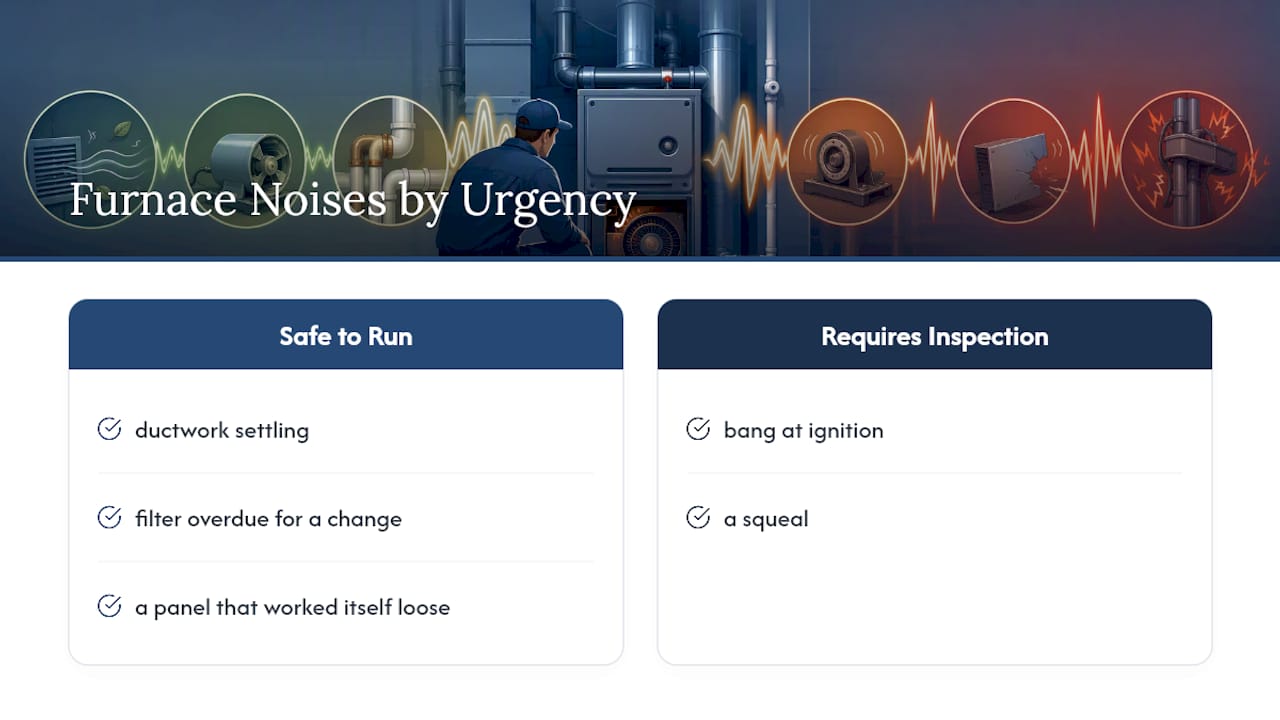
Most of the noise calls we get in Crestwood and around St. Louis County break down the same way: someone hears a bang or a squeal, panics a little, and wants to know if it’s safe to keep the heat running that night. Nine times out of ten, it’s something ordinary, ductwork settling, a filter overdue for a change, a panel that worked itself loose. The other cases are exactly the ones this article treats as urgent, and we’d rather a homeowner call us and find out it’s nothing than skip the call and find out too late that it wasn’t.
We built our process around honest diagnostics because upselling a scared homeowner into a new furnace over a $150 fix is the fastest way to lose trust in a neighborhood where word travels. After 50 years of servicing furnaces around Jefferson County, we’ve learned that the sound itself rarely lies. A bang at ignition behaves differently than a duct pop, and once you know what to listen for, most of the mystery goes away.
If you do call us, expect a safety-first visit. We’re going to ask you the same timing and location questions this article walks through, listen through a full cycle if the noise allows it, and give you a straight answer about whether you’re looking at a $150 fix or something bigger. No pressure toward the most expensive option on the list.
Get a Straight Answer From Someone Who Will Actually Show Up
A quick internet search will hand you a dozen theories about what’s wrong with your furnace, but none of them can put a hand on the unit and listen to it run. That’s the gap Ricottaheatingandair closes for homeowners across St. Louis and Jefferson County: a technician who shows up, listens through an actual cycle, and gives you a real diagnosis instead of a guess.

A typical visit starts with the same safety checks this article covers, confirming there’s no gas smell, no CO risk, and no visible damage, before moving into an audio diagnosis at the cabinet and ductwork. From there, we inspect burners, check the blower and motor, and hand you a written estimate before any repair starts, so you’re deciding with real numbers instead of a verbal ballpark. Our maintenance plans exist precisely so you catch worn bearings and loose panels at a scheduled visit instead of an emergency one, and our heating service page covers everything from a single noisy-furnace visit to a full system replacement if a cracked heat exchanger leaves you no other option. If your furnace is banging, squealing, or grinding right now, the next step is simple: schedule a visit and get a straight answer before that noise turns into a bigger repair bill.
Sources
- Furnace Noises | Home Service Plus | CenterPoint Energy
- Furnace Banging or Booming Noise? Causes & Safety Warnings | National HVAC Parts
- Furnace Making a Buzzing Noise? Learn Why and What to Do - Trane®
- Home heater maintenance: boost efficiency and extend system life