
Furnace Ignitor Replacement Cost: What Homeowners Pay
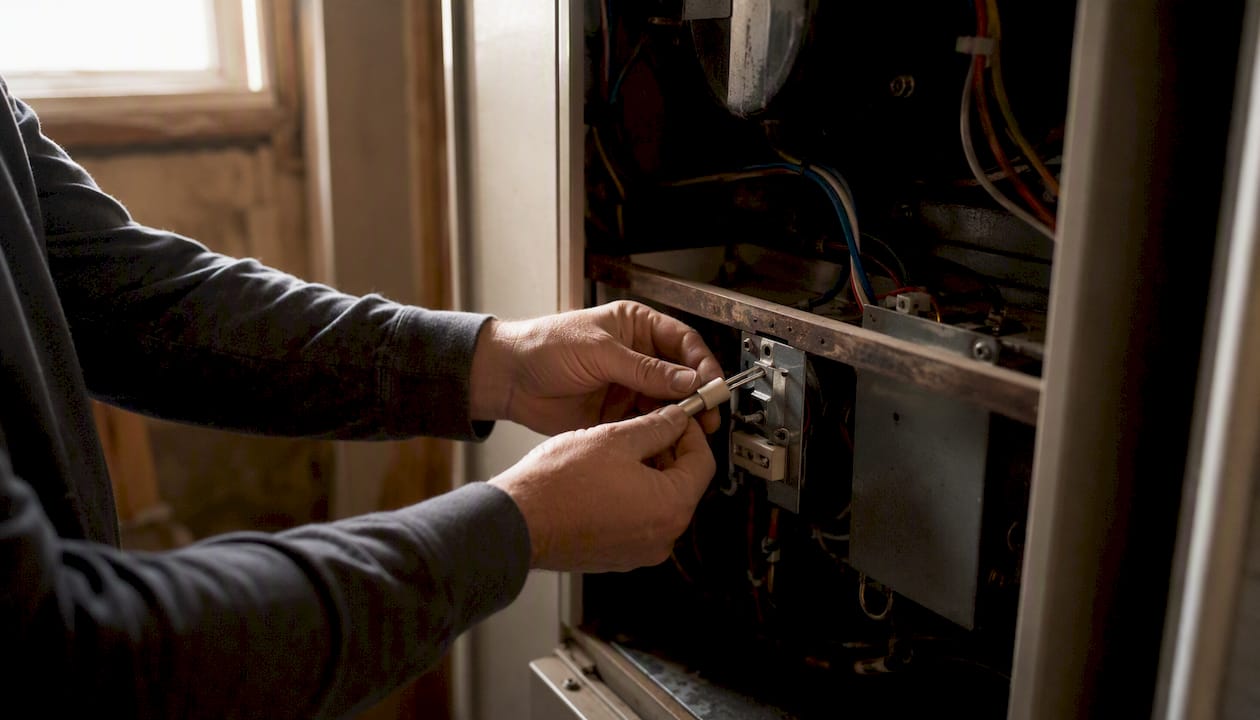
Many homeowners pay in the low to mid hundreds for a professional furnace ignitor replacement, parts and labor included. If you’re handy and confident working around gas appliances, the part cost can be moderate, depending on the ignitor type. Before you spend a dollar, check your furnace’s manufacturer warranty as many policies provide parts coverage for several years, which could reduce your out-of-pocket cost on the part itself.
Our single recommendation: check your warranty first, then call a licensed technician if you’re not experienced with gas appliances. The ignitor is fragile, the system involves gas and high-voltage wiring, and a misdiagnosis costs more than the part.
Table of Contents
- What does a furnace ignitor do, and how long does it last?
- What does furnace ignitor replacement cost, broken down?
- Should you DIY or call a professional?
- What does a technician actually do during a diagnostic visit?
- Can your warranty cover the ignitor replacement cost?
- Smart questions to ask your HVAC tech (and ways to save)
- Key takeaways on furnace ignitor costs and next steps
- A local technician’s honest take on ignitor calls
- Ricottaheatingandair can handle your ignitor repair today
- Sources and further reading
What does a furnace ignitor do, and how long does it last?
The ignitor is the component that lights your furnace’s gas burners. When your thermostat calls for heat, the control board sends voltage to the ignitor, which heats up (or sparks) to ignite the gas flowing into the burner assembly. No ignitor, no heat — it’s that simple.
The two main types you’ll encounter
- Hot-surface ignitor (HSI): The most common type in modern gas furnaces. A small ceramic element heats to roughly 1,800°F and glows orange before the gas valve opens. Two subtypes matter for cost: silicon carbide HSIs ($25–$90 for the part) are cheaper but more brittle; silicon nitride HSIs ($40–$150) cost more upfront but tend to last longer and handle thermal cycling better, according to PICKHVAC’s cost research.
- Spark/electrode ignitor: Used in older systems and some intermittent pilot setups. Less fragile than HSIs, but less common in furnaces made after the mid-1990s.
- Standing pilot: Found in older furnaces only. A small flame burns continuously. These don’t use an electronic ignitor at all, so this article’s cost guidance doesn’t apply to them.
How long should an ignitor last?
Most hot-surface ignitors last for several years under normal use, though some types tend to last longer. Heavy cycling (a furnace that runs frequently in a cold St. Louis winter), dirty filters that cause the system to work harder, and poor maintenance all shorten that window. Electric furnaces don’t use gas ignitors at all — this is strictly a gas furnace component.
Is it definitely the ignitor?
Not always. A furnace that won’t light could also point to a faulty thermostat, a tripped gas supply valve, a dirty flame sensor, or a control board fault. Before assuming the ignitor is the problem, run through these safe homeowner checks: confirm the thermostat is set to “heat” and the temperature is above room temperature, check that the furnace switch and circuit breaker are on, and replace the air filter if it’s clogged. A dirty filter can cause the furnace to overheat and shut down mid-cycle, mimicking ignitor failure.
IMPORTANT: If you smell gas near the furnace, do not attempt any checks. Shut off the gas supply valve, leave the house, and call your gas utility or 911. Continuous clicking from the ignitor with no flame is another sign to shut the system down and call a licensed technician immediately.
What does furnace ignitor replacement cost, broken down?
The furnace ignitor replacement cost has three components: the part, the diagnostic/service call fee, and labor. Here’s how each one typically breaks down, based on Modernize’s cost research and PICKHVAC’s installed-cost data.
Labor and service call fees
- Labor for ignitor replacement: — $75–$200 for a standard, accessible installation
Pick Comfort’s labor data puts the hands-on replacement time at 30–60 minutes for an experienced technician. That said, accessibility matters enormously. A furnace tucked into a crawlspace or a tight attic closet can double the time required, pushing labor well above the standard estimate.
What drives costs higher
High-efficiency furnaces (90%+ AFUE models) often require OEM-specific ignitors and have more complex access panels. Well Built Florida’s regional analysis shows these jobs commonly run $200–$500 installed, with difficult-access or older units occasionally reaching $600. After-hours and emergency calls typically add a premium on top of standard rates.
Sample cost scenarios
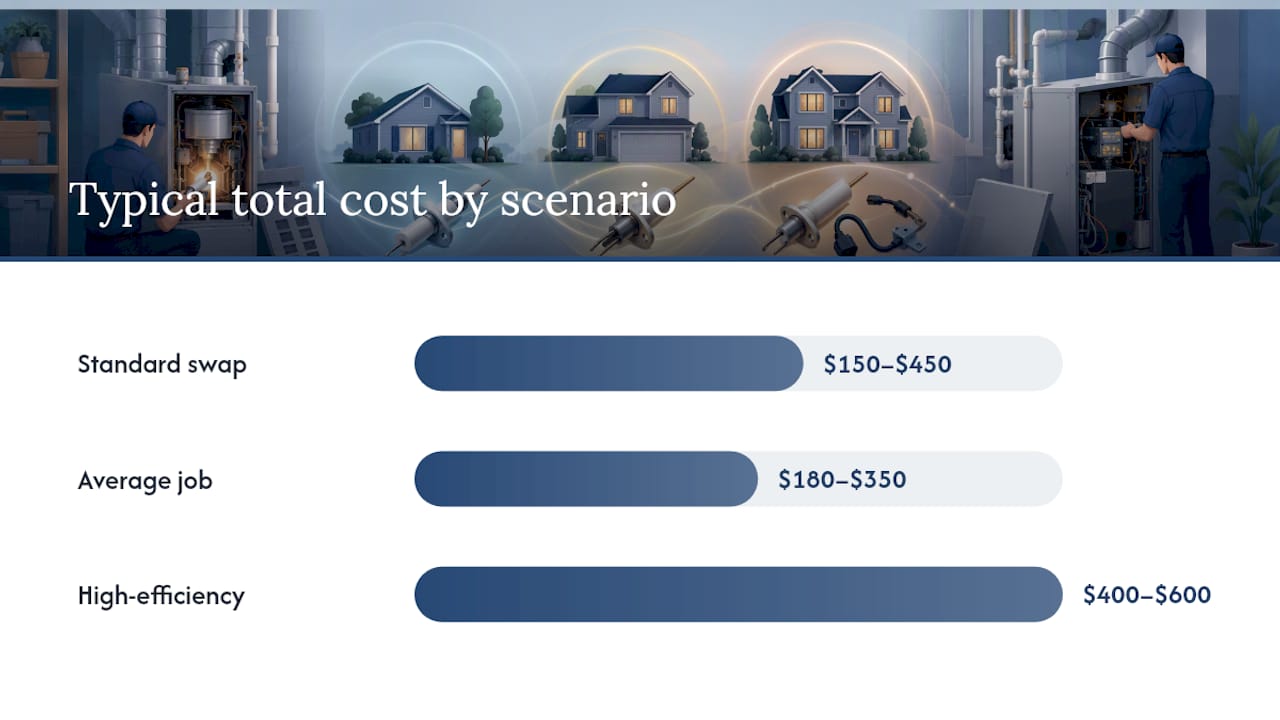
| Scenario | Part cost | Labor | Typical total |
|---|---|---|---|
| Standard swap, universal part, easy access | $25–$90 | $75–$150 | $150–$450 |
| Average job, silicon nitride, moderate access | $40–$150 | — | $180–$350 |
| High-efficiency furnace, OEM part, tight access | $75–$200 | — | $400–$600 |
Should you DIY or call a professional?
This is the question most homeowners wrestle with, and the honest answer depends on your comfort level with gas appliances and electrical systems, not just your general handiness.
Carrier’s manufacturer guidance is direct: modern hot-surface ignitors are fragile, the system involves gas and high-voltage circuitry, and professional diagnostics help identify underlying causes before the part is replaced. That’s not just a liability disclaimer. A cracked ignitor is sometimes a symptom of a deeper problem — restricted airflow, a dirty flame sensor, or a control board fault — that a DIY swap won’t fix.
Pros and cons at a glance
DIY replacement makes sense if you:
- Have experience working on gas appliances and are comfortable with electrical disconnects
- Can source the correct OEM or compatible part for your furnace model
- Understand that touching the ceramic element with bare hands will likely destroy the new part within days
- Are prepared to stop and call a pro if the furnace doesn’t light after replacement
Hire a licensed technician if you:
- Are unsure which ignitor type your furnace uses
- Want the repair covered under a labor warranty (typically 1–2 years from a licensed contractor)
- Have a furnace still under manufacturer parts warranty (DIY may void it)
- Suspect the ignitor isn’t the only problem
The cost savings from DIY are real — you pay $20–$150 for the part instead of $150–$450 total — but only if the diagnosis is correct and the installation goes smoothly. A second service call because the wrong part was installed, or because a failing flame sensor wasn’t caught, erases those savings quickly.
To understand why HVAC fire hazards are a real concern with DIY gas appliance work, it’s worth reading up on the electrical and combustion risks before you start.
Multimeter check (before and after)
A healthy silicon carbide HSI typically reads 40–90 ohms of resistance; silicon nitride reads 10–50 ohms. An open circuit (OL on your meter) confirms the element is broken. Check the new part before installation to confirm it’s not damaged in shipping, then recheck after installation with power off.
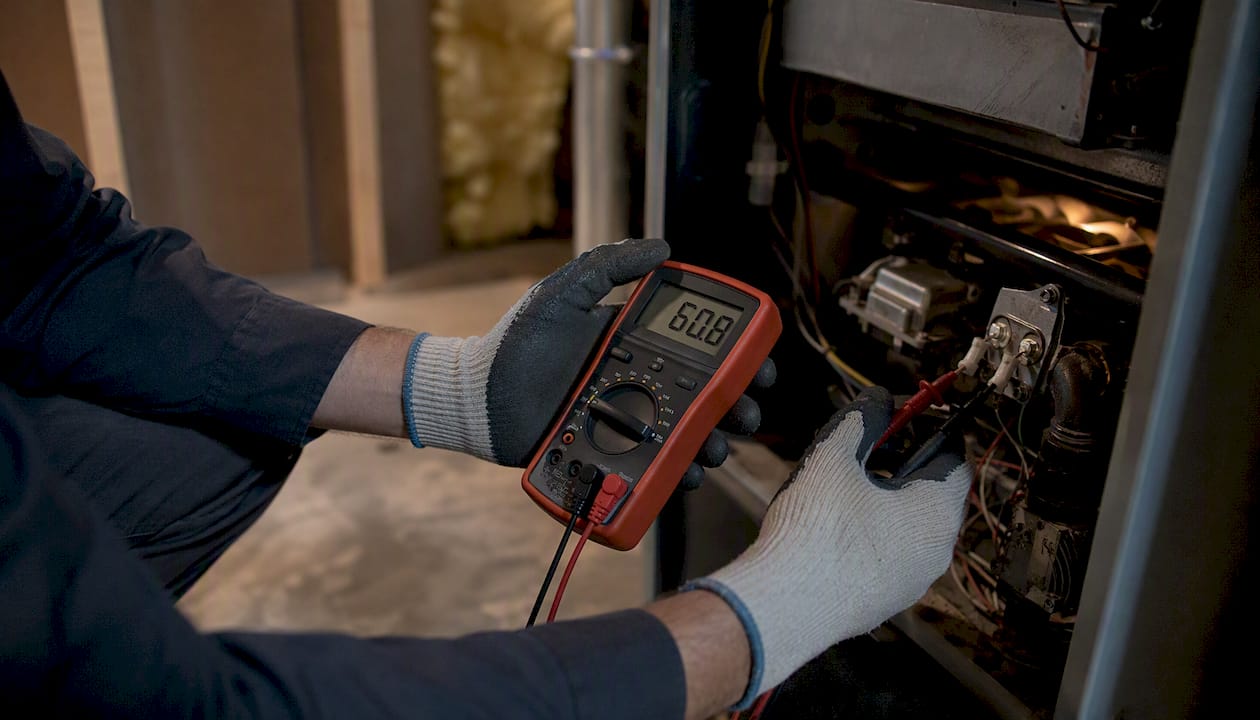
IMPORTANT: Never probe a live ignitor with a multimeter. Always check resistance with the system powered down.
Pro Tip: When you remove the old ignitor, check the bracket mounting holes for hairline cracks in the surrounding metal. A warped or cracked bracket puts mechanical stress on the new element and shortens its life. If the bracket looks damaged, replace it at the same time — it’s usually a $10–$20 part.
What does a technician actually do during a diagnostic visit?
A professional diagnostic visit isn’t just a technician swapping the part and leaving. A thorough tech spends the first part of the visit understanding the failure pattern — how often the furnace has been failing to light, whether error codes are stored on the control board, and whether the problem is intermittent or consistent.
The typical sequence looks like this: visual inspection of the ignitor and burner assembly, reading control board error codes (most modern furnaces flash a code sequence that points directly to the fault), a multimeter resistance check on the ignitor, and an observed ignition cycle if the system will attempt one. If the ignitor checks out electrically but the furnace still won’t light, the technician moves to the flame sensor, gas valve, and inducer pressure switch.
Common root causes technicians find alongside a failed ignitor include restricted airflow from a clogged filter or blocked flue, a dirty flame sensor that shuts the gas valve down immediately after ignition, and intermittent control board faults. Replacing the ignitor without checking these means the new part may fail within weeks for the same underlying reason.
Most straightforward ignitor replacements, diagnosis included, wrap up in 30–90 minutes. Pick Comfort’s labor estimates put the hands-on replacement portion at 30–60 minutes; the diagnostic adds time depending on what the tech finds. On your invoice, look for line items that separate the service call/diagnostic fee, the part with its part number, and labor. A written, itemized quote before work begins is a sign of an honest shop.
The energy.gov guidance on gas-fired furnaces reinforces why combustion and venting checks during a service visit matter — a licensed technician can catch unsafe conditions that a DIY ignitor swap would miss entirely.
Can your warranty cover the ignitor replacement cost?
Possibly, and it’s worth checking before you pay anything. Many furnace manufacturers cover parts for 5–10 years from the installation date, according to Today’s Homeowner’s warranty research. Labor warranties from the installing contractor are typically shorter, usually 1–2 years. That means the ignitor itself might be free under a parts warranty, even if you still owe labor.
Understanding how HVAC warranties work before your service call can save you from paying for a covered part out of pocket.
How to check your coverage before calling
- Check manufacturer registration. If the furnace was registered at installation, the manufacturer’s website can confirm your warranty status. Brands like Carrier, Lennox, Trane, and Rheem all have online warranty lookup tools — Ricottaheatingandair services all of these major brands.
- Review your home warranty policy — if you have one. Home warranties often cover HVAC components, but read the fine print on covered parts vs. labor and any service-call deductible.
Documents to have ready when you call a technician: model number, serial number, installation date, proof of purchase or warranty registration confirmation, and any previous service records.
Smart questions to ask your HVAC tech (and ways to save)
Scheduling during regular business hours is the single easiest way to reduce your ignitor replacement price. After-hours and emergency calls add a premium that can push a $250 job past $400. If your furnace fails on a Friday night in January, that premium may be unavoidable, but for a furnace that’s been struggling for a few days, a Monday morning call saves real money.
Beyond timing, here’s what to ask before any work begins:
- “Is the diagnostic fee credited toward the repair?” Most reputable HVAC companies say yes. If the answer is no, factor that into your comparison.
- “Are you using an OEM part or a universal replacement?” Universal parts work fine on most out-of-warranty systems and cost less. If your furnace is still under manufacturer warranty, ask whether a universal part would affect coverage.
- “What’s the warranty on the part and your labor?” A quality shop backs both, typically 1 year on labor and whatever the part manufacturer offers.
- “Can you give me a written, itemized quote before you start?” Any technician unwilling to do this is a red flag.
- “Did you check the flame sensor and control board while you were in there?” A good tech checks these as a matter of course. If they didn’t mention it, ask.
One trap to avoid: choosing the cheapest ignitor version when your furnace specifically requires a different type. Installing a silicon carbide HSI in a furnace designed for silicon nitride, or using a universal part with the wrong resistance rating, can cause repeated failures. The $30 you save on the part costs you another service call.
Annual maintenance plans are worth considering if you’ve had ignitor trouble. A yearly tune-up catches dirty flame sensors, restricted airflow, and early-stage ignitor wear before they become a cold-night emergency.
Key takeaways on furnace ignitor costs and next steps
Many homeowners pay a few hundred dollars for a professionally installed furnace ignitor replacement, but checking your manufacturer warranty first can reduce or eliminate the part cost entirely.
| Point | Details |
|---|---|
| Typical installed cost | Most homeowners pay $180–$350; high-efficiency or OEM jobs can reach $400–$600. |
| DIY part cost | The ignitor part alone runs $20–$150 depending on type; never touch the element with bare hands. |
| Check warranty first | Manufacturer parts warranties often run 5–10 years and may cover the ignitor at no cost to you. |
| Diagnostic matters | A failing ignitor is often a symptom; technicians check flame sensors, airflow, and control boards to prevent repeat failures. |
| Ricottaheatingandair | Serves St. Louis and Jefferson County with diagnostic-first repairs, transparent quotes, and same-day availability where possible. |
A local technician’s honest take on ignitor calls
There’s a pattern we see regularly at Ricottaheatingandair: a homeowner orders an ignitor online, installs it themselves, and calls us two weeks later because the furnace is doing the same thing. Nine times out of ten, the ignitor wasn’t the only problem. A flame sensor coated in residue was shutting the gas valve down seconds after ignition, or a clogged filter was causing the heat exchanger to overheat and trip the high-limit switch. The ignitor looked like the culprit because it was the most visible failed part, but it was really just the first thing to give out under stress.
The homeowners who come out ahead are the ones who treat the ignitor as a starting point for diagnosis, not the final answer. If your furnace is under 10 years old and this is its first ignitor failure, a straightforward replacement is probably all you need. If it’s the second failure in three years, something else is driving it.
For St. Louis and Jefferson County homeowners, our heating repair team carries common ignitor types on the truck, which means most jobs are diagnosed and completed in a single visit. We’ve been doing this for 50 years locally, and the one thing that hasn’t changed is that a proper diagnosis at the start saves everyone time and money.
Ricottaheatingandair can handle your ignitor repair today
When your furnace stops lighting on a cold St. Louis morning, the last thing you want is a technician who shows up, swaps the part, and leaves without checking why it failed. Ricottaheatingandair’s diagnostic-first approach means you get a full ignition system check, a transparent itemized quote before any work begins, and a technician who carries the most common ignitor types on the truck for same-visit repairs.
The diagnostic fee is credited toward your repair when you proceed, so you’re not paying twice. Ricottaheatingandair serves homeowners across St. Louis and Jefferson County, including Mehlville and surrounding communities, with same-day and next-day availability for most furnace calls. For urgent situations, emergency furnace repair is available when you need it most. If you want ongoing protection that catches ignitor wear before it becomes a cold-night failure, ask about Ricottaheatingandair’s maintenance plans when you call.
Sources and further reading
| Source | Best for |
|---|---|
| Carrier: What Is a Furnace Ignitor? | Understanding ignitor types, fragility warnings, and why professional diagnostics matter |
| Modernize: Furnace Ignitor Replacement Cost | Detailed cost components: parts, labor, and service call fee breakdown |
| PICKHVAC: Furnace Ignitor Replacement Cost | Installed cost averages, part type pricing, and regional variance |
| Pick Comfort: HVAC Ignitor Replacement Cost | Labor time estimates and how diagnostic fees appear on invoices |
| Well Built Florida: Furnace Ignitor Cost | How access, efficiency rating, and region affect total installed cost |
| Today’s Homeowner: Furnace Ignitor Cost | Manufacturer warranty windows and how to verify OEM coverage |
| energy.gov: Gas-Fired Boilers and Furnaces | Safe furnace operation, combustion, and venting guidance |
| Ricottaheatingandair: Emergency Furnace Repair | Local St. Louis and Jefferson County scheduling, diagnostic-first service |
This article provides general cost and safety information for homeowners. For guidance specific to your furnace model, warranty status, or local code requirements, consult your manufacturer’s documentation or a licensed HVAC technician in your area.