
Blower Motor Replacement Cost: What to Expect in 2026
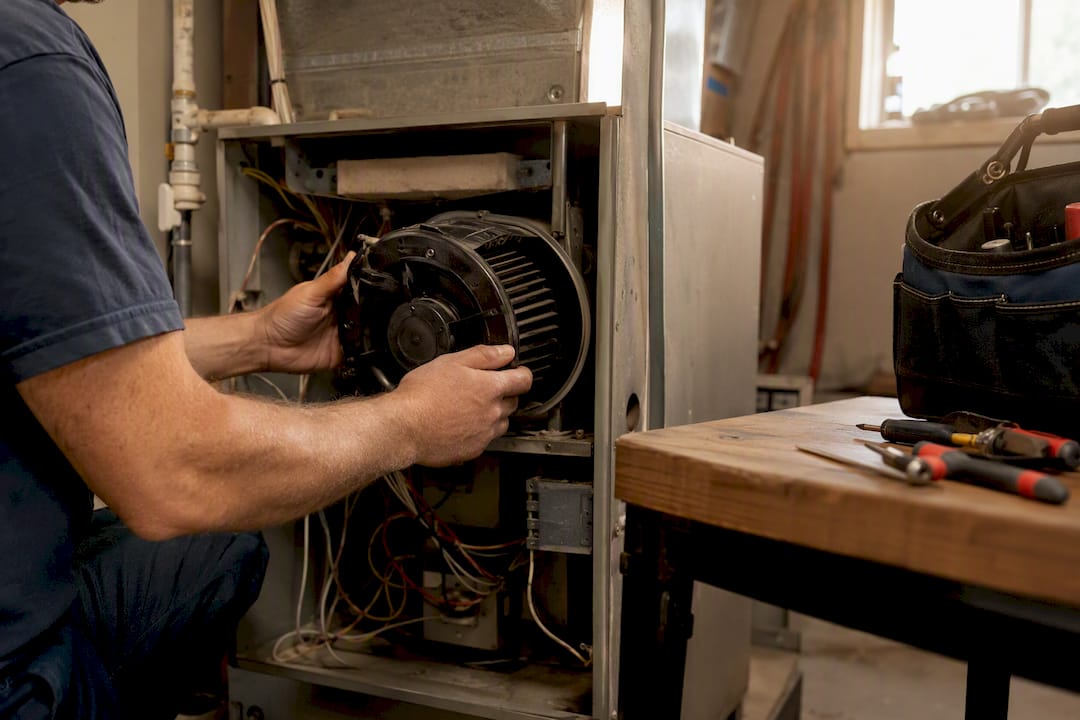
Expect a typical installed blower motor replacement to cost about $300 to $900 for a straightforward job, though full replacements involving ECM or variable-speed motors can run $500 to $2,300 when you factor in parts and labor together. The motor itself, before labor, usually falls between $70 and $2,400 depending on horsepower and technology. Three things move that number more than anything else:
- Motor type — a basic PSC motor costs far less than an ECM or variable-speed unit
- Accessibility — attic and crawlspace installs take longer and cost more in labor
- Warranty status — a covered part still leaves you paying for labor
The bottom line: most homeowners land closer to the $500 mark than the high end, unless they’re dealing with a premium furnace brand or a hard-to-reach unit.
Key Takeaways
Blower motor replacement typically costs $300 to $900 installed for standard PSC systems and up to $2,300 for ECM or variable-speed units, with accessibility and diagnostics driving most of the variation; homeowners should consider the AC blower motor cost when budgeting for this service.
| Point | Details |
|---|---|
| Know your cost range | Budget $300 to $900 for a standard PSC motor and up to $2,300 for ECM or variable-speed systems. |
| Rule out cheaper fixes first | A failed capacitor or tripped breaker often mimics motor failure and costs far less to fix. |
| Watch for accessibility charges | Attic and crawlspace installs can add 30 to 100 percent more labor time to a job. |
| Check warranty terms before authorizing work | Parts are often covered, but labor usually is not, so ask what’s included. |
| Get an itemized quote from Ricottaheatingandair | Ricottaheatingandair tests capacitors and amp draw before recommending a motor swap, with pricing broken down in writing. |
Table of Contents
- How Much Does Blower Motor Replacement Cost by Motor Type?
- What Am I Actually Paying For? Labor, Fees, and Common Add-Ons
- What Makes a Blower Motor Quote Go Up or Down?
- What Are the Signs of a Bad Blower Motor?
- Should I Repair the Motor or Replace the Whole Furnace?
- How Do Warranties Work, and How Can I Save Money?
- Fifty Years of Diagnosing Blower Motors the Right Way
- What Other Costs Might Come Up During Replacement?
- Does Where You Live Change Blower Motor Replacement Pricing?
- Does My Furnace Brand Affect the Cost of a New Motor?
- Why Most Motor Replacement Quotes Are Wrong Before the Diagnosis Even Happens
- Get an Honest Diagnostic Before You Pay for a New Motor
- Sources
How Much Does Blower Motor Replacement Cost by Motor Type?
The type of motor in your furnace or air handler is the single biggest number on your invoice. A PSC (permanent split capacitor) motor is the older, simpler technology, and it’s the cheapest to replace. An ECM (electronically commutated motor) or a variable-speed motor costs more up front but runs more efficiently and quietly.
Here’s how the parts-only pricing typically breaks down by horsepower and motor type, based on figures reported across HomeGuide and This Old House:
- 1/4 to 1/3 HP PSC motor: roughly $70 to $200 for the part
- 1/2 to 3/4 HP PSC motor: roughly $150 to $350 for the part
- ECM motor (any common residential size): roughly $300 to $900 for the part alone
- Variable-speed motor: roughly $450 to $2,400 for the part, depending on the brand and control module
Once you add labor, the installed totals shift accordingly. A basic PSC swap in an easy-to-reach furnace closet often lands around $300 to $600 installed. An ECM replacement, which sometimes requires reprogramming or a matched control board, typically runs $600 to $1,200 installed. A variable-speed motor replacement on a newer high-efficiency furnace can reach the $1,500 to $2,300 range, especially if the control module needs replacing along with the motor.
A quick example: If your air conditioner runs but barely pushes air out of the vents, and a technician finds the blower motor’s bearings have seized on a 12-year-old PSC system, you’re likely looking at the lower end of that range, somewhere near $400 to $700 installed. If the same symptom shows up on a five-year-old variable-speed furnace, the diagnosis and part cost climb fast because those motors talk to a control board that has to be matched correctly.
What Am I Actually Paying For? Labor, Fees, and Common Add-Ons
Your invoice isn’t just “motor plus labor.” It’s usually built from a few distinct pieces, and knowing what each one covers helps you spot a fair quote from an inflated one.
HVAC technician labor typically runs $75 to $150 per hour, and a standard blower motor job takes 1 to 3 hours once the diagnosis is confirmed. That’s the bulk of what separates a $300 job from a $900 one when the motor itself is inexpensive.
Beyond the motor and the base labor, a few common add-ons show up regularly:
| Add-on part or fee | Typical cost range |
|---|---|
| Capacitor replacement (with service call) | $150 to $400 |
| Blower wheel replacement or balancing | $100 to $300 |
| Motor bearings or belt (if separable) | $30 to $150 |
| Control module (ECM/variable-speed systems) | $200 to $600 |
| Diagnostic or service-call fee | $75 to $150 |
Most companies apply the diagnostic fee separately, and many waive it if you proceed with the repair. Ask about that up front. If a technician finds a seized or damaged blower wheel while pulling the motor, that’s a real add. Wheels sometimes need separate removal and rebalancing, which can tack on both parts and time you didn’t budget for.
What Makes a Blower Motor Quote Go Up or Down?
Two homeowners with nearly identical furnaces can get quotes $400 apart, and it usually comes down to four factors.
Accessibility matters more than most people expect. A furnace in a basement utility closet is quick work. One tucked into a cramped attic or crawlspace forces the technician to work in tighter, hotter, or colder conditions, which can add 30 to 100 percent more labor time in practice.
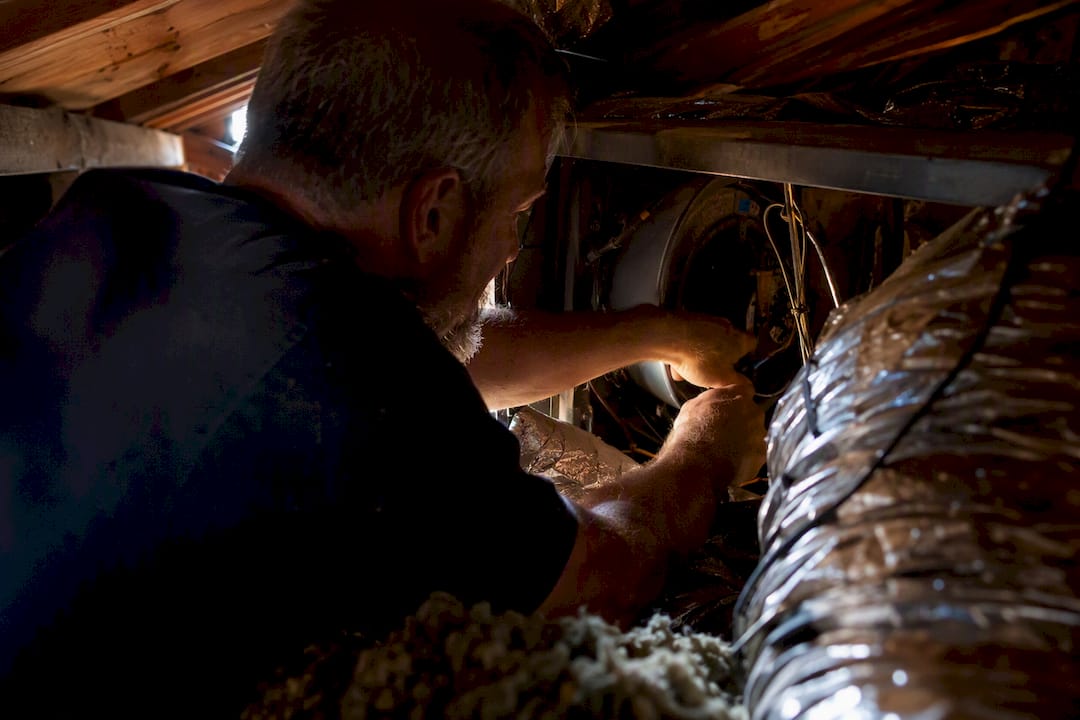
OEM versus aftermarket parts changes both cost and warranty coverage. An OEM (original equipment manufacturer) part usually costs more but keeps your furnace’s factory warranty intact. Aftermarket parts save money short term but can complicate warranty claims later.
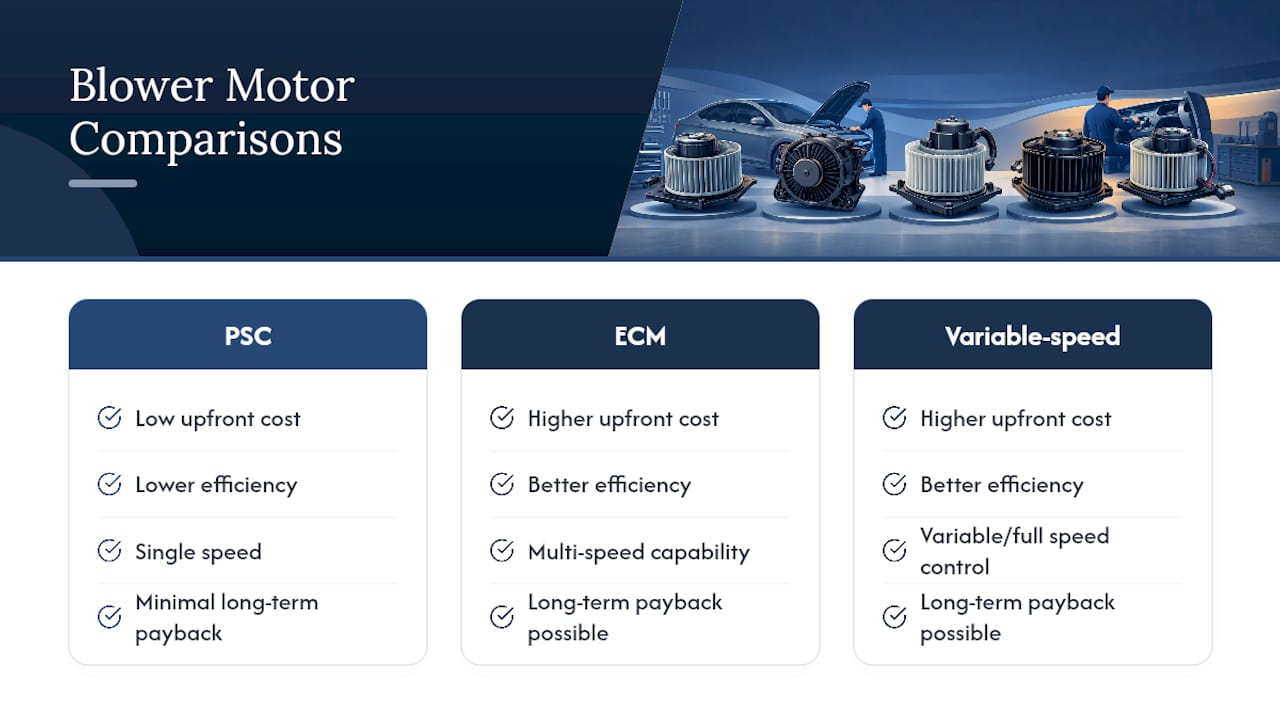
Motor technology carries a long-term tradeoff. PSC motors are cheap to replace but run at one speed and use more electricity. ECM and variable-speed motors cost more up front, but the efficiency gains often pay some of that back over the life of the system.
System age can introduce compatibility headaches. A ten-year-old furnace might need an adapter kit or a slightly different mounting bracket if the exact original motor is discontinued.
Pro Tip: Always ask whether your quote separates the motor’s list price from the labor and any access fees. A single lump number makes it impossible to tell if you’re overpaying for the part or the time.
What Are the Signs of a Bad Blower Motor?
Before you assume the motor is dead, run through these checks. A shocking number of “motor failure” calls turn out to be something far cheaper.
- No airflow at all from vents while the thermostat calls for heat or cooling. Check the breaker first. A tripped breaker is a five-minute fix, not a motor problem.
- Weak or inconsistent airflow. This often points to a clogged filter restricting air movement, not a failing motor.
- Grinding, squealing, or rattling noises. These usually mean worn bearings or a loose blower wheel, not necessarily a dead motor.
- Intermittent operation, where the blower cycles on and off unpredictably. This frequently traces back to a failing capacitor or a control board issue rather than the motor itself.
A failed capacitor or a tripped indoor breaker mimics blower motor failure often enough that a good technician always checks both first. Expect your technician to test the capacitor, measure the motor’s amp draw, inspect the blower wheel for damage, and run a control board diagnostic before ever recommending a full motor swap.
Should I Repair the Motor or Replace the Whole Furnace?
This is the question that actually saves or costs homeowners real money, and it depends heavily on your furnace’s age and overall condition.
- Furnace under 10 years old: Replace the motor. It’s almost always the smarter financial move on a system with plenty of service life left.
- Furnace 10 to 15 years old: Weigh the motor cost against the furnace’s remaining efficiency. If the motor quote is high and other components (heat exchanger, ignitor) are also aging, full replacement can be the better long-term investment.
- Furnace over 15 years old: A major motor failure is often the tipping point. Pairing an old furnace with a brand-new variable-speed motor rarely makes financial sense when the rest of the system is near the end of its life anyway.
- Multiple failing parts at once (motor, heat exchanger, control board) is usually a stronger signal to replace the whole unit than to keep patching pieces.
What Happens During a Blower Motor Replacement Visit?
A typical visit runs a few hours from arrival to a working system, depending on accessibility and whether extra parts are needed.
- Diagnosis first. The technician tests the capacitor, checks amp draw, and confirms the motor (not something cheaper) is the actual problem.
- Old motor removal. This includes disconnecting wiring and pulling the blower assembly.
- Blower wheel inspection. If it’s worn, cracked, or unbalanced, it gets addressed here, sometimes adding time.
- New motor installation and wiring. The replacement gets mounted, wired, and secured.
- System test. Airflow, amp draw, and cycling are checked before the technician calls it done.
Jobs run longer when the blower wheel needs separate work or when a control module has to be matched and programmed to a variable-speed motor.
How Do Warranties Work, and How Can I Save Money?
Manufacturer warranties commonly cover the replacement part itself but not the labor to install it, so don’t assume a “covered” motor means a free repair visit. Always check your furnace’s specific warranty terms before authorizing work, since coverage windows and part-only exclusions vary by brand and model.
A few ways to keep costs down without cutting corners on safety:
- Ask for the OEM part number so you can confirm you’re getting a genuinely compatible motor, not a mismatched substitute
- Check whether a maintenance plan or service agreement is already in place, since some agreements affect eligibility for warranty labor discounts
- Get at least two quotes before authorizing a full motor replacement, especially on higher-end variable-speed systems
- Ask if a cheaper part-level repair, like a capacitor or bearing swap, could solve the problem before committing to a full motor
Pro Tip: Request an itemized quote that separates the part price, labor hours, and any access or diagnostic fees. If a company won’t break it down, that’s a red flag worth taking seriously.
Fifty Years of Diagnosing Blower Motors the Right Way
Ricottaheatingandair has spent 50 years working on furnaces and air handlers across the St. Louis and Jefferson County area, and the pattern holds true year after year: a lot of “dead motor” calls turn out to be a $150 capacitor or a tripped breaker.
- Honest diagnostics before any part gets replaced
- Transparent, itemized pricing on every quote
- 150+ five-star Google reviews reflecting consistent service quality
A homeowner calls about weak airflow from the furnace. The tech checks the breaker first, finds it fine, then tests the capacitor and finds it’s failed. Total fix: under $300, no motor replacement needed.
Ricotta technicians always recommend homeowners ask for the part number and labor warranty in writing on any quote, regardless of who does the work.
What Other Costs Might Come Up During Replacement?
The motor and labor aren’t always the whole story. A few extra line items show up often enough that you should budget for the possibility.
Disposal fees for the old motor and any packaging typically run $10 to $30, and most companies fold this into the labor charge rather than listing it separately. It’s worth asking anyway.
Permit fees rarely apply to a straightforward blower motor swap, since it’s a component repair, not a system installation. If your job also involves ductwork modifications or a full furnace replacement, some municipalities require a permit, and that fee typically falls in the $50 to $150 range depending on your local building department.
Related repairs discovered mid-job are the most common surprise cost. If the technician finds a damaged blower wheel while removing the old motor, that’s additional parts and labor. The same goes for a corroded control board or wiring that needs replacing to safely connect a new ECM or variable-speed motor. These aren’t upsells; they’re genuine safety and functionality issues that show up once the old motor is out and the technician can actually see the condition of surrounding parts.
Filter and ductwork issues sometimes surface too. A severely clogged filter that contributed to the motor’s early failure might prompt a recommendation for a filter upgrade, though this is optional and shouldn’t be pressured on you.
Ask your technician to flag any of these before they proceed, not after the work is already done.
Does Where You Live Change Blower Motor Replacement Pricing?
Regional labor rates and climate demands both play a role in what you’ll pay. Areas with a higher cost of living generally see labor rates at the top of that $75 to $150 per hour range, while smaller markets often land closer to the bottom.
Climate matters too, in a less obvious way. Regions with brutal summers or winters put more cumulative run time on a blower motor, which can shorten its lifespan and make replacement a more frequent event than in milder climates. Homes in the Midwest and South, where furnaces and air handlers run hard for months at a stretch, tend to see more wear-related motor failures than regions with shorter heating or cooling seasons.
Local permit requirements and inspection rules vary by municipality as well, which is one more reason a quote from a company that knows your specific area tends to be more accurate than a national average pulled from a cost calculator. If you’re in the St. Louis or Jefferson County area, a local diagnostic visit will give you a far more reliable number than any nationwide estimate, because labor rates, permit rules, and even common furnace brands installed in the region all factor into the final price.
Does My Furnace Brand Affect the Cost of a New Motor?
Brand matters more than most homeowners expect, mostly because of parts availability and proprietary control systems, not because one brand’s basic motor technology is fundamentally different from another’s.
Mainstream brands with wide dealer networks tend to have motors and control boards readily in stock, which keeps both part costs and turnaround time down. Premium or less common brands sometimes require special-order parts, which can add days to the timeline and a premium to the price.
Variable-speed and ECM motors are also often programmed or paired to a specific furnace’s control board. That means you frequently can’t just drop in a generic replacement. You need the exact OEM part or a compatible aftermarket unit the technician has confirmed will communicate correctly with your existing system. This is where documentation of part numbers and serials becomes genuinely useful. If a compatible replacement isn’t confirmed ahead of time, you risk a return visit and additional labor.
Ricottaheatingandair services all major residential furnace and air handler brands, which means compatibility questions get answered before the job starts, not discovered halfway through.
Why Most Motor Replacement Quotes Are Wrong Before the Diagnosis Even Happens
Here’s the uncomfortable truth: a lot of blower motor “replacements” never needed to happen. The conventional advice you’ll find online treats motor failure as a binary problem, either the motor works or it’s dead and needs a swap. That framing skips the step that actually matters most: a real diagnostic test of the capacitor and amp draw before anyone touches the motor.
The economics back this up. A capacitor fix runs a fraction of a full motor replacement, yet capacitors fail constantly and produce nearly identical symptoms. Homeowners who skip the diagnostic step, or hire a company that skips it for them, end up paying for a motor they didn’t need.
What should you prioritize first? Not the price range, though that matters. Prioritize finding a technician willing to test before they replace, and get that testing documented in writing. The number on your quote matters less than the process that produced it.
— Alan
Get an Honest Diagnostic Before You Pay for a New Motor
Ricottaheatingandair tests the capacitor and checks amp draw before recommending a motor replacement, which means you’re never paying for a full swap when a $150 fix would have solved it. That’s the real difference between a shop chasing a bigger invoice and one that’s been trusted across St. Louis and Jefferson County for 50 years and backs it with 150+ five-star Google reviews.
When you book a diagnostic visit, expect a straightforward process: a technician arrives, tests the actual components (capacitor, amp draw, blower wheel, control board), and gives you an itemized quote before any work begins. No pressure to authorize a full motor replacement on the spot. If your system is in the Mehlville area or nearby Jefferson County communities, you can schedule a diagnostic visit and ask specifically for the OEM part number and labor warranty terms in writing. Also ask whether a maintenance plan makes sense for your system going forward, since regular tune-ups catch capacitor wear long before it turns into a no-airflow emergency call.
Sources
- How much does blower motor replacement cost? — HomeGuide
- What is the cost of a furnace blower motor? — This Old House
- Central AC running but not blowing air — The Cold Cloud