
Installer Backed Checks for Variable Speed AC in St. Louis Homes
A variable-speed AC gives you three real advantages over a standard system: lower energy bills, far better humidity control, and steadier temperatures without hot and cold spots. You’ll pay more upfront, and how much you save depends on your home’s size, ductwork, and local electric rates. The sections below walk through how these systems work, what the evidence shows, what they cost, and what to check before you sign an installation contract.
TL;DR:
- Variable-speed systems rely on continuous modulation for longer, more efficient run cycles that improve humidity control and indoor comfort.
- Savings depend heavily on proper installation, matching components, ductwork condition, and local electric rates, with no guaranteed dollar amount without a site assessment.
- More complex electronics in variable-speed units may lead to costlier repairs, requiring careful consideration of maintenance and repair needs upfront.
- Installation quality is critical; mismatched components or leaky ducts can negate the system’s benefits and reduce efficiency gains.
- Homeowners with long-term residence, humidity issues, or open floor plans benefit most, while those in homes with poor ductwork should prioritize repairs before upgrading.
Table of Contents
- How Variable Speed Air Conditioners Actually Work
- What You Actually Get: Energy Savings, Drier Air, and Fewer Hot Spots
- Is a Variable Speed AC Worth the Extra Cost?
- What to Check Before You Buy: A Sizing and Installation Checklist
- What We See in St. Louis and Jefferson County Homes
- When I Actually Recommend a Variable Speed System
- Ready to See What a Matched System Would Cost You
- Where This Information Comes From
- Sources
- FAQ
How Variable Speed Air Conditioners Actually Work
A standard AC has two settings: on and off, running at full blast every time it kicks on. A variable speed AC uses an inverter-driven compressor and a modulating blower motor that can throttle output up or down, typically operating anywhere from about a quarter to full capacity depending on how much cooling your home actually needs at that moment, according to Trane’s breakdown of variable-speed technology.
Think of it like driving with cruise control instead of stomping the gas and slamming the brakes over and over. That constant, low-level adjustment changes everything downstream:
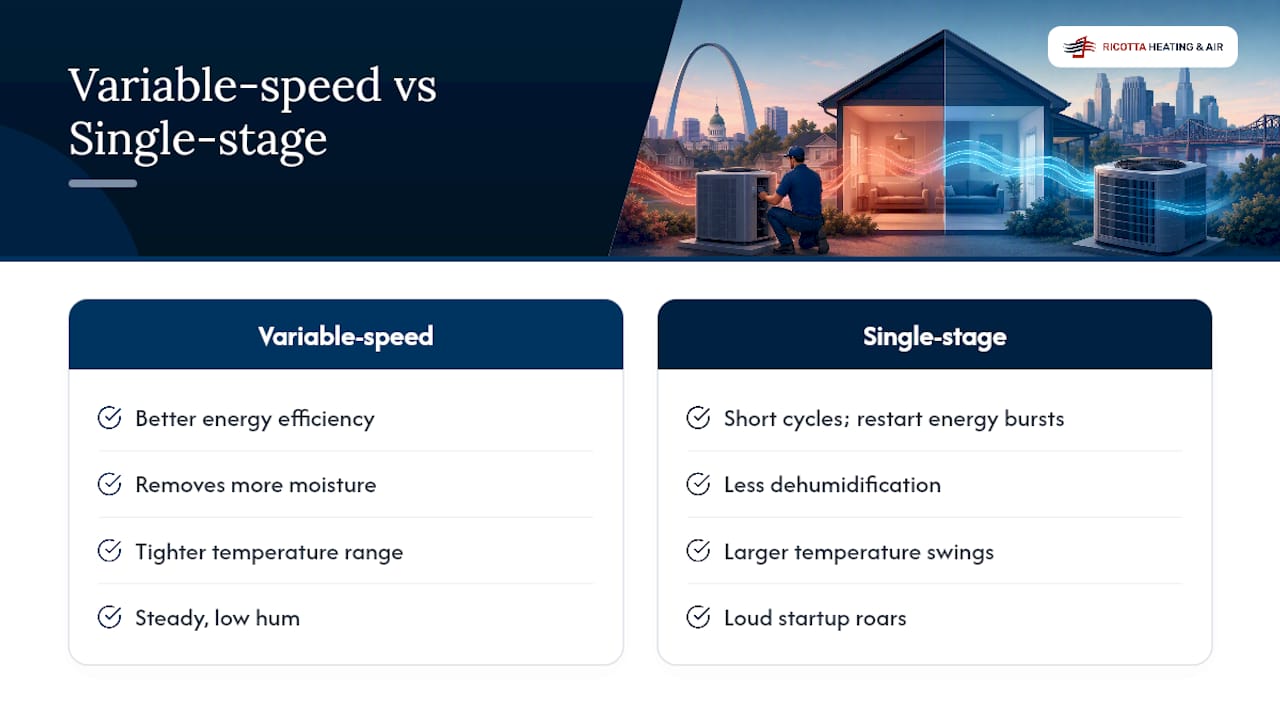
- Fewer hard starts, which means lower startup energy spikes
- Longer, gentler run cycles instead of short bursts
- Continuous airflow that keeps pulling moisture out of the air
- A steadier indoor temperature because the system never has to “catch up”
That’s the mechanical reason variable-speed systems outperform single-stage units on comfort and efficiency. Everything else in this guide flows from that one design difference.
What You Actually Get: Energy Savings, Drier Air, and Fewer Hot Spots
Here’s the part that matters most: a variable-speed system doesn’t just run more efficiently in theory, it changes how your house feels day to day.
Energy efficiency. A single-stage AC blasts full power, hits the thermostat setpoint, shuts off, and repeats. Each restart draws a burst of energy, and short cycling wastes a lot of it. A variable-speed unit instead runs longer at a lower, more efficient speed, and that steadier operation is a major reason these systems use less electricity over a cooling season, per Hvac. Actual savings on your utility bill depend on your home’s insulation, square footage, and the system’s SEER2 rating, so nobody can promise you an exact dollar figure without seeing your setup.
Statistic Callout: Manufacturer comparisons from Carrier show variable-speed systems can remove significantly more moisture from indoor air than single-stage systems in worst-case comparisons, because they run longer at lower speeds instead of shutting off the moment the temperature target is hit.
Humidity control. That extended runtime is the whole story here. A single-stage system cools the air fast, hits the setpoint, and stops, often before it has pulled much moisture out. A variable-speed unit keeps moving air across the coil for longer stretches, which means it’s dehumidifying almost continuously rather than in short, ineffective bursts. If you’ve ever had a St. Louis summer where the air conditioner “worked” but the house still felt sticky, this is usually why.
Comfort and noise. Because the system isn’t slamming on and off, your indoor temperature stays within a much tighter range instead of swinging a few degrees between cycles, which is one reason Trane highlights consistent comfort as the standout benefit of the technology. Rooms that used to run hot upstairs and cold downstairs tend to even out. You’ll also notice the sound difference: instead of a loud startup roar every twenty minutes, you get a steady, low hum most of the day. And because the blower is moving air more of the time, more of it is passing through your filter, which can support better indoor air quality over time.
Is a Variable Speed AC Worth the Extra Cost?
You’ll pay more for a variable-speed system than a standard single-stage unit, and there’s no getting around that upfront gap. Whether it pencils out depends on a handful of factors that vary from house to house: your local utility rates, how well your home holds temperature, the SEER2 rating you’re comparing against, and how many hours a day the system actually runs during a St. Louis or Jefferson County summer.
A few things determine your real return on investment:
- Home size and insulation quality (a leaky attic eats into any efficiency gain)
- Local electric rates, since savings scale with what you pay per kilowatt-hour
- SEER2 rating of the specific unit versus what you’re replacing
- Daily usage patterns, since a house that’s empty all day cools differently than one running full-time
Pro Tip: Ask your installer to run a side-by-side estimate comparing your current system’s SEER2 rating against the proposed variable-speed unit’s rating, using your actual utility rate. A real number beats a vague “you’ll save a lot” every time.
One tradeoff worth knowing: variable-speed systems have more complex electronics inside the compressor and blower controls. That generally means fewer hard-start mechanical failures, but it can also mean pricier repairs if a control board or inverter module fails, so ask about what a compressor replacement or major repair might run before you commit. And in especially humid stretches, even a variable-speed system may need help from a dedicated dehumidifier during low-load periods, according to FSEC/University of Central Florida research on humidity control.
What to Check Before You Buy: A Sizing and Installation Checklist
None of these benefits show up automatically. A variable-speed system installed wrong performs like a mediocre single-stage one, so run through this list with any installer quoting your job.
- Confirm AHRI-matched components. Ask for the AHRI match certificate showing the outdoor condenser and indoor coil are certified to work together at the rated SEER2. Mismatched components quietly erase the efficiency gains you’re paying for.
- Get your ductwork inspected. Undersized or leaky ducts choke airflow, and a variable-speed system can’t modulate properly if the duct system can’t move the air it needs.
- Check thermostat compatibility. Some variable-speed systems need communicating thermostats rather than a standard 24-volt setup; confirm this before installation day, not after.
- Watch for red flags. Vague savings promises, no AHRI documentation, and no mention of a duct inspection are all signs to get a second opinion.
What We See in St. Louis and Jefferson County Homes
After decades of installs across St. Louis County and Jefferson County, the most common problem we run into isn’t the equipment. It’s mismatched sizing or old, leaky ductwork paired with a brand-new variable-speed unit that never gets the chance to perform the way it’s designed to.
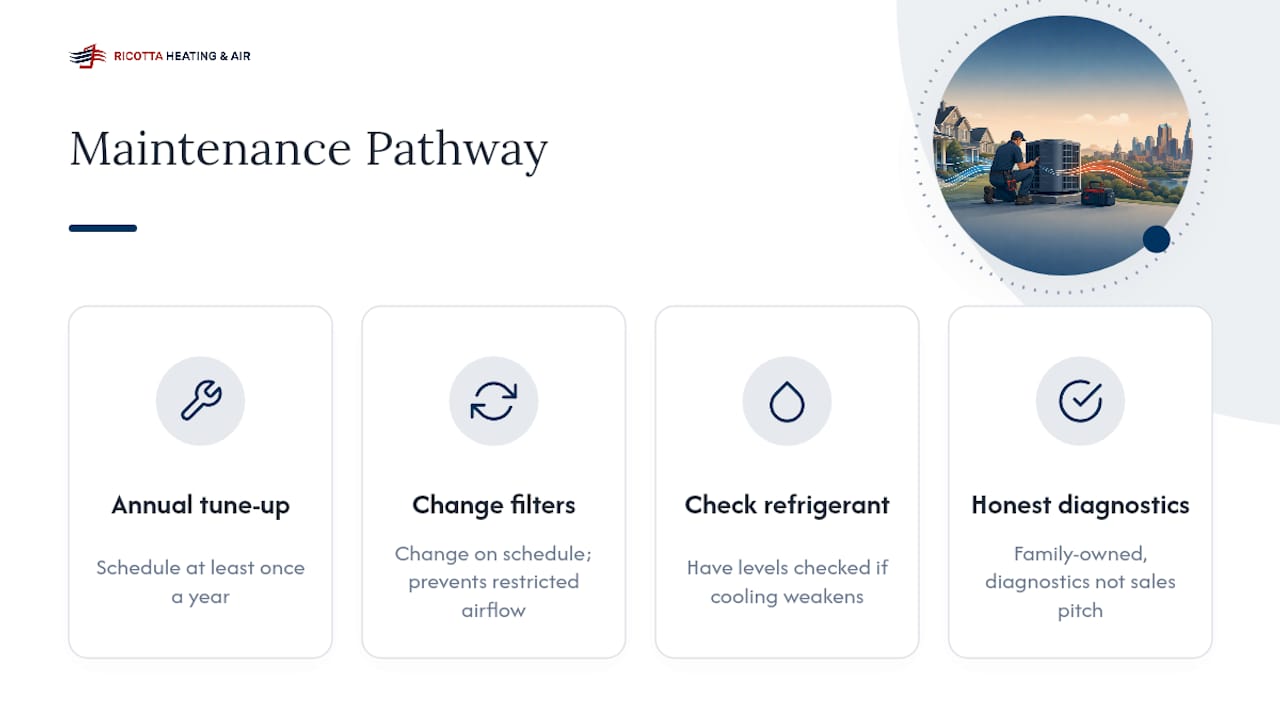
A few habits protect your investment: schedule a tune-up at least once a year, change filters on schedule since restricted airflow strains the modulating blower harder than a standard one, and have refrigerant levels checked if you notice weaker cooling. The company is family-owned and emphasizes building its reputation on providing homeowners honest diagnostics instead of a sales pitch dressed up as advice.
When I Actually Recommend a Variable Speed System
I steer homeowners toward variable-speed when they’re staying in the house long-term, dealing with humidity complaints, living in an open floor plan, or sharing a bedroom with someone who can’t sleep through a noisy AC cycling on. If the budget is tight, a two-stage system is a reasonable middle ground, and the honest truth is that a mediocre installer will blunt either option’s benefits. Installation quality matters more than the brand name on the unit.
— Alan Ricotta
Ready to See What a Matched System Would Cost You
If you’ve read this far, you already know the real question isn’t whether variable-speed technology works. It’s whether your ductwork, sizing, and installer can actually deliver what the equipment promises. This company positions itself as a local alternative to a sales-driven estimate by offering honest diagnostics first, plain advice on whether a home is a good fit for variable-speed, and avoiding upselling.

Start with an AC installation and replacement consultation, where we’ll check your existing ductwork, confirm AHRI-matched components, and give you a straight estimate of what savings actually look like for your home. If you’re weighing a heat pump instead, our heat pump installation team can walk through that option too. Once your system is in, a maintenance plan keeps it running at the efficiency you paid for. Serving homeowners across St. Louis County and Jefferson County, MO, we’re ready when you are.
Where This Information Comes From
For deeper technical detail, Trane’s variable-speed explainer covers operating ranges, Carrier’s technology page breaks down moisture removal, HVAC.com covers cost and ROI factors, and the FSEC/University of Central Florida report details humidity control limits. Always confirm SEER2 ratings and AHRI match paperwork against manufacturer specs before signing a quote.
Sources
- Variable-Speed HVAC Systems Explained | Trane
- Four benefits of variable speed technology | Carrier
- Hvac
- FSEC technical publication on humidity control | FSEC/University of Central Florida
FAQ
Is a variable-speed AC worth it?
For most homeowners staying in their house long enough to recoup the upfront cost, yes: you get measurable energy savings, better humidity control, and steadier comfort. The payoff depends on your home’s insulation, local electric rates, and whether the installer sizes and matches the equipment correctly.
Is variable speed better than two-stage?
Variable speed offers finer control since it modulates continuously rather than switching between two fixed capacities, which generally means better humidity removal and steadier temperatures. Two-stage systems cost less upfront and still outperform single-stage units, making them a reasonable option on a tighter budget.
Does a variable-speed AC run all the time?
It runs far more often than a single-stage system, but usually at a lower, quieter speed rather than constant full power. That extended low-speed operation is exactly what drives the energy savings and moisture removal these systems are known for.
When should I not choose a variable-speed AC?
Skip it if your ductwork is undersized or leaky and you’re not planning to fix that first, since poor ducts blunt most of the benefit. It’s also a harder sell in a home you plan to sell soon, where the higher upfront cost may not have time to pay back through lower bills.
What does Ricotta Heating & Air charge for a variable-speed installation?
Pricing depends on your home’s size, existing ductwork, and equipment selected, so current pricing is available directly through Ricotta Heating & Air’s cooling services page. Every quote starts with an honest diagnostic, not a generic estimate.