
HVAC Maintenance Schedule for Homeowners: Simple Plan
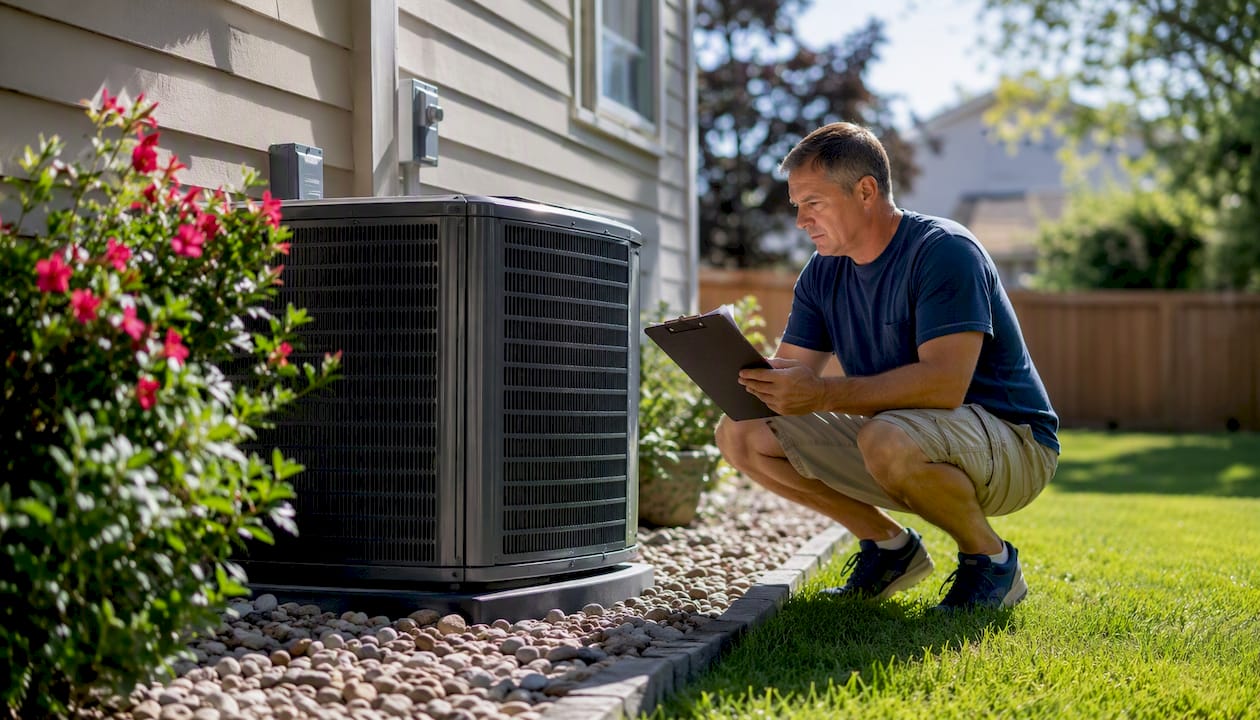
For most U.S. homes, a bi-annual professional tune-up — once in spring and once in fall — plus filter checks every few months are the simplest, most reliable way to keep your HVAC system running efficiently all year. ENERGY STAR backs this schedule as the residential baseline, and Ricottaheatingandair has followed it for homeowners across St. Louis and Jefferson County for 50 years.
Here is the short version you can act on right now:
- The verdict: Two professional visits per year (spring for cooling, fall for heating) covers the vast majority of what your system needs.
- Minimum DIY: Check your air filter every month; replace it every 30–90 days depending on pets, allergies, and how hard the system runs.
- When to call a pro: Any time you smell gas, notice short-cycling, hear grinding or banging, or see water pooling near the air handler.
Pro Tip: Book your spring tune-up in March or early April, before the first hot weekend hits. Technicians fill up fast once temperatures climb, and a shoulder-season appointment is easier to get and often faster to complete.
Table of Contents
- What does a good HVAC maintenance schedule look like?
- Your complete HVAC maintenance checklist by frequency
- What cooling-specific maintenance should you do before summer?
- What heating-specific checks protect your family each fall?
- What can you do yourself, and what should you leave to a pro?
- When should you schedule service, and when do you need it more often?
- What does a Ricottaheatingandair maintenance plan look like in practice?
- Key Takeaways
- Why the “set it and forget it” approach to HVAC always costs more
- Ricottaheatingandair maintenance plans for Jefferson County homeowners
- Useful sources and further reading
What does a good HVAC maintenance schedule look like?
A reliable schedule does not have to be complicated. The table below maps every common task to the right cadence so you can hand it to a scheduler or check tasks off yourself.
| Task | Cadence | Who Does It |
|---|---|---|
| Inspect air filter | Monthly | Homeowner |
| Replace air filter | Every 30–90 days | Homeowner |
| Clean supply/return vents | Monthly | Homeowner |
| Check thermostat operation | Monthly | Homeowner |
| Clear debris around outdoor unit | Quarterly / after storms | Homeowner |
| Check condensate drain for clogs | Quarterly | Homeowner (call pro if clogged) |
| Spring AC tune-up | March–May | Professional |
| Fall heating tune-up | September–November | Professional |
| Duct inspection / sealing | Every 2–3 years or when performance drops | Professional |
| Full system safety inspection | Annually (part of bi-annual visits) | Professional |
Ideal booking windows: Spring tune-ups land best between March and May before peak cooling demand. Fall tune-ups fit best between September and November before the first hard freeze. ENERGY STAR guidance specifically points to shoulder seasons as the window when technicians are most available and emergency-call volume is lowest.
Pro Tip: Call to book your fall furnace check in late August or early September. Once October arrives, slots fill quickly across the St. Louis metro.
Your complete HVAC maintenance checklist by frequency
Monthly and every 1–3 months
Your single most impactful monthly habit is checking the air filter. A clogged filter is like trying to breathe through a pillow: your system strains, airflow drops, and energy costs climb. ENERGY STAR recommends inspecting filters monthly and replacing them every 30–90 days, with monthly replacement for homes with pets, allergy sufferers, or heavy system use.
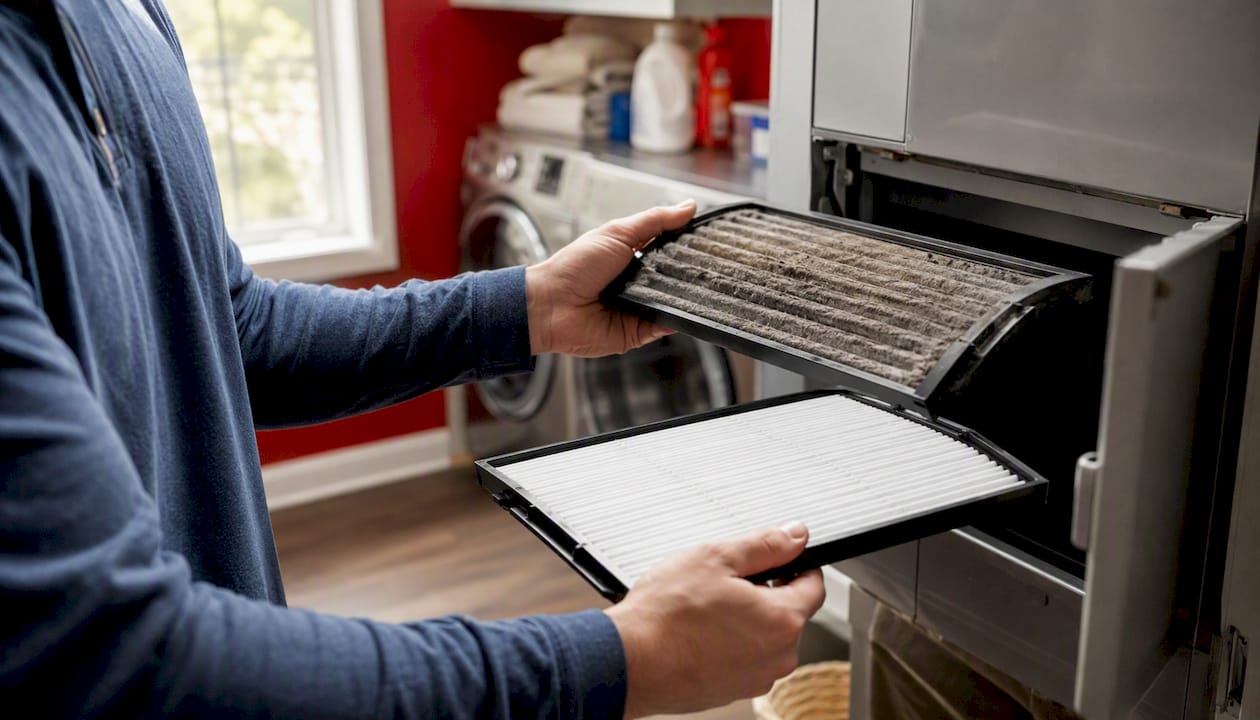
While you are at it, wipe down supply and return vents to keep dust from recirculating, and do a quick thermostat check to confirm it is reading and responding correctly. A thermostat that drifts or short-cycles can quietly waste energy for months before you notice.
Seasonal homeowner tasks
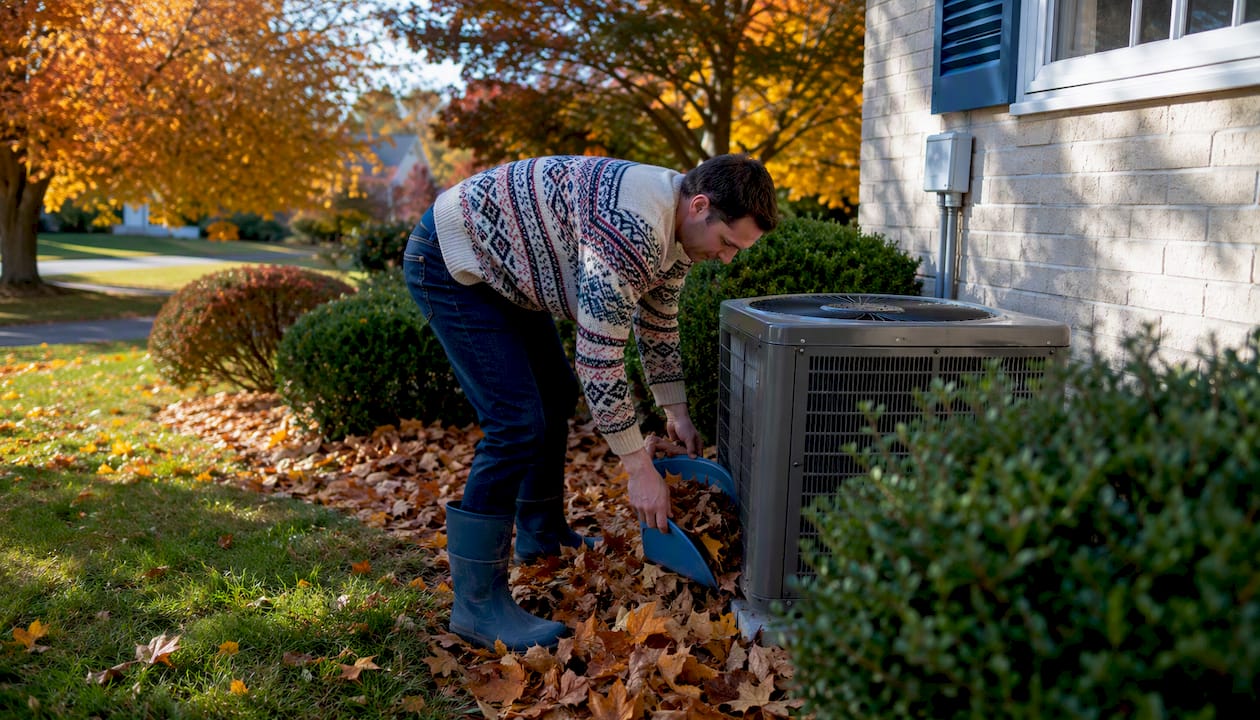
Spring (March–May): Clear any leaves, mulch, or debris from around the outdoor condenser unit, leaving at least two feet of clearance on all sides. Check the condensate drain line for algae buildup; a slow or blocked drain can cause water damage near your air handler. Flush it with a diluted bleach solution if it drains slowly. If it is fully blocked, call a technician rather than forcing it.
Fall (September–November): Replace the filter before heating season starts. Check that all vents are open and unobstructed. If you have a gas furnace, visually inspect the area around the unit for any signs of soot or rust, and make sure the flue pipe looks intact. Do not attempt to inspect the heat exchanger yourself.
Winter: Keep the area around your outdoor heat pump unit clear of ice and snow. Heat pumps run year-round, so blocked airflow in winter affects heating performance directly.
Bi-annual and annual professional tasks
| Task | Season | DIY or Pro |
|---|---|---|
| Refrigerant level check | Spring | Pro only |
| Condenser coil cleaning | Spring | Pro |
| Condensate drain flush/inspection | Spring | Pro (deep clean) |
| Electrical connection tightening | Both visits | Pro |
| Lubrication of motors and moving parts | Both visits | Pro |
| Heat exchanger inspection | Fall | Pro only |
| Burner cleaning and ignition test | Fall | Pro |
| Safety control and CO test | Fall | Pro |
| Duct leakage check | As needed | Pro |
Tightening electrical connections and lubricating moving parts are two tasks homeowners often assume are optional. They are not. Loose terminals and dry bearings are among the most common causes of mid-season component failure, and catching them during a routine visit prevents far more expensive repairs later.
IMPORTANT: Never attempt to inspect a heat exchanger, handle refrigerant, or work on gas connections yourself. If you smell gas or suspect a carbon monoxide leak, leave the house immediately and call your gas utility and 911 before calling an HVAC technician.
What cooling-specific maintenance should you do before summer?
Spring is when your air conditioner gets its pre-season checkup, and the tasks are specific to the components that carry the heaviest load during cooling season.
- Clear the condenser unit. Remove any debris, trim back vegetation, and confirm at least two feet of clearance around the outdoor cabinet.
- Clean the condenser coil. Dirt on the coil acts as insulation, forcing the compressor to work harder. A technician uses a coil cleaner and low-pressure rinse to restore heat transfer without bending the fins.
- Check refrigerant charge. Low refrigerant is not a maintenance item you top off like oil; it signals a leak. A technician checks pressure against manufacturer specs and traces any loss. Running a system low on refrigerant stresses the compressor and can cause permanent damage.
- Inspect fan blades and motor. Bent blades or a failing motor bearing will show up as vibration or noise before they fail completely.
- Test the condensate drain. Condensate drain blockages are a leading cause of water damage near air handlers; a full flush during the spring visit prevents summertime surprises.
Dirty condenser coils and low refrigerant are the two most common reasons a system that “worked fine last year” struggles to cool the house on the first hot day of summer. Both are invisible until the system is under load — which is exactly why a spring tune-up before the heat arrives matters more than one scheduled in June.
If you have a heat pump rather than a traditional split system, cooling-season maintenance also includes checking the reversing valve (the component that switches the system between heating and cooling modes) and confirming the defrost cycle operates correctly. Heat pumps run year-round, so they accumulate wear faster than systems that sit idle for half the year, and bi-annual service is the standard recommendation for them.
Pro Tip: If your outdoor unit sits under a large tree, schedule a coil cleaning every spring without exception. Cottonwood and maple seeds clog condenser fins faster than almost anything else in the St. Louis area.
What heating-specific checks protect your family each fall?
Fall maintenance shifts focus from cooling efficiency to combustion safety, and some of these checks are genuinely life-safety items.
- Heat exchanger inspection: A cracked heat exchanger can allow combustion gases, including carbon monoxide, to enter your living space. This is a professional-only task requiring a camera or combustion analyzer; no homeowner visual check substitutes for it.
- Burner cleaning: Dirty burners produce uneven flames, incomplete combustion, and higher carbon monoxide output. A technician cleans and adjusts them during the fall visit.
- Ignition system test: Both hot-surface igniters and spark igniters fail with age. Testing them in September beats discovering the failure on the first cold night in November.
- Safety control verification: Limit switches, pressure switches, and rollout sensors are your furnace’s built-in fail-safes. A technician confirms each one trips at the correct threshold.
- Flue and venting inspection: Blocked or damaged flue pipes are a carbon monoxide risk. A technician checks for obstructions, corrosion, and proper draft.
- Thermostat calibration: A thermostat that reads two or three degrees off causes the system to overshoot or undershoot, which raises energy costs and reduces comfort. Calibration takes minutes during a fall visit.
IMPORTANT: Carbon monoxide is odorless and colorless. If your CO detector sounds, leave immediately and call 911. Do not re-enter until emergency services clear the home. An emergency furnace repair call is always the right move when you suspect combustion issues.
For boiler systems, fall checks also include inspecting the expansion tank, pressure relief valve, and zone valves. The same principle applies: combustion safety first, efficiency second.
What can you do yourself, and what should you leave to a pro?
The line between DIY and professional HVAC work is clearer than most homeowners realize. If a task involves electricity beyond a thermostat, refrigerant, gas, or combustion components, it belongs to a licensed technician.
DIY tasks (safe for homeowners):
- Filter inspection and replacement
- Cleaning supply and return vents
- Clearing debris around the outdoor unit
- Checking and replacing thermostat batteries
- Flushing a slow condensate drain with diluted bleach
- Keeping the area around the air handler clear
Professional tasks (do not attempt yourself):
- Refrigerant checks and recharging
- Electrical connection tightening and testing
- Heat exchanger inspection
- Combustion analysis and burner adjustment
- Coil cleaning with chemical agents
- Duct sealing and pressure testing
A professional tune-up is not just a filter swap and a visual check. A thorough visit covers coil cleaning, refrigerant pressure testing, electrical connection tightening, motor lubrication, safety control verification, and a written record of system measurements. That documentation matters when a warranty claim or a home sale comes up.
How long does a tune-up take? A standard single-system visit typically runs one to two hours. A heat pump or dual-fuel system may take longer because of the additional components a technician needs to check. If a technician is in and out in 20 minutes, ask what was actually inspected.
What does it cost? Tune-up pricing varies by region, system type, and what is included. In the St. Louis area, a single-system visit generally falls in a range that reflects the technician’s time, any consumables replaced, and whether diagnostics are bundled. A maintenance plan or service agreement often brings the per-visit cost down and includes priority scheduling.
Five questions to ask any HVAC technician before they start:
- What specific tasks are included in this visit?
- Will you provide written documentation of measurements and findings?
- Does this service count toward my manufacturer warranty requirements?
- What is your response time for emergency calls between scheduled visits?
- Are replacement parts (like capacitors or contactors) included, or billed separately?
Pro Tip: Ask for a written summary of every visit, including refrigerant pressures, electrical readings, and any items flagged for future attention. That paper trail protects your warranty and gives the next technician a baseline to work from.
When should you schedule service, and when do you need it more often?
The bi-annual schedule is a baseline, not a ceiling. Several situations call for more frequent visits or an earlier-than-planned appointment.
Red flags that justify an extra visit:
- Short-cycling (the system turns on and off every few minutes)
- Rising energy bills without a change in usage or weather
- Unusual noises: grinding, banging, squealing, or rattling
- Visible water pooling near the air handler or furnace
- Repeated filter clogging within weeks of replacement
- Rooms that are consistently too hot or too cold despite normal thermostat settings
- Homes with multiple pets, allergy sufferers, or occupants with respiratory conditions
- Systems 10 years old or older, which may need more frequent checks as components age
Leaky ductwork is another trigger most homeowners miss. Ducts in poorly sealed systems can lose a significant share of conditioned air before it reaches the living space, and that loss shows up as comfort complaints and high bills rather than an obvious failure.
Booking checklist — have this ready when you call:
- System make, model, and approximate installation year
- Date of last professional service
- Any symptoms or changes you have noticed (noises, smells, performance)
- Whether you have a standard split system, heat pump, or dual-fuel setup
Pro Tip: A maintenance plan locks in your preferred spring and fall slots before the seasonal rush. It also typically puts you at the front of the line for emergency calls, which matters a great deal when your furnace stops working at 10 PM in January.
What does a Ricottaheatingandair maintenance plan look like in practice?
For a typical Jefferson County single-family home, a Ricottaheatingandair maintenance visit covers the full seasonal checklist: spring visits focus on the cooling system (coil cleaning, refrigerant check, condensate drain, electrical connections, and a full system test), while fall visits shift to combustion safety (heat exchanger inspection, burner cleaning, ignition test, safety control verification, and flue inspection).
What sets a good local maintenance plan apart is not just the task list — it is the documentation, the honest assessment of what needs attention now versus what can wait, and the relationship with a technician who knows your specific system. That is the difference between a maintenance visit and a sales call disguised as one.
Ricottaheatingandair is family-owned with 50 years of local expertise and 150+ five-star Google reviews from homeowners across St. Louis and Jefferson County. Their service agreements include priority scheduling, which means you get a preferred slot in the shoulder seasons rather than competing with emergency calls in July or January. They service all major brands and offer indoor air quality services alongside routine maintenance, so filter upgrades, whole-home filtration, and humidity control are available in the same visit.
When booking, ask for:
- A written pre-visit checklist of what will be inspected
- Documented measurements from the visit (refrigerant pressures, electrical readings)
- A clear explanation of any items flagged and their urgency
- Confirmation that the visit satisfies your manufacturer’s warranty documentation requirement
Pro Tip: Keep a simple folder, physical or digital, with every service record, warranty card, and equipment manual. When you sell your home, documented maintenance history is a genuine selling point. When a warranty claim comes up, it is the difference between coverage and a denied claim.
Key Takeaways
Bi-annual professional HVAC service in spring and fall, combined with monthly filter checks, is the most effective and practical maintenance schedule for U.S. homeowners.
| Point | Details |
|---|---|
| Bi-annual pro visits | Schedule one spring tune-up (March–May) and one fall tune-up (September–November) every year. |
| Filter checks every 30–90 days | Inspect monthly; replace more often in homes with pets, allergies, or heavy system use. |
| Shoulder-season booking | Book in March or September to avoid peak-demand wait times and secure preferred slots. |
| Keep service records | Documented visits protect manufacturer warranties and support home resale value. |
| Ricottaheatingandair service agreements | Jefferson County homeowners can book bi-annual maintenance plans with priority scheduling and honest diagnostics. |
Why the “set it and forget it” approach to HVAC always costs more
Most homeowners think of HVAC maintenance the way they think of dental cleanings: they know they should do it, they put it off, and then they pay for it later. The difference is that a missed dental cleaning rarely costs $4,000. A missed fall furnace inspection that lets a cracked heat exchanger go undetected can.
The conventional wisdom says “service it once a year.” That is better than nothing, but it misses the point. Spring and fall visits exist because the system faces completely different stresses in each season. A spring visit that finds a weak capacitor prevents a no-cool call in August. A fall visit that catches a failing igniter prevents a no-heat call in January. Those are not the same problem, and one annual visit cannot catch both at the right time.
The other thing most articles understate: the filter. Homeowners who replace filters on schedule consistently report fewer service calls, lower energy bills, and longer equipment life. It costs a few dollars and five minutes. Skipping it for six months is like driving with the parking brake on and wondering why the brakes wear out.
Pair your filter checks with something you already do on a schedule. Daylight saving time changes work well: when you change the clocks, change the filter and book your next tune-up. That single habit, done consistently, does more for your system’s reliability than almost any other single action.
Ricottaheatingandair maintenance plans for Jefferson County homeowners
Skipping scheduled maintenance is the fastest way to turn a $150 tune-up into a $1,500 repair. Ricottaheatingandair offers a straightforward alternative: a local maintenance plan built around the bi-annual schedule this guide recommends, with no upsell pressure and no surprises on the invoice.

Family-owned with 50 years of experience serving St. Louis and Jefferson County, Ricottaheatingandair brings honest diagnostics and transparent recommendations to every visit. Their maintenance service agreements cover spring and fall tune-ups, priority scheduling, and discounted repairs when something does need attention. With 150+ five-star Google reviews, they have earned the trust of homeowners who want reliable service without the pressure of being sold something they do not need.
When you call to book, have your system’s make, model, and last service date ready. Ask about what is documented after each visit and confirm the service satisfies your manufacturer’s warranty requirements. To get started, visit the service agreements page or call to schedule your next spring or fall tune-up.
Useful sources and further reading
The guidance in this article draws on the following authoritative sources. Each one is worth bookmarking for deeper detail on specific topics.
- ENERGY STAR Maintenance Checklist — The U.S. EPA’s residential HVAC maintenance baseline, covering filter replacement frequency, seasonal tune-up timing, and condensate drain care. The most authoritative starting point for any homeowner schedule.