
6 AC Checks for Freon Leak Symptoms: No Upsell Tips for St. Louis
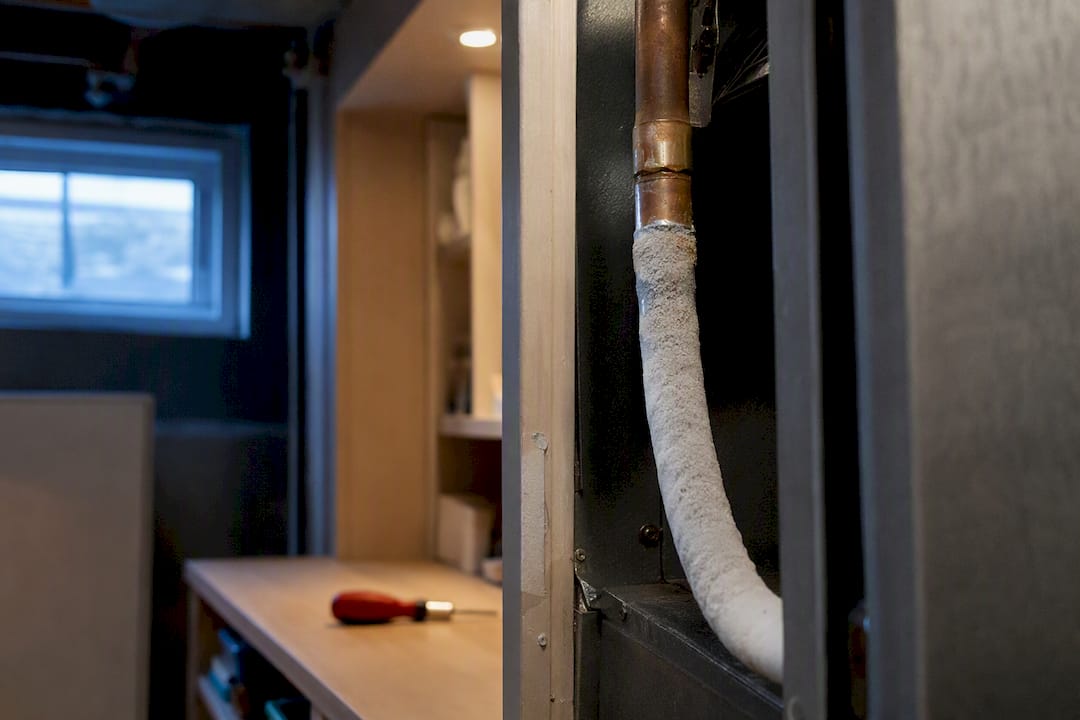
If your AC is blowing warm or lukewarm air, has ice building up on the coils or lines, or you’re hearing hissing near the indoor unit, you’re likely dealing with a refrigerant leak. Open a window, turn the system off if you smell something odd or feel unwell, and call a licensed HVAC technician before running it another day.
TL;DR:
- A refrigerant leak often causes ice buildup on coils and lines, hissing sounds, higher energy bills, and increased indoor humidity.
- Simple checks like inspecting filters, measuring vent temperature, and looking for oily spots can help determine if a leak or other issues are involved.
- Running the AC with a known leak can spread refrigerant vapor and overwork the compressor, risking more damage and safety hazards.
- Technicians use tools like electronic detectors, UV dye, pressure testing, and system performance measurements to locate and fix leaks efficiently.
- Small refrigerant leaks in older R-22 systems may justify repair, but ongoing or large leaks often make full system replacement more cost-effective.
Table of Contents
- Freon Leak Symptoms AC Owners in St. Louis Should Know
- Why a Small Leak Causes This Many Problems
- Safe Checks You Can Run Before Calling a Technician
- Is a Freon Leak Dangerous? What to Do Right Away
- What a Technician Actually Does to Find and Fix a Leak
- Repair or Replace? What to Ask Before You Decide
- Ricotta Heating & Air’s Perspective on Suspected Leaks
- The Checklist Matters More Than the Panic
- Ready to Get Your AC Checked?
- Where This Information Comes From
- Sources
- FAQ
Freon Leak Symptoms AC Owners in St. Louis Should Know
Refrigerant leaks rarely announce themselves with a bang. They show up as a handful of small annoyances that, together, paint a pretty clear picture. Here’s what to watch for and how to tell it apart from a simpler fix.
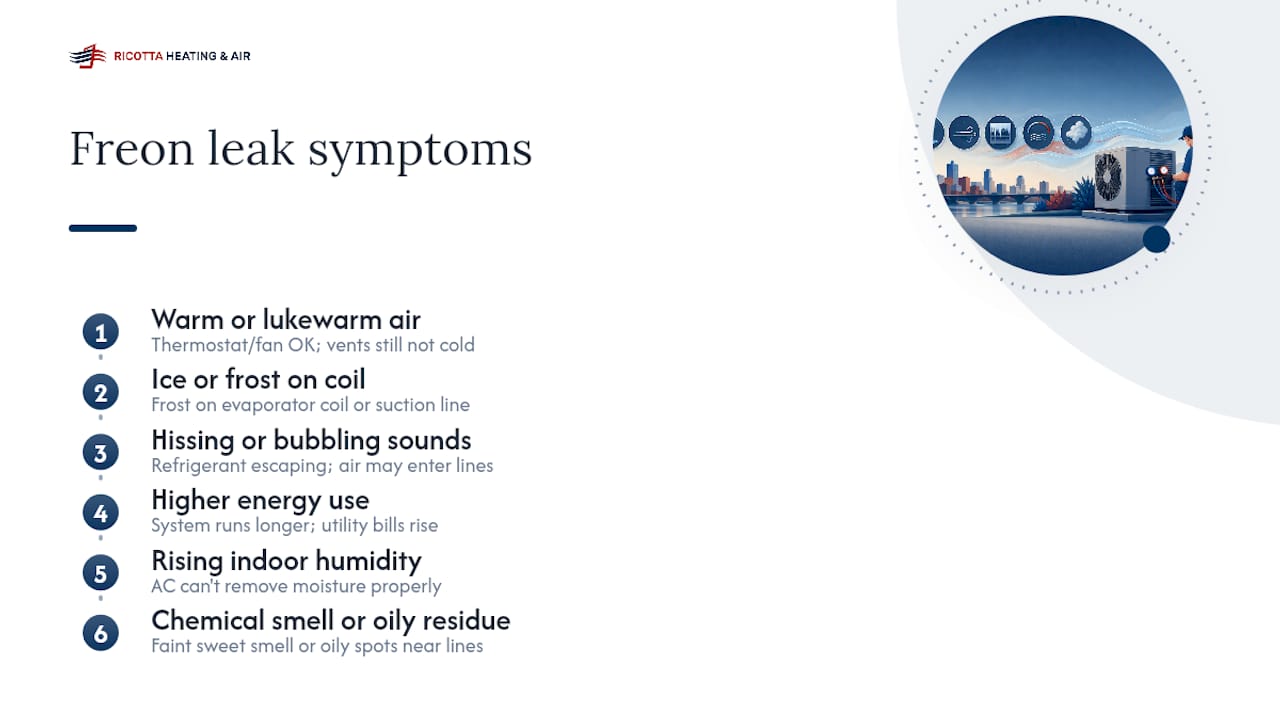
Warm or lukewarm air from the vents. Before you assume the worst, rule out the easy stuff. Check that your thermostat is actually set to “Cool” and the fan is on “Auto,” not just running the blower without the compressor kicking on. If those check out and the air still isn’t cold, low refrigerant is a strong suspect.
Ice or frost on the evaporator coil or the suction line. This is one of the most reliable signs of low refrigerant, according to Trane’s own troubleshooting guidance. When pressure drops inside the coil, the remaining refrigerant gets so cold it freezes any moisture in the air around it, wrapping your lines in frost even in July.
Hissing, bubbling, or gurgling near the indoor unit or refrigerant lines. A hiss usually means refrigerant is actively escaping through a small crack or a loose fitting. Bubbling or gurgling can point to a leak combined with air getting into the line set.
Higher energy bills and longer cooling cycles. Pull your last two or three utility bills and compare them to the same months last year. A system fighting low refrigerant runs longer to hit the same temperature, and that shows up on your statement before it shows up anywhere else.
Rising indoor humidity. If your house feels clammy even with the AC running, the system may not have enough refrigerant to pull moisture out of the air properly.
A faint, sweet chemical smell or oily residue near the lines. Some refrigerants, especially older R-22, carry a faint smell similar to nail polish remover when they escape. Oily spots near a fitting or joint are also a giveaway, since refrigerant leaks often carry lubricating oil out with them.
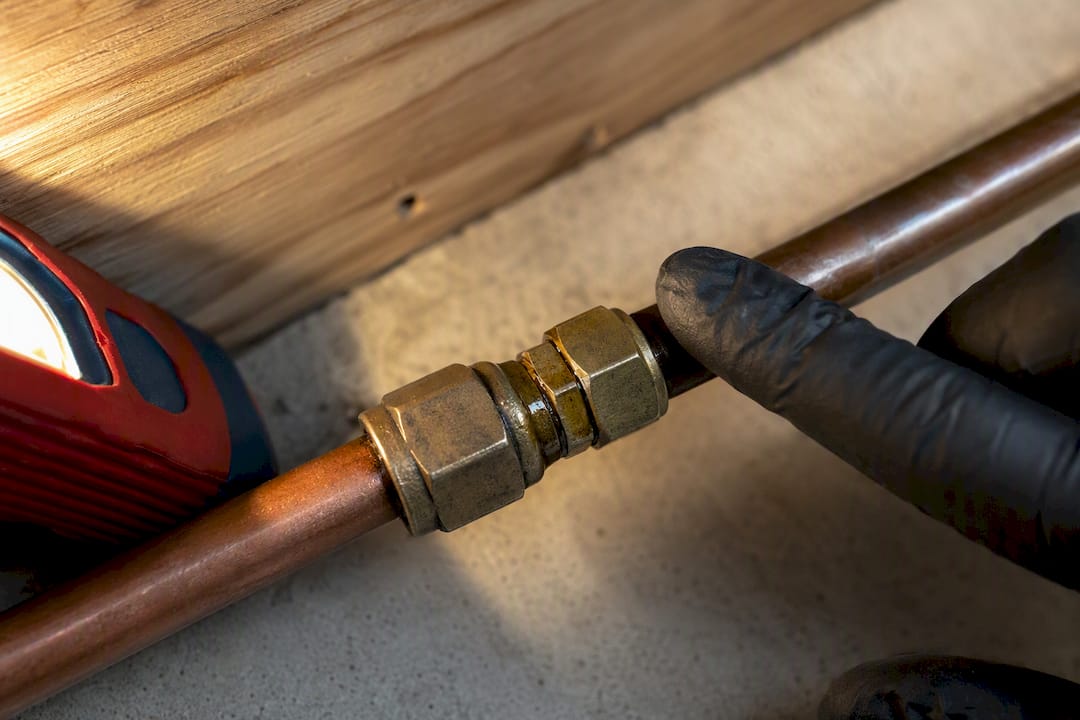
Manufacturers like Trane and Bryant both note that these symptoms frequently overlap with airflow or electrical issues, which is exactly why a professional diagnostic check matters before you assume the worst.
Why a Small Leak Causes This Many Problems
Refrigerant is the working fluid that carries heat out of your home. It absorbs heat from the indoor air at the evaporator coil, travels outside, and dumps that heat through the condenser. When a leak drains even a small amount of refrigerant, the whole cycle gets thrown off.
Lower refrigerant pressure means the coil runs colder than it should. That extra cold pulls moisture out of the air faster than the system can drain it, and the moisture freezes right onto the coil and lines. Meanwhile, the compressor has to work harder to push a shrinking supply of refrigerant through the system, which is why energy use climbs and, over time, why compressors on leaking systems tend to fail early. Most leaks also carry a small amount of oil with them, which is why you’ll often spot a greasy residue at the exact point where the line, fitting, or coil failed.
Safe Checks You Can Run Before Calling a Technician
You don’t need to touch refrigerant to gather useful information. In fact, you shouldn’t, since that requires EPA certification. But a few simple checks can save your technician time and help you describe the problem accurately.
- Replace the air filter. A clogged filter can mimic several low refrigerant symptoms, including a frozen coil, so rule this out first.
- Confirm the basics. Thermostat set to “Cool,” fan on “Auto,” and breakers not tripped.
- Check the vent temperature. Hold a thermometer near a supply vent for a few minutes and note the reading, along with how long the house took to cool.
- Look, don’t touch. Inspect any accessible copper lines and the area around the indoor unit for ice, frost, oily residue, or wet spots.
- Listen for hissing or bubbling near the indoor and outdoor units.
- Photograph everything you notice, and jot down the date and time symptoms started.
Pro Tip: A simple soapy water bubble test on accessible outdoor fittings can sometimes reveal a leak, since escaping refrigerant will form tiny bubbles at the exact spot. Never spray it near electrical connections, and never attempt to open any sealed line yourself.
Is a Freon Leak Dangerous? What to Do Right Away
A small leak inside a well ventilated home is rarely a medical emergency, but it’s not something to ignore either. Breathing refrigerant vapor can cause headache, dizziness, nausea, coughing, and throat or eye irritation. In rare cases involving larger leaks in enclosed spaces, exposure can cause more serious respiratory distress, according to Poison Control’s refrigerant safety guidance.
If anyone in your home starts feeling unwell, get them into fresh air immediately. If symptoms are severe or don’t improve quickly, call Poison Control or emergency services. Open windows to ventilate the space, and avoid open flames or anything that could ignite near the unit. Turn the system off rather than running it. Running a leaking AC doesn’t just waste energy. It can spread vapors further through your home and put extra strain on an already struggling compressor.
What a Technician Actually Does to Find and Fix a Leak
Finding a refrigerant leak is detective work, and it usually involves more than one tool. Technicians typically combine several methods depending on where they suspect the leak is hiding:
- Electronic leak detectors (“sniffers”) that sense refrigerant vapor in the air near suspect joints.
- UV dye and lamp inspection, where a fluorescent dye is added to the system and later revealed under UV light at the leak site.
- Nitrogen pressure testing, pressurizing the system with nitrogen to spot drops that reveal a leak’s location.
- Superheat and subcooling measurements, which tell a technician how the system is actually performing compared to spec, according to Bryant’s refrigerant leak repair guide.
Once the leak is found, the repair follows a set sequence: recover the remaining refrigerant, repair or braze the leak point, pressure test the repair with nitrogen to confirm it holds, pull a vacuum on the system to remove air and moisture, and recharge to the manufacturer’s exact spec. Most straightforward repairs take somewhere between two and six hours.
Under EPA Section 608, only certified technicians can legally handle refrigerant, and venting it into the atmosphere is prohibited. That also means simply “topping off” a leaking system without fixing the actual leak isn’t a legitimate repair. It’s a temporary patch that often violates EPA rules and just delays the real fix while wasting your money.
Repair or Replace? What to Ask Before You Decide
A single accessible leak on a relatively young system is usually worth repairing, especially if it’s your first refrigerant issue. Repeated leaks, a failed evaporator coil, or an aging R-22 system tell a different story. R-22 has been phased out for years, so refrigerant for those older units is expensive and getting harder to find, which often tips the math toward replacement.
Ballpark costs, based on HVACDatabase’s repair and replacement guide, run roughly $500 to $1,500 for a minor leak repair and recharge, with coil replacement and full system swaps costing considerably more depending on your home’s size and equipment. Before committing to any option, ask for a written estimate, find out whether the repair carries a warranty, and don’t hesitate to get a second opinion if the number feels high for the work described.
Ricotta Heating & Air’s Perspective on Suspected Leaks
We treat every suspected refrigerant leak the same way: find it safely, explain exactly what we found in plain language, and lay out repair versus replace options honestly, without pushing you toward the more expensive one. That approach comes from 50 years of working on HVAC systems across St. Louis County and Jefferson County homes, many of them with quirks unique to older local housing stock.
Before we arrive, take a few minutes to jot down when you first noticed the warm air, hissing, or ice, and snap a couple of photos if you can safely reach the unit. That short head start usually means a faster, more accurate diagnosis on the first visit, and fewer surprises once we’re standing in front of your outdoor unit.
The Checklist Matters More Than the Panic
Most homeowners jump straight from “warm air” to worst case scenario, and that’s where the conventional advice usually falls short. It treats every symptom as equally urgent instead of teaching you to separate a dirty filter from an actual leak. The research here is pretty consistent: warm air alone means almost nothing, but warm air paired with ice on the coil, hissing, and a climbing energy bill is a real pattern worth acting on.
What gets underrated is the value of a five minute filter check before anyone calls for service. A shocking number of “refrigerant leak” complaints turn out to be airflow problems wearing a disguise. Prioritize the cheap, safe checks first: filter, thermostat settings, breakers, and a simple temperature reading at the vent. If those don’t explain what you’re seeing, stop guessing and get a technician out before a small leak turns into compressor damage you could have avoided.
— Alan Ricotta
Ready to Get Your AC Checked?
Some HVAC contractors offer homeowners honest answers about whether they need a minor repair or a full system replacement. No upsell pitch, no pressure toward the priciest option, just a clear diagnosis and a transparent estimate you can actually plan around.

Before your visit, pull together the notes and photos from your own checks, filter condition, vent temperature readings, and anything you heard or smelled near the unit to help plan your heat pump service. That information helps our technicians move straight to a proper electronic leak detection and repair visit instead of starting from scratch. If your system is aging or on its second or third leak, ask us about a maintenance plan that catches these issues before they turn into a summer without cooling. Call today to schedule a diagnostic visit.
Where This Information Comes From
The guidance in this article draws on EPA Section 608 regulations for refrigerant handling, manufacturer troubleshooting resources from Trane and Bryant, safety guidance from Poison Control, and cost data from HVACDatabase.
This article is general information, not a substitute for advice from a qualified doctor. Consult a qualified healthcare professional about your own circumstances before acting on anything here.
Sources
- Trane — AC refrigerant leak troubleshooting
- Poison Control — refrigerant fluid safety and exposure guidance
- Bryant — how to fix a refrigerant leak
FAQ
How Can I Tell if My AC Is Leaking Freon?
Look for warm air from the vents, ice on the evaporator coil or copper lines, hissing near the unit, rising energy bills, and higher indoor humidity. These are the primary indicators recognized by manufacturers like Trane, though a technician still needs to confirm the leak with proper testing.
Can You Stay in a House With a Freon Leak?
You can usually stay in the house if the leak is small and the space is ventilated, but keep windows open and watch for symptoms like headache, dizziness, or nausea. If anyone feels unwell, move to fresh air and contact Poison Control or emergency services if symptoms are severe.
Is It Safe to Run AC With a Freon Leak?
Running the system with a known leak isn’t a good idea. It spreads refrigerant vapor further through the house, adds strain to the compressor, and won’t actually cool your home effectively. Turn the system off and schedule a repair instead of continuing to run it.
How Long Will Freon Last With a Leak?
There’s no fixed timeline. A pinhole leak might take months to fully drain a system, while a larger crack or failed fitting can empty it within days. Either way, refrigerant doesn’t get used up during normal operation, so any drop in level means there’s an active leak that needs a proper repair, not just a recharge.