
AC Refrigerant Recharge Cost: 2026 Homeowner Guide
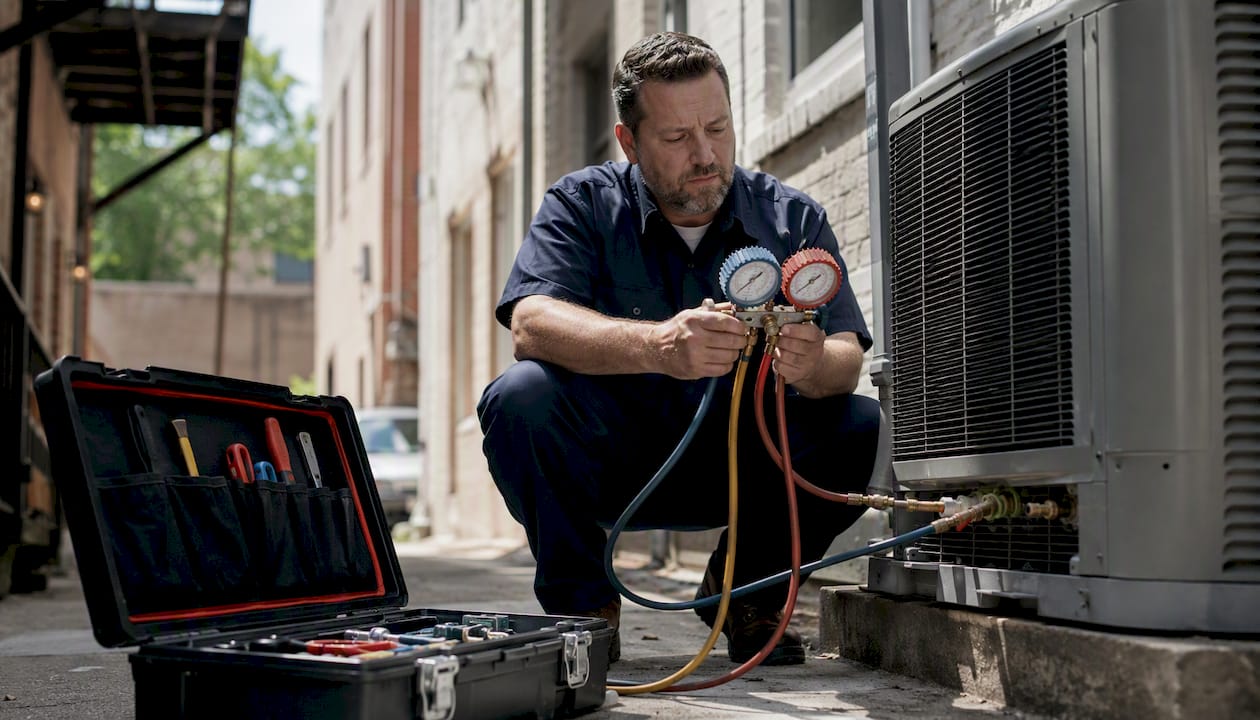
A professional AC refrigerant recharge typically costs $200 to $600 for modern R-410A systems. If your home runs on older R-22 refrigerant, expect costs to be significantly higher due to phase-out and tight supply. Trane’s pricing guidance and industry data from HVACPricingGuide both put the R-410A range at $200–$600 total, with per-pound pricing driving most of the variation.
Here is the single most important thing to know before you authorize any work: a properly sealed AC system does not lose refrigerant. If yours is low, there is a leak somewhere. Recharging without finding and fixing that leak is like refilling a punctured tire every summer. Trane and the EPA both emphasize that leak diagnosis must come first.
- Typical R-410A recharge totals vary according to need and market conditions
- Typical R-22 recharge totals are significantly higher due to supply constraints
- Per-pound pricing for R-410A and R-22 varies with market and supplier
- Most residential systems require multiple pounds of refrigerant per ton of cooling capacity
- Always insist on leak detection before paying for refrigerant
Table of Contents
- 1. What actually drives your AC refrigerant recharge cost?
- 2. How do you know if your AC actually needs refrigerant?
- 3. How refrigerant type changes what you pay
- 4. What a licensed technician actually does during a recharge
- 5. Why DIY refrigerant recharge is not a legal option for homeowners
- 6. When a recharge makes sense and when replacement is smarter
- 7. Sample cost breakdowns for small, medium, and large systems
- 8. Questions to ask your technician and red flags to watch for
- Key Takeaways
- The honest truth about refrigerant recharges
- Ricottaheatingandair: straightforward diagnostics and fair pricing in St. Louis
- Useful sources for homeowners
1. What actually drives your AC refrigerant recharge cost?
The number on your invoice is rarely just refrigerant. Most homeowners are surprised to find four or five separate line items, each with its own price range. Understanding them helps you spot a fair quote versus one that needs a second look.
Refrigerant material cost varies by type and market conditions. A system needing refrigerant will have material costs based on per-pound pricing and amount required.
Service call and diagnostic fee covers the technician’s time to show up, inspect the system, and connect gauges. Expect $75–$150 for a basic inspection, per HVACPricingGuide.
Leak detection is a separate charge and a necessary one. Methods range from a simple bubble test to electronic sniffers and nitrogen pressure testing. Leak detection costs depend on method and complexity, with nitrogen pressure tests generally more expensive than basic electronic inspections.
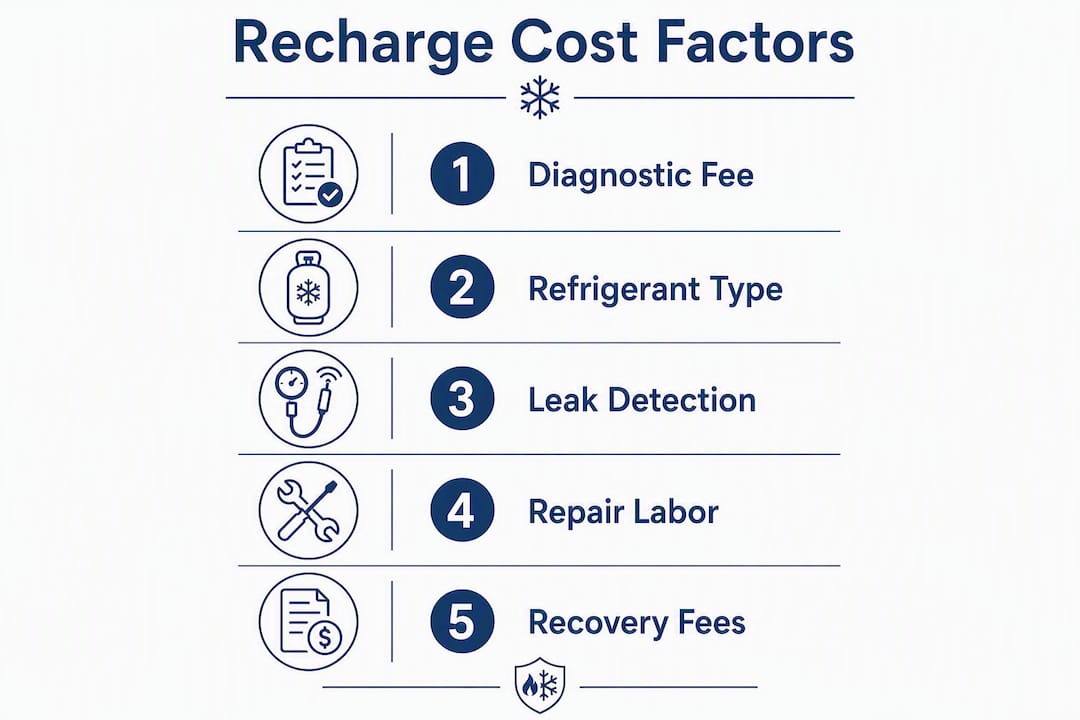
Repair labor and parts vary the most. If the leak is at an accessible fitting, repair might add $100–$200. A cracked evaporator coil or buried line is a different story entirely (more on that in the repair vs. replace section below).
Recovery and disposal fees apply when a technician must remove existing refrigerant before recharging, as required by EPA regulations.
Emergency and after-hours premiums may increase the base rate depending on time and urgency. If your AC fails on a 95-degree Saturday in St. Louis, plan for it.
| Line Item | Low | Typical | High |
|---|---|---|---|
| Refrigerant (R-410A, per lb installed) | $40 | $65 | $90 |
| Service call / diagnostic | $75 | $150 | — |
| Leak detection (electronic) | $75 | — | $150 |
| Leak detection (nitrogen pressure test) | $150 | — | $300 |
| Recovery / disposal fee | — | $50 | $75 |
| Repair labor (accessible leak) | $100 | $150 | — |
Geographic location also matters. Supply-chain pressures and the ongoing phase-out of R-410A in favor of lower-GWP blends have pushed prices upward in 2026, particularly in markets where contractor demand is high during peak cooling season.
2. How do you know if your AC actually needs refrigerant?
Low refrigerant is not always the first thing to check. Several other issues produce the same symptoms, and a rushed recharge on a system that does not actually need one wastes your money and delays the real fix.
Common signs that refrigerant may be low:
- Warm or barely cool air coming from vents even after the system has run for 15–20 minutes
- Ice forming on the evaporator coil (the indoor unit) or on the refrigerant lines outside
- Longer-than-normal run cycles without reaching the set temperature
- A hissing or bubbling sound near the refrigerant lines or indoor coil
- Noticeably higher electric bills without a change in usage habits
Quick checks you can do yourself before calling:
- Confirm the thermostat is set correctly and the fan is on “auto,” not “on”
- Check and replace the air filter if it is clogged (a dirty filter restricts airflow and mimics low-refrigerant symptoms)
- Look at the outdoor unit for ice buildup or oily residue near fittings, which can indicate a leak point
- Listen for unusual hissing or gurgling near the indoor air handler
None of these checks replace a professional pressure-gauge reading, but they can rule out simple causes before you pay a diagnostic fee.
Pro Tip: Ask the technician upfront whether they will perform a pressure test and provide a written leak-repair estimate before adding any refrigerant. A reputable tech will always diagnose first.
3. How refrigerant type changes what you pay
The type of refrigerant in your system is one of the biggest price variables, and it also shapes your long-term options. Here is what each common refrigerant means for your wallet.

R-22 (Freon): Phased out under the Clean Air Act and no longer manufactured in the U.S. Supply comes entirely from reclaimed stockpiles, which is why installed prices commonly run $100–$150+ per pound, with total recharges hitting $500–$2,000+ depending on how much is needed. If your system uses R-22 and has a significant leak, replacement is often the smarter financial decision.
R-410A (Puron): The dominant refrigerant in U.S. homes installed between roughly 2010 and 2023. Per-pound installed pricing sits at $40–$90 in 2026, though AC Direct notes that prices have spiked due to the transition away from R-410A toward lower-GWP alternatives. A 3-ton system needing a full recharge (6–12 lbs) can run $240–$1,080 in refrigerant alone before labor.
R-454B and R-32: These newer, lower global-warming-potential blends are appearing in systems manufactured from 2025 onward. Per-pound pricing is still settling, but expect it to be higher than current R-410A rates in the near term as supply chains mature.
| Refrigerant | Typical Installed $/lb | System Era | Phase-Out Status |
|---|---|---|---|
| R-22 | $100–$150+ | Pre-2010 | Fully phased out |
| R-410A | $40–$90 | 2010–2023 | Phase-down underway |
| R-454B / R-32 | Market-variable | 2025+ | Current standard |
Most residential systems require several pounds of refrigerant per ton of cooling capacity. A standard 3-ton home system holds roughly 6–12 lbs total, so a full recharge from empty is a very different cost than topping off 1–2 lbs after a small leak repair.
4. What a licensed technician actually does during a recharge
Knowing the process helps you verify the work is being done right and understand why the job takes as long as it does.
The typical sequence:
- Visual inspection of the indoor and outdoor units, refrigerant lines, and fittings for obvious damage or oil staining
- Pressure test to confirm the system is holding pressure and identify the approximate leak location
- Leak detection using an electronic sniffer, UV dye, or nitrogen pressure test to pinpoint the exact leak
- Written repair estimate presented to you before any refrigerant is added
- Evacuation and vacuum to remove moisture and non-condensables from the system before charging
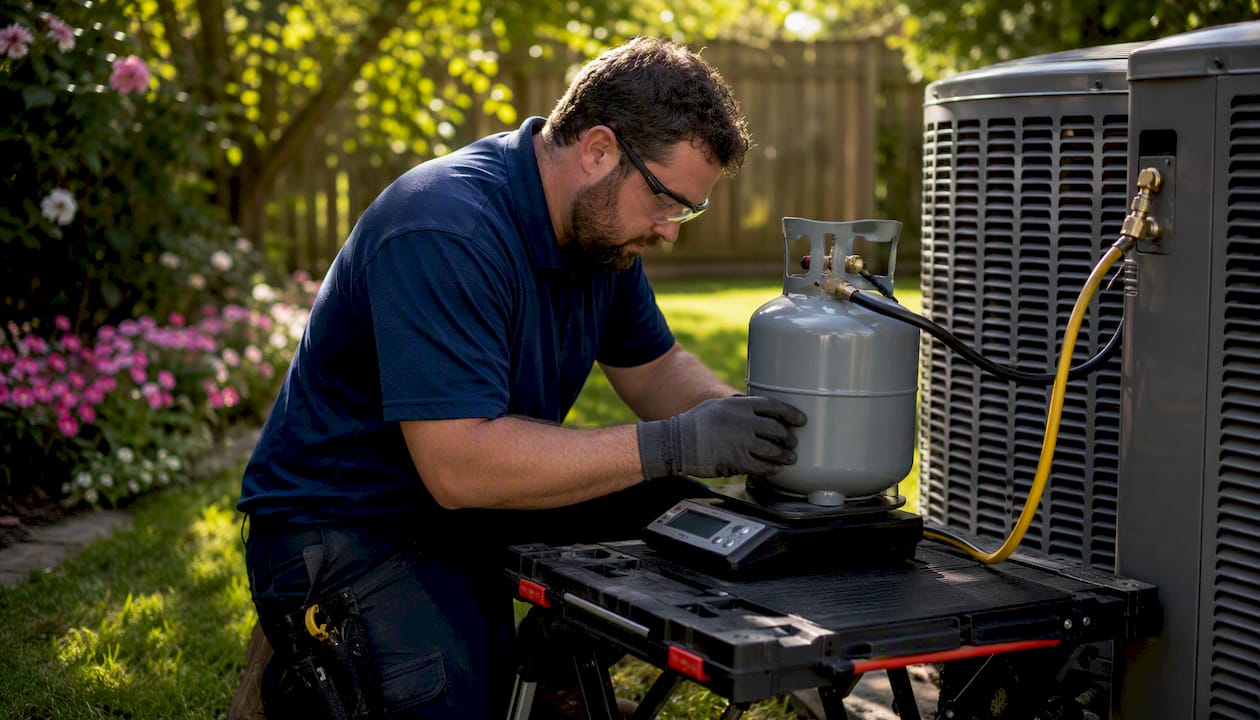
- Weigh-in recharge where refrigerant is added by weight (not by pressure gauge alone) to reach the manufacturer’s specified charge
- System testing to confirm proper pressures, temperatures, and airflow
- Recovery and disposal of any refrigerant removed during the process, as required by EPA Section 608
A straightforward recharge with no leak repair typically requires under an hour; leak repairs extend the job time depending on complexity.
The “weigh-in” method matters. Some technicians still charge by pressure gauge feel, but weighing refrigerant in by the pound is the accurate standard. Ask specifically whether they use a refrigerant scale. You should receive documentation showing the refrigerant type, pounds added, and the technician’s EPA Section 608 certification number.
5. Why DIY refrigerant recharge is not a legal option for homeowners
You may have seen refrigerant canisters at auto-parts stores. Those are for automotive AC systems, which use a different refrigerant (R-134a or R-1234yf) and operate at much lower pressures than residential central air. They do not apply to your home system.
For residential central AC, EPA Section 608 restricts the purchase and handling of regulated refrigerants to EPA-certified technicians. Selling R-410A or R-22 to an uncertified individual is prohibited under federal law. This is not a gray area.
Why the rules exist:
- Residential refrigerants operate at high pressures (R-410A runs at 400+ PSI) and can cause serious injury if mishandled
- Improper charging damages compressors and coils, turning a $300 recharge into a $2,000+ repair
- Refrigerant released into the atmosphere is an environmental violation with real penalties
- Without proper evacuation equipment, moisture enters the system and causes acid damage over time
Pro Tip: Before scheduling service, ask the company whether their technicians hold EPA Section 608 certification. Any reputable HVAC contractor will confirm this immediately. If they hesitate, call someone else.
Checking a technician’s credentials takes 30 seconds and protects you from both shoddy work and potential liability. The EPA’s Section 608 certification requirements are publicly available and worth a quick read if you want to understand what certified technicians are trained to do.
For homeowners who want to stay ahead of refrigerant issues through regular maintenance, reviewing HVAC DIY maintenance basics can help you catch early warning signs before they become expensive problems.
6. When a recharge makes sense and when replacement is smarter
A refrigerant recharge is a legitimate repair when the leak is small, accessible, and on a system that still has years of useful life. It becomes a money pit when the leak is large, recurring, or located in an expensive component.
Repair makes sense when:
- The system is less than 10 years old with a good SEER rating
- The leak is at a fitting or valve, not inside a coil or buried line
- The repair cost (leak fix + recharge) is under $800–$1,000 total
- The refrigerant is R-410A, not R-22
Replacement is worth serious consideration when:
- The system uses R-22 and needs more than 1–2 lbs of refrigerant
- The leak is in the evaporator coil ($600–$2,500 to replace) or compressor ($1,500–$3,000)
- You have recharged the same system more than once in three years
- The system is 12–15+ years old and approaching end of useful life
The math on recurring leaks: If your system loses 3 lbs of R-410A per year at $65/lb installed, that is roughly $195 in refrigerant annually, plus a service call each time. Over five years, that adds up to $1,000–$1,500 in recharge costs alone, not counting the leak detection fees each visit. A new high-efficiency system installed by a qualified contractor pays for itself faster than most homeowners expect when you factor in lower energy bills and eliminated repair costs.
Pro Tip: Ask your technician to calculate the “5-year repair cost” versus a replacement quote. Any honest tech will walk you through that math with you.
7. Sample cost breakdowns for small, medium, and large systems
These scenarios use mid-range per-pound pricing and typical labor rates to give you a realistic budget target. Your actual quote may vary by region, access difficulty, and whether leak repair is needed.
| Scenario | Refrigerant | Diagnostic | Leak Detection | Repair Labor | Recovery Fee | Estimated Total |
|---|---|---|---|---|---|---|
| small system, no leak repair | $130 | — | — | — | $50 | $400 |
| 3-ton central, accessible leak repair | $260 | — | — | $200 | $50 | $800–$1,000 |
| 5-ton central, R-22, coil leak | $600 (4 lbs R-22 @ $150/lb) | — | $300 | $1,500+ | $75 | $2,500+ |
A few assumptions behind these numbers: R-410A at $65/lb installed, R-22 at $150/lb, labor at $100–$150/hr, and leak detection via nitrogen pressure test on the larger jobs. HomeAdvisor and Angi both confirm that leak detection and repairs can add hundreds to thousands beyond the base recharge price, which is why the 5-ton R-22 scenario climbs so quickly.
The 3-ton central scenario is the most common situation for St. Louis-area homeowners. A single accessible leak repair plus recharge in the $700–$900 range is a reasonable repair on a system under 10 years old. The same job on a 15-year-old R-22 system tips the math toward replacement.
For a broader look at what a professional HVAC inspection covers before a recharge, this inspection cost overview breaks down what to expect from a diagnostic visit.
8. Questions to ask your technician and red flags to watch for
Going into a service call prepared makes a real difference. Here is exactly what to ask, both on the phone and when the technician arrives.
Questions to ask when scheduling:
- Are your technicians EPA Section 608 certified?
- Do you charge a separate diagnostic or service call fee, and does it apply toward the repair?
- Will you perform leak detection before adding refrigerant?
- Can you provide a written, itemized estimate before starting work?
Questions to ask on-site:
- What refrigerant type does my system use, and how many pounds are you adding?
- What is your per-pound charge for refrigerant?
- Where is the leak, and what will it cost to repair it?
- What warranty covers the repair and the refrigerant charge?
Red flags that warrant a second opinion:
- The technician proposes a “quick top-off” without running any diagnostics
- No written documentation of charge weight or refrigerant type
- An unusually low per-pound price with no explanation (could indicate recycled or contaminated refrigerant)
- Pressure to approve add-on repairs without photos, gauge readings, or a clear explanation
- Reluctance to confirm EPA certification
Getting two estimates for any repair over $500 is standard practice and any reputable contractor will expect it. A technician who pressures you to decide on the spot is a red flag, not a sign of urgency.
Key Takeaways
A professional AC refrigerant recharge costs $200–$600 for R-410A systems, but leak detection and repairs routinely push the total higher, making a written diagnostic estimate the single most important step before authorizing any work.
| Point | Details |
|---|---|
| Budget range | R-410A recharges run $200–$600 total; R-22 systems often cost $500–$2,000 or more. |
| Leak diagnosis first | Insist on leak detection before refrigerant is added — a closed system should not lose refrigerant. |
| Per-pound pricing | R-410A runs $40–$90/lb installed; R-22 runs $100–$150+/lb, often making replacement smarter. |
| Verify certification | Confirm EPA Section 608 certification and request written documentation of refrigerant type and pounds added. |
| Ricottaheatingandair | Ricottaheatingandair provides transparent, line-item diagnostics and recharge services across St. Louis and Jefferson County. |
The honest truth about refrigerant recharges
Most homeowners call about a refrigerant recharge expecting a simple, inexpensive fix. The reality is more nuanced, and I think the industry does a poor job of setting that expectation upfront.
Here is what often gets glossed over: the recharge itself is rarely the expensive part. The expensive part is what you find when you actually look for the leak. A technician who skips leak detection is not saving you money; they are deferring a cost you will pay again next summer, plus the service call fee, plus the refrigerant markup, plus the diagnostic fee you should have paid the first time.
The other thing worth saying plainly: the phase-out of R-410A is real and it is already affecting prices. Homeowners with systems installed before 2024 should factor refrigerant availability into their long-term planning. A system that needs a recharge every two years is not just an inconvenience; it is a signal that the economics of repair are shifting toward replacement.
The most trustworthy technicians are the ones who show you the gauge readings, explain what the numbers mean, and give you a written estimate before touching the refrigerant. That is not a premium service. That is the baseline.
Ricottaheatingandair: straightforward diagnostics and fair pricing in St. Louis
When your AC is struggling in the middle of a St. Louis summer, the last thing you need is a technician who shows up, adds refrigerant without checking for a leak, and hands you a bill that solves nothing for long.
Ricottaheatingandair has been serving homeowners across St. Louis and Jefferson County for 50 years, with 150+ five-star Google reviews built on honest diagnostics and transparent pricing. Every refrigerant service starts with a proper inspection: pressure testing, leak detection, and a written line-item estimate before any refrigerant is added. EPA Section 608 certified technicians handle all recovery, recharge, and disposal work, and you receive documentation of refrigerant type and charge weight every time.

Whether you need a straightforward recharge, a leak repair, or an honest assessment of whether your system is worth fixing, Ricottaheatingandair covers the full St. Louis metro and Jefferson County. Explore cooling service agreements that keep your system running efficiently year-round, or schedule AC service in Mehlville and surrounding areas today.
Useful sources for homeowners
- EPA — Refrigerant Sales Restriction (Section 608): Federal rules on who can purchase and handle regulated refrigerants, and why DIY recharging is prohibited for residential systems.
- AC Refrigerant Recharge Cost — 2026 Prices (HVACPricingGuide): Consolidated cost ranges for R-410A and R-22 recharges, leak detection fees, and repair cost bands.
- How Much Does AC Recharge Cost? (Angi): Average service costs and common add-on charges for leak detection and repairs
- AC Recharge Cost Guide (HomeAdvisor): Typical recharge ranges and a breakdown of how leak repairs can significantly increase the final bill