
3 Minute Checklist If Your AC Fan Isn’t Spinning, St. Louis Homeowners
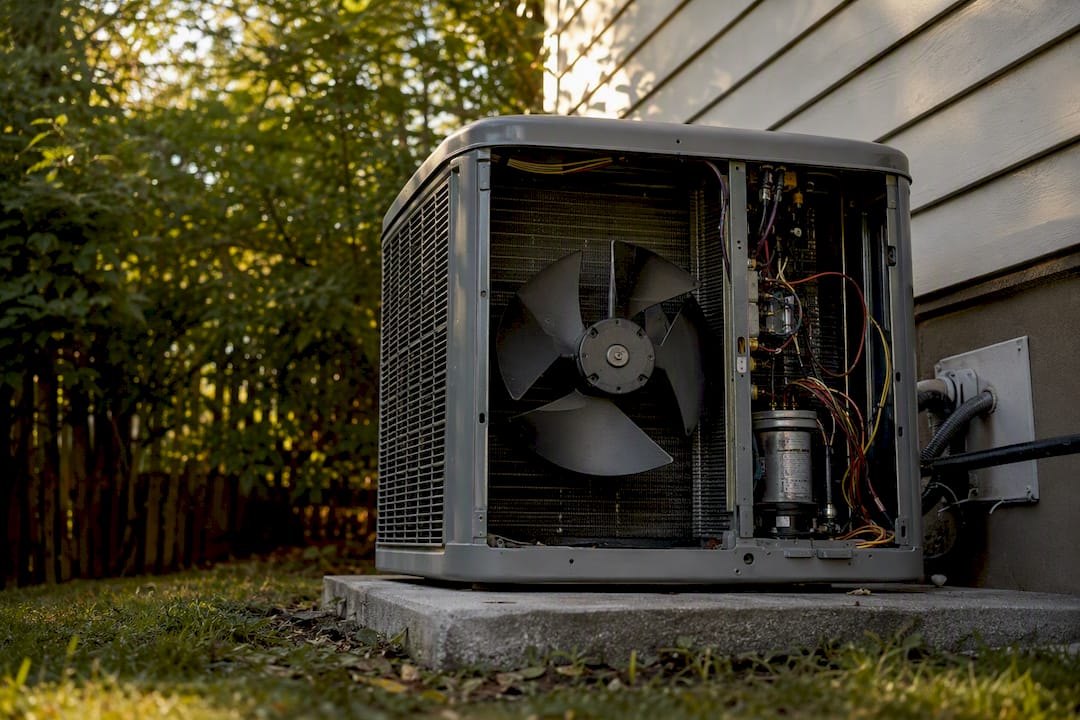
An AC fan that won’t spin usually comes down to five suspects: a tripped breaker, the thermostat set wrong, a clogged filter, a failed capacitor, or a burned-out motor. If your fan is silent, humming, or barely turning, shut the system off first, especially if you smell burning or hear repeated clicking. Then run through a quick 3-minute checklist before deciding whether this is a fix you can handle or one that needs a professional.
TL;DR:
- The most common causes for a fan that won’t spin are a tripped breaker, a clogged filter, failed capacitor, or a burned-out motor, which all can often be diagnosed quickly.
- Seeing or hearing specific signs, such as total silence or humming without blades turning, can pinpoint whether the problem is power supply, capacitor, or motor failure.
- Simple DIY fixes include resetting breakers, replacing filters, clearing debris, or performing a manual spin test, but dangerous repairs like capacitor replacement should be left to professionals.
- If the fan hums but doesn’t turn or if the motor is hot or makes grinding noises, it is time to call an HVAC technician to prevent further damage.
- A reliable technician can accurately diagnose whether the issue is a weak capacitor or a more serious component failure, offering transparent pricing and warranty on repairs.
Table of Contents
- Why is my AC fan stopped? Run this 3-minute checklist
- Diagnosing AC fan issues by what you hear and see
- Safe DIY fixes you can try right now
- When to call a licensed HVAC technician
- A local tech’s take on stopped AC fans
- Get your AC fan diagnosed the right way
- Sources
Why is my AC fan stopped? Run this 3-minute checklist
Before you assume the worst, rule out the easy stuff. Most fan failures trace back to something you can check safely in a few minutes.
- Check the thermostat. Make sure it’s set to “Cool” with the temperature well below room temperature, then flip the fan switch to “On” to see if the blower responds at all.
- Check your breaker panel and the outdoor disconnect. Look for a tripped breaker (the switch sits in the middle instead of fully on) and reset it once. Also check the small metal disconnect box near your outdoor condenser. It should sit fully seated.
- Pull the air filter. A filthy filter is one of the most common reasons air stops moving through the system, and it’s a five-minute swap.
- Walk out to the condenser with the power off. Look for leaves, grass clippings, or a bent fan blade caught against the housing.
- Listen. A humming compressor with no fan movement points somewhere different than total silence, and that distinction matters for the next step.
Diagnosing AC fan issues by what you hear and see
What your unit is doing right now tells you almost everything about what’s wrong. Treat this as a decision tree, not a guessing game.
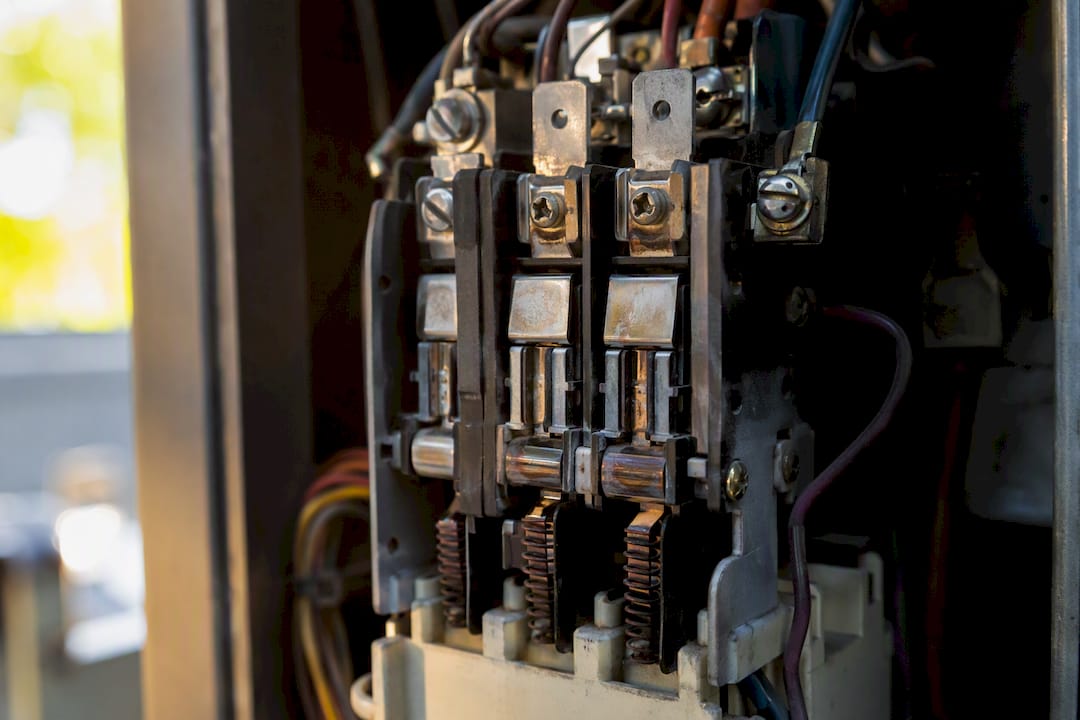
The outdoor unit is completely silent. No hum, no click, nothing. This usually means the fan isn’t getting power at all. Check the disconnect box and breaker again, and look at the contactor (the small relay that switches power to the outdoor unit) for signs of pitting or a stuck switch. A failed fan relay can leave the whole outdoor unit dead even though the indoor thermostat is calling for cooling. Total silence can also mean the motor itself has failed, though that’s less common than a power interruption.
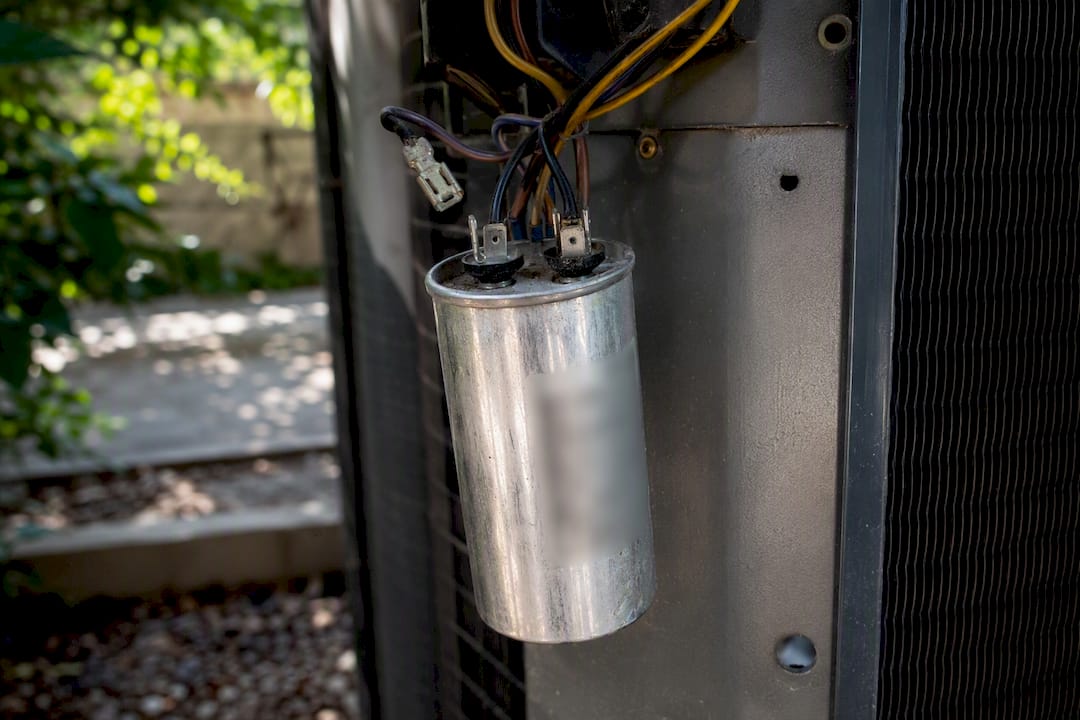
You hear humming, but the blades aren’t turning. This is the classic sign of a bad start or run capacitor. The capacitor is what gives the motor its initial jolt of energy to overcome inertia. Without it, the motor tries to start and just buzzes in place. According to Bryant’s troubleshooting guidance, a humming fan with no rotation is one of the clearest capacitor symptoms in residential AC units. This is also where a manual spin test becomes useful, more on that in the next section.
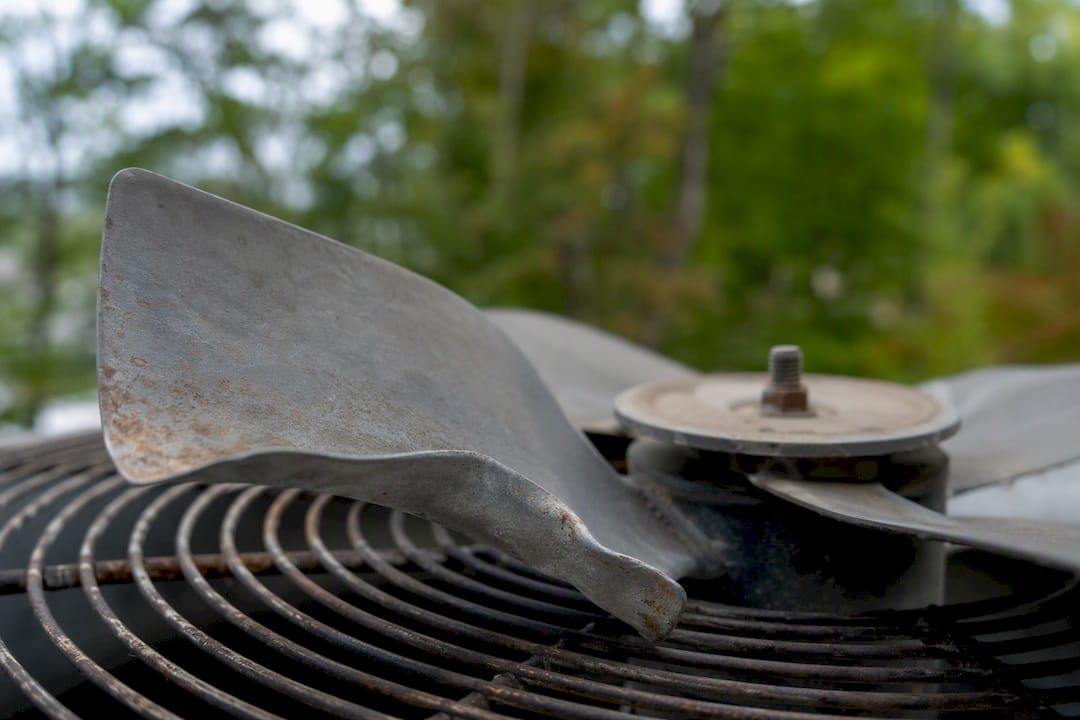
The fan spins, but slowly or with a wobble. A slow or uneven spin usually points to worn bearings, a bent blade throwing the fan out of balance, or a loose mounting bolt. Bearings wear out from age and moisture exposure, and once they start grinding, the motor has to work harder just to keep the blade turning at all. Left alone, this pattern typically ends in a burned-out motor.
The outdoor fan runs fine, but you’re getting no air indoors. This is a different problem entirely, and a lot of homeowners waste time troubleshooting the wrong unit. If the condenser is spinning but your vents are blowing weak or warm air, the issue is usually inside: a clogged filter, a frozen evaporator coil, or a struggling indoor blower motor. Roughly 40 percent of blower airflow problems come down to something as simple as a dirty air filter, so check that before assuming a bigger failure. It’s worth reading how a frozen coil affects cooling if this is your scenario.
Stop immediately if you notice:
- A burning smell coming from the outdoor unit or the indoor air handler.
- A motor housing that’s hot to the touch.
- Breakers that trip again within minutes of resetting them.
Any one of those is your cue to power down and call for service rather than keep testing.
Safe DIY fixes you can try right now
A few fixes are genuinely low-risk and solve the problem more often than people expect. Others cross into territory where a mistake can hurt you or wreck the unit.
- Reset the breaker and disconnect properly. Flip the breaker fully off, wait 30 seconds, then back on. Pull the outdoor disconnect block out, reseat it firmly, and confirm it clicks into place.
- Replace the filter. A new filter often restores airflow within minutes and prevents the kind of overheating that shortens motor life, which is why seasonal filter checks are one of the cheapest maintenance habits you can build.
- Clear debris with the power fully off. Brush away leaves and grass clippings from the condenser cage, and gently straighten a slightly bent blade by hand if it’s minor.
- Do the manual spin test correctly. With the breaker off and the disconnect pulled, use a stick (never your hand) to spin the fan blade. If it spins freely and then runs normally once power is restored, that points toward a weak capacitor rather than a seized motor.
Never attempt: capacitor replacement, internal wiring repairs, or refrigerant work. Capacitors hold an electrical charge that can injure you even after the unit is unplugged, and that’s not a risk worth taking to save a service call.
Pro Tip: If nudging the blade gets the fan spinning again, don’t just walk away satisfied. That’s almost always a dying capacitor limping along, and it tends to fully fail, and often takes the motor with it, within weeks.
When to call a licensed HVAC technician
Some symptoms mean it’s time to stop troubleshooting and pick up the phone.
- The breaker trips again after one reset.
- You smell burning plastic or ozone near the unit.
- The fan hums but won’t spin, even after a careful manual test.
- The motor housing is hot, or you hear grinding from the bearings.
A technician will test capacitor voltage against its rated microfarad value, check motor amp draw against bearing resistance, inspect the contactor and control board, and rule out refrigerant issues if airflow looks normal but cooling doesn’t. Costs vary a lot by what’s actually broken. A capacitor or contactor swap tends to be a modest, straightforward repair, while a full motor replacement or refrigerant diagnostic runs considerably higher. Ask any tech you hire about their license, whether parts and labor carry a warranty, and whether the diagnostic fee applies toward the repair if you move forward. For symptoms tied to strange noises rather than a stopped fan, this breakdown of common AC sounds is worth a look too.
A local tech’s take on stopped AC fans
Homeowners often assume a dead fan means a dead unit, when it’s frequently a $20 part. The mistake I see most is people nudging the blade to get it spinning again and calling it fixed. That capacitor is still failing, and it usually takes the motor down with it. Honest diagnostics beat guesswork every time. If your airflow problem looks bigger than the fan, our cooling troubleshooting guide covers the rest.
— Alan
Get your AC fan diagnosed the right way
Ricotta Heating & Air is the straightforward alternative to guessing at capacitor replacements or paying for parts you don’t need. We show up, run the same voltage and amp-draw tests a technician would run on any brand, and tell you plainly whether you’re looking at a $20 capacitor or a bigger repair before any work starts.

Every visit includes a transparent diagnostic, a written explanation of what’s failing and why, and a warranty on parts and labor once repairs are done. With 50 years serving St. Louis and Jefferson County homeowners and more than 150 five-star Google reviews, we’ve seen every version of a fan that won’t spin. If you’re dealing with one now, book a cooling repair visit and get it sorted before the next heat wave, or ask about our maintenance plans to catch worn bearings and dirty filters before they leave you without cool air at all.
Sources
For deeper technical detail: Inspectapedia’s condenser fan guide, Energy, HVACLaboratory’s airflow guide, and capacitor safety from Strong Heating & Cooling.
- Diagnose & Repair AC Condenser Unit Fan — Inspectapedia
- Energy
- HVAC Capacitor Failure: What Homeowners Need to Know — Strong Heating & Cooling