
My Outdoor AC Unit Isn't Running, But the Inside Fan Is: A Sunset Hills Troubleshooting Guide
It’s a classic St. Louis summer scenario: the humidity is thick enough to swim through, you head inside for relief, and you feel… nothing. The vents are blowing air, but it’s not cold. A quick look outside confirms your fears: the big outdoor air conditioner is silent. If your outdoor AC unit is not running, Sunset Hills homeowners often worry about a catastrophic failure, especially during a 95-degree heatwave. But it's not always a worst-case scenario. Sometimes, it’s a simple fix you can safely handle yourself. This guide will walk you through the most common culprits, from your thermostat to your outdoor disconnect.
Before You Panic: What Every Sunset Hills Homeowner Should Check First
When your AC gives out, the first instinct might be to assume the worst. But before you pick up the phone, taking a few minutes to check the basics can sometimes save you the time and expense of a service call. These are simple, safe steps any homeowner in Sunset Hills can take. Think of this as the essential first-aid for your HVAC system.
First, head to your thermostat. This might sound obvious, but it’s the number one cause of unnecessary service calls. Ensure it’s set to “Cool” and that the set temperature is at least 5 degrees below the current room temperature. If it's a digital thermostat, check the screen. Is it blank? You may just need to replace the batteries. If the screen is on but the system isn't responding, try turning the system off and then back on to cool mode after a minute.
Next, check your air filter. A severely clogged filter can choke your air conditioner, restricting airflow so much that the indoor coil can freeze into a solid block of ice. When this happens, safety sensors will often shut down the outdoor unit to prevent damage to the compressor. In our humid St. Louis County climate, this is a very common issue. If you can’t remember the last time you changed it, now is the time to check. A dirty, gray filter is a clear sign it needs to be replaced.
Finally, let’s look at the circuit breakers. Your AC system has two main breakers:
- The indoor unit breaker: Located in your home's main electrical panel.
- The outdoor unit breaker: Also in the main panel, usually a larger, double-pole breaker.
Look for a breaker that has tripped to the middle or “off” position. You can try resetting it by flipping it fully to “off” and then back to “on.” Important safety note: Only attempt to reset a breaker once. If it trips again immediately, there's an electrical fault that needs a professional. Many homes in established neighborhoods like Sunset Hills also have an outdoor disconnect box—a smaller metal box near the AC unit with a pull-out handle or a switch. Ensure that is also in the “on” position.
Inspecting the Condenser: What's Happening Outside Your Sunset Hills Home?
If the thermostat, filter, and breakers all check out, it’s time to head outside to the condenser unit itself. This is the big metal box with the fan on top that's responsible for releasing heat from your home. Before you do anything else, your safety is the top priority. You should turn off the power to the unit at both the main circuit breaker and the outdoor disconnect box we mentioned earlier. Never stick your hands or any tools into the unit without confirming the power is off.
With the power safely disconnected, perform a visual inspection. Is the unit completely covered in dirt, grass clippings, or that fluffy white cottonwood seed that blankets St. Louis County every spring? The metal fins around the unit need to be clean to allow for proper heat exchange. If they are clogged, the unit can't breathe, causing it to overheat and shut down. You can gently clean these fins yourself using a soft brush or by spraying them down with a garden hose on a gentle setting. Be careful not to bend the delicate aluminum fins.
While you’re out there, look for any obvious signs of damage. Have sticks or other debris fallen into the top of the unit through the fan grille? Is the unit sitting level on its concrete pad? Over time, the ground in our area can settle, causing the pad to tilt, which can put stress on the system's components.
Finally, you can listen. Before you turned the power off, did you hear anything? Sometimes, a unit will make a distinct humming or buzzing noise without the fan or compressor kicking on. This specific symptom often points away from a simple power issue and toward a failed electrical component within the unit itself, which we'll cover next.
When the Outdoor AC Unit is Not Running in Sunset Hills: Common Electrical Culprits
If your indoor fan runs, the breakers are on, and the outdoor unit is clean but still silent (or just humming), you're very likely dealing with a failed electrical component inside the condenser. This is where troubleshooting for a homeowner ends and the need for a professional begins, as these parts carry high voltage. However, understanding what might be wrong can help you communicate the issue to a technician. Two components are responsible for the vast majority of these failures.
The Dual Run Capacitor: This is the most common point of failure on an air conditioner, especially after a long, brutal Missouri summer. The capacitor is a small cylindrical component that acts like a battery, providing the initial burst of energy needed to start the compressor and the condenser fan motor. When it fails, the motors don't have the 'kick' to get going. You'll often hear a humming sound as the motors try but fail to start. Sometimes, a failed capacitor will physically bulge at the top or leak an oily substance. Replacing a capacitor is a quick job for a pro, but it's extremely dangerous for a DIYer because capacitors can hold a lethal electrical charge even with the power off. If you suspect a bad capacitor is why your outdoor AC unit is not running, Sunset Hills technicians at Ricotta have the tools to test and replace it safely.
The Contactor: Think of the contactor as a heavy-duty switch. When your thermostat calls for cooling, it sends a low-voltage signal to the contactor, which then closes and allows high voltage to flow to the compressor and fan motor. These contactors can wear out and fail, or sometimes, believe it or not, ants and other small pests can crawl inside and get fried between the contact points, preventing it from closing. A technician can easily test the contactor to see if it's the weak link in the chain. This is another relatively inexpensive repair that needs an expert to diagnose and perform correctly.
Beyond Simple Fixes: Deeper Issues That Require a Pro
While capacitors and contactors are common and relatively easy fixes, sometimes the problem runs deeper. When our technicians arrive at a Sunset Hills home for an air conditioning repair call, we also investigate these more serious potential issues, especially in older systems that have served through many hot St. Louis seasons.
Condenser Fan Motor Failure: If the capacitor is working correctly but the fan blade isn't turning, the fan motor itself may have burned out. This can happen due to age, lack of maintenance, or simply the strain of running for hours on end during a 95°+ heatwave. Preceding signs can include squealing or grinding noises in the days before it failed completely. If the fan motor is dead, the compressor may run for a short time before overheating and shutting down on its own thermal overload protector. Running an AC with a bad fan motor can quickly destroy the much more expensive compressor.
Compressor Problems: The compressor is the heart of your entire air conditioning system. It's responsible for pressurizing the refrigerant and moving it through the system. Unfortunately, it's also the single most expensive component. Compressor failure can be electrical (a short or 'grounded' motor) or mechanical (internal parts seizing up). If your AC trips the breaker instantly every time it tries to start, or if you heard a loud, violent clanking or grinding noise before it died, it could be a sign of a failed compressor. For an older unit (12+ years), a failed compressor often means it's more economical to replace the entire condenser or the full system.
Refrigerant Leaks: Your AC is a closed-loop system, and it should never 'use up' refrigerant. If it's low, there's a leak somewhere. Modern systems have low-pressure safety switches that will prevent the outdoor unit from running if the refrigerant level drops too low. This is a crucial safety feature that protects the compressor from damage. Finding and repairing a refrigerant leak, especially a small one, requires specialized electronic leak detectors and gauges.
Fixing an AC Unit in Sunset Hills Demands a Professional Diagnosis
While it's tempting to keep flipping breakers or hope the problem resolves itself, continuing to run or attempt to run an air conditioner with an undiagnosed fault can cause a chain reaction, turning a small problem into a catastrophic failure. A failed capacitor is a minor repair; the compressor it can destroy if left unchecked is not.
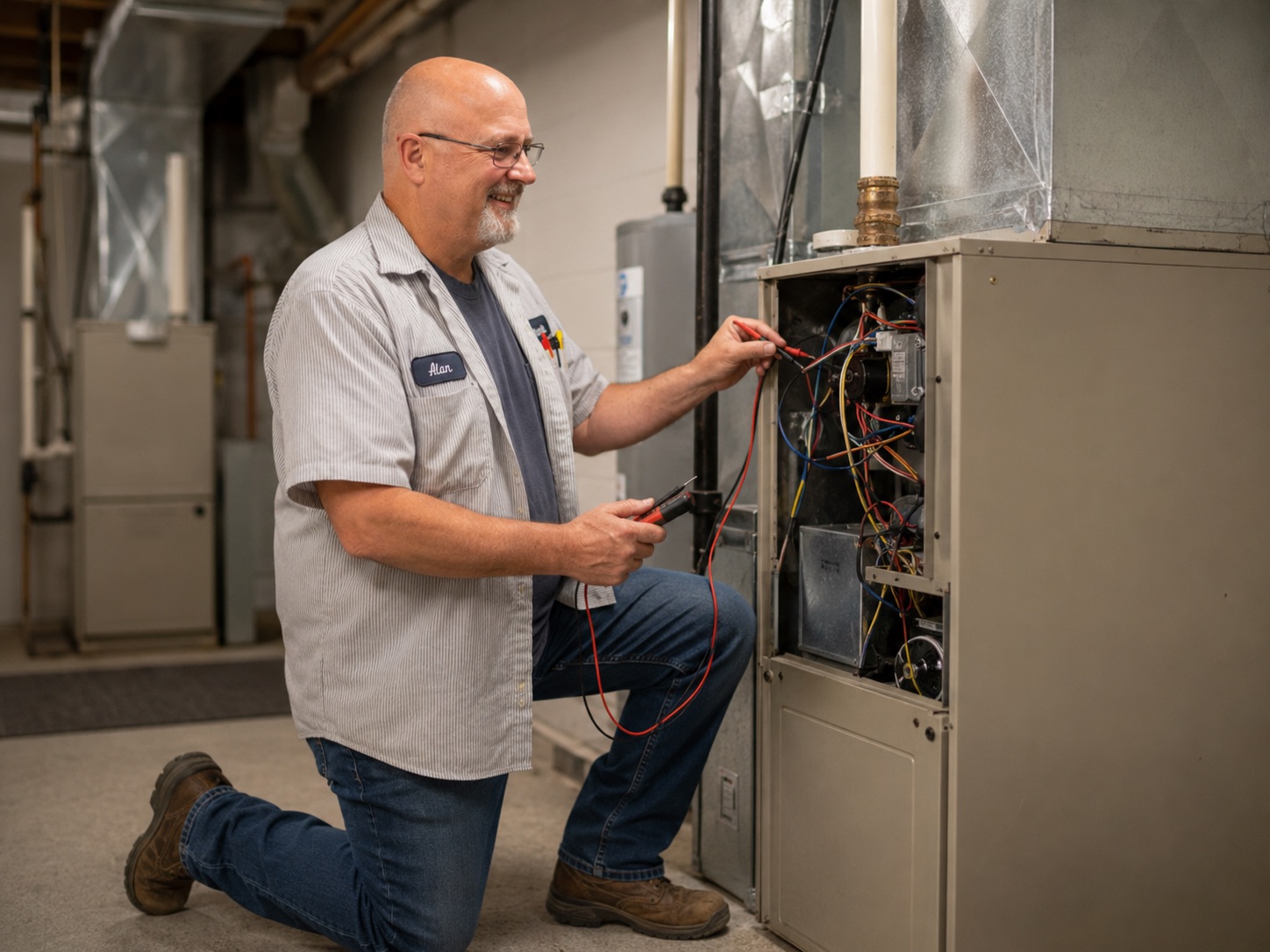
This is why a professional diagnosis is so critical. A trained technician from Ricotta Heating & Air won't just guess; they’ll use a multimeter, refrigerant gauges, and years of experience to pinpoint the exact cause of the failure. We can tell you definitively if it's a simple, affordable fix or if you're facing a more significant repair. We believe in providing honest, transparent options, especially when it comes to the repair vs. replace decision on an aging system.
As a family-owned company serving Sunset Hills and the greater St. Louis County area, we've seen it all. From newer systems in modern homes to decades-old units in the charming, established neighborhoods that make our community unique, we have the local expertise to get the job done right. We understand the demands that a Missouri summer puts on your equipment. Don't spend another minute sweating and worrying about why your unit isn't working.
If you've run through the simple DIY checks and your AC is still out of commission, it's time to call in the experts. As your local Sunset Hills HVAC professionals, we are committed to restoring your comfort quickly and reliably. For prompt, honest service, call Ricotta Heating & Air today at (314) 333-5900.
Need help in Sunset Hills, MO?
Ricotta Heating & Air has been serving St. Louis County homeowners for 50+ years. Same-day AC service calls.
Frequently Asked Questions
Why is my inside fan running if the outside AC unit is off?+
The indoor blower fan and the outdoor condenser unit are controlled separately. Your thermostat's fan setting might be on 'ON' instead of 'AUTO', or there is a specific fault with the outdoor unit (like a bad capacitor or motor) that prevents it from running while the indoor unit is still being told to operate.
How much does it cost to fix an AC unit that's not running in Sunset Hills?+
The cost varies greatly depending on the cause. A simple fix like replacing a capacitor might cost a couple hundred dollars. However, a major repair like a compressor or fan motor replacement will be significantly more. We always provide a clear, upfront diagnosis and quote before any work begins.
My AC is buzzing but the fan outside isn't spinning. What's wrong?+
A buzzing or humming noise without the fan moving is a classic symptom of a failed start capacitor. The motor is receiving power and trying to start but doesn't have the electrical 'jolt' from the capacitor to get going. This requires a professional technician to safely test and replace.
Is it safe to replace an AC capacitor myself?+
We strongly advise against it. AC capacitors store a very powerful electrical charge, even when the power to the unit is turned off. Mishandling one can result in severe electrical shock. This repair should only be performed by a trained and qualified HVAC technician.
How long does an AC unit last in the St. Louis climate?+
With regular maintenance, a central air conditioner in our hot and humid Missouri climate typically lasts between 12 to 15 years. The intense workload during summer heatwaves can put significant strain on components, sometimes leading to earlier failures if not properly maintained.
My AC is over 15 years old. Should I repair or replace it?+
If your older unit needs a major, expensive repair (like a new compressor or coil), it's often more cost-effective in the long run to invest that money into a new, high-efficiency system. A new unit will be more reliable, lower your energy bills, and come with a full manufacturer's warranty. We can help you weigh the costs and benefits for your specific situation.