
Aging Furnace Maintenance Tips | Jefferson County, MO
Table of Contents
- Why Preventive Maintenance Matters for Aging Furnaces
- Annual Furnace Maintenance: What You Need to Know
- Furnace Filter Replacement Schedule for Older Systems
- Gas Furnace Safety Inspection Checklist
- Older Furnace Maintenance Checklist: Homeowner Tasks vs. Professional Work
- Age-Related Warning Signs and Repair vs. Replacement
- Maintenance Records and Winter Preparation
- Frequently Asked Questions
Why Preventive Maintenance Matters for Aging Furnaces
An older furnace needs regular attention, but age alone doesn't tell you what condition it's in. Dirt, restricted airflow, and worn parts can affect how well it heats your home. For Hillsboro homeowners, checking those issues before cold weather arrives makes more sense than waiting for the furnace to stop working.
Maintenance gives a technician a chance to spot wear and safety concerns before they become bigger problems. It can't prevent every breakdown or make a damaged furnace safe to operate, but it can help you understand what needs attention.
That information also helps you weigh repair versus replacement. Knowing your furnace's condition lets you plan rather than guess.
Annual Furnace Maintenance: What You Need to Know
Schedule an annual furnace maintenance visit before the heating season. The work should follow the manufacturer's recommendations and account for your furnace's condition, fuel type, and service history.
Professional Inspection and Burner Cleaning
A technician checks the furnace's main components for wear, damage, and safety concerns. On a gas furnace, that includes the burners, ignition system, heat exchanger, and venting.
Dirty burners can interfere with ignition and combustion. Your technician should inspect them and clean them as needed using the manufacturer's procedures. Blower dirt and other airflow restrictions also deserve attention.
The inspection should include accessible combustion components and signs of overheating or deterioration. Some problems require additional testing beyond a visual check.
Heat Exchanger and Safety Control Checks
The heat exchanger transfers combustion heat to the air circulating through your home while keeping combustion gases separate. Cracks or corrosion can compromise that separation and create a carbon monoxide hazard.
A technician should inspect the heat exchanger using appropriate methods and test the furnace's safety controls. Flame-sensing components, limit switches, and rollout switches help shut the system down when unsafe conditions occur. Never bypass them.
The ignition system also needs testing. It starts the burners, while flame-sensing controls confirm that ignition occurred and allow operation to continue.
Furnace Filter Replacement Schedule for Older Systems
Your furnace filter catches particles in the air passing through the system. A clogged filter restricts airflow and can contribute to overheating.
Check the filter monthly and follow the filter and equipment manufacturers' replacement instructions. Pets, dust, filter size, and system use all affect how quickly it gets dirty. If your furnace blower also serves your air conditioner, the filter needs attention during Missouri's humid summers as well as its cold winters.
A higher MERV rating means finer filtration, not automatically better airflow. Use the filter size and rating your system supports. Ask your technician before switching to a more restrictive filter.
Write the installation date on the filter frame and point the airflow arrow in the direction specified by the equipment instructions.
| Filter Type | Replacement Frequency | Best For | Airflow Impact |
|---|---|---|---|
| Fiberglass | Check monthly; replace as directed or when dirty | Basic filtration where approved | Generally low restriction when clean |
| Pleated, MERV 8–11 | Follow the manufacturer's schedule; check monthly | Compatible household systems | Depends on filter design, size, and condition |
| Higher-efficiency, MERV 13 | Follow the manufacturer's schedule; check monthly | Finer particle filtration in compatible systems | Confirm system compatibility before use |
| Washable | Clean as directed; let dry fully before reinstalling | Systems approved for reusable filters | Varies by model and condition |
Gas Furnace Safety Inspection Checklist
Gas furnace maintenance includes combustion, venting, and control checks. Homeowners can watch for warning signs and test CO alarms, but furnace safety testing belongs to a qualified technician.
Carbon Monoxide and Combustion Safety
Carbon monoxide is a colorless, odorless gas that can form during incomplete combustion. Your furnace should vent combustion gases outdoors. Damaged, disconnected, or blocked venting can allow those gases into your home.
A technician should inspect vent connections, look for damage and obstructions, and evaluate combustion as appropriate for the equipment. Soot around a furnace or flue is a warning sign that needs prompt professional attention.
Install CO alarms on every level and near sleeping areas, following the alarm manufacturer's placement instructions. Read the CDC's carbon monoxide guidance. If a CO alarm sounds, get everyone outside immediately and call emergency services from outside. Do not reenter until responders say it is safe.
Ignition System and Controls Testing
Some older furnaces have standing pilot lights; others use electronic ignition. A technician should check that the system lights properly and that flame-sensing controls respond correctly.
Where fitted, the control board manages the heating sequence and blower operation. Testing should confirm that the controls and safety devices work as the manufacturer intended.
Older Furnace Maintenance Checklist: Homeowner Tasks vs. Professional Work
Routine homeowner care helps keep the system clean and unobstructed. Work involving gas, combustion, electrical components, or safety controls requires professional training and equipment.
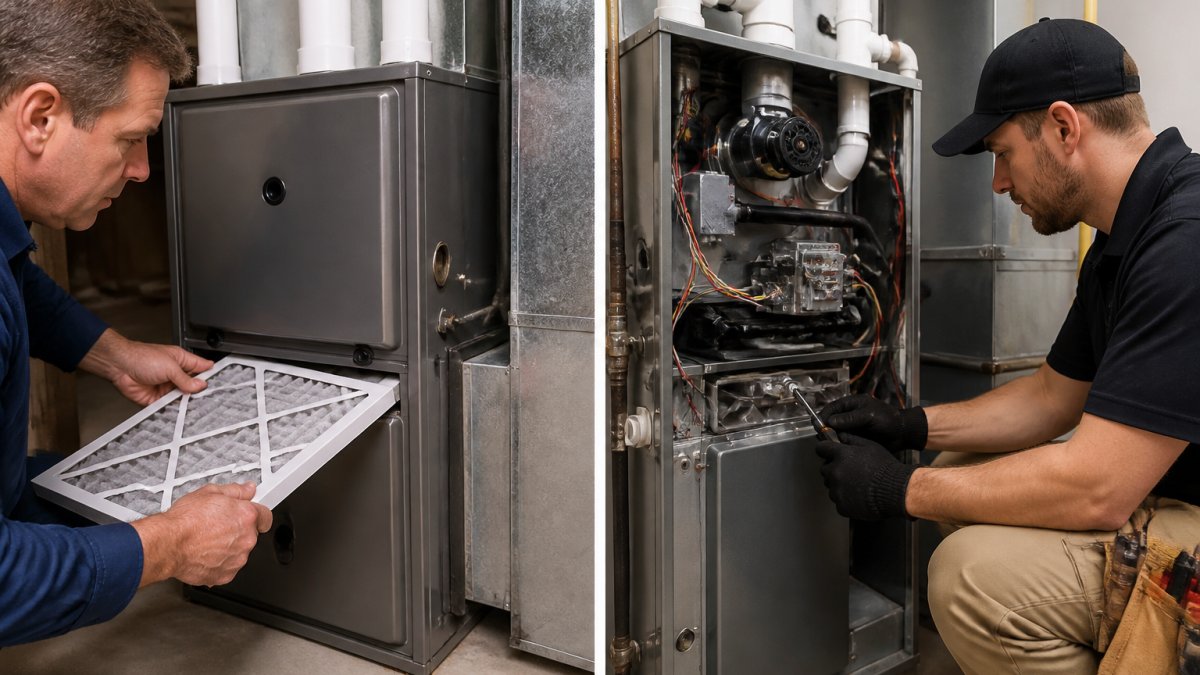
What You Can Do Safely at Home
Check the filter monthly for dirt buildup. Turn the system off before replacing it, and follow the equipment instructions for safe access.
Keep boxes, cleaning products, and other stored items away from the furnace. Maintain the clearances listed on the equipment label or in the manual, and never block combustion-air openings.
Keep return grilles and supply registers clear of furniture, rugs, and curtains. Don't close vents to try to force more heat into other rooms.
Pay attention to unusual noises such as banging, squealing, or grinding. Note when they happen and contact a technician promptly rather than waiting for routine service. Stop using the furnace if it makes loud or persistent mechanical noises.
To check heating operation, set the thermostat to heat and raise the setting above room temperature. Allow for the system's normal startup delay. If it doesn't heat, check the thermostat settings and batteries, if applicable, then call for service.
When to Call a Qualified Technician
Limit access to homeowner tasks described in your manual, such as filter replacement. Leave internal service panels and components to a qualified technician.
Don't clean burners, inspect the inside of the heat exchanger, or work on ignition components yourself. Improper handling can damage parts or create unsafe combustion.
Do not adjust, bypass, or test safety controls yourself. These checks require the right instruments and an understanding of the furnace's operating sequence.
Leave gas connections and combustion vent repairs to a qualified professional. Never attempt to fix a suspected gas leak.
Call for service if the furnace isn't heating or is making unusual sounds. A CO alarm or suspected gas leak is an emergency: leave first and call emergency services from outside, not just an HVAC service company.
Age-Related Warning Signs and Repair vs. Replacement
An older furnace isn't automatically due for replacement. Its condition, repair history, and ability to heat your home safely matter more than age alone. In Jefferson County, it's worth reviewing those factors before you depend on it through another heating season.
Frequent breakdowns or a major component failure are good reasons to compare repair and replacement options. Ask your technician to explain the diagnosis and what each option would address.
Watch for these signs that your furnace needs attention:
- Uneven heating: Hot and cold rooms can point to airflow, ductwork, or equipment problems.
- A persistently yellow pilot flame: On a furnace with a standing pilot, this can indicate a combustion problem. Have it checked rather than trying to adjust it.
- Loud noises: Banging, squealing, or grinding can indicate ignition trouble or worn mechanical parts.
- Frequent cycling: Repeated short heating cycles may signal airflow, thermostat, or safety-control issues.
- Rising energy bills: Unexplained increases deserve a check, though weather, utility rates, and thermostat settings also affect costs.
- Visible rust or corrosion: These signs may point to moisture or venting problems, not just age.
- Soot around the furnace: Soot can indicate incomplete combustion and needs prompt professional attention.
There is no single repair-cost cutoff that works for every home. Compare the needed work, overall equipment condition, available replacement options, and your plans for the home. If the furnace is unsafe, do not operate it until the problem has been resolved.
Maintenance Records and Winter Preparation
Keep a record of service dates, inspection findings, cleaning, and repairs. Add filter changes and any unusual symptoms you notice between visits.
These notes help your technician spot recurring issues and understand what work has already been done. They can also be useful when you sell your home.
Before winter, schedule a maintenance visit so there's time to address any problems before you need steady heat.
Check thermostat operation and walk through the house to make sure supply registers and return grilles are unobstructed.
Test CO alarms according to their instructions, check their replacement dates, and make sure you have alarms on every level and near sleeping areas.
Regular care helps you understand your furnace's condition and prepare for cold weather. Ricotta Heating & Air is a family-owned company serving Jefferson County; contact us to discuss maintenance or concerns about your older furnace.
Frequently Asked Questions
How often should an aging furnace be professionally serviced?
Schedule professional maintenance annually, preferably before the heating season, and follow the manufacturer's recommendations. Additional service should depend on the furnace's condition and symptoms, not age alone. Don't wait for an annual visit if you notice heating problems, soot, or unusual noises.
What preventive maintenance can homeowners safely do on an older furnace?
Check filters monthly and replace or clean them according to the manufacturer's instructions. Keep vents unobstructed, check thermostat settings, test CO alarms, and keep the furnace area clear. Leave burner cleaning, heat exchanger inspections, ignition work, and safety-control testing to a qualified technician.
Can regular maintenance extend a furnace's lifespan?
Maintenance can help limit avoidable wear by keeping airflow and combustion components in proper condition. It also gives a technician a chance to identify developing problems. It cannot reverse existing damage or guarantee how long a furnace will last.
When should you repair or replace an aging furnace?
Start with a professional diagnosis. A repair may make sense when the problem is isolated and the rest of the furnace is in sound condition. Frequent failures, serious damage, or poor heating performance may make replacement worth considering. Compare the scope of repairs, equipment condition, and replacement options before deciding.
This article was written with AI assistance and edited for Hillsboro and Jefferson County homeowners by Ricotta Heating & Air. For advice about your own system, call (314) 333-5900.