
When to Act: Cracked Heat Exchanger Symptoms, Hard vs Soft Signs
If your furnace shows a yellow flickering flame, your CO detector has gone off, or several people in your home get headaches that fade once they step outside, you may have a cracked heat exchanger, and that is a carbon monoxide risk, not a maintenance inconvenience. If the CO alarm is sounding right now, turn off the furnace, get everyone outside, and call 911 or your gas utility before you do anything else.
TL;DR:
- CO alarms, yellow flames, or multiple household symptoms indicate immediate need to shut down the furnace and evacuate.
- Hard signals like high CO readings or furnace lockouts require professional diagnosis and confirmatory combustion analysis.
- Soft signals such as headaches, chemical smells, or unusual noises should prompt scheduling an inspection within the same week.
- Cracks often result from thermal fatigue, low airflow, or corrosion, which can be prevented through routine maintenance and timely filter changes.
- Replacement is the standard solution after a crack is confirmed, and proof like photos and readings should always be requested before repairs.
Table of Contents
- Cracked Heat Exchanger Symptoms: Hard Signals vs. Soft Signals
- Why Do Heat Exchangers Crack in the First Place?
- What to Do Right Now If You Suspect a Crack
- How Do Technicians Confirm a Cracked Heat Exchanger?
- What Happens After a Crack Is Confirmed?
- Preventing a Cracked Heat Exchanger Before It Starts
- What Fair HVAC Diagnostics Should Look Like
- Get a Same-Day Heat Exchanger Inspection
- Sources
Cracked Heat Exchanger Symptoms: Hard Signals vs. Soft Signals
Not every warning sign carries the same weight. Some symptoms of heat exchanger leaks demand action within the hour. Others are quieter, easier to dismiss, and still worth a same-week inspection.
Hard signals mean stop using the furnace now:
- CO alarm activation, or a technician’s meter reading CO above safe thresholds at your registers or flue
- A furnace that locks out or throws a fault code repeatedly
- A yellow or flickering burner flame instead of a steady blue one
- Visible soot buildup or heavy corrosion around the burner compartment
According to Lennox, CO readings above safe thresholds are treated as an immediate red flag, and a yellow flame combined with a furnace fault lockout is one of the clearest heat exchanger damage indicators a homeowner can catch without any tools.
Soft signals are subtler but still real signs of heat exchanger wear:
- Headaches, dizziness, or nausea that show up when the furnace runs and clear once you leave the house
- A metallic or slightly chemical smell during heating cycles
- Unusual rattling, popping, or ticking from the furnace cabinet
- Heavier-than-normal dust or soot near supply registers
A single soft signal isn’t proof on its own. Two or three together, especially if more than one household member notices the same pattern, are enough to justify calling a technician this week rather than waiting for the next scheduled tune-up.
Why Do Heat Exchangers Crack in the First Place?
Cracks rarely appear out of nowhere. They’re usually the result of accumulated stress, and understanding cracked heat exchanger causes helps you catch problems before they become emergencies.
- Thermal fatigue from short cycling. An oversized furnace heats the space quickly, shuts off, then restarts often. That repeated expansion and contraction stresses the metal the same way bending a paperclip back and forth eventually snaps it.
- Low airflow. A clogged filter or blocked return vent starves the system of air, which lets heat build up inside the exchanger instead of transferring into your ductwork. Think of it like breathing through a pillow, except it’s your furnace overheating instead of you.
- Corrosion. Condensation and age slowly weaken the metal walls, and Lennox notes most exchangers have a typical lifespan before wear occurs.
Every symptom in the checklist above traces back to one of these three mechanical causes.
What to Do Right Now If You Suspect a Crack
Act on the severity of what you’re seeing, not on how inconvenient the timing is.
- CO alarm sounding, or multiple people with acute symptoms: Shut off the furnace and gas supply if it’s safe to reach the valve, get everyone (including pets) outside immediately, and call 911 or your gas utility. The CDC is direct about this: carbon monoxide is odorless and colorless, so don’t wait to see if symptoms worsen before you evacuate.
- Only soft signals present: Stop running the furnace, open windows to ventilate, and get outside if anyone’s symptoms escalate. Schedule an emergency inspection rather than a routine appointment.
- Either way, do not re-enter until first responders or your gas utility confirm the air is safe.
Pro Tip: Keep a quick log on your phone: when symptoms happened, who was affected, what the furnace was doing, and any detector readings. That timeline saves your technician time and helps rule out unrelated causes.
How Do Technicians Confirm a Cracked Heat Exchanger?
A trustworthy diagnosis rests on measurable evidence, not guesswork. This is where “is my heat exchanger faulty” gets answered with numbers instead of assumptions.
Combustion analysis is the backbone of the process. A technician measures CO levels in the flue and compares them to readings at your supply registers. According to Trane, high flue CO readings combined with a disturbed flame when the blower kicks on strongly point to a leak, while ambient CO in your living space should read zero.
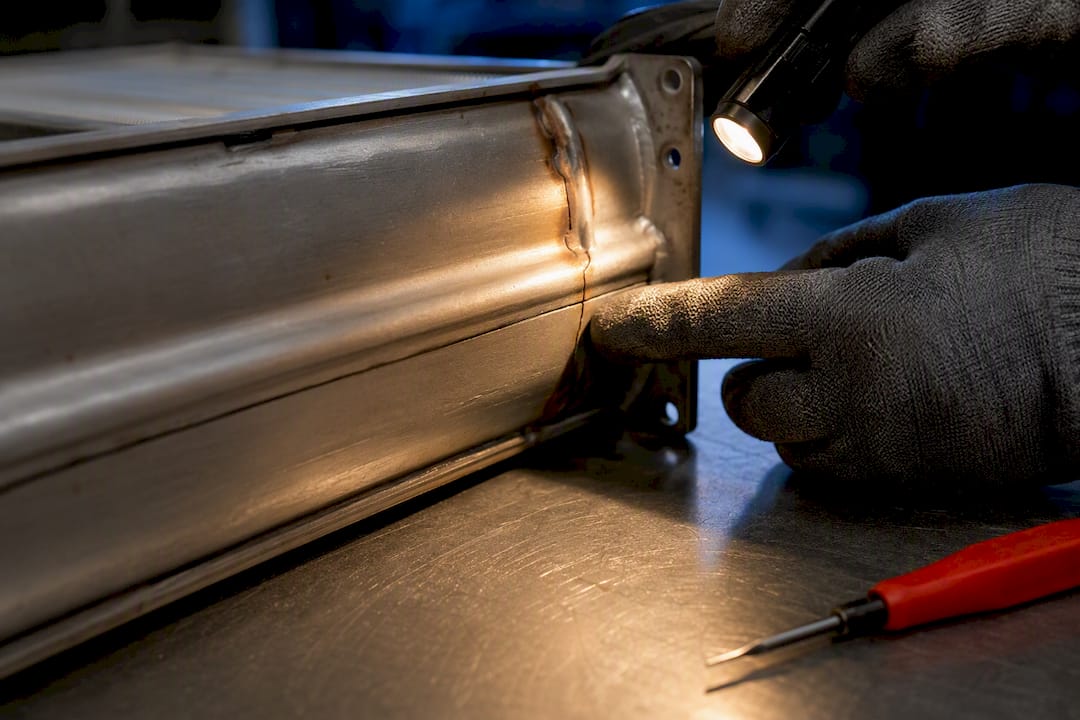
Visual inspection backs up the numbers. Technicians use a flashlight, an inspection mirror, or a borescope camera to look for actual cracks or soot staining inside the heat exchanger, since a visible crack or scorch mark tends to settle any doubt the meter readings raised. Some situations call for extra steps: dye or tracer tests, manometer pressure checks, or CO sampling directly at individual registers to isolate which section of the system is leaking.
Ask to see the numbers, not just hear a verdict. A tech who can show you the flue CO reading, the register reading, and a photo or video of the crack has given you something you can actually evaluate, not just a recommendation to trust blindly.
What Happens After a Crack Is Confirmed?
A confirmed crack changes the metal around it, not just the spot you can see. That’s why patching isn’t on the table.
- Replacement is the standard remedy rather than patching, whether that means swapping the heat exchanger alone or replacing the whole furnace, according to Furnace.
- What decides exchanger-only versus full furnace replacement: the unit’s age, whether the model still has parts available, how much corrosion surrounds the crack, and whether a standalone exchanger swap is even cost-effective compared to a new furnace.
- Ask for proof before committing: meter readouts, photos or video of the crack, and even the physical removed part. For a repair this size, a second opinion is a reasonable request, not an insult to the first technician.
Preventing a Cracked Heat Exchanger Before It Starts
Most of the causes above are preventable with routine attention.
- Change filters on schedule and check that return vents aren’t blocked by furniture or rugs.
- Book an annual combustion tune-up and safety check before heating season starts.
- Have a professional evaluate short cycling or sizing problems. Regular inspection also catches early soot or discoloration, per Therma, before it turns into a crack.
- Test your CO detectors monthly and make sure one is installed near sleeping areas.
Pro Tip: If you can check or swap a filter yourself, do it monthly during heating season. Anything involving the burner compartment, flame color, or gas connections is a call-a-pro situation, not a DIY one.
What Fair HVAC Diagnostics Should Look Like
A technician who’s confident in the diagnosis will show you the combustion analyzer numbers and photos, not just tell you what they found. You should get a written estimate before any work starts, and a safety-first recommendation that explains why replacement, not a patch, is the right call. If a shop condemns your furnace on a high-dollar job, asking for a second opinion or the removed part is completely reasonable. Ricottaheatingandair has spent 50 years serving St. Louis and Jefferson County heating customers, and that track record, backed by 150+ five-star reviews, is built on showing homeowners the evidence, not just the invoice.
— Alan
Get a Same-Day Heat Exchanger Inspection
If you’re seeing any of the signs above, waiting for a “better time” is the one move that actually costs you. Technicians often bring combustion analyzers to furnaces, not just their opinion, so you can see the CO readings and any crack evidence yourself before agreeing to anything.
Our team handles emergency furnace diagnostics and repair across St. Louis and Jefferson County, along with CO testing, heat exchanger and furnace replacement, and ongoing maintenance plans designed to catch corrosion and airflow problems before they become cracks. If your furnace is showing any hard or soft signal from this guide, call now or request emergency service and get a technician out to your home today.
This article is general information, not a substitute for advice from a qualified doctor. Consult a qualified healthcare professional about your own circumstances before acting on anything here.
Sources
- Cracked Heat Exchanger: What Does It Mean? — Lennox
- Carbon Monoxide (CO) — CDC
- Cracked Heat Exchanger — Trane
- Furnace