
Furnace Repair: 7 Warning Signs | Jefferson County, MO
Table of Contents
- Warning Signs Your Furnace Needs Repair
- Safe Homeowner Troubleshooting Before Calling for Service
- Furnace Blowing Cold Air: Causes and Next Steps
- Furnace Making Strange Noises: What Different Sounds Mean
- Furnace Repair or Replacement: How to Decide
- Understanding Furnace Repair Costs and Budget Planning
- Urgent Safety Signs: When to Stop Using Your Furnace
- Furnace Age and System Lifespan: Planning Ahead
- Frequently Asked Questions
Warning Signs Your Furnace Needs Repair
Your furnace works hard during Missouri's cold winters. If your Jefferson County home isn't staying warm, unusual sounds, weak airflow, or frequent shutdowns can help you spot a problem before it gets worse.
Ricotta Heating & Air is a family-owned HVAC company based in Hillsboro, MO. We help homeowners sort out furnace problems and understand what needs attention. Not every heating problem calls for a new furnace, but ignoring warning signs can lead to more damage.
Here are seven signs your furnace may need repair:
1. Insufficient Heat or Furnace Not Blowing Warm Air
Your furnace runs, but the air coming from the vents stays lukewarm or cold. If that continues beyond startup, something needs attention.
Possible causes include a clogged filter, an ignition problem, or a blower issue. Check the thermostat settings first. If the furnace still won't deliver warm air, call a technician.
2. Uneven Temperatures Between Rooms
One room stays warm while another stays cold. Adjusting the thermostat doesn't solve it.
This can point to leaky ductwork, blocked vents, closed dampers, or a blower problem. Insulation and air leaks can also affect room temperatures. A technician can check the system rather than assume the furnace itself is at fault.
3. Rising Energy Bills
Your heating bills climb even though your thermostat settings and household routine haven't changed. A furnace that runs longer than it should may need attention.
Compare energy use as well as the bill total. Colder weather and changing utility rates can raise costs, too. If those don't explain the increase, have the filter, airflow, and furnace operation checked.
4. Furnace Making Strange Noises
A steady fan sound is normal. New banging, rattling, grinding, or squealing is not something to ignore.
Rattling may come from loose panels or components. Squealing can point to motor bearings or a worn belt on a belt-driven blower. A loud bang at ignition can indicate delayed ignition. Stop using the furnace if it bangs at startup or makes grinding sounds, and call a technician.
5. Frequent Repairs and Service Calls
If your furnace keeps breaking down, it's worth looking at the whole system instead of treating each repair as an isolated problem.
Repeated failures may reflect worn components or an unresolved underlying issue. Ask a technician to review the repair history and compare repair and replacement options. The number of service calls alone doesn't determine whether a furnace needs replacing.
6. Visible Damage or Rust
Rust, corrosion, water stains, or visible cracks deserve a closer look. Moisture can damage the cabinet and internal components.
Missouri's humid summers make basement moisture worth watching, but rust near a furnace can also come from a leak or condensate problem. Don't assume humidity is the only cause. Have a technician inspect visible damage without removing panels yourself.
7. Unusual Smells or a Yellow Pilot Flame
A persistent burning, chemical, or musty odor needs investigation. If your furnace has a standing pilot, a persistently yellow flame instead of its usual blue flame may indicate a combustion problem.
Flame color or odor alone cannot confirm a cracked heat exchanger or rule out carbon monoxide. Carbon monoxide has no smell. Stop using the furnace and arrange an inspection for suspected combustion problems. If you smell gas or a carbon monoxide alarm sounds, leave immediately and call for emergency help from outside.
Safe Homeowner Troubleshooting Before Calling for Service
If there is no gas odor, carbon monoxide alarm, smoke, or other urgent warning sign, start with these simple checks. Leave electrical, fuel, and internal furnace repairs to a technician.
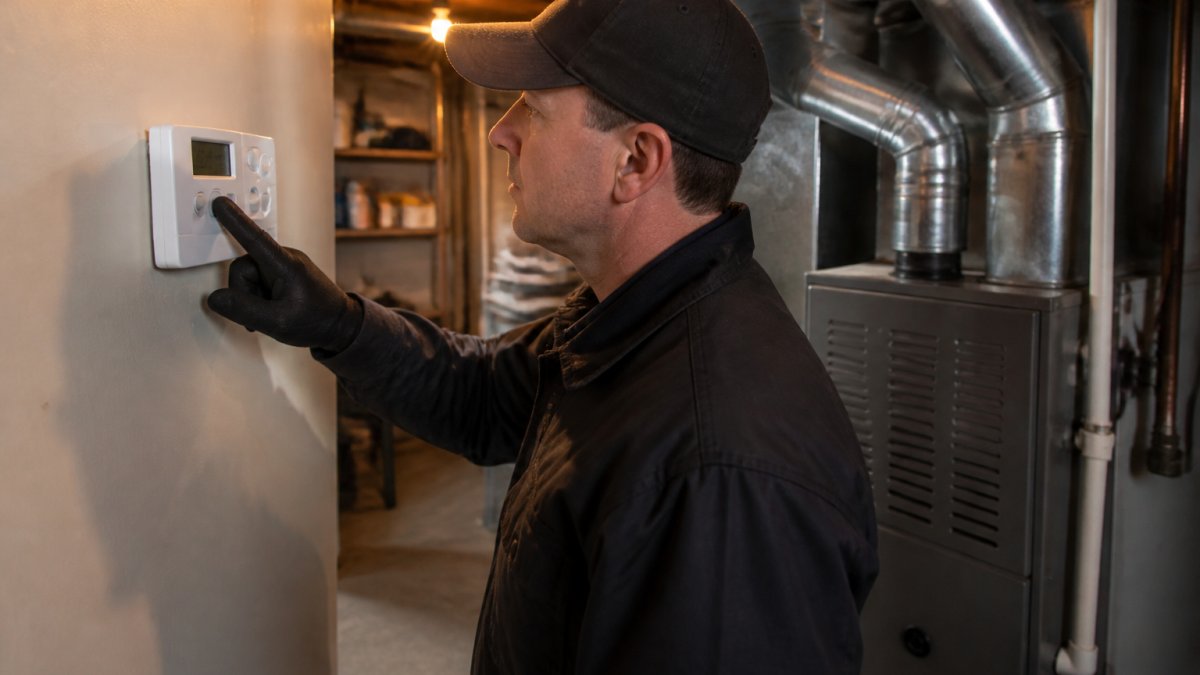
Check your thermostat first. Set the system to "heat" and the temperature above the current room temperature. Set the fan to "auto" so it doesn't circulate unheated air between heating cycles.
Look at your air filter. Turn the system off before checking an accessible filter. Replace a dirty disposable filter with the correct size and type, following the manufacturer's instructions.
Check all vents and returns. Make sure furniture, curtains, and other items aren't blocking them. Keep supply registers open unless a technician has advised otherwise.
Listen for the blower. The blower may start after a short delay. If the furnace attempts to heat but the blower never starts, stop using it and call for service.
Observe the pilot flame only if it is safely visible. Use the viewing window, if provided. Don't remove panels, adjust burners, or repeatedly try to relight a pilot.
Look for visible damage. Check the outside of the cabinet and visible piping for rust, water stains, or damage. Don't tighten gas connections, touch wiring, or open the furnace to investigate.
If these checks don't resolve the problem, a technician can test the system and identify the cause.
Furnace Blowing Cold Air: Causes and Next Steps
When your furnace blows cold air, the cause may be a setting, an airflow restriction, or a problem that requires service.
The thermostat settings need adjusting. Select "heat" for the system and "auto" for the fan. The fan's "on" setting can circulate room-temperature air even when the furnace isn't heating.
The filter is clogged. Restricted airflow can cause overheating. A safety control may shut off the burners while the blower continues running.
The blower isn't working properly. A blower problem can reduce airflow or cause a safety shutdown. Don't keep running the furnace if the blower fails to start.
The burners aren't staying lit. Ignition, flame-sensing, or other safety-control problems can interrupt heating. A technician should diagnose these issues and check for combustion or heat exchanger concerns when needed.
Ductwork is leaking. Leaks can let heated air escape or draw cooler air into return ducts, depending on their location.
Check the thermostat and filter, and note any visible duct damage without taking anything apart. If the air stays cold, call for service rather than repeatedly resetting the furnace.
Furnace Making Strange Noises: What Different Sounds Mean
Some sound at startup and shutdown is normal. A new, loud, or persistent noise deserves attention, though sound alone isn't enough to diagnose a failed part.
Squealing or whistling may come from restricted airflow, worn motor bearings, or a belt on a belt-driven blower. Check for a dirty filter or blocked vents. Leave internal repairs to a technician.
Rattling or clanking can indicate a loose panel or component. Have a technician locate the source rather than reaching inside the cabinet.
Banging or popping can come from expanding ductwork, but a loud bang when the burners ignite may indicate delayed ignition. Stop using the furnace and call for service if it bangs at ignition. A noise by itself does not establish that the heat exchanger is cracked.
Humming may be part of normal operation. A loud new hum, especially when the blower won't start, can indicate an electrical or motor problem.
Grinding can signal worn bearings or moving parts rubbing together. Shut the furnace off and have it inspected.
Tell the technician when the noise happens: at ignition, while the blower runs, or during shutdown. That detail can help narrow down the problem.
Furnace Repair or Replacement: How to Decide
For Jefferson County homeowners, the choice comes down to safety, condition, repair history, and how well the system heats the house.
Age of the system. Age provides context, but it isn't a diagnosis. An older furnace with a minor problem may still be repairable, while a serious safety issue needs a closer discussion.
Scope of the repair. Ask for a written estimate and an explanation of what the work will address. Compare that with a replacement proposal if the repair is substantial.
Frequency of repairs. Review repeated failures with the technician. Find out whether they share a cause and whether the proposed repair addresses it.
Energy efficiency. Compare the existing furnace's rated efficiency and condition with the proposed equipment. Don't assume a new furnace will solve high bills caused by duct leaks or poor insulation.
Your comfort needs. Uneven heating may involve ductwork, sizing, or air leaks. Those issues should be evaluated before choosing a replacement.
Ricotta Heating & Air can assess your furnace and explain your repair or replacement options so you can make an informed decision.
Understanding Furnace Repair Costs and Budget Planning
A useful repair estimate starts with a diagnosis. The failed component, equipment model, parts availability, and labor involved all affect the work required.
Basic checks include thermostat settings, batteries where applicable, and filter condition. Ask what a diagnostic visit includes before scheduling.
Component repairs may involve a blower motor, thermostat, or ignition control. The technician should explain the test results and identify the part that needs attention.
Major repairs such as heat exchanger replacement deserve a discussion about the condition of the rest of the furnace and whether replacement is worth considering.
After-hours service may have different terms. Ask about any applicable fees before authorizing a visit.
Before you authorize a repair, ask your technician:
- What failed, and what caused it?
- What will the repair address?
- Are there other condition or reliability concerns?
- Is replacement worth considering?
You should understand the recommended work and the written estimate before deciding.
Urgent Safety Signs: When to Stop Using Your Furnace
Some furnace problems require more than a routine service call. If you suspect a gas leak or carbon monoxide exposure, leave immediately rather than stopping to troubleshoot or shut equipment off.
A persistent chemical or burning smell needs professional investigation. If there is no suspected gas leak or carbon monoxide emergency, stop using the furnace and call for service. An odor cannot diagnose a cracked heat exchanger, and carbon monoxide itself is odorless. If a carbon monoxide alarm sounds or anyone has symptoms such as headache, dizziness, or nausea, get everyone outside and call 911. Do not reenter until responders say it is safe.
A persistently yellow pilot flame may indicate a combustion problem. Stop using the furnace and have it inspected. A blue flame does not prove that the system is safe.
Soot around the furnace can indicate improper combustion. Stop using the equipment and arrange an inspection before restarting it.
A suspected cracked heat exchanger requires professional evaluation. Don't remove panels to look for cracks. If a technician identifies unsafe damage, keep the furnace off until the problem is corrected.
A gas smell is an emergency. Leave the building immediately. Do not operate the thermostat, switches, appliances, or a phone inside, and do not use flames. From a safe location outside, call your gas utility's emergency line or 911. Stay out until responders clear the building.
Keep working carbon monoxide alarms installed and maintained according to their instructions. Don't rely on smell or flame appearance to detect carbon monoxide.
Furnace Age and System Lifespan: Planning Ahead
Your furnace's age is useful for planning, but maintenance history, installation quality, and current condition matter, too.
Newer equipment: Follow the manufacturer's maintenance recommendations and keep up with filter checks. Even a newer furnace needs attention if it starts acting differently.
Equipment showing wear: Keep records of repairs and routine maintenance. Ask the technician to explain any developing problems.
Older equipment needing major work: Compare repair and replacement options before committing. Consider safety, parts availability, and the condition of the whole system.
Equipment with unresolved safety problems: Keep it out of service until a qualified technician determines what is needed. Age alone should never override a safety finding.
The equipment label may list the manufacture date. If it doesn't, a technician or the manufacturer can help identify the age from the model and serial numbers.
Planning ahead gives you time to consider your options before you lose heat during cold weather.
Furnace trouble doesn't always mean you need a new system. A proper diagnosis can show whether a repair will address the problem.
If your Hillsboro furnace isn't heating properly, contact Ricotta Heating & Air to discuss the symptoms and arrange service.
Frequently Asked Questions
How do I know if my furnace needs repair or replacement?
Have a technician evaluate the furnace's safety, condition, and repair history. A minor, isolated problem may be worth repairing. Major damage or repeated failures may make replacement worth considering. Compare written estimates and ask whether ductwork or airflow problems also need attention.
What determines the cost of a furnace repair?
The failed part, furnace model, parts availability, and labor involved determine the estimate. A diagnosis is needed before a technician can quote the repair. Ask what the diagnostic visit includes and get a written estimate before authorizing the work.
Why is my furnace blowing cold air instead of warm air?
Possible causes include the fan being set to "on," a clogged filter, an ignition problem, or a safety shutdown. Check that the system is set to "heat," the fan is set to "auto," and the filter is clean. If the air stays cold, call for service rather than repeatedly resetting the furnace.
What unusual sounds mean my furnace needs professional service?
New rattling, squealing, loud humming, banging, or grinding should be checked. These sounds can come from airflow restrictions, loose components, motor problems, or ignition trouble. Stop using the furnace if it grinds or bangs when the burners ignite. A technician needs to inspect the system to identify the cause.
This article was written with AI assistance and edited for Hillsboro and Jefferson County homeowners by Ricotta Heating & Air. For advice about your own system, call (314) 333-5900.