
3 Rules for St. Louis Homeowners: When to Replace Your Furnace
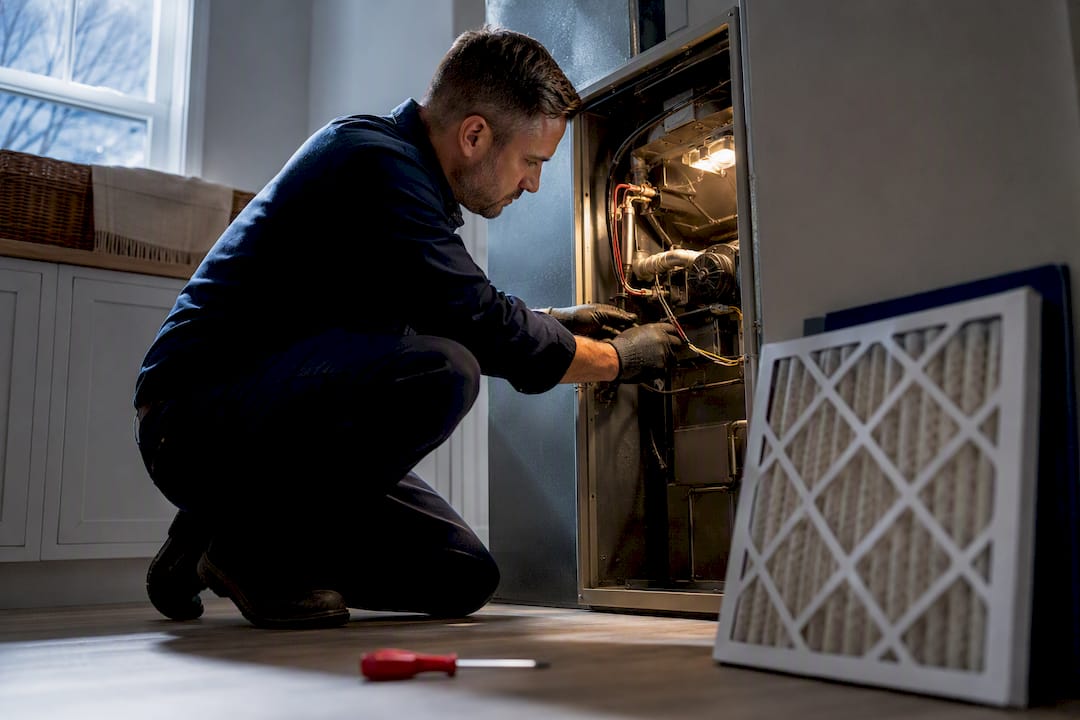
Replace your furnace now if it’s past 15 to 20 years old and showing major faults, or if you’ve hit a safety issue like a carbon monoxide alarm, gas smell, or cracked heat exchanger. If none of those apply, a licensed diagnostic will tell you where you actually stand.
TL;DR:
- Most furnaces need replacement around 15 to 20 years, with electric models lasting up to 30 years, depending on maintenance and installation quality.
- Frequent repairs, rising heating bills, and unusual noises or flames are strong indicators your furnace is nearing the end of its lifespan.
- Safety issues like carbon monoxide alarms, gas smells, or cracked heat exchangers demand immediate shutdown and professional diagnostics.
- Regular professional tune-ups and filter changes every 30 to 90 days significantly extend furnace life and efficiency.
- Homeowners should start budgeting for replacement by age 12 to 15 and seek multiple bids before scheduling off-season replacement for savings.
Table of Contents
- Signs You Need a New Furnace
- How Long Does a Furnace Actually Last?
- Should I Repair or Replace My Furnace?
- When Is a Furnace Problem a Safety Emergency?
- What Extends a Furnace’s Life?
- How Much Does Furnace Replacement Cost and When Should You Schedule It?
- The Bottom Line on Furnace Replacement
- Our Take on Honest Furnace Diagnostics
- Get a Straight Answer on Your Furnace, Not a Sales Pitch
- Sources
Signs You Need a New Furnace
Your furnace usually tells you before it fails completely. The trick is catching the pattern before winter forces a decision for you.
Frequent repairs top the list. If you’ve called for service multiple times in the past year or two, that’s not bad luck. It’s a system in decline, the way a car that keeps needing new belts and hoses is quietly warning you about the engine underneath.
Rising heating bills are the next tell. If your winter gas bill climbs significantly over prior years, after you account for weather, your furnace is losing combustion efficiency even if it still heats the house.
Other signs to watch for:
- Banging, screeching, or popping sounds, or a constant rattle when the blower kicks on
- Uneven heating or rooms that never quite reach the thermostat setting
- Long run times that never seem to satisfy the thermostat
- A yellow or flickering flame instead of steady blue, which points to incomplete combustion
- Soot around the unit or a persistent burning odor
- Rust, corrosion, or visible damage on the flue pipe or cabinet
Pro Tip: Take a photo of your flame through the furnace’s viewing window once a month. A healthy gas flame burns steady blue. If you ever see yellow, orange, or flickering, that’s your cue to call for a diagnostic that day, not next week.
How Long Does a Furnace Actually Last?
Gas furnaces typically run 15 to 20 years, electric furnaces stretch to 20 to 30 years since they have no combustion components to wear out, and oil furnaces land in the 15 to 25 year range.
Industry data puts the median residential furnace replacement age in the late teens — meaning most homeowners replace once, somewhere in that late-teens window, rather than stretching a unit to 25 or 30.
Where your furnace lands in its range depends less on age and more on how it was treated. Installation quality, your local climate’s demand on the system, total run hours, and how consistently you’ve kept up maintenance all shift the number up or down. Energy Star recommends homeowners start comparing modern, efficient models once a unit passes 15 years, since newer furnaces run meaningfully more efficiently and can cut heating costs even before the old one fails. Start budgeting in the low teens for a gas furnace. That gives you room to replace on your terms instead of during a January cold snap.
Should I Repair or Replace My Furnace?
Three decision rules take the emotion out of this call, and they work together rather than in isolation.
- The 50% rule. If a repair quote runs more than half the expected cost of a replacement, replacing is often the better choice. This rule adapts naturally as equipment prices rise, so it stays accurate even as costs climb year over year.
- The $5,000 rule. A rule of thumb multiplies the furnace’s age by the repair cost, and large results can indicate replacement is preferable. It’s a fast triage tool, but sanity-check it against current pricing before you commit.
- The 3-repair rule. Three or more repairs within a couple of years signals systemic decline, not a single bad part.
Two quick examples show how this plays out:
- A 12-year-old furnace with an $800 repair quote: 12 × $800 = $9,600, which clears the $5,000 threshold, but at 12 years old with one issue, repair is often still the smarter call. Run the 50% rule too before deciding.
- An 18-year-old furnace with a $2,200 blower motor repair: 18 × $2,200 = $39,600, and $2,200 likely exceeds half the cost of replacement anyway. Both rules point the same direction: replace.
Get at least two replacement bids before you decide anything. A diagnostic visit typically costs $80 to $200 and gives you real numbers to run through these rules instead of guessing.
When Is a Furnace Problem a Safety Emergency?
Safety overrides every rule above. No math applies here.
- Carbon monoxide alarm or symptoms (headache, dizziness, nausea): leave the house immediately, call emergency services, then call an HVAC professional. OSHA guidance is unambiguous that CO exposure requires immediate evacuation, not a wait-and-see approach.
- Gas smell: evacuate first, then call your gas company or emergency line from outside the home.
- Yellow flame, soot, or a burning smell: stop using the furnace and schedule an emergency diagnostic.
- Cracked heat exchanger: this is almost always a replace-only issue, since a crack can leak carbon monoxide directly into your air supply and repair rarely makes sense on an older unit anyway.
None of these are “monitor and see” situations. Treat them as immediate action items.
What Extends a Furnace’s Life?
Two habits do more for furnace longevity than anything else: an annual professional tune-up and changing filters every 30 to 90 days. Trane’s own maintenance guidance points to these as the highest-impact steps a homeowner can take, and a clogged filter forces your blower to work like it’s breathing through a pillow.
Installation matters just as much as upkeep. Proper Manual J load calculation sizes the furnace correctly for your home, preventing short cycling, which is one of the leading causes of early failure. A real diagnostic should always include:
- Combustion analysis
- Heat exchanger inspection
- Blower and control checks
Many HVAC service providers in St. Louis and Jefferson County offer experience and customer satisfaction demonstrated by positive reviews. Honest diagnostics, not upsells, is the whole approach.
Pro Tip: Set a recurring phone reminder for filter changes. It’s the cheapest insurance you’ll ever buy for a furnace.
How Much Does Furnace Replacement Cost and When Should You Schedule It?
Start saving once your gas furnace hits year 12 to 15. That gives you a real cushion before you’re forced into a decision during the coldest week of the year.
Replacement cost swings on a handful of factors: the unit’s heating capacity, its AFUE efficiency rating, existing ductwork condition, venting requirements, and local labor rates. Off-season replacement, meaning spring or fall, tends to cost less and gives contractors more scheduling flexibility than peak winter demand.
Before you sign anything:
- Request a Manual J calculation, not just a quote based on your old unit’s size
- Get itemized bids from at least two contractors
- Check manufacturer and labor warranties
- Ask whether ductwork modifications are needed
The Bottom Line on Furnace Replacement
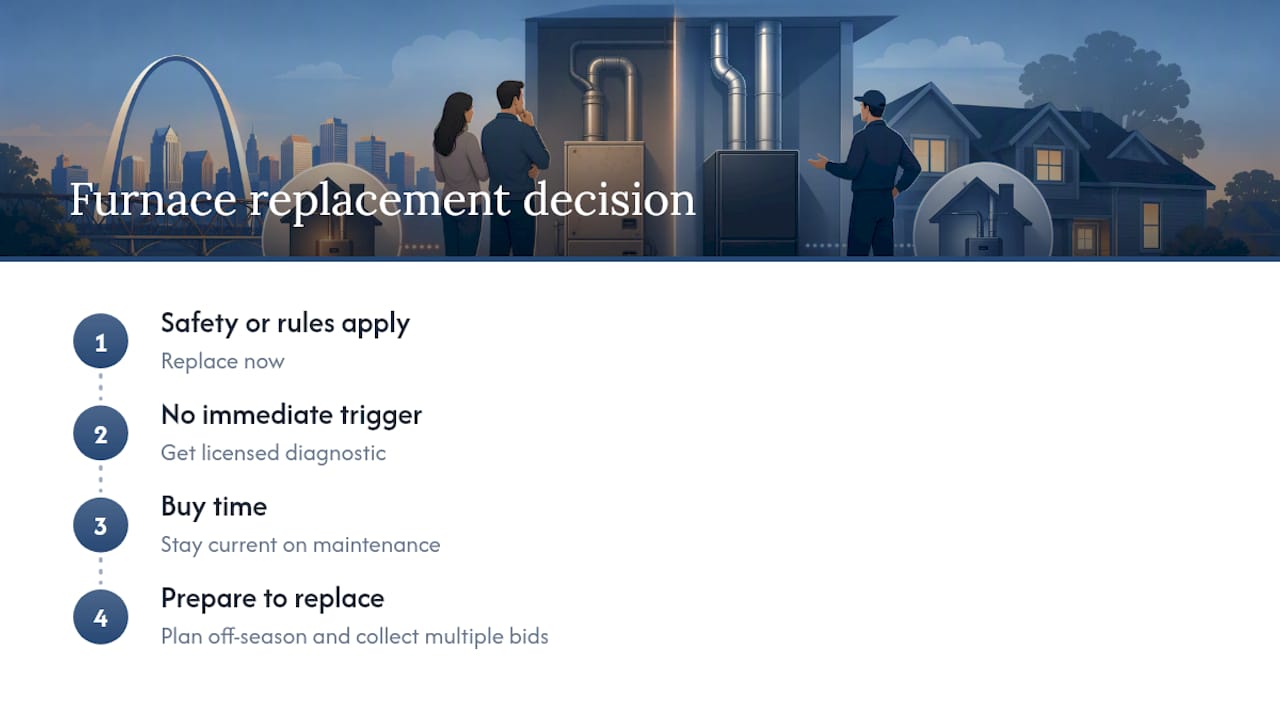
If safety concerns or the replacement rules apply, replace now. If not, get a licensed diagnostic and stay current on maintenance to buy time. Either way, plan for off-season replacement and collect multiple bids before you commit.
Our Take on Honest Furnace Diagnostics
We’d rather tell a Crestwood homeowner their 14-year-old furnace has three good years left than talk them into a replacement they don’t need yet. That’s the whole philosophy behind our diagnostics: give you the real number, not the scary one. If your furnace is acting up or you just want peace of mind before winter, reach out for an inspection or emergency support.
— Alan
Get a Straight Answer on Your Furnace, Not a Sales Pitch
Certain HVAC companies provide honest, in-person evaluations on furnace repairs without commission-driven upsells, serving homeowners across St. Louis and Jefferson County, including Mehlville, Cedar Hill, Arnold, and Manchester.
If your furnace is showing any of the warning signs above, start with a furnace and AC repair diagnostic. If it checks out and you’d rather avoid this decision again in a few years, our HVAC maintenance plans keep filters, tune-ups, and inspections on schedule automatically. Call today to book a visit, no pressure, just a clear answer about where your furnace actually stands.
Sources
- ENERGY STAR — Replace your heating system
- Home Energy Decisions — Repair or Replace HVAC (repair vs replace rules)
- OSHA — Carbon monoxide factsheet
- Trane — Gas furnace maintenance tips