
Duct Sealing for Historic Homes | Jefferson County, MO
Quick Summary
Yes, ductwork in a historic home can often be sealed. First, inspect accessible ducts for rust, tears, loose connections, and suspect insulation. Repair damaged sections before sealing sound joints with compatible duct mastic or approved HVAC foil tape. Follow the product instructions, and never disturb material that may contain asbestos.
- Leaky ducts can waste heated and cooled air.
- Clean sound, asbestos-free surfaces before applying sealant.
- Use products approved for the duct material—not ordinary cloth duct tape.
- Have a technician check airflow and combustion safety before and after sealing.
- Plan access carefully to protect old plaster, trim, and framing.
Table of Contents
- Why Leaky Ducts in Older Homes Waste Energy
- How to Assess Old Ductwork Before You Seal Anything
- Older Duct Materials and How to Handle Them
- How to Seal Old Ductwork: A Step-by-Step Method
- Mastic Duct Sealant for Accessible Joints
- Foil Tape, Metal Tape, and Why Cloth Duct Tape Fails
- Sealing Ducts From the Inside for Hidden Leaks
- Duct-Sealing Risks in Old Houses
- Request a Duct Assessment for Your Older Home
- Frequently Asked Questions
Why Leaky Ducts in Older Homes Waste Energy
In an older Jefferson County home, leaking ducts can send conditioned air into an attic or crawlspace instead of the rooms that need it. Return leaks can also draw unconditioned air into the system. During Missouri's humid summers and cold winters, those problems can make it harder to keep rooms comfortable.
Ricotta Heating & Air is a family-owned company based in Hillsboro, serving Jefferson County and South St. Louis County.
What Duct-Sealing Research Shows
This HUD field report on duct sealing examines air-distribution losses and sealing methods. Your home's results depend on the condition and location of its ducts, so an inspection matters more than a broad efficiency estimate.
- Return leaks can pull in attic or crawlspace air.
- Supply leaks can leave distant rooms short on heated or cooled air.
- The system may run longer as it tries to reach the thermostat setting.
Sealing can help, but it will not correct every airflow problem. Damaged ducts, poor sizing, and blocked returns need separate attention.
How to Assess Old Ductwork Before You Seal Anything
Before opening a tub of mastic, look at the whole system. Sealing a duct that is falling apart can hide a repair it still needs.
Start with a visual inspection of safely accessible areas:
- Locate duct joints in the attic, basement, and crawlspace.
- Check for rust, crushed sections, and disconnected runs.
- Look for gaps at duct connections near the furnace and registers.
- Note old insulation, duct wrap, or tape without touching it.
Do not assume the joints visible from the attic hatch are the only leaks. Other connections may be behind equipment or beneath insulation. Leave unsafe or inaccessible areas to a professional.
Our guide to furnace ductwork inspection for older homes explains what to check and in what order.
Older Duct Materials and How to Handle Them
The duct material determines which products and repair methods are appropriate.
- Sheet metal with slip joints: Sound, properly secured joints can often be sealed with compatible mastic.
- Rigid fiberglass duct board: This material can crumble when damaged. Use its approved closure system, and have deteriorated sections assessed rather than coating over them.
- Flexible duct: Torn, crushed, or sagging runs need repair, replacement, or proper support before sealing.
- Suspected asbestos duct wrap: Stop work and consult an asbestos professional before disturbing it.
If you are unsure what you have, our article on which duct material is right for an older home explains the common options.
Never cut, sand, scrape, or remove material you suspect contains asbestos. Appearance alone cannot confirm whether it is safe to handle.
How to Seal Old Ductwork: A Step-by-Step Method
These steps describe sealing accessible, sound ductwork after suspect materials and safety concerns have been addressed. Do not apply duct sealant to appliance vents or flues, or cover equipment access panels.
1. Map the system and identify leaks. Inspect accessible connections and mark suspected leaks. A technician can test leakage and establish baseline airflow. Keep clear of hot surfaces, wiring, and moving parts.
2. Turn off the system. Switch it off at the thermostat and disconnect power before working nearby. Let hot equipment cool. Leave work inside equipment cabinets to a technician.
3. Prepare each joint. On confirmed asbestos-free surfaces, remove dust and loose, failed tape as the sealant instructions allow. Surfaces should be clean and dry. Repair and mechanically secure loose connections using the method appropriate for the duct material.
4. Apply compatible mastic. Brush it over the joint at the thickness specified by the manufacturer. Use approved reinforcing mesh where required. Do not try to bridge large gaps or cover crumbling duct board with sealant.
5. Use approved HVAC tape where appropriate. Foil tape can seal suitable seams when it is rated for the duct material and application. Follow its surface-preparation instructions and press it down firmly. Tape is not a substitute for required mechanical fasteners.
6. Follow curing instructions. Allow the sealant to cure as directed before restarting the system. Product requirements vary.
7. Test the results. Have leakage, room airflow, and combustion safety checked after the work. If rooms still receive uneven airflow, balancing may be the next step. This article on improving airflow in older homes discusses related considerations.
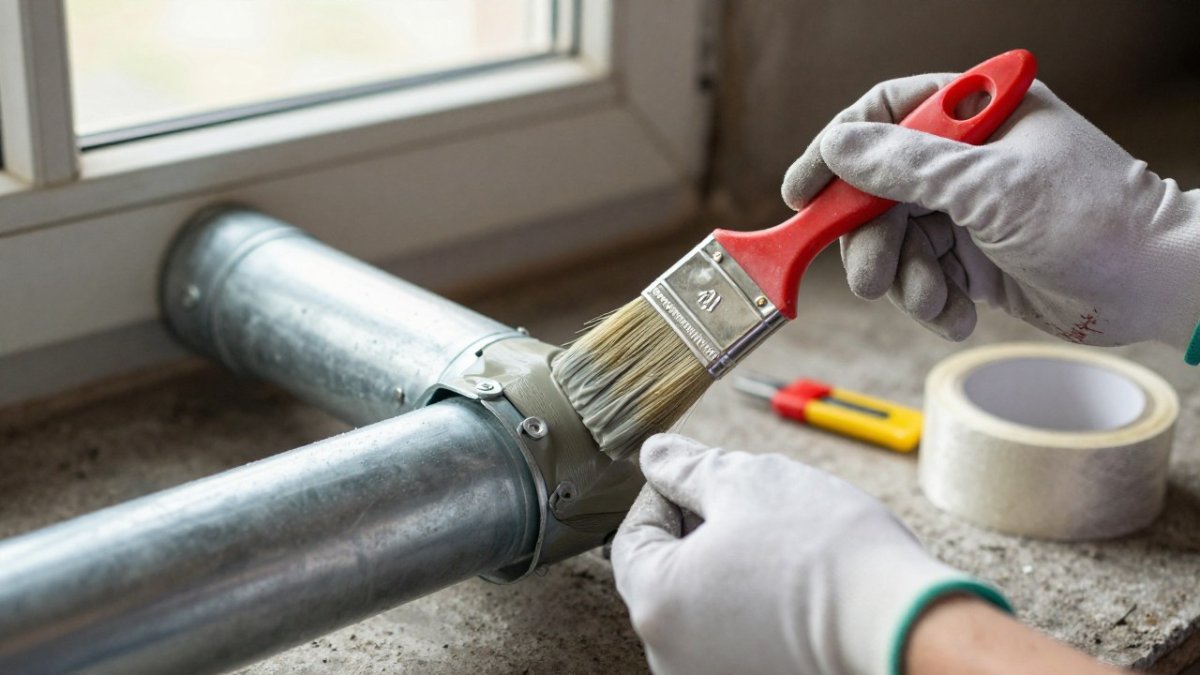
Hidden leaks may still need attention. Do not move old insulation or cut into finished surfaces just to reach a suspected leak without an access plan.
For more on damaged connections, see our step-by-step guide to repairing ductwork in older homes.
Mastic Duct Sealant for Accessible Joints
Duct mastic is a thick sealant applied to compatible joints and seams. It is useful on irregular surfaces where tape may not make full contact.
- Suitable products can seal metal joints, seams, and connections.
- Some gaps require approved reinforcing mesh.
- The cured seal accommodates normal duct movement.
- Clean, dry surfaces are essential for adhesion.
Mastic can be messy and takes time to apply. Check the label for compatible materials, application thickness, gap limits, and curing requirements.
Foil Tape, Metal Tape, and Why Cloth Duct Tape Fails
Approved HVAC foil tape can be a suitable seal on clean, compatible surfaces. Not every roll labeled “metal tape” is intended for ducts, so check the product's listing and instructions.
Ordinary cloth duct tape is not a durable duct seal. Heat and aging can weaken its adhesive. The Department of Energy's guidance on tight duct sealing covers appropriate materials.
- HVAC foil tape: Use a product approved for the duct material and connection.
- Other metal tapes: Confirm their intended application before use.
- Cloth duct tape: Do not use it as a permanent duct seal.
Apply tape without wrinkles and press it down as directed. Neither tape nor mastic replaces the fastening method required to hold a connection together.
Sealing Ducts From the Inside for Hidden Leaks
Some leaks are behind walls, beneath insulation, or inside enclosed chases. Professional aerosol sealing may reach suitable leaks without opening those surfaces.
The process sends sealant particles through a prepared duct system. Particles collect at leakage points and build a seal.
It may be worth considering when:
- Leaks are inside finished walls or ceilings.
- Manual access would require substantial demolition.
- Preserving historic plaster is a priority.
A technician must first determine whether the system is suitable. Aerosol sealing does not replace repairs to disconnected, crushed, or badly deteriorated ducts.
Duct-Sealing Risks in Old Houses
Sealing changes how air moves through the system. Checking the whole house helps prevent a duct repair from creating a different problem.
Combustion safety and backdrafting. Naturally drafted furnaces and water heaters need adequate combustion air and proper venting. Changes in house pressure can affect draft and allow combustion gases to enter living spaces. Have a qualified technician check venting and combustion safety before and after sealing.
Supply and return imbalance. Fixing leaks can expose existing duct-sizing or return-air problems. Check room-by-room airflow and system pressure after the work rather than assuming every uncomfortable room had a leak.
Moisture and condensation. During humid weather, cool ducts can collect condensation if insulation or its vapor barrier is missing or damaged. Address crawlspace moisture and insulation problems along with leaks. Simply adding crawlspace ventilation is not always the right answer.
Damage to historic finishes. Access work can crack plaster or damage trim and framing. Plan openings carefully and avoid pulling or forcing old materials. Normal pressure changes from duct sealing are not a reason to expect framing or plaster to crack.
Access in attached and multifamily buildings. Ducts inside shared walls or finished ceilings may need a coordinated repair plan. Depending on their condition, targeted repairs, internal sealing, or replacement may be appropriate.
| Risk | What Can Happen | What to Do |
|---|---|---|
| Backdrafting | Combustion gases enter the home. | Check venting and combustion safety before and after sealing. |
| Pressure imbalance | Some rooms receive too little air. | Check system pressure, supply and return airflow, and room balance. |
| Moisture problems | Condensation can contribute to mold growth. | Address moisture sources and damaged duct insulation or vapor barriers. |
| Damage to old finishes | Access work damages plaster, trim, or framing. | Plan access and protect historic materials. |
| Hard-to-access ducts | Manual sealing may require opening finished surfaces. | Compare internal sealing, targeted repair, and replacement. |
For more safety checks, read our guide to repairing an old HVAC system safely.
Request a Duct Assessment for Your Older Home
Older homes deserve careful work. If you do not know what your ducts or their insulation are made of, get an assessment before cleaning, scraping, or sealing them.
For help with an older Jefferson County home, contact Ricotta Heating & Air to discuss a duct assessment. Ask which sections need repair, which can be sealed, and how airflow and safety will be checked afterward.
Start with the condition of the ducts—not a roll of tape. A sound repair plan should address leaks without overlooking damaged materials, moisture, or combustion safety.
Frequently Asked Questions
How do you seal old ductwork?
Inspect accessible ducts for loose connections, rust, crushed sections, and suspect insulation. Have potential asbestos assessed before disturbing it. Repair damaged ducts and secure connections, then seal sound joints with compatible mastic or approved HVAC tape. Follow product instructions and have leakage, airflow, and combustion safety checked after the work.
Is mastic or foil tape better for sealing ducts?
It depends on the duct material and joint. Mastic works well on many accessible seams and irregular surfaces. Approved HVAC foil tape can work well on clean, compatible surfaces. Both require proper preparation, and neither replaces required mechanical fasteners. Avoid ordinary cloth duct tape.
Can sealing ducts in a historic home cause problems?
Yes, if the work overlooks the rest of the system. Sealing can change pressure and airflow, which may affect naturally drafted combustion appliances. Old insulation and fragile finishes also require care. An assessment should address suspect materials, moisture, airflow, and combustion safety before and after sealing.
Can ducts be sealed from the inside?
Yes. Professional aerosol sealing sends sealant particles through a prepared duct system to seal suitable leaks from within. It may reach joints behind walls or ceilings, but the system must be assessed first. It cannot replace repairs to crushed, disconnected, or badly deteriorated ducts.

This article was written with AI assistance and edited for Hillsboro and Jefferson County homeowners by Ricotta Heating & Air. For advice about your own system, call (314) 333-5900.