
Old HVAC Repair: Safety Checks in Jefferson County, MO
Quick Summary
Before repairing an older HVAC system, have a technician check whether it can operate safely. In Hillsboro homes, that means looking beyond the failed part for problems such as a damaged heat exchanger, worn wiring, or a failing compressor. Leave gas, electrical, and refrigerant repairs to a qualified technician.
- If you smell gas, hear a carbon monoxide alarm, or suspect carbon monoxide exposure, leave immediately and call 911 or your gas utility from outside. Do not stop to operate switches or shut down the equipment.
- For persistent burning odors or soot, stop using the system and arrange an inspection. If there is smoke or fire, leave and call 911.
- Refrigerant handling is regulated by the EPA and belongs with a technician who meets the applicable requirements.
- When there are no danger signs, check the thermostat settings, air filter, and visible power controls before calling for service.
- Repair may make sense when the problem is isolated, parts are available, and the rest of the system is sound.
Table of Contents
- Why Older HVAC Systems Need a Different Approach
- Signs an HVAC System Is Unsafe to Run
- Old Furnace Safety Inspection: What a Technician Checks
- HVAC Troubleshooting for Homeowners: Safe First Steps
- Old HVAC System Repair vs. Replacement: How to Decide
- When to Call Ricotta for an HVAC Diagnosis
- Frequently Asked Questions
Why Older HVAC Systems Need a Different Approach
Repairing an old HVAC system starts with two questions: can it run safely, and is it worth fixing? Age alone does not answer either one. The condition of the equipment matters more than a birthday on the data plate.
Missouri's humid summers and cold winters put heating and cooling equipment to work throughout the year. For Jefferson County homeowners, an inspection can help separate an isolated failure from broader wear.
A cracked heat exchanger, failing compressor, or damaged wire may not be visible from outside the cabinet. Replacing the part that stopped working does not necessarily address those other problems.
Older equipment may also use refrigerant that is harder to source. The EPA regulates refrigerant handling and recovery, including technician certification requirements. Leave work on the refrigerant circuit to a properly qualified technician.
Signs an HVAC System Is Unsafe to Run
Some warning signs call for an inspection. Others mean you need to leave the house immediately. Do not keep troubleshooting when you suspect a gas leak, carbon monoxide exposure, or an electrical hazard.
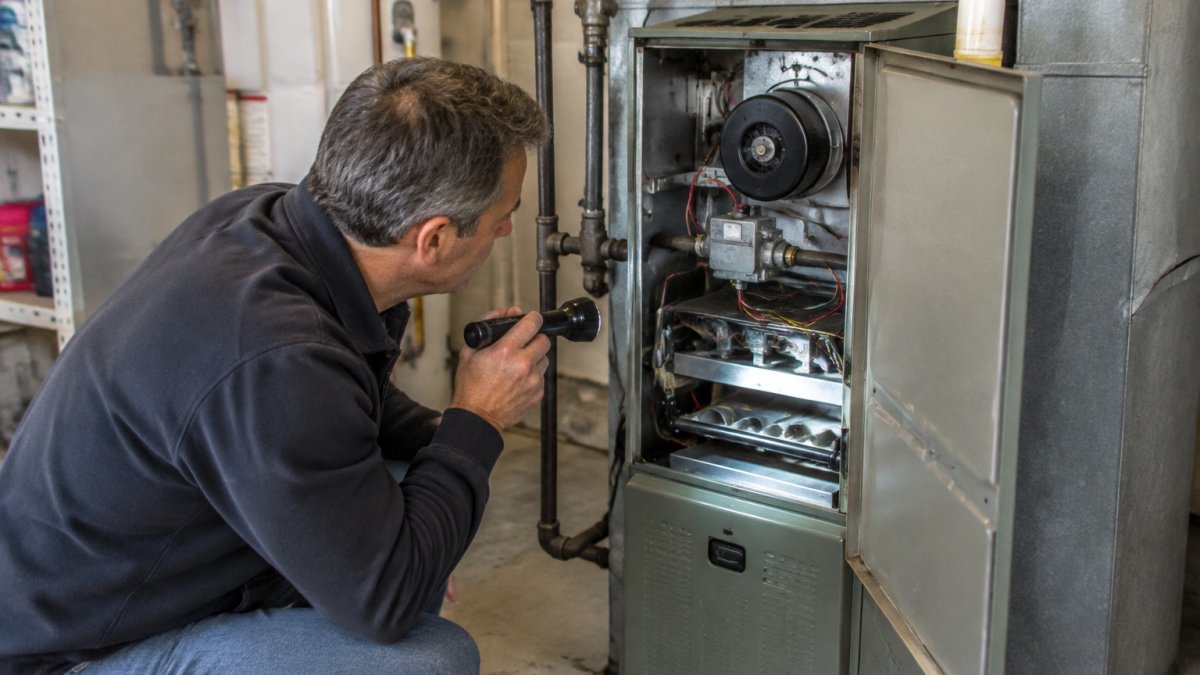
A persistent burning smell, soot, or an unusual burner flame can signal an electrical or combustion problem. Do not remove panels to inspect the flame yourself. Carbon monoxide has no smell, so stale air or the absence of an odor cannot tell you whether it is present.
Test carbon monoxide alarms and replace them according to the manufacturer's instructions. For equipment problems after any immediate danger has been addressed, see our emergency furnace repair service in Jefferson County, MO.
Warning Signs That Mean Stop Using the System
Take these signs seriously, but choose the right response:
- Persistent burning smell: shut off the system only if you can do so safely, and call a technician. For smoke or fire, leave and call 911.
- Soot or black marks around the furnace or vent: stop using the equipment and arrange an inspection.
- Carbon monoxide alarm: get everyone outside immediately and call 911. Do not reenter until emergency responders say it is safe.
- Headaches, dizziness, or nausea that improve outside: leave immediately, call 911, and seek medical attention for possible carbon monoxide exposure.
- Gas odor: leave without operating switches, phones, or appliances inside. Call 911 or your gas utility from outside, away from the building.
- Water around equipment with signs of electrical trouble: stay clear of the water and equipment, and call for professional help.
Read more in Furnace Carbon Monoxide Warning Signs and Cracked Heat Exchanger Symptoms: When to Act. Neither guide replaces an inspection or an emergency response.
Symptoms That Need a Professional Look Soon
Schedule service for these problems rather than waiting for the system to quit:
- Rattling, grinding, or squealing from the blower
- Breakers that trip when the system starts; leave the system off until it is checked
- Short cycling, when the system repeatedly starts and stops
- Uneven heating or cooling between rooms
- An unexplained increase in energy use
Possible causes include airflow restrictions, worn motors, electrical faults, and control problems. The symptom alone does not identify the failed part.
Old Furnace Safety Inspection: What a Technician Checks
An older fuel-burning furnace needs more than a quick visual check. A technician should inspect the heat exchanger, evaluate combustion and carbon monoxide readings, and check venting, electrical connections, and safety controls.
Ask the technician to explain the findings and any readings that affect safe operation. Our Furnace Tune-Up Checklist explains what a tune-up should include.
Ductwork deserves attention, too. In older houses, ducts may have been altered during additions or remodeling. Leaks, poor connections, and restricted returns can affect airflow and how the furnace operates.
HVAC Troubleshooting for Homeowners: Safe First Steps
If there are no warning signs, a few basic checks may explain a no-heat or no-cooling problem. Follow the equipment instructions, stay out of service compartments, and stop if anything looks damaged or unfamiliar.
Start with the thermostat, then check accessible power controls and airflow. These steps do not replace a safety inspection.
Step 1: Check the Thermostat Settings
- Check the mode. Select heat or cool as needed. Setting the fan to on can run the blower even when the system is not heating or cooling.
- Check the set temperature. For heat, set it above room temperature. For cooling, set it below room temperature.
- Check the batteries. If your thermostat uses replaceable batteries, follow its instructions for replacing them.
- Check the schedule and hold settings. A programmed setback may explain why the equipment is not running.
If the display stays blank after the appropriate battery check, call for service. The problem could involve the thermostat, its power supply, or a system control.
Step 2: Check the Power Controls
- Look at the breaker position. If the HVAC breaker has tripped, leave it off and call a technician. Do not remove the electrical panel cover or repeatedly reset the breaker.
- Check the service switch. A furnace or air handler may have a nearby switch that looks like a light switch. If it was accidentally turned off, restore it only when there are no warning signs and it was not intentionally shut off for service.
- Leave the outdoor disconnect alone. Do not open it, pull it out, or reseat it. Have a technician check it.
A tripped breaker can indicate an electrical fault or excessive current. Restoring power without finding the cause can put damaged equipment back into operation.
Step 3: Check Airflow
- Check the air filter. Turn the system off before using a homeowner-accessible filter slot. Replace a dirty filter with the size and type specified for the equipment, and follow the manufacturer's inspection and replacement guidance.
- Clear debris around the outdoor unit. With the system off, remove loose leaves and grass clippings from the surrounding area. Follow the manufacturer's clearance requirements. Do not remove grilles or reach inside.
- Check supply and return vents. Move furniture or rugs that block them, and keep airflow paths open.
Step 4: Match the Symptom to Possible Causes
Use this table to choose a next step, not to diagnose or replace components yourself.
| What You Notice | Possible Causes | Safe Next Step |
|---|---|---|
| No heat; thermostat is blank | Dead batteries, loss of control power, or a thermostat fault | Replace batteries if applicable; call if the display stays blank. |
| No cooling; outdoor unit is silent | Power, control, or electrical component problem | Check thermostat settings; leave a tripped breaker off and call. |
| Outdoor unit hums, but the fan does not spin | Capacitor or fan motor problem | Turn the system off and call a technician. Do not try to spin the fan. |
| Ice on the indoor coil or refrigerant line during cooling | Restricted airflow or a refrigerant problem | Turn cooling off, check the accessible filter, and arrange service. Do not chip away the ice. |
| Short cycling | Airflow, sizing, control, or safety-switch problem | Check the filter and thermostat settings; call if it continues. |
| Breaker trips on startup | Compressor, motor, or wiring fault | Leave the breaker off and call a technician. |
| Persistent burning smell at the furnace | Overheating or an electrical fault | Shut the system off if safe and call for service. For smoke or fire, leave and call 911. |
Where the Safe DIY Line Is
Homeowner checks stop at service panels, wiring, gas components, and refrigerant lines. Do not open electrical compartments, touch capacitors or contactors, bypass safety switches, or add refrigerant. Some electrical components can retain a dangerous charge after power is shut off.
If you are considering smart thermostats, have compatibility and wiring requirements checked first. A thermostat upgrade is separate from diagnosing an unsafe or malfunctioning system.
If the basic checks do not solve the problem, arrange a professional diagnosis. That is where homeowner troubleshooting should end.
Old HVAC System Repair vs. Replacement: How to Decide
The decision comes down to safety, overall condition, parts availability, and the scope of the repair—not age alone.
Compare a written repair estimate with a replacement estimate. Ask what each option addresses and whether other major components show signs of wear.
Repair may be reasonable when one available part has failed and the rest of the system is sound. Repeated breakdowns, unavailable parts, or major component damage deserve a closer comparison. A cracked heat exchanger means the furnace must stay out of service until the damaged component or furnace is properly replaced.
| Situation | What to Consider |
|---|---|
| One faulty part; system otherwise in good condition | Repair may be practical if the part is available. |
| Repeated repairs | Compare replacement with the remaining repair needs. |
| Cracked heat exchanger | Keep the furnace off; compare heat exchanger replacement with furnace replacement. |
| Failed compressor on an older unit | Compare repair scope, system condition, and replacement options. |
| Obsolete or unavailable parts | Ask whether an approved repair is possible; consider replacement. |
| Major repair relative to replacement cost | Compare both estimates and what each option resolves. |
Check Warranty Terms and Insurance Coverage
Before authorizing work, review any equipment or home service coverage you may have. Do not assume an older system is covered or that a particular repair qualifies.
Warranty terms. Check the actual documents or contact the provider about eligibility, authorization requirements, and exclusions.
Homeowners insurance. Ask your insurer about your policy and whether permits or improperly performed work could affect a claim. Coverage depends on the policy and circumstances.
Refrigerant Rules and the Repair Decision
Refrigerant type and availability can affect whether a repair is practical. Handling and recovery are federally regulated, so work on the refrigerant circuit is not a homeowner task.
Ask your technician to identify the refrigerant, explain any leak or component problem, and outline the available repair options. Adding refrigerant alone does not fix a leak.
Contact Ricotta Heating & Air to discuss an estimate for your equipment.
When to Call Ricotta for an HVAC Diagnosis
If your older system is struggling or you are unsure whether it is safe to run, arrange an inspection. Ricotta Heating & Air is a family-owned company based in Hillsboro, serving Jefferson County and South St. Louis County. Ask for an explanation of the problem, the condition of the equipment, and your repair or replacement options.
Frequently Asked Questions
Can an old HVAC system be repaired safely?
Often, yes, if the problem is repairable and an inspection confirms the system can operate safely afterward. Parts availability and the condition of the heat exchanger, compressor, wiring, and other components all matter. Leave gas, electrical, and refrigerant repairs to qualified technicians. If you smell gas, hear a carbon monoxide alarm, or suspect carbon monoxide exposure, leave immediately and call 911 or your gas utility from outside. Do not stop to shut off equipment.
What HVAC repairs should homeowners never attempt themselves?
Do not work on gas lines, burners, heat exchangers, refrigerant circuits, or high-voltage electrical components. Never bypass safety controls. Homeowner tasks should stay limited to checks allowed by the equipment instructions, such as adjusting thermostat settings, clearing blocked vents, and replacing an accessible dirty filter with the system off. Stop if you notice damage, unusual odors, or other warning signs.
How do I know whether it is time to repair or replace an old HVAC system?
Consider safety, overall condition, repair history, parts availability, and the repair estimate compared with replacement. An isolated failure on otherwise sound equipment may be worth repairing. Major damage or repeated breakdowns may make replacement more practical. Ask the technician to explain both options and whether the system must remain off while you decide.
Do not guess with equipment that may be unsafe. Contact Ricotta Heating & Air to discuss an inspection and your next steps.

This article was written with AI assistance and edited for Hillsboro and Jefferson County homeowners by Ricotta Heating & Air. For advice about your own system, call (314) 333-5900.