
Avoid a $1,500 Surprise: HVAC Zoning Cost for St. Louis Homeowners
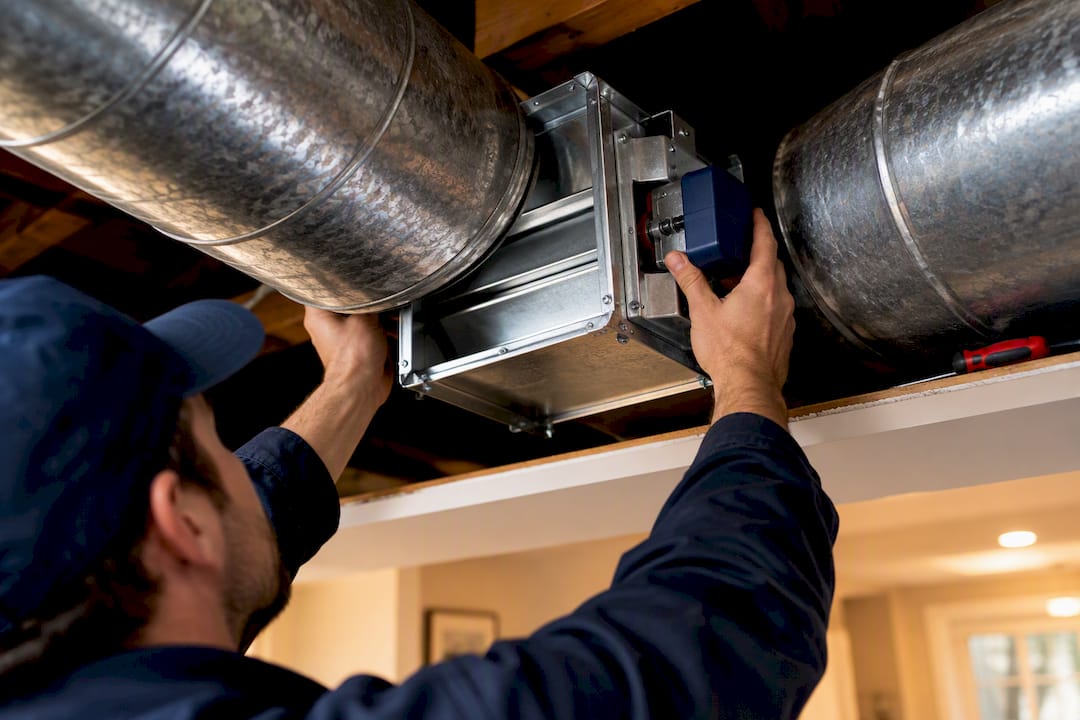
Most ducted zoning retrofits run $2,000 to $5,000 installed, while ductless mini-split zoning typically costs $4,500 to $15,000 depending on how many rooms you’re separating. The biggest swing factors are how many zones you want, whether your ductwork needs repair, and which system type you choose. Zoning pays off fastest in multi-story homes or houses with a room that’s always too hot or too cold, no matter what the thermostat says.
TL;DR:
- Ducted zoning retrofit costs typically range from $2,000 to $5,000 for two or three zones, with additional zones adding $350 to $500 each, depending on ductwork condition.
- Ductless mini-split zoning can cost between $4,500 and $15,000 for multiple zones, offering true independent temperature control but with a higher upfront investment.
- Costs increase significantly if ductwork needs sealing, reconfiguring, or contains issues like asbestos, low ceilings, or insufficient electrical capacity, which can add thousands.
- Proper diagnosis prior to installation ensures zoning effectively addresses actual comfort problems, not just airflow, saving money and avoiding unnecessary upgrades.
- A reliable quote includes line items for dampers, control panels, thermostats, wiring, duct repair, and bypass components, with no hidden fees or vague estimates.
Table of Contents
- How Much Does HVAC Zoning Cost by System Type?
- What Drives HVAC Zoning Prices Up or Down?
- What Do Real Zoning Jobs Actually Cost?
- Is HVAC Zoning Worth the Investment?
- How Do You Get a Reliable HVAC Zoning Quote?
- What Does a Zoning Installation Timeline Look Like?
- How Ricotta Heating & Air Handles Zoning Projects
- What Does Zoning Cost to Maintain Long Term?
- What Complicates Zoning Retrofits in Older Homes?
- The Real Question Isn’t Cost. It’s Whether You’ve Diagnosed the Right Problem.
- Ready for a Straight-Talk Zoning Quote?
- Sources
- FAQ
How Much Does HVAC Zoning Cost by System Type?
The number on your quote depends almost entirely on which path you take: adding dampers to existing ducts, going ductless, or splitting the house into two full systems.
A ducted zoning retrofit using motorized dampers tied into your existing supply trunks is the most common and usually the most affordable route. Installed costs typically land between $2,000 and $5,000 for a basic two or three-zone setup, with each additional zone beyond the first adding roughly $350 to $500. That per-zone math matters because contractors price zoning modularly. A four-zone job isn’t just “more expensive.” It’s your base cost plus two or three incremental zone charges.
Ductless mini-split zoning works differently. Instead of dampers splitting air from one central system, each zone gets its own indoor head tied to an outdoor compressor. A two-zone mini-split system commonly runs $4,500 to $7,500, and larger multi-zone installs can reach $8,000 to $15,000. You’re paying more upfront, but you get true independent temperature control per room, not just per zone group.
Nationally, Angi’s aggregated data puts the broader zoning cost range at $1,500 to $8,500, with an average near $3,000 once labor and components are factored in.
| Component | Typical Price Range |
|---|---|
| Motorized damper (each) | $300+ |
| Zone control panel | $720 |
| Zone thermostat (each) | $50 to $600 |
| Ducted retrofit, 2 to 3 zones (installed) | $2,000 to $5,000 |
| Additional zone (ducted) | $350 to $500 |
| Ductless mini-split, 2 zones | $4,500 to $7,500 |
| Ductless mini-split, multi-zone | $8,000 to $15,000 |
What Drives HVAC Zoning Prices Up or Down?
Two houses with the same number of zones can end up with wildly different bills. Here’s what actually moves the number on your quote.
- Duct condition and accessibility. If your trunk lines need sealing or reconfiguring to accept dampers, that alone can add $800 to $4,000 to the job.
- Control panel and thermostat choice. A basic two-zone panel costs far less than an eight-zone board built for a multi-stage variable-speed furnace.
- Bypass or pressure-relief requirements. Closing dampers in unused zones raises static pressure in the ductwork. A bypass duct or pressure-relief damper typically adds $300 to $600, and skipping it risks damaging your blower motor.
- Electrical and permit work. New control wiring, a dedicated circuit, or a permit pull in your municipality all add line items.
- Cosmetic repairs. Drywall patching after running wire through finished ceilings or walls isn’t rare, especially in older homes.
- A second outdoor unit. Some homeowners skip zoning entirely and add a second independent system instead. It costs more upfront but allows true simultaneous heating and cooling in separate zones, something zoning alone can’t fully match.
Pro Tip: Ask your contractor to physically show you where each damper will sit and whether your trunk line needs rework before you sign anything. That single walkthrough catches most of the surprise costs before they become change orders.
What Do Real Zoning Jobs Actually Cost?
Numbers on a page are one thing. Seeing how they play out in an actual house tells you more.
- Small retrofit, 2 zones, accessible ductwork. A single-story ranch with an unfinished basement and dampers going into exposed trunk lines. Total cost usually lands near $2,500 to $3,500, since there’s no drywall repair and minimal duct rework.
- Medium job, 3 zones, two-story with finished basement. This is the classic “upstairs is an oven, downstairs is a freezer” scenario. Add a third zone for the basement, run wiring through finished ceilings, and you’re typically looking at $4,000 to $6,000 once minor drywall patching is included.
- Larger or ductless example, multi-room mini-split. A homeowner converting four separate rooms, maybe a sunroom addition with no existing ductwork, to independent mini-split zones often lands between $9,000 and $14,000 depending on head count and line-set length.
The single biggest thing that moves any of these estimates? Duct condition discovered mid-project. A contractor who inspects trunk lines during the diagnostic visit, rather than after demo has already started, is the one whose final invoice matches the original quote.
Is HVAC Zoning Worth the Investment?
The Department of Energy estimates that a well-designed, correctly used zoning system can cut space-conditioning energy use by up to about 30%, largely by stopping you from heating or cooling empty rooms around the clock.
The math in practice: If your household spends $2,400 a year on heating and cooling, a 20% to 30% reduction saves roughly $480 to $720 annually. On a $3,000 ducted zoning install, that puts payback around four to six years, sometimes faster in larger homes with more wasted conditioning.
Payback windows stretch or shrink based on your climate, how many hours a day the “problem” zone sits empty, and how leaky your ducts are to start with. A poorly sealed duct system can eat into projected savings no matter how good the zoning hardware is. And energy savings aren’t really the main reason most homeowners pull the trigger. Comfort, eliminating the room that’s always ten degrees off, tends to be the bigger motivator than the utility bill.
How Do You Get a Reliable HVAC Zoning Quote?
A vague verbal estimate is how homeowners end up with a bill $1,500 higher than they expected. Protect yourself with a few non-negotiables before signing anything.
- Demand a written, line-item quote. It should separately list dampers, the control panel, thermostats, wiring, labor, permits, and any duct repair work, not one lump number.
- Confirm the bypass or pressure-relief solution is included. If it’s missing from the quote, ask why. It’s a $300 to $600 item that protects your blower long-term.
- Check control panel compatibility. A zone panel has to match your system’s staging and blower type; a mismatch on a variable-speed furnace can force a costly upgrade mid-project.
- Ask about diagnostic fees, timeline, and warranty terms upfront, including how change orders are handled if duct problems surface once work begins.
- Get three written quotes, and confirm each contractor is licensed and insured in your area before comparing numbers.
Pro Tip: If a quote is dramatically lower than the others, ask specifically whether it includes duct sealing and a bypass damper. Missing components are the most common reason a “cheap” quote balloons once work starts.
What Does a Zoning Installation Timeline Look Like?
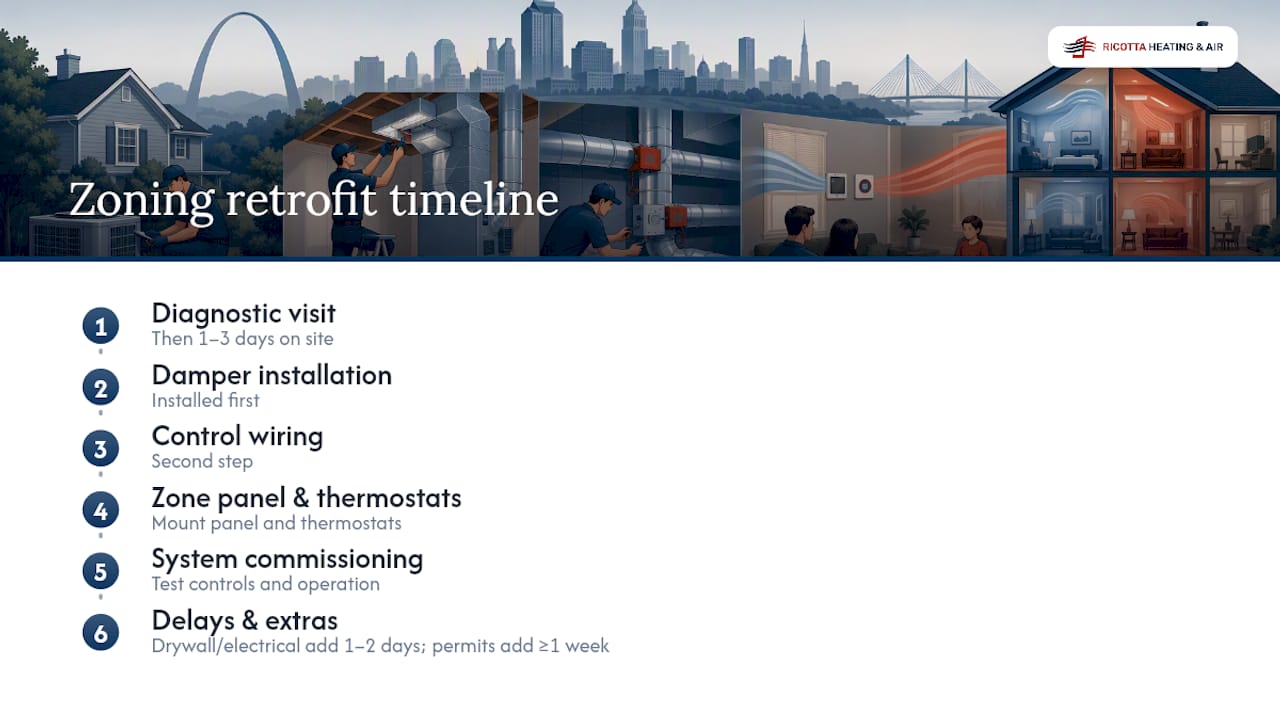
Most zoning retrofits take one to three days on site after the diagnostic visit, depending on zone count and duct accessibility. A typical sequence runs damper installation first, then control wiring, then mounting the zone panel and thermostats, followed by system commissioning and airflow balancing. Homes needing drywall repair or a dedicated electrical circuit add a day or two, and any permit pull can shift your start date by a week or more depending on your municipality’s review time.
How Ricotta Heating & Air Handles Zoning Projects
Ricotta Heating & Air has served homeowners across St. Louis County and Jefferson County for 50 years, and that local track record shows up in over 190 five-star Google reviews. A zoning project starts with a diagnostic visit where a technician inspects your duct layout, checks blower compatibility, and identifies which rooms are actually driving your comfort complaints.
From there, you get a written estimate broken into real line items: dampers, control panel, thermostats, wiring, and any duct repair, so nothing shows up as a surprise mid-project. If your plan includes upgraded controls, Ricotta’s thermostat repair and replacement team handles that piece directly, and the ductless mini-split installation crew steps in for homes better suited to a zoneless-duct approach.
What Does Zoning Cost to Maintain Long Term?
Zoning adds moving parts to a system that already needs upkeep, and that changes your annual maintenance math a little. Motorized dampers can stick or fail after years of opening and closing thousands of times, and replacing one typically costs less than replacing an entire zone board, but it’s an expense a non-zoned system simply doesn’t have.
Zone control panels and their sensors occasionally need recalibration, especially after a thermostat swap or a power surge. Budget a modest amount for that during your annual tune-up rather than waiting for a zone to stop responding altogether. Bypass dampers, if your system has one, deserve a look during maintenance too, since a stuck-open bypass quietly undercuts the energy savings zoning is supposed to deliver in the first place.
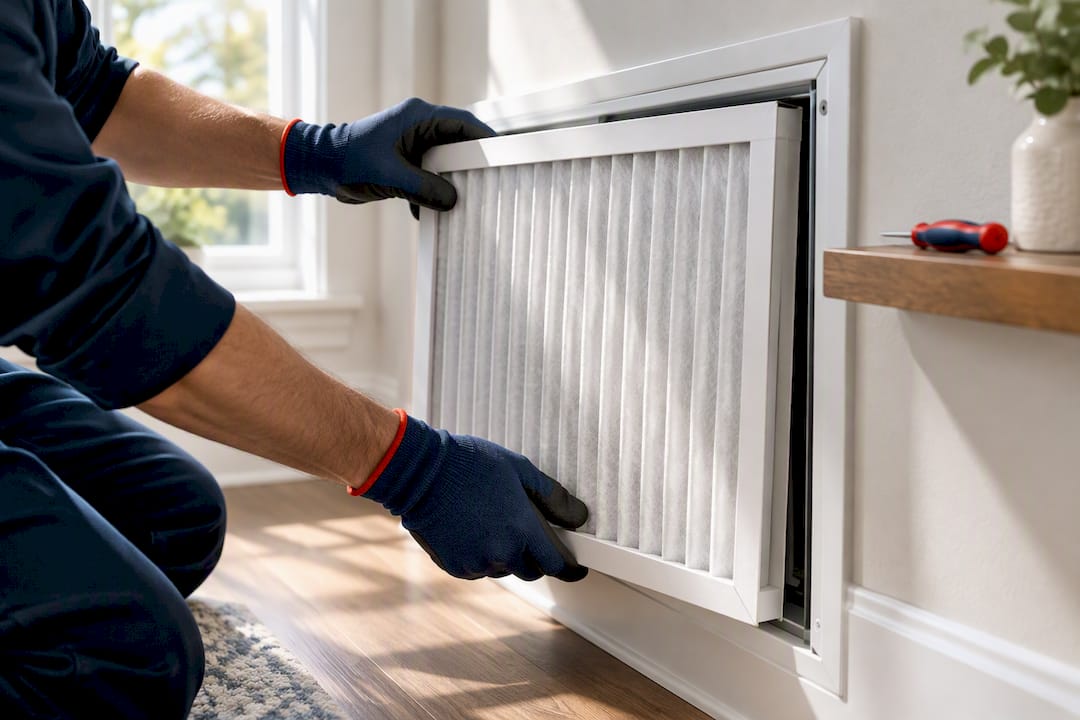
The good news: none of this requires a separate service contract. A standard annual or twice-yearly HVAC tune-up can include a zoning system check as part of the visit, provided your technician knows to look for it. That’s where a maintenance plan earns its keep. Regular filter changes also matter more with zoning, since closed dampers concentrate airflow through fewer active supply runs, and a dirty filter restricts that already-narrower path faster than it would in an unzoned system.
What Complicates Zoning Retrofits in Older Homes?
Older housing stock throughout St. Louis County and Jefferson County often comes with duct systems that were never designed with zoning in mind, and that’s where budgets go sideways. Undersized or oddly routed trunk lines from a 1960s or '70s build sometimes can’t accept enough dampers without a partial redesign, which pushes a straightforward retrofit into full duct modification territory.
Asbestos-wrapped ductwork in some pre-1980s homes adds another layer entirely, since any work disturbing that insulation requires proper abatement handling before a damper ever goes in. Plaster walls and lath construction, common in older St. Louis homes, make running new control wiring more labor-intensive than snaking wire through modern drywall, and that labor difference shows up directly on the invoice.
Electrical panels in older homes sometimes lack capacity for a new zone control board without an upgrade, particularly in houses that haven’t had panel work done since the original build. And low-clearance crawl spaces or finished basements without accessible ceilings can turn a one-day damper install into a two or three-day job once a contractor has to open up ceiling sections to reach the ducts. None of this means zoning is off the table for an older home. It just means the diagnostic visit matters more, not less, before anyone commits to a number.
The Real Question Isn’t Cost. It’s Whether You’ve Diagnosed the Right Problem.
Most homeowners shopping for zoning costs are really trying to answer a different question: will this actually fix my hot room or cold room? That’s the piece the conventional advice skips. Plenty of guides list price ranges and stop there, as if the number alone tells you whether zoning is the right fix.
It often isn’t. A room that’s uncomfortable because of a leaky duct run, an undersized supply register, or poor attic insulation won’t get meaningfully better with a damper and a thermostat bolted on. Zoning corrects airflow distribution. It doesn’t correct a house that’s losing conditioned air before it ever reaches the room.
If there’s one thing worth prioritizing above the price tag, it’s an honest diagnostic that identifies the actual cause of your discomfort before anyone talks dampers and control panels. Homeowners who skip that step tend to spend the money and still have a room that runs a few degrees off, just now with a fancier control system attached to it.
— Alan Ricotta
Ready for a Straight-Talk Zoning Quote?
You’ve seen the ranges, the line items, and the questions worth asking. The next step is getting numbers specific to your house, not a national average. Ricotta Heating & Air is the alternative to a sales-driven estimate: a diagnostic visit that actually inspects your duct layout and blower compatibility before anyone writes a price, and a quote broken into real line items instead of one padded number.

That visit covers everything a solid zoning plan touches: damper placement, control panel and thermostat setup, duct repair needs, and whether a bypass damper is required for your system. If your home is a better fit for independent room control than ducted zoning, the same visit covers ductless mini-split installation as an option too. Once your system is in, a maintenance plan keeps dampers, sensors, and control boards working the way they should for years, not just the first season.
Homeowners across St. Louis County and Jefferson County can schedule a diagnostic visit and get a written, line-item quote before any work starts. No upsell, no guesswork, just a clear number tied to your actual house.
Sources
FAQ
Is HVAC Zoning Worth It?
For multi-story homes or houses with persistent hot and cold spots, yes, zoning usually delivers real comfort improvement and can cut energy use by up to about 30% when designed correctly. In small, single-story homes without airflow imbalances, the upfront cost often outweighs the benefit.
How Much Does It Cost to Add Zoning to an HVAC System?
Most ducted retrofits cost $2,000 to $5,000 installed, with each additional zone adding roughly $350 to $500. Ductless mini-split zoning runs higher, typically $4,500 to $15,000 depending on how many rooms are involved.
How Do You Add Zoning to an Existing HVAC System?
A contractor installs motorized dampers in your supply ducts, wires them to a central control panel, and adds a thermostat for each zone, then commissions the system to balance airflow. Older ductwork sometimes needs sealing or minor redesign first, so a diagnostic visit should always come before installation.
Which HVAC Zoning System Is Best for My Home?
Ducted zoning with motorized dampers works well when your existing ductwork is in good condition and you’re grouping rooms into two or three zones. Ductless mini-split zoning fits better when you need true independent control room by room or when there’s no existing ductwork to tap into. A diagnostic visit identifies which approach fits your home’s actual duct layout and blower type.
What’s Included in a Written HVAC Zoning Quote?
A reliable quote lists dampers, the control panel, thermostats, wiring, labor, permits, and any required duct repair as separate line items, not a single bundled price. It should also specify whether a bypass or pressure-relief solution is included, since that component protects your blower and is often missing from lowball estimates.