
St. Louis Homeowners: Whole House Air Purifier Costs in 3 Budget Tiers
Most homeowners land somewhere between $419 and $4,962 for a whole house air purifier installation, with a national average near $2,610. Where you fall on that range comes down to three things: which system type you pick, how much work your ductwork needs, and local labor and permit costs. The next section breaks down each system type so you can see where your budget realistically lands.
TL;DR:
- Whole house air purifier installation costs typically range from $419 to $4,962, depending on system type, ductwork work, and local labor and permit charges.
- HEPA system installation may cost $2,000 to over $5,000, requiring ductwork modifications and bypass blowers, which significantly increase total expenses.
- Annual maintenance costs vary from $40 to $400, with higher-tier systems like HEPA bypass units requiring less frequent, but more expensive, filter and bulb replacements.
- Adding permits, electrical work, or duct modifications can add hundreds to thousands of dollars to the initial installation cost, often not included in initial quotes.
- Upfront costs should be matched with specific household needs, as basic filters cost less but may be insufficient for allergy or asthma concerns, while premium systems offer more comprehensive air quality improvements.
Table of Contents
- What do different whole house air purifier types cost?
- What drives up installation costs beyond the unit price?
- What will you spend to keep it running each year?
- Is a whole-house system worth it, or should you go portable?
- What should you ask before requesting quotes?
- Why homeowners in Jefferson County trust Ricotta for this
- What hidden fees actually show up on the final invoice?
- Should you pay more upfront or spread costs over time?
- Can financing or rebates lower the cost?
- Why the “cheapest option” is usually the wrong question
- Ready to find out what your home actually needs?
- Sources
What do different whole house air purifier types cost?
Not every “whole house” system does the same job, and the price tag tells you why. Here’s how the main options stack up:
- Flat or basic media filters slide into your existing ductwork with minimal fuss. They trap larger particles like dust and pet hair but miss the finer stuff. Installed cost typically runs $150 to $500, and you’ll swap the filter every 60 to 90 days for $10 to $30 a pop.
- Extended media filters are thicker, pleated versions that catch more without choking your blower motor. Expect a mid-range installed cost, with replacements every several months costing a moderate amount.
- Electronic air cleaners use an electrical charge to grab smaller particles, including some smoke and smog components. They cost $400 to $1,000 installed and need periodic cell cleaning rather than filter swaps, though replacement cells run $50 to $150 when needed.
- UV light systems don’t filter particles at all. They neutralize mold spores, bacteria, and viruses as air passes the bulb, which makes them useful for pathogen control but useless against dust or pollen on their own. Installed cost sits around $300 to $700, and UV bulbs need replacing yearly for $30 to $100.
- HEPA installations are the priciest option because most residential HVAC systems can’t push air through true HEPA-grade media without a dedicated bypass blower. That extra equipment and the ductwork rework it requires push installed costs to $2,000 to $5,000 or more. HEPA filters themselves cost tens to a couple hundred dollars and last several months.
- Portable units aren’t whole-house solutions at all, but they’re worth mentioning as the low-cost comparison point at $100 to $400 each, covering one room at a time.
Consumer Reports notes that mechanical HEPA-style filters don’t remove gases or odors, which is why some premium setups pair a HEPA stage with activated carbon for smoke and chemical smells.
What drives up installation costs beyond the unit price?
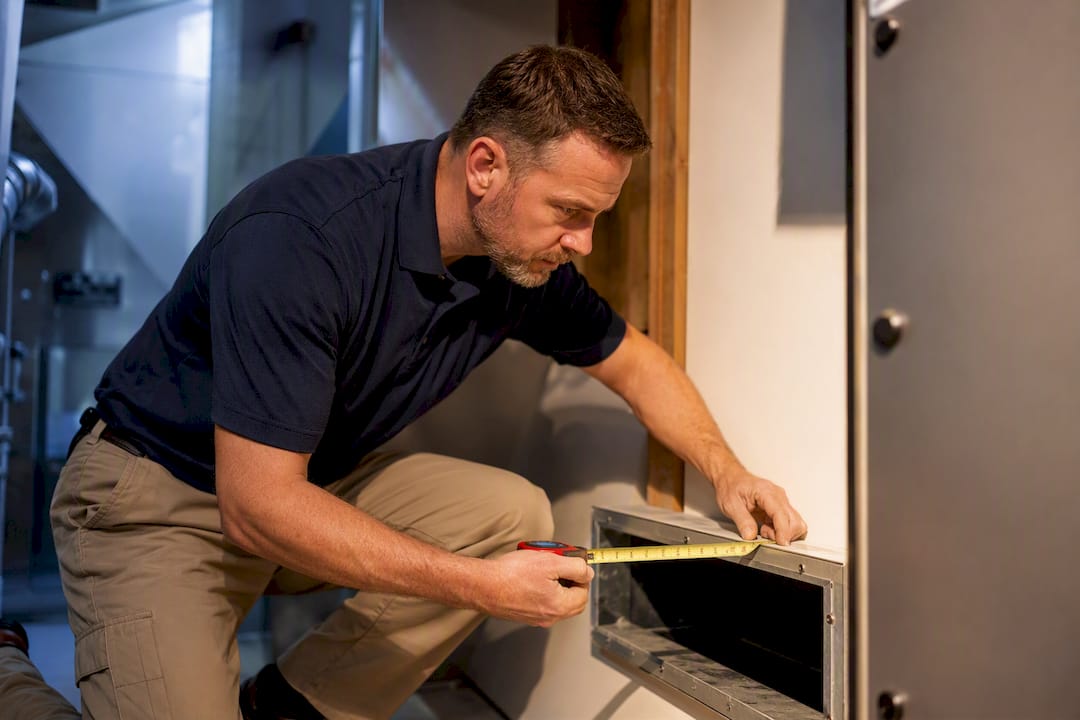
The purifier itself is only part of the bill. Labor is where quotes start to diverge, with HVAC technicians typically charging $100 to $250 per hour, and most installs taking 1 to 6 hours depending on complexity.
Ductwork is the biggest wildcard. If your system needs new sheet metal, rerouting, or drywall repair to accommodate a bypass HEPA unit, add $500 to $2,000 to your estimate. A few other line items catch homeowners off guard:
- Permits: many jurisdictions require a permit for HVAC modifications, running $250 to $400.
- Inspection fees: a pre-installation inspection can run $100 to $500, though some installers roll this into the quote.
- Electrical work: electronic air cleaners and UV systems sometimes need a dedicated outlet or added wiring, adding $150 to $400 for an electrician.
- HVAC prep work: an aging or undersized furnace or air handler may need a tune-up or repair before it can support a new purifier at all.
What will you spend to keep it running each year?
The install price is a one-time number. The real long-term cost is filters, bulbs, and the occasional service call. Basic mechanical filters cost $20 to $200 depending on grade, activated carbon runs up to $50 per change, and UV bulbs need annual replacement in the $30 to $100 range, based on Consumer Reports’ filter cost data.
Rough annual maintenance costs by tier:
- Budget systems (basic media): $40 to $120 a year in filter changes.
- Mid-tier systems (electronic or UV plus media): $100 to $250 a year.
- Premium systems (HEPA bypass with carbon): $150 to $400 a year.
Check your filter’s MERV rating or HEPA certification label before assuming a “HEPA-type” filter performs like true HEPA. Many indicator lights simply track runtime hours, not actual air quality, so don’t skip a manual filter check just because the light hasn’t turned on.
Is a whole-house system worth it, or should you go portable?
If someone in your home deals with chronic allergies or asthma, you have pets shedding year-round, or you’re recovering from a mold remediation, a whole-house system earns its cost fast. It treats every room through your existing ductwork instead of leaving hallways and bedrooms untreated. The EPA notes indoor air can be more polluted than outdoor air, and that risk doesn’t stop at the living room door.
Portable units seem cheaper upfront, but covering a typical 2,000 square foot home takes three or four of them at $100 to $400 each, plus the noise and the hassle of managing separate filters in every room. A single whole-house install, particularly a mid-tier electronic or media system, often costs less than that portable fleet over five years and adds a quiet selling point if you list your home later.
What should you ask before requesting quotes?
Walk into any consultation with your home’s square footage, your HVAC system’s age and model, and whether you’re running single-zone or multi-zone ductwork. Note whether your attic or plenum is easily accessible, since that affects labor time directly.
Ask every contractor the same questions so quotes are actually comparable:
- Does this installation require a permit in our area, and is that included in the quote?
- What’s the warranty on parts and labor?
- What will filter or bulb replacements cost me annually?
- If you’re recommending HEPA, does my system need a bypass blower, and what does that add?
- How much downtime should I expect during installation?
Then follow three simple steps: schedule an inspection, collect two or three itemized quotes, and verify each contractor’s license and recent reviews before signing anything.
Pro Tip: Ask for the quote broken into equipment cost, labor cost, and any ductwork or electrical add-ons as separate lines. A contractor who won’t itemize is usually the one padding the number.
Why homeowners in Jefferson County trust Ricotta for this
Ricotta Heating & Air has spent 50 years serving St. Louis and Jefferson County homeowners, backed by 150+ five-star Google reviews. We start every indoor air quality job with an inspection, not a sales pitch, so you get a written estimate that reflects what your home actually needs. If a simple media upgrade solves your problem instead of a full HEPA retrofit, we’ll tell you that.
What hidden fees actually show up on the final invoice?
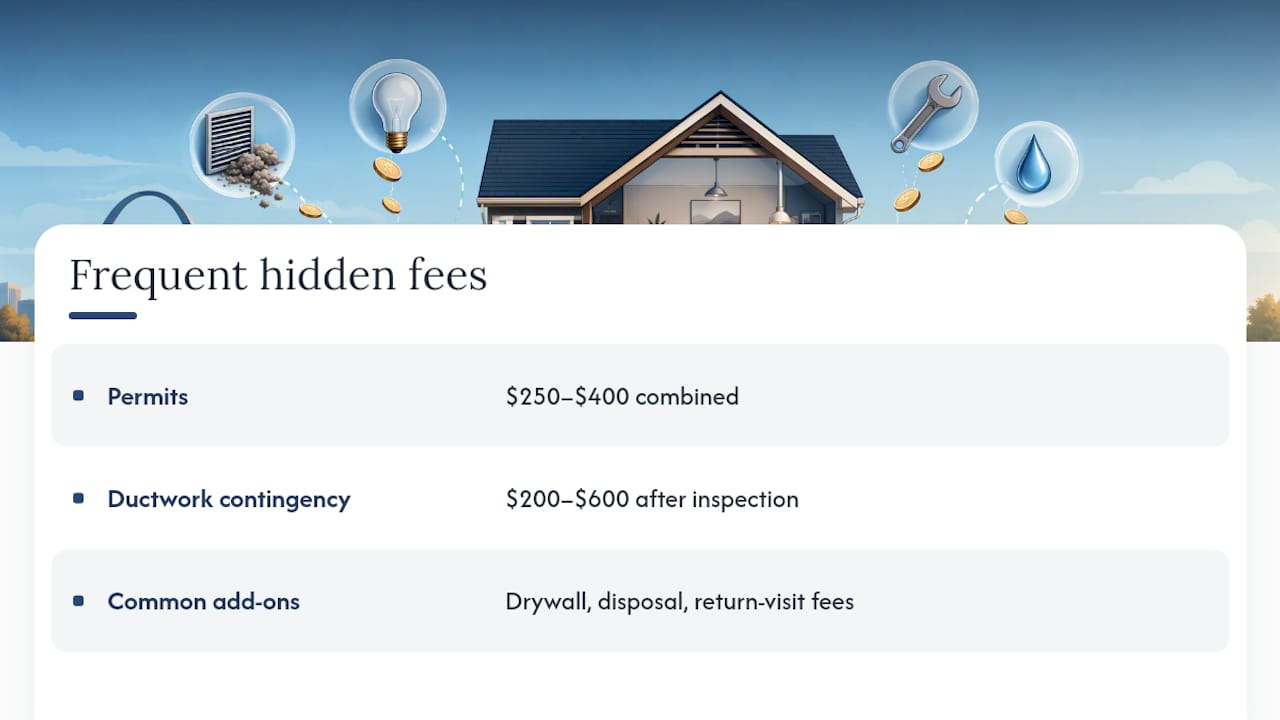
The quoted equipment price rarely matches the final invoice, and the gap usually comes from a handful of predictable add-ons rather than anything mysterious. Drywall patching after ductwork access, disposal fees for old filter housings, and a service call charge if the technician has to return for a second visit all show up more often than homeowners expect.
Electrical permits and HVAC modification permits, at $250 to $400 combined in many areas, sometimes get quoted separately from the main installation price rather than bundled in. Ask whether your quote already includes them. Older homes with asbestos-era ductwork or undersized returns may need additional sealing or duct sizing work, adding another $200 to $600 that only shows up after a technician actually opens the system.
The safest way to avoid surprise line items is a written, itemized estimate before work begins, listing equipment, labor, permits, and any ductwork contingency as separate figures. If a quote is a single lump number with no breakdown, that’s your signal to ask more questions before you sign.
Should you pay more upfront or spread costs over time?
A budget flat filter system costs $150 to $500 installed but delivers the least pollutant coverage and needs filter changes every 60 to 90 days. A mid-tier electronic or UV system costs $400 to $1,000 upfront with lower ongoing filter costs, since you’re cleaning or replacing components less often. A premium HEPA bypass system runs $2,000 to $5,000 or more installed, but if allergy relief or pathogen control is the goal, it can prevent the repeated cost of standalone portable units, doctor visits, or lost productivity from poor air quality.
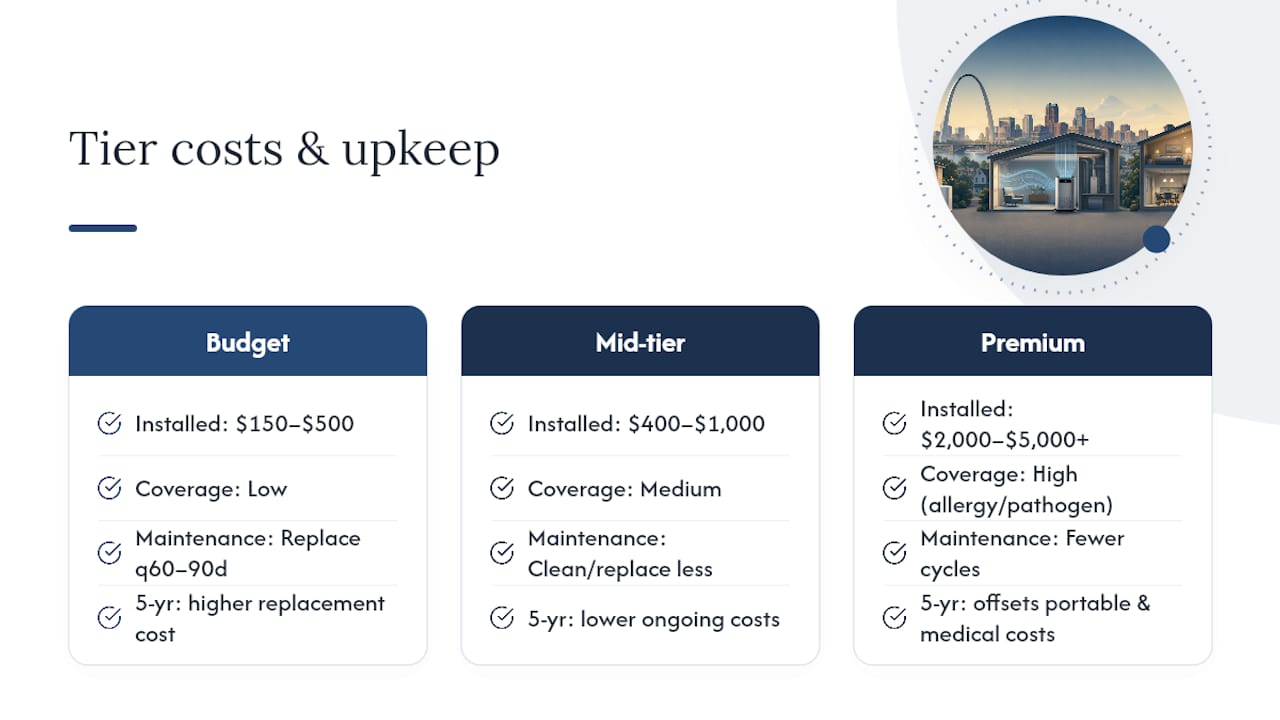
Over five years, a budget system’s higher replacement frequency can eat into its lower sticker price, while a premium system’s higher install cost gets offset by fewer, more effective maintenance cycles. There’s no universal right answer here. A household with mild dust concerns doesn’t need to pay HEPA bypass prices, and a household managing a respiratory condition shouldn’t settle for a basic media filter to save $1,000 upfront. Match the tier to the actual health or comfort problem you’re solving, not to the lowest number on the quote.
Can financing or rebates lower the cost?
Most HVAC contractors, including Ricotta, offer financing plans that break a $2,000 to $5,000 installation into monthly payments, which matters most for premium HEPA bypass systems where the upfront cost is highest.
Federal tax credits and utility rebates for indoor air quality equipment change from year to year and often depend on whether the purifier is paired with a qualifying high-efficiency HVAC system rather than installed as a standalone add-on. Check current federal energy tax credit programs and your local utility’s rebate page before assuming your specific system qualifies, since eligibility rules are narrow and vary by equipment type. A maintenance plan that bundles filter replacements into a flat annual fee is a more reliable way to control long-term costs than betting on a rebate that may not apply to your exact setup.
Why the “cheapest option” is usually the wrong question
Every cost guide, this one included, hands you a range and lets you pick a number. But the real mistake homeowners make is shopping by system type before shopping by problem. If you have no specific health concern and just want cleaner air, a mid-tier electronic or extended media system solves that at half the price of HEPA bypass. If someone in the house has a diagnosed respiratory condition, spending less on a basic filter to save a few hundred dollars is a false economy.
The industry averages are useful as a budgeting anchor, not as a purchase decision. A $2,610 average install means plenty of homes spend far less on a media upgrade and plenty spend far more on a full bypass retrofit, and both can be the right call depending on what’s actually happening in that house. What conventional cost guides skip is the inspection step. A trained technician can often tell you in twenty minutes whether your existing ductwork will even support the system you’re eyeing, before you spend money finding out the hard way. Start there, not with a price range.
— Alan
Ready to find out what your home actually needs?
You’ve seen the ranges. Now get a number specific to your house instead of a national average. Ricotta Heating & Air offers inspection-first estimates across St. Louis and Jefferson County, typically scheduled within a few days of your call, and we’ll tell you plainly if a lower-cost fix solves your air quality problem before we ever recommend a full system.
Every estimate comes written and itemized, no vague lump sums, so you know exactly what you’re paying for equipment, labor, and any ductwork work your home needs. If ongoing costs are a concern, ask about our HVAC maintenance plans, which bundle filter replacements and tune-ups into predictable annual pricing instead of surprise bills. Request your indoor air quality inspection today and get a real number for your home, not a guess from a national average.
Sources
- HomeAdvisor — How much does a whole-home air purifier cost?
- Angi — Whole house air purifier cost
- Consumer Reports — Air purifiers buying guide