
St. Louis Homeowners: Set Thermostat to 68°F This Winter and Save up to 10%
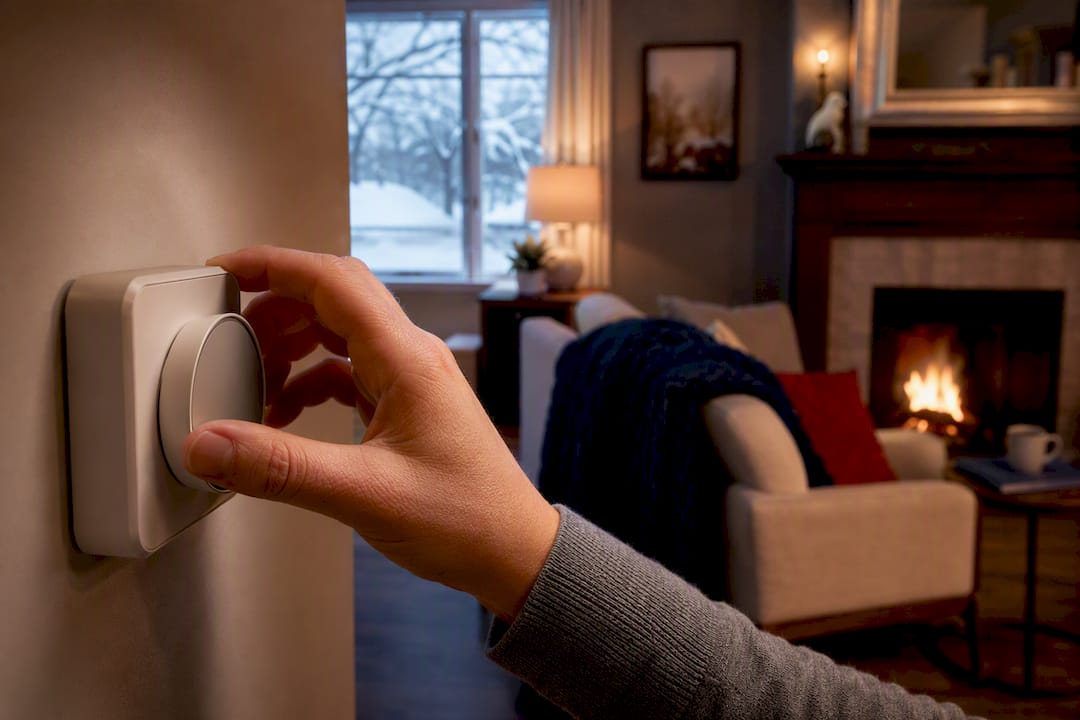
Set your thermostat to about 68°F while you’re home and awake, then lower it by several degrees for roughly eight hours during sleep or when you’re out. That single habit can help reduce your heating bill significantly over a year. If infants, older adults, or anyone with health concerns lives in your house, maintain a minimum temperature around 64°F, even at night.
TL;DR:
- Keeping the thermostat at 68°F when home and awake, and lowering it by 7 to 10°F for about eight hours, can save up to 10% annually on heating costs.
- A setback of more than 10°F risks long recovery times, especially for older systems or heat pumps, which can negate the savings gained.
- Correct thermostat placement, proper system maintenance, and sealing leaks are crucial to ensure setbacks translate into actual energy savings.
- Maintaining indoor temperatures above 64°F is essential for health, with higher minimums recommended for vulnerable household members.
- Proper humidity levels between 30% and 50% improve comfort and efficiency, preventing dry air from making rooms feel colder and reducing condensation issues.
Table of Contents
- What Are the Best Thermostat Settings for Winter?
- How Do Setback Schedules Actually Save Money?
- Manual, Programmable, or Smart: Which Thermostat Fits Your House?
- Does Thermostat Placement Change Your Ideal Setting?
- What’s a Safe Minimum Temperature in Winter?
- What Other Changes Multiply Your Thermostat Savings?
- What Mistakes Do Homeowners Make With Winter Thermostat Settings?
- Does Humidity Change How Cold Your Home Feels?
- Is a “Perfect” Thermostat Setting Really Realistic?
- Get Your Winter Thermostat Setup Checked by a Local Pro
- Sources
What Are the Best Thermostat Settings for Winter?
Here’s a cheat sheet you can copy straight into your thermostat’s schedule tonight:
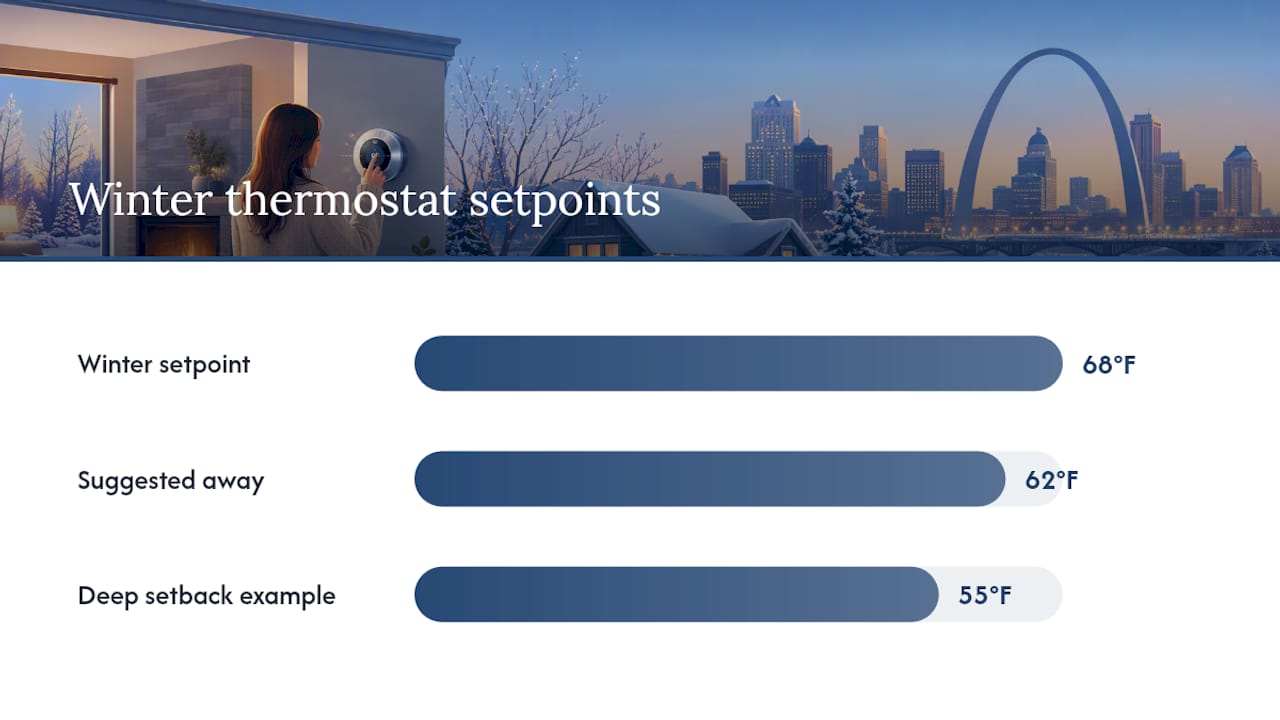
- Home/awake: 68°F is the standard baseline. If your household runs cold, 68 to 70°F is still efficient without much of a cost penalty.
- Sleep: 60 to 66°F works for most people. Cooler bedrooms tend to help you fall asleep faster and stay asleep, according to the Sleep Foundation.
- Away for the day: 55 to 66°F, depending on how cold it gets and how exposed your pipes are.
- Vacation/extended away: Never below 55°F in a home where pipes could freeze.
If anyone vulnerable is in the house, the World Health Organization’s guidance points to 64°F as a practical floor, not 60. Treat that number as a hard line, not a suggestion.
How Do Setback Schedules Actually Save Money?
The math behind the setback rule is simple: the bigger the gap between outdoor and indoor temperature, the faster your house loses heat, and the harder your furnace or heat pump works to replace it. Narrow that gap for part of the day, and you cut the total workload. The Department of Energy’s own guidance backs a 7 to 10°F setback held for about eight hours, translating into savings of up to 10% annually on heating costs. That’s not a one-time trick. It compounds every day of the season.
A simple three-period schedule looks like this:
- Home (6:00 a.m. to 10:00 p.m.): 68°F
- Away (10:00 a.m. to 4:00 p.m., if the house is empty): 60 to 62°F
- Sleep (10:00 p.m. to 6:00 a.m.): 60 to 66°F
For a more detailed version, build in recovery time. Forced-air furnaces heat a room back up fast, often within 15 to 20 minutes, so you can set the jump close to your wake time. Heat pumps recover more gradually and work best with a smaller setback and an earlier start. Radiant floor systems and old steam radiators are the slowest of all. They may need an hour or more of lead time before you want full comfort. Push any setback much past 10°F and you risk long recovery periods that leave rooms clammy and uneven, wiping out the savings you were chasing.
Manual, Programmable, or Smart: Which Thermostat Fits Your House?
A manual thermostat costs the least, but it only saves money if someone actually remembers to adjust it twice a day, every day, all winter. Most people don’t. Programmable models fix that with a fixed schedule, and smart thermostats go further with geofencing, learning algorithms, and remote control from your phone.
Setting one up correctly takes about ten minutes:
- Enter your wake, leave, return, and sleep times.
- Assign a temperature to each period using the ranges above.
- Turn on the schedule feature. Don’t just set one temperature and walk away.
- Check the energy report after a week and adjust for comfort.
- Enable geofencing if your model supports it, so setbacks trigger automatically when you leave.
The Department of Energy notes that smart and programmable models remove the human error that undermines manual setbacks, closing the gap between what a schedule promises and what a household actually delivers.
Pro Tip: Set your “away” temperature closer to 62°F than 55°F if your house has an older furnace. A deep setback with a slow system often costs you more in recovery energy than it saves in downtime.
If your display goes dark or stops responding to schedule changes, don’t just replace the batteries and hope. Check our quick fixes for a blank thermostat screen before assuming the worst.
Does Thermostat Placement Change Your Ideal Setting?
A thermostat on an exterior wall, near a sunny window, or above a heat vent reads the temperature of that one spot, not your house. It might tell you the room is 70°F while the far corner sits at 64. That mismatch pushes people to crank the setpoint higher than they actually need, which quietly erases any setback savings.
Good placement means an interior wall in a main living area, away from direct sun, drafts, and kitchen heat. A few other factors change how a given setpoint performs:
- Homes with zoning let you set different temperatures per floor, which matters most in split-level houses.
- Heat pumps lose efficiency faster in extreme cold than gas furnaces, so their ideal setback is smaller.
- Poor duct sealing or thin attic insulation stretches recovery time no matter what setpoint you choose.
If one floor never seems to reach the temperature the thermostat claims, uneven airflow is usually the culprit. Our guide on fixing hot upstairs, cold downstairs rooms walks through the most common causes.
What’s a Safe Minimum Temperature in Winter?
Comfort settings are flexible. Safety minimums are not. Medical guidance is clear that indoor temperatures shouldn’t drop below about 64°F for healthy adults, and infants, older adults, and anyone with chronic illness need a higher floor, closer to normal daytime settings around the clock.
For extended trips, keep the house at 55°F or above anywhere pipes run through unheated or exterior spaces; older homes with less insulation may need a higher floor still. During bitter cold snaps:
- Open cabinet doors under sinks along exterior walls.
- Let faucets on exposed pipes drip slightly overnight.
- Watch for a furnace that runs constantly without raising the temperature, and call for emergency service before a minor issue becomes a frozen or burst pipe, a caution echoed in Consumer Reports’ freeze-prevention guidance.
What Other Changes Multiply Your Thermostat Savings?
Your thermostat schedule only works as well as the house around it. A perfectly programmed setback still loses to a leaky attic or a rim joist full of gaps.
- Seal and insulate the attic first. It’s usually the single biggest source of winter heat loss.
- Close blinds and curtains at night to cut drafts off windows; open them on sunny days to let in free heat.
- Change your furnace filter monthly during peak season and schedule an annual tune-up, both called out in ENERGY STAR’s heating efficiency guidance.
- Layer clothing and heat the rooms you use most rather than fighting to raise the whole house a degree or two.
Pro Tip: Don’t seal off vents in unused rooms to save money. Closing more than a couple can unbalance airflow and strain the blower, especially in forced-air systems.
What Mistakes Do Homeowners Make With Winter Thermostat Settings?
After decades of service calls across St. Louis and Jefferson County, a few patterns show up again and again. Thermostats mounted near a fireplace or above a floor vent give false readings that lead to overworked systems. Skipped annual maintenance turns a small airflow problem into a full breakdown right when you need heat most. Uneven rooms get ignored until someone’s bedroom is unbearable.
Watch for these red flags that go beyond a simple setpoint change:
- Recovery from a setback takes much longer than it used to.
- The furnace short cycles, turning on and off in quick bursts.
- The thermostat display goes blank or stops holding a schedule.
Ricotta Heating & Air has built more than 150 five-star Google reviews over 50 years serving the area, largely by diagnosing these issues honestly instead of pushing a replacement nobody needs.
Does Humidity Change How Cold Your Home Feels?
Dry winter air makes a room feel colder than the thermometer says, which is why so many people push the thermostat higher than they actually need to during heating season. Furnaces strip moisture out of the air as they run, and indoor humidity below 30% makes 68°F feel noticeably chillier than the same temperature at 40% to 50% humidity.
That gap matters for your energy bill. Every degree you add to compensate for dry air costs you money without adding real warmth, since the discomfort is about moisture, not heat. A whole-home humidifier tied into your HVAC system lets you hold a comfortable feel at a lower actual setpoint, often the difference between running at 68°F comfortably or nudging up to 70 or 71°F just to stop feeling cold.
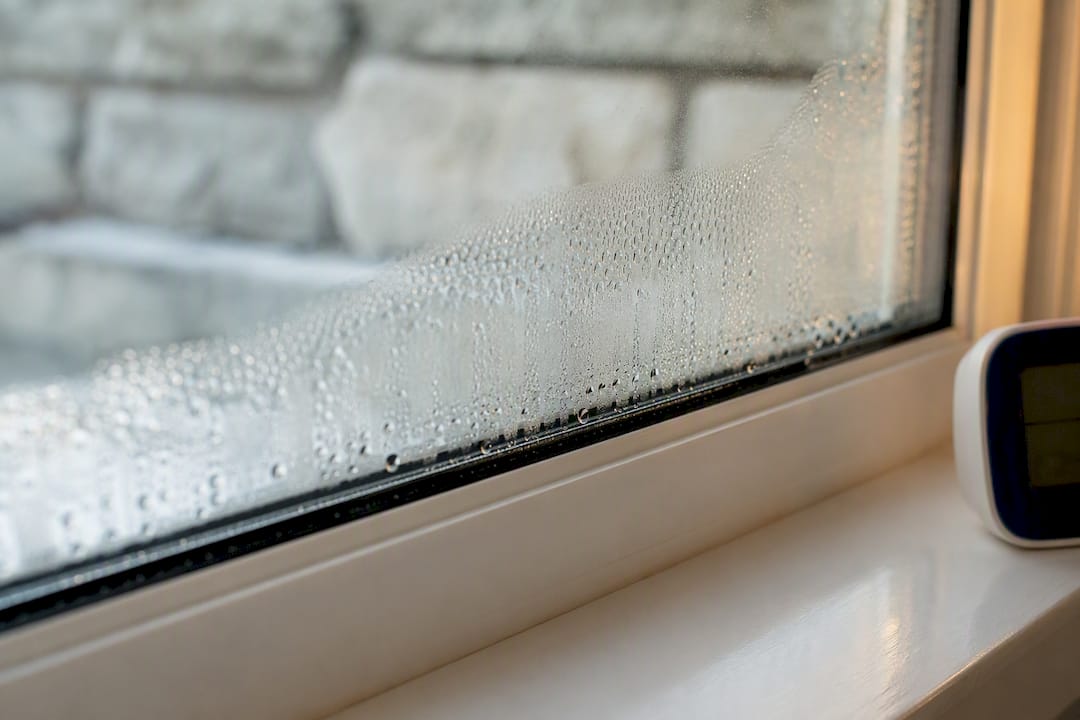
Too much humidity causes its own problems in winter. Condensation on windows, musty smells, and even mold growth on cold exterior walls usually mean humidity is running too high for the temperature you’ve chosen. The sweet spot for most homes sits between 30% and 50% relative humidity in the colder months. If your house swings far outside that range no matter what you set the thermostat to, that’s usually a sign your HVAC system needs a humidity control component, not just a different number on the dial.
Is a “Perfect” Thermostat Setting Really Realistic?
Nobody nails their ideal schedule on the first try, and that’s fine. Start with 68°F while home, drop it for sleep and time away, then adjust in one-degree steps based on how your household actually feels, not what a chart says. Prioritize the temperature needs of anyone vulnerable in the house over shaving a few extra dollars off the bill. Keep your system maintained. Test a new schedule for a week before deciding it doesn’t work; most complaints trace back to placement or a system overdue for a tune-up, not the numbers themselves.
— Alan
Get Your Winter Thermostat Setup Checked by a Local Pro
A perfect schedule can’t fix a thermostat that’s miscalibrated, misplaced, or losing connection to your system, and that’s where Ricotta Heating & Air comes in. As a family-owned HVAC company serving St. Louis and Jefferson County for 50 years, we install, repair, and calibrate thermostats without pushing a replacement you don’t need.

If your setpoints never seem to hold, your display has gone dark, or recovery times keep stretching longer each week, our thermostat repair and replacement service can diagnose the actual cause instead of guessing. For homeowners who want the whole system tuned before the coldest stretch hits, our HVAC maintenance plans cover the filter changes, inspections, and adjustments that keep a good schedule actually delivering savings. Schedule an inspection now, before the next cold front tests a system you haven’t had checked this year.
Sources
- World Health Organization / indoor temperature guidance (via NCBI)
- Best bedroom temperature for sleep (Sleep Foundation)