
HVAC System Damage: First Steps | Jefferson County, MO
Quick Summary
After HVAC damage, turn the system off at the thermostat and breaker only if both are dry and safe to reach. Leave it off until a technician inspects it. Never enter standing water to reach equipment or a breaker panel. Take photos from a safe location before cleanup.
- Water around indoor equipment or electrical parts needs professional attention before restarting.
- Do not reset a tripped breaker after suspected water or storm damage.
- Take wide photos first, then close-ups where safely accessible, and preserve the date and time information.
- Ask the technician to retain failed parts if your insurer needs them.
- Repeated major repairs are a reason to compare repair and replacement, not an automatic reason to replace.
Contact Ricotta Heating & Air to discuss an inspection and your next steps.
Table of Contents
- What should I do first after HVAC system damage?
- Signs of water, storm, and flood damage in your HVAC system
- Your HVAC storm damage checklist
- How to document HVAC damage for insurance
- Questions to ask your HVAC technician before work begins
- HVAC repair versus replacement: How to decide
- Schedule your HVAC damage inspection
- Frequently asked questions
What should I do first after HVAC system damage?
If the controls and electrical panel are dry and safely accessible, turn the system off at the thermostat and then at the breaker. Leave it off until a qualified technician inspects it. If you smell gas, see smoke, or hear a carbon monoxide alarm, leave immediately instead of trying to shut down the equipment.
For Jefferson County homeowners, losing heating or cooling during Missouri's humid summers or cold winters can be more than uncomfortable. Still, restarting damaged equipment is not worth the risk. Stay somewhere safe if indoor temperatures become unsafe.
Take these steps only when there is no immediate hazard:
- Turn off the thermostat. Set it to OFF, not HEAT or COOL, if it is dry and safe to reach.
- Disconnect power at the breaker. Switch the furnace and AC breakers off only if the panel and your access route are dry and undamaged.
- Stop an active water leak if safe. Close the appropriate plumbing shutoff valve only if you can reach it without approaching electrical hazards.
- Photograph visible damage. Stay out of standing water and leave equipment panels closed.
- Call a qualified HVAC technician. Describe the damage and whether water reached the equipment.
Research on HVAC fault detection explores ways to identify system problems. For a homeowner, visible damage and unusual operation are reasons to stop using the system—not a substitute for testing.
Never enter standing water to reach a breaker. If the panel is wet, damaged, or inaccessible, keep away and call your utility or an electrician for help disconnecting power safely.
Signs of water, storm, and flood damage in your HVAC system
Puddles, rust streaks, and musty odors deserve attention, but they do not all mean the same thing. Outdoor AC units are designed for normal rain exposure; flooding, submerged components, and storm debris are different concerns.
Look for these signs without opening the equipment:
- Unexpected standing water around indoor equipment, in an overflow pan, or rising around the outdoor unit
- Rust or corrosion visible on the cabinet
- A musty, damp smell from vents or the utility room
- A sagging or stained ceiling below an attic air handler
- Debris lodged in the outdoor unit after a storm
- A tripped breaker after a storm or water exposure
If water is near your indoor unit, our guide to AC leaks and when to call a pro explains safe checks for drain problems and frozen coils.
A water leak is not the same as a refrigerant leak. If refrigerant is low, ask the technician to identify the cause rather than simply adding more without explaining the problem.
Your HVAC storm damage checklist
After a storm in Hillsboro, the right first step depends on what happened. Floodwater, wind damage, electrical surges, and fire exposure each require different precautions. Start with the matching situation below, then use the shared checklist.
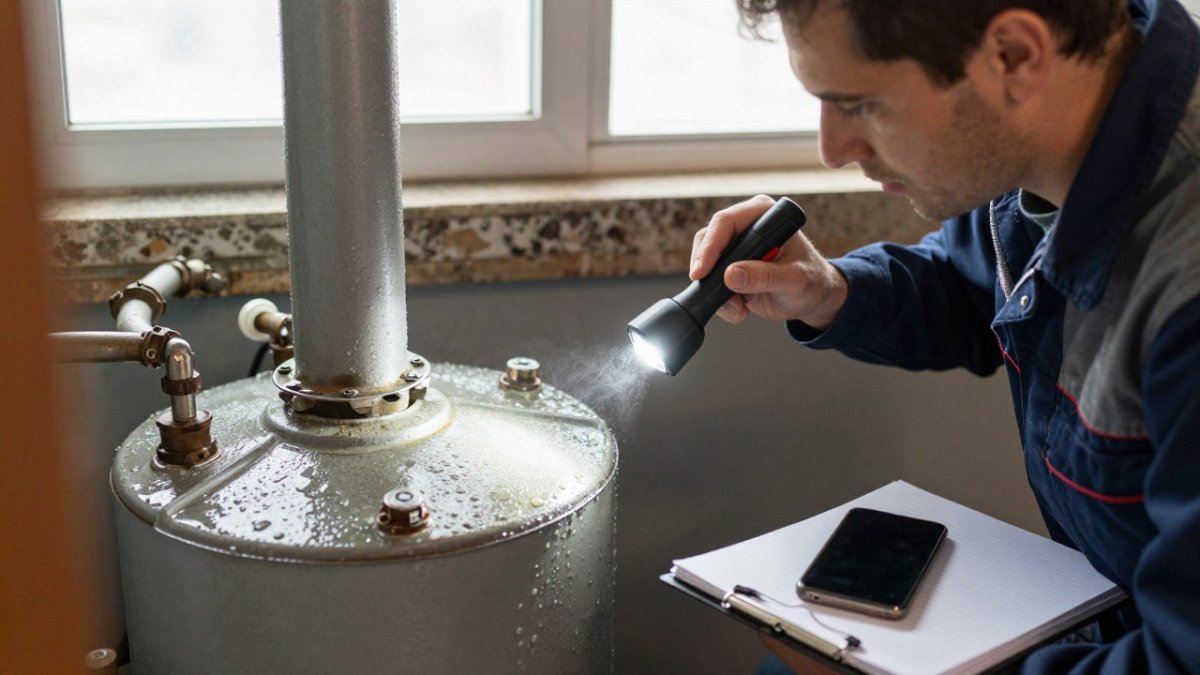
Identify the type of damage first
Flooding or standing water. Keep everyone out of the water. Do not wade to the breaker panel or touch wet equipment. Ask your utility or an electrician to arrange safe power disconnection.
Storm debris and wind damage. From a safe distance, look for dents, displaced panels, a shifted outdoor unit, and lodged debris. Do not reach through the grille or try to straighten parts.
Electrical surge or lightning strike. Electrical damage may not be visible. If a breaker trips or the thermostat stays dark after power returns, leave the system off and arrange an inspection.
Fire or smoke exposure. If there is an active fire or smoke, evacuate and call 911 from outside. After emergency responders clear the property, do not restart the HVAC equipment until it has been inspected. Heat, smoke residue, and damaged venting can make it unsafe.
The shared checklist
Use this list only after immediate hazards have been addressed. Skip any step that requires approaching wet or damaged electrical equipment.
- Thermostat set to OFF, if safe to reach
- Furnace and AC breakers switched off, only if the panel and access route are dry and undamaged
- Gas valve left alone; if gas is suspected, everyone has left the house and called the gas utility or 911 from outside
- Visible damage photographed from a safe location
- Standing water noted without entering it
- Outdoor unit viewed from a safe distance for debris or displaced panels
- Filter condition left for the technician to check if the equipment is wet or damaged
- Date and time of the storm or outage recorded
- Insurance company contacted about documentation and next steps
Carbon monoxide and electrical safety
A damaged fuel-burning furnace can create a carbon monoxide hazard. A damaged heat exchanger, blocked flue, or venting problem can allow this odorless gas into the home. If a CO alarm sounds or anyone has possible symptoms, such as headache, dizziness, or nausea, get everyone outside and call 911. Do not reenter until emergency responders say it is safe.
If you smell gas, leave without operating switches, thermostats, breakers, or phones inside. Call the gas utility or 911 from a safe location outside.
Treat wet electrical equipment as energized until a qualified professional verifies otherwise. Switching off one breaker does not necessarily make a flooded room safe. Do not reset breakers to test damaged equipment.
Begin water cleanup only after electrical hazards have been addressed and the area has been cleared for safe access. Floodwater may also require professional cleanup because of contamination.
PO Box 142, Hillsboro, MO 63050
View mailing address on mapHow to document HVAC damage for insurance
Clear records help your insurer understand what happened. Take photos before cleanup when it is safe, but never delay emergency action to document damage.
Keep these items together:
- Wide photos and close-ups. Show the room or outdoor area first, then visible damage you can photograph safely.
- Original photo files. Preserve their date and time information.
- A short written log. Record what happened, when you noticed it, what you shut off, and whom you called.
- Receipts. Keep records of cleanup supplies, temporary repairs, and related work. Your insurer determines what is covered.
- Failed parts, if requested. Ask the technician and insurer what should be retained. Do not handle damaged electrical parts yourself.
- A written estimate. Request the findings and proposed scope of work.
Our breakdown of residential HVAC repair costs explains factors that affect an estimate.
This HVAC water damage claim case study offers an example of a damage assessment. Ask your own insurer what inspection records it needs; requirements and coverage vary.
Questions to ask your HVAC technician before work begins
Before approving work, make sure you understand the diagnosis and the proposed repair. You should not need technical training to follow the explanation.
Start with these questions:
- What failed, and what caused it? Ask for an explanation in plain English.
- Do you recommend repair or replacement, and why? Ask which findings support the recommendation.
- Is it safe to leave the system off while I decide? Discuss any steps needed to prevent further damage.
- Do you carry insurance and meet local licensing requirements? Ask for documentation that applies to the work.
- Will you provide a written estimate? Make sure it identifies the work included and any exclusions.
- Is there a diagnostic fee, and what does it cover? Ask before the visit or before testing begins.
- Could any existing warranty apply? Ask the technician to check the terms for parts and labor rather than assuming coverage.
Our furnace and AC repair FAQs cover other common homeowner questions.
Compare the scope of work, not just the total. A lower estimate may leave out testing or repairs needed to address the underlying cause.
HVAC repair versus replacement: How to decide
Repair may make sense when damage is limited and the rest of the system is in good condition. Replacement deserves a closer look when damage is extensive, major repairs keep recurring, or safe operation cannot be restored with a practical repair.
Factors that affect the decision
Damage severity and location. One failed component is different from floodwater reaching controls, motors, insulation, and fuel-system components. Ask which parts were affected and what the manufacturer requires.
Repair history. Repeated major failures are worth reviewing, but there is no fixed number of repairs that automatically means replacement. Consider whether the failures share an unresolved cause.
Refrigerant type. Ask whether refrigerant availability and compatible parts affect the repair options.
Existing warranty terms. If coverage may apply, verify what it includes and excludes. Do not assume storm or flood damage is covered.
Safety findings. Damaged wiring, heat exchanger problems, and gas leaks require immediate precautions. Once the hazard is controlled, the technician can explain whether a safe repair is possible. If you smell gas, leave rather than trying to shut equipment down yourself.
A decision guide
| Situation | Next step | Why |
|---|---|---|
| One failed part; the rest of the system is in good condition | Consider repair | Damage may be limited to a serviceable component |
| Recurring major repairs | Compare repair and replacement | Repair history and the underlying cause matter |
| Aging equipment with a major failure | Review both options | Condition, parts availability, and repair scope affect the decision |
| Heat exchanger damage or a gas smell | Address safety first; evacuate if gas is suspected | The hazard must be controlled before evaluating repair options |
| Water damage to electrical parts | Keep the system off pending inspection | Drying alone does not establish that components are safe |
| Potential coverage under an existing warranty | Verify terms before deciding | Coverage and exclusions may affect your options |
What a professional inspection should tell you
The inspection should identify the damage, likely cause, safety concerns, and recommended work. Depending on the equipment and damage, checks may include wiring, controls, the blower, drain pan, heat exchanger, and venting. Operating tests should happen only after the technician determines the system can be energized safely.
Ask for written findings and whether the proposed repair addresses the cause or only the failed part. Our repair-or-replace checklist explains how age, condition, safety, and repair history fit into the decision.
The recommendation should follow the inspection findings, not a sales pitch.
Schedule your HVAC damage inspection
Wet equipment needs attention even when it is switched off. Lingering moisture can contribute to corrosion and mold growth, so arrange an inspection and safe cleanup rather than waiting for the system to dry on its own.
Ricotta Heating & Air is a family-owned company serving Jefferson County and South St. Louis County. Contact us to discuss the damage and arrange service.
If your system was exposed to water or storm damage, request a heating and furnace service visit. Explain what happened and ask about inspection charges before authorizing work.
Keep damaged equipment off, stay clear of hazards, and document what you can safely see.
Frequently asked questions
Does homeowners insurance cover water damage from HVAC?
Coverage depends on your policy and the cause of the damage. Sudden accidental leaks, long-term leaks, and flooding may be treated differently. Coverage for damage to the home may also differ from coverage for the failed equipment. Take photos when safe, keep receipts, and ask your insurer what documentation it needs.
Can I run my HVAC system after it has been exposed to water?
Do not run equipment that has flooded or has water inside electrical components until a qualified technician clears it for use. Turn it off only if the controls, panel, and access route are dry and safe. Otherwise, keep away and call your utility or an electrician. Normal rain on an outdoor AC unit is different from flooding or water entering parts that should remain dry.
How do I know whether HVAC system damage means repair or replacement?
The extent of damage, equipment condition, repair history, parts availability, and manufacturer guidance all matter. Limited damage may be repairable, while extensive flooding or major failures may make replacement more practical. Ask for written findings and an explanation of each safe option before deciding.
What should I ask an HVAC repair technician after storm damage?
Ask what failed, whether the findings are consistent with storm damage, and whether the system is safe to operate. Request a written estimate showing the proposed work, parts, and labor. Also ask about diagnostic charges and whether any existing warranty might apply. Make sure you understand the findings before approving repairs.

This article was written with AI assistance and edited for Hillsboro and Jefferson County homeowners by Ricotta Heating & Air. For advice about your own system, call (314) 333-5900.