
When to Replace Your HVAC System: A Homeowner’s Checklist
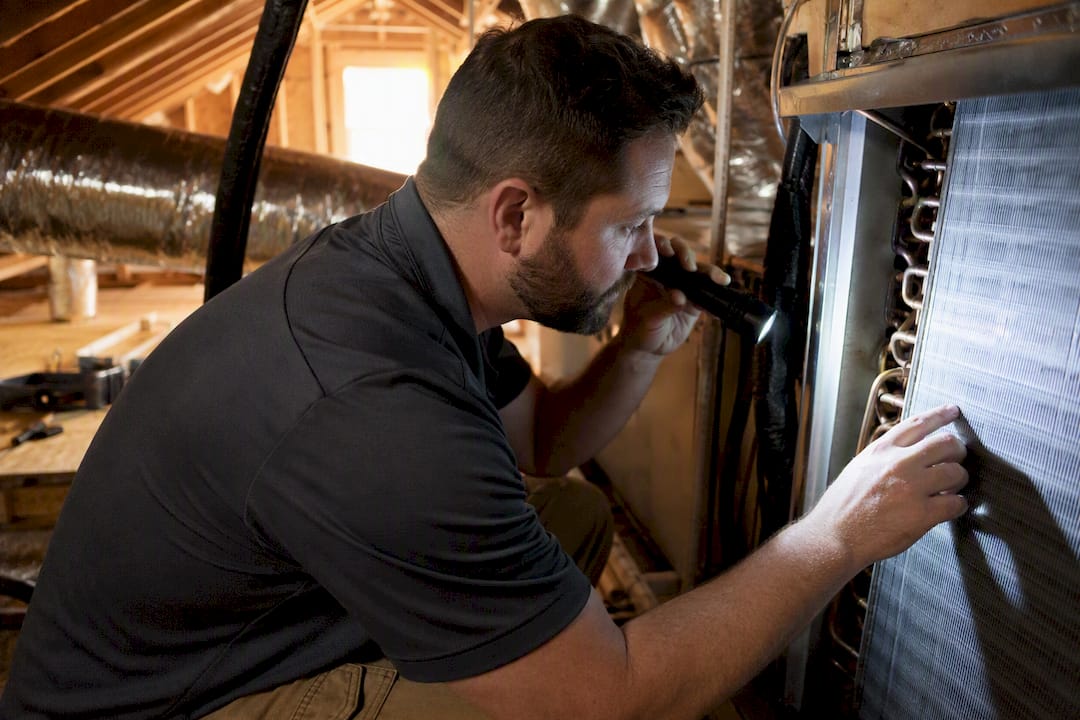
Replace your HVAC system when it’s near the end of its typical service life, showing safety red flags, or when repair costs and age together make a new system the smarter long-term bet. If your equipment checks two or more boxes below, start collecting replacement quotes instead of scheduling another repair.
- Age: furnace past 15-20 years, AC or heat pump past 10-15 years
- Safety: gas smell, cracked heat exchanger, or repeated carbon monoxide alarms
- Repair pattern: two or more major repairs in two years
- Comfort: rooms that never reach the thermostat setting, or humidity that won’t budge
- Refrigerant or corrosion: visible rust, oil residue at fittings, or repeated refrigerant leaks
ENERGY STAR frames replacement around end-of-life timing, and contractor data from ServiceTitan backs up those age windows with real-world numbers. If you’re in St. Louis or Jefferson County and want a second opinion before you spend another dollar on repairs, Ricottaheatingandair can walk your system with you and tell you straight.
Key Takeaways
The smartest replacement decision combines age, safety, repair history, and cost math rather than relying on any single factor alone.
| Point | Details |
|---|---|
| Know your age windows | Furnaces run 15-20 years; ACs and heat pumps typically last 10-15 years. |
| Safety always wins | A cracked heat exchanger or gas smell means replace immediately, regardless of age. |
| Use the $5,000 rule wisely | Multiply age by repair cost, then check against 30-50% of a new system’s price. |
| Time it right | Schedule replacement in spring or fall to avoid peak-season pricing and rushed installs. |
| Get a local, honest opinion | Ricotta Heating & Air offers diagnostic visits and itemized quotes across St. Louis and Jefferson County. |
Where to Learn More
- ENERGY STAR: replacement timing and efficiency guidance
- ServiceTitan: observed replacement age data
- ConsumerAffairs: full-system cost breakdowns
- Carrier: equipment-specific pricing
- Tru Comfort: additional warning-sign background
Table of Contents
- What Are the Warning Signs You Need to Replace Your HVAC?
- How Long Do HVAC Systems Actually Last?
- What Does HVAC Replacement Cost, and When Should You Schedule It?
- Should You Repair or Replace? A Decision Checklist
- What Happens During an HVAC Replacement Visit?
- What Do Replacement Timing Averages Actually Tell You?
- How Ricotta Heating & Air Can Help You Decide
- Frequently Asked Questions
- Sources
What Are the Warning Signs You Need to Replace Your HVAC?
Some signs are obvious. Others creep up on you until you realize your energy bill has quietly doubled. Here’s what actually points toward replacement rather than another patch job.
- Your system has hit its age ceiling. Furnaces typically last 15 to 20 years, and air conditioners or heat pumps run 10 to 15. Once you’re past that window, every repair is a bet against the odds.
- Utility bills are climbing without explanation. A system losing efficiency has to work harder to hit the same temperature, and that shows up on your bill before it shows up as a breakdown.
- You’re calling for repairs more than once a year. A single repair is normal wear. A pattern of repairs is your system telling you it’s tired.
- Some rooms never feel right. Uneven temperatures or stubborn humidity often mean the equipment can no longer match your home’s actual load, not just a dirty filter or a closed vent.
- It’s making noises it never used to make. Grinding, squealing, or banging usually means a mechanical part, like a blower motor or compressor, is failing.
- You see corrosion, oil stains, or repeated refrigerant leaks. Rust on the coil or oily residue at a fitting usually means the metal itself is breaking down, not a one-time fluke.
- You smell gas or the system trips CO alarms. Stop using the equipment and call a professional immediately. This isn’t a repair decision. It’s a safety one.
Pro Tip: A single failed capacitor or a dead igniter is a fair reason to repair. A failed compressor, a cracked heat exchanger, or a second refrigerant leak in two years usually means the whole unit is compromised, and repairing it just delays the inevitable at your expense.
If you want to rule out a simple fix first, run through a quick troubleshooting checklist before assuming the worst.
How Long Do HVAC Systems Actually Last?
Furnaces average around 15 to 20 years. Air conditioners and heat pumps typically run 10 to 15 years, with coils and air handlers often lasting as long as the outdoor unit they’re paired with.
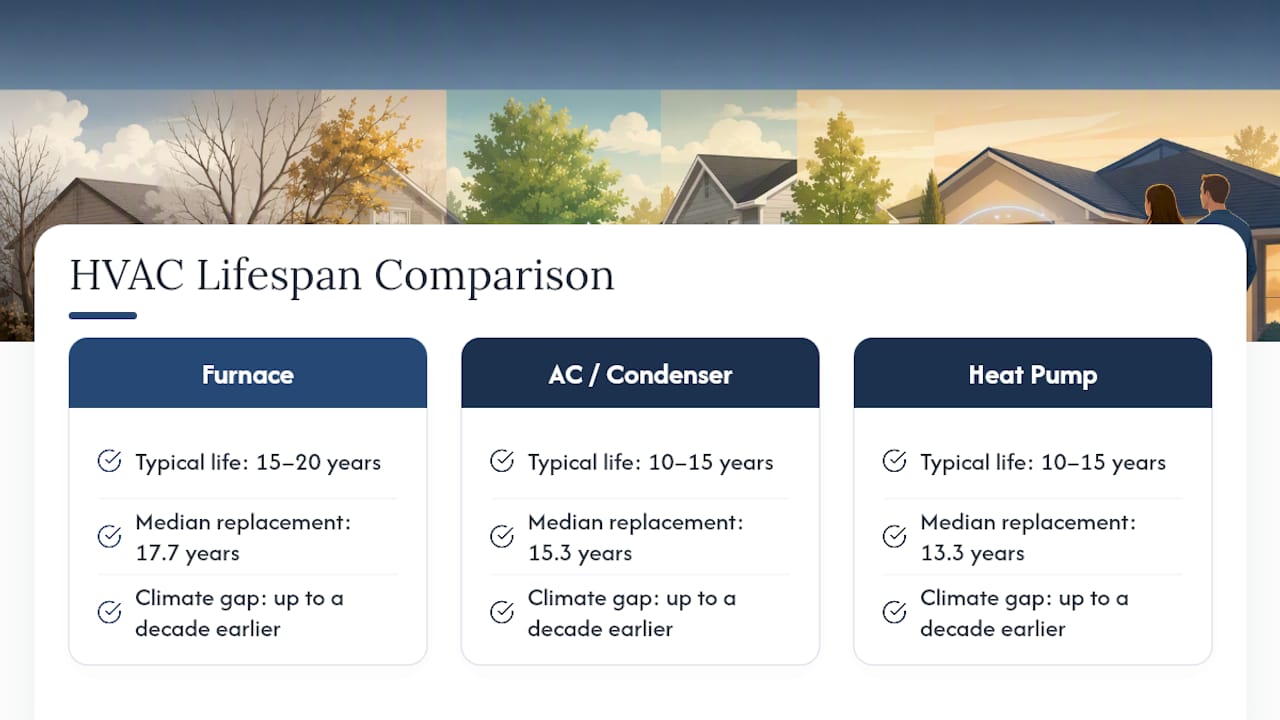
Climate changes those numbers more than most homeowners expect. ServiceTitan’s analysis of contractor records found a median furnace replacement age of about 17.7 years, AC or condenser units around 15.3 years, and heat pumps closer to 13.3 years, with state-by-state gaps wide enough that identical equipment gets replaced a decade earlier in humid, high-use climates than in cooler, drier ones.
Think of those figures as a planning guide, not a countdown timer. A system that’s well maintained and correctly sized for your home, per ENERGY STAR’s guidance, can beat the median easily. One that was installed poorly or skipped maintenance can fail years early.
What Does HVAC Replacement Cost, and When Should You Schedule It?
Budget matters as much as timing, and both affect each other more than most homeowners realize.
- Full system replacement: averages around $11,500, with most homeowners paying between $8,000 and $15,000
- Central AC alone: typically $3,000 to $15,000 depending on size and efficiency tier
- Furnace or heat pump: costs vary widely by efficiency rating and home size
- Ductless mini-split or geothermal: often priced higher upfront but can shift the math if ductwork is already a problem
Ductwork is the wild card. Replacing or adding ducts, upgrading electrical service, or dealing with tight attic or crawlspace access can push a project well past the average, sometimes doubling the total cost and timeline.
Installation itself usually takes one to two days for a like-for-like swap, according to the Department of Energy’s homeowner guide. Duct work or a full system-type change can stretch that to a week or more.
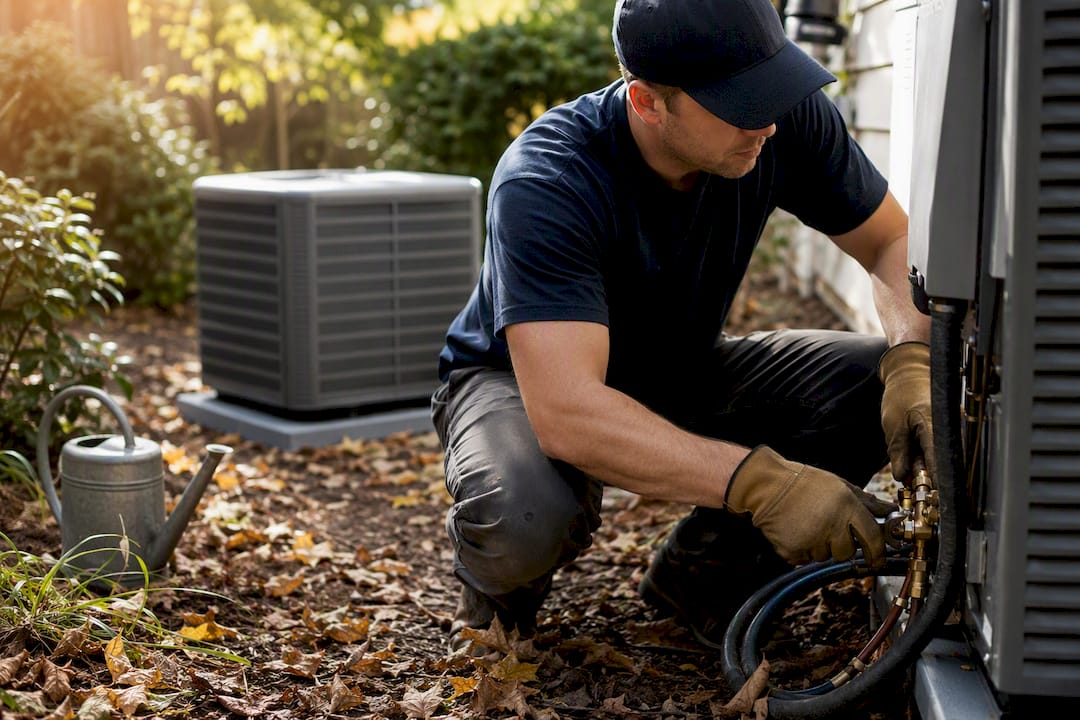
Pro Tip: Schedule your replacement in spring or fall if you can. Installers aren’t slammed with emergency calls, crews tend to be more experienced with the season’s lower volume, and you’ll often dodge the peak-season pricing bump that hits every July and January.
Should You Repair or Replace? A Decision Checklist
Run through this in order. The first “yes” you hit usually settles the question.
- Is there a safety issue? A cracked heat exchanger, gas leak, or repeated carbon monoxide trips means replace, full stop, regardless of age.
- Is the unit past its typical age range? Furnaces near 15-20 years and AC or heat pump units near 10-15 years should lean toward replacement even if the current repair looks minor.
- Have you repaired it more than once in the last two years? A repeat offender rarely becomes reliable again.
- What does the cost math say? Multiply the system’s age by the repair estimate. If that number tops $5,000, replacement usually wins. This “$5,000 rule” is a fast triage tool, not gospel, so cross-check it against a second rule: if the repair costs more than 30-50% of a new system’s price, replacing makes more financial sense.
Quick example: a 12-year-old AC needs a $450 compressor repair. That’s $5,400 under the age-times-cost math, which flags replacement, but $450 is nowhere near 30% of a new unit’s cost. That’s exactly why you check both rules instead of leaning on just one.
Ask any contractor these questions before signing anything:
- What’s the exact make, model, and efficiency rating of the replacement equipment?
- Is this itemized, with labor, permits, and disposal broken out separately?
- What’s covered under warranty, and for how long?
Watch for red flags that suggest a sales pitch instead of honest advice: pressure to sign same-day, a quote with no itemization, or a “deal” that expires tonight only.
What Happens During an HVAC Replacement Visit?
A professional visit typically follows a predictable path:
- Diagnostic inspection of the current system and your home’s layout
- A written estimate covering equipment, labor, and any duct or electrical work
- Scheduling, ideally during a shoulder season for better crew availability
- Installation day: removal of old equipment, setup, and system commissioning
- Cleanup, a walkthrough of the new system, and final paperwork
Before the crew leaves, get these in hand:
- Model numbers and efficiency ratings (SEER, AFUE) for the new equipment
- An itemized invoice, not a lump-sum total
- Permit confirmation, where your municipality requires one
- Written warranty terms for both parts and labor
Get at least two written bids before you commit, and don’t let peak-season urgency rush you into skipping that step.
What Do Replacement Timing Averages Actually Tell You?
These medians come from ServiceTitan’s analysis of contractor service records nationwide, and they skew by climate more than almost any other factor: hot, humid regions wear equipment out years faster than cooler, drier ones.
Contractor records also reflect who called for service, not every unit in existence, so treat these numbers as a benchmark for planning, not a fixed rule. Pair them with a local diagnostic before you decide.
A Note From the Field
Homeowners usually already sense something’s off before they call us. That instinct is worth trusting, and a second written opinion never hurts before you spend money either way.
How Ricotta Heating & Air Can Help You Decide
If you’re staring down a repair quote and wondering whether it’s worth it, Ricotta Heating & Air gives you an honest answer instead of a sales pitch. Unlike contractors who push replacement on every service call, our diagnostics focus on what your system actually needs, backed by 50 years of local experience across St. Louis and Jefferson County.
We offer diagnostic assessments, detailed replacement estimates, and financing options so you’re never guessing at the real cost. Our services include:
- Full system replacement and installation
- Heat pump conversions for homes ready to switch
- Ongoing service agreements to catch problems before they become replacement decisions
Ask us for an itemized quote, and we’ll walk you through permit and warranty details before you sign anything. If your system is showing two or more of the signs above, schedule a diagnostic visit with us and get a straight answer on repair versus replace.
Frequently Asked Questions
How often should you replace HVAC equipment? Most homeowners replace furnaces every 15-20 years and air conditioners or heat pumps every 10-15 years, though climate and maintenance quality shift those numbers significantly.
What’s the average furnace lifespan? Furnaces typically last 15 to 20 years, with ServiceTitan’s contractor data putting the median replacement age around 17.7 years.
Is it cheaper to repair or replace an HVAC system? It depends on the repair cost relative to the system’s age and a new unit’s price.
What’s the best time of year to replace an HVAC system? Spring and fall usually offer better installer availability and lower labor costs than the peak demand of summer or winter.
How long does HVAC installation take? A like-for-like swap typically takes one to two days. Projects involving new ductwork or a system-type change can take a week or longer.
Sources
- Replace your heating and cooling equipment | ENERGY STAR
- Equipment replacement lifespan | ServiceTitan State of the Trades
- How Much Does an HVAC System Cost? (2026 Guide) | ConsumerAffairs
- HVAC Replacement Cost | System Pricing & Installation Guide | Carrier
- Guide to Home Heating and Cooling | U.S. Department of Energy