
HVAC Diagnosis: Verify Repairs | Jefferson County, MO
Quick Summary
Before approving an HVAC repair in Jefferson County, separate billing questions from diagnosis questions. Ask what failed, which test confirmed the problem, and what the written estimate includes. Consider a second opinion on major work, especially if the technician cannot explain why it is needed.
- An inflated bill and an unnecessary repair are different problems. Check both the price and the diagnosis.
- A written estimate should identify the repair, explain the charges, and state the expected total.
- Ask the technician to show you the problem and explain the test results.
- For a second opinion, start by describing the symptoms rather than repeating the first diagnosis.
- Some contracts signed at home qualify for cancellation under the FTC's Cooling-Off Rule, but exceptions apply.
Table of Contents
- Two Kinds of Overcharging Homeowners Need to Recognize
- HVAC Repair Practices That Deserve a Closer Look
- Questions to Ask Before Approving an HVAC Repair
- How to Get a Second Opinion on HVAC Repair
- Comparing Prices and Understanding Your Consumer Rights
- Safe Checks Homeowners Can Make
- Schedule an HVAC Assessment with Ricotta Heating & Air
- Frequently Asked Questions
Two Kinds of Overcharging Homeowners Need to Recognize
When your system stops working in Hillsboro, getting comfortable again is usually your first concern. Missouri's humid summers and cold winters can make a repair decision feel urgent. Still, it helps to separate two questions: Is the work needed, and are the charges explained?
Billing problems involve charges for necessary work that do not match the agreed estimate, include undisclosed fees, or bill for work that was not performed.
Diagnosis problems involve recommending work without showing why it is needed, or overlooking a simpler repair that would address the failure.
A low price does not make an unnecessary repair worthwhile. Likewise, a higher estimate does not automatically mean a contractor is overcharging.
If a technician recommends replacing the whole system before explaining the failure, ask for the findings and the available repair options. Replacement may make sense, but the recommendation needs a reason.
HVAC Repair Practices That Deserve a Closer Look
Vague estimates, unexplained urgency, and surprise fees deserve questions. None proves dishonesty on its own, but each is a reason to slow down before approving work.
Vague Estimates and Hidden Fees
A written estimate should identify the repair and explain what the total covers. If the technician cannot give a firm total until more testing is done, ask what that testing costs and when your approval will be needed again.
Charges to clarify before work starts:
- A diagnostic fee that was not explained when you booked
- Supply or disposal charges not included in the estimate
- A parts charge with no part description or explanation of what it covers
- Separate trip and service-call charges whose purposes are unclear
High-Pressure Sales and Urgency Language
Some failures need immediate attention. A technician should explain the hazard and what you need to do to stay safe, not simply push you to sign.
Reasons to ask more questions include:
- A same-day sales deadline used to discourage comparison
- A safety warning with no explanation of the hazard
- A replacement recommendation without a discussion of repair options
- Refusal to provide written findings
If a safety problem is identified, follow shutdown instructions while seeking clarification or another assessment. Do not keep running unsafe equipment while comparing quotes.
Questions to Ask Before Approving an HVAC Repair
Ask for the diagnosis, proposed work, and pricing terms in writing. You should understand what you are approving without having to know every technical term.
Keep these questions handy for your next service call:
- What failed, and can you show me the problem or the test results?
- Does this need repair or replacement, or can it safely be monitored?
- Is it safe to operate the system while I decide?
- Is the price flat-rate or based on time and materials?
- Does the total include the diagnostic fee and any other charges?
- Does any existing parts coverage apply, and how can I confirm it?
- Can you put the findings, options, and estimate in writing?
If you have older equipment, confirm that the company services that brand before approving work.
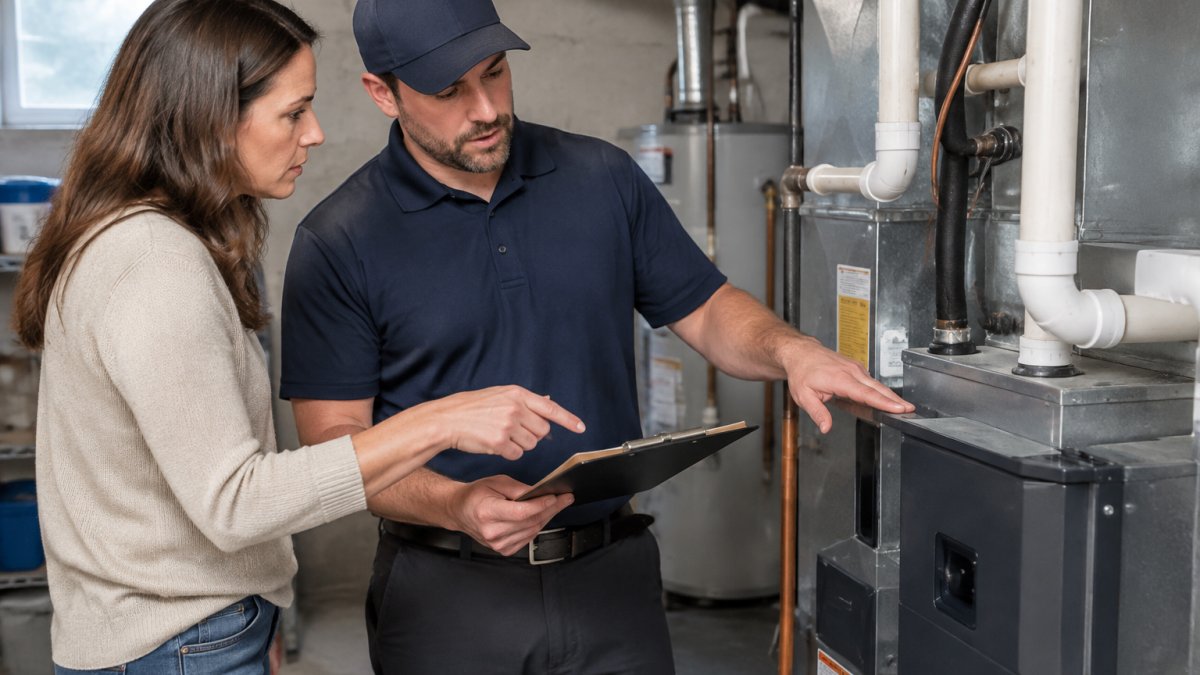
How to Get a Second Opinion on HVAC Repair
A second opinion means having another company inspect the system and provide an independent diagnosis. It can be helpful before a major repair or replacement, particularly when the first explanation is unclear.
Follow these steps:
- Hold off on authorizing new work or paying a deposit while you review the recommendation.
- Request the first company's written diagnosis and estimate.
- Describe the symptoms to the second company. Share any safety warnings, shutdown instructions, and work already performed.
- Compare the explanations and scope of work, not just the totals.
- If the diagnoses differ, ask which tests support each conclusion.
If you have been quoted a major repair or replacement, learn more about getting a second opinion before committing. Ask about any assessment fee when you book.
Comparing Prices and Understanding Your Consumer Rights
There is no single price benchmark that fits every HVAC repair. Equipment, access, the work involved, and scheduling can affect an estimate. Start by understanding how the job will be billed.
| Pricing Model | How It Works | What to Check |
|---|---|---|
| Flat-rate pricing | A set price for a defined repair | Ask what is included, what could change the total, and how the diagnostic fee is handled. |
| Time and materials | Labor charges plus parts and applicable fees | Ask for the labor rate, estimated time, parts charges, and any travel or minimum charges. |
Either method can be reasonable when the terms are clear. A flat-rate quote may combine parts and labor into one repair price. A time-and-materials invoice should explain the hours and materials billed. Ask how additional work will be approved if the technician finds another problem.
Review these areas:
- Parts charges. An installed part costs more than the part alone because the job also involves sourcing, labor, and business expenses. An online retail price is not a direct comparison. Ask for the part description and compare estimates for the same work.
- Separate fees. Diagnostic, travel, supply, and disposal fees should be explained before you approve service.
- Labor billing. For time-and-materials work, ask about minimum charges, rounding, and whether travel time is included.
- After-hours charges. Ask whether evening or weekend service changes the rate before booking.
For consumer information, review the Federal Trade Commission's home repair and improvement guidance. The FTC's Cooling-Off Rule allows cancellation of certain sales made at home within three business days, but it does not cover every HVAC agreement. Some emergency work and requested repair visits are excluded. Check the details before relying on a cancellation right: Buyer's Remorse: The FTC's Cooling-Off Rule May Help. The Missouri Attorney General's consumer complaint resources explain how to report a concern.
If an estimate seems wrong, request clarification and compare it with another assessment before authorizing work. If you dispute a completed job, document the issue and contact the company in writing. Review your agreement and seek consumer or legal guidance rather than assuming you can withhold payment without consequences.
Keep estimates, invoices, test results, and messages. If the company will not document the diagnosis or pricing terms, consider another contractor before proceeding.
Safe Checks Homeowners Can Make
A few basic observations can help a technician narrow down the problem. They will not prove that a repair is necessary—or unnecessary—but they give you a useful starting point.
Check only what you can safely access without removing equipment panels:
- Filter. With the system off, inspect an accessible filter and replace it if needed according to the equipment and filter instructions. Use the specified size and type, and note when it was changed.
- Thermostat. Check the heating or cooling mode and temperature setting. Replace batteries if the thermostat uses them and indicates they are low. The fan's ON setting can circulate air between heating or cooling cycles.
- Breaker. Note whether the labeled HVAC breaker appears tripped, but do not remove the electrical panel cover or repeatedly reset it. A trip can indicate an electrical fault; ask a professional how to proceed.
- Outdoor unit. Look for leaves or debris blocking airflow. With the system off, remove loose debris around the unit without reaching inside or touching wiring, fins, or refrigerant lines.
- Drainage. Look for visible water around the indoor unit or in an accessible drain pan. Report it to the technician. Do not bypass a float switch or open equipment to investigate.
- Utility bill. Compare usage with a similar period, allowing for weather, rate changes, and household habits. An increase alone does not prove an equipment failure.
A dirty filter, thermostat setting, or drainage problem can affect operation. If basic checks do not explain the symptoms, leave further testing to a technician. If you smell gas, leave the home and call the gas utility or emergency services from outside. If a carbon monoxide alarm sounds, leave immediately and call emergency services.
Checking quoted or completed work. Ask to see the findings and have the test results explained. Afterward, ask what was replaced and how operation was checked. You can request the old part, but it may need to be returned to a supplier or manufacturer; its absence alone does not prove wrongdoing.
Our year-round HVAC maintenance schedule can help you distinguish routine upkeep from a repair recommendation.
Do not open the outdoor disconnect, remove service panels, test electrical components, or handle refrigerant lines. Those checks belong to a qualified professional.
Schedule an HVAC Assessment with Ricotta Heating & Air
You do not need to diagnose the equipment yourself. Your job is to explain the symptoms, ask questions, and understand the recommendation before approving it.
Ricotta Heating & Air is a family-owned HVAC company based in Hillsboro, serving Jefferson County and South St. Louis County. Contact us to discuss your heating or cooling concerns and request an assessment.
When you are ready to book, request heating service and describe what your system is doing, when the problem started, and any findings from an earlier visit.
Frequently Asked Questions
What are the signs that my HVAC system is overcharged with refrigerant?
Too much refrigerant can cause poor cooling and abnormal operating pressures, but those symptoms overlap with other problems. A technician needs to check airflow and evaluate the charge using the manufacturer's procedure. Ask which readings support the diagnosis rather than relying on noises or cooling performance alone.
Should I always get a second opinion for expensive HVAC repairs?
A second opinion is worth considering for major repairs or replacement, especially if the diagnosis is unclear or the options were not explained. Ask the second technician what they tested and compare both findings. If the equipment has been declared unsafe, leave it off while arranging another assessment.
How can I tell if an HVAC repair is actually necessary?
Ask what failed, how it was tested, and how the proposed repair addresses the symptoms. Request relevant readings or photos and an explanation of whether it is safe to wait. If the findings do not support the recommendation or you still do not understand it, seek another assessment before approving the work.
What questions should I ask before authorizing HVAC work?
Ask what was tested, why the repair is needed, and whether it addresses the cause or only the symptoms. Request a written scope of work and pricing terms, including diagnostic and other fees. Ask about applicable licensing requirements, any existing parts coverage, and how additional work will be approved. Confirm whether the system is safe to use while you decide.
Before approving your next repair, make sure the diagnosis and estimate answer your questions. If they do not, ask for clarification or a second opinion. Contact Ricotta Heating & Air to discuss your system and request an assessment.

This article was written with AI assistance and edited for Hillsboro and Jefferson County homeowners by Ricotta Heating & Air. For advice about your own system, call (314) 333-5900.