
HVAC Second Opinion: Get a Free, No-Pressure Review
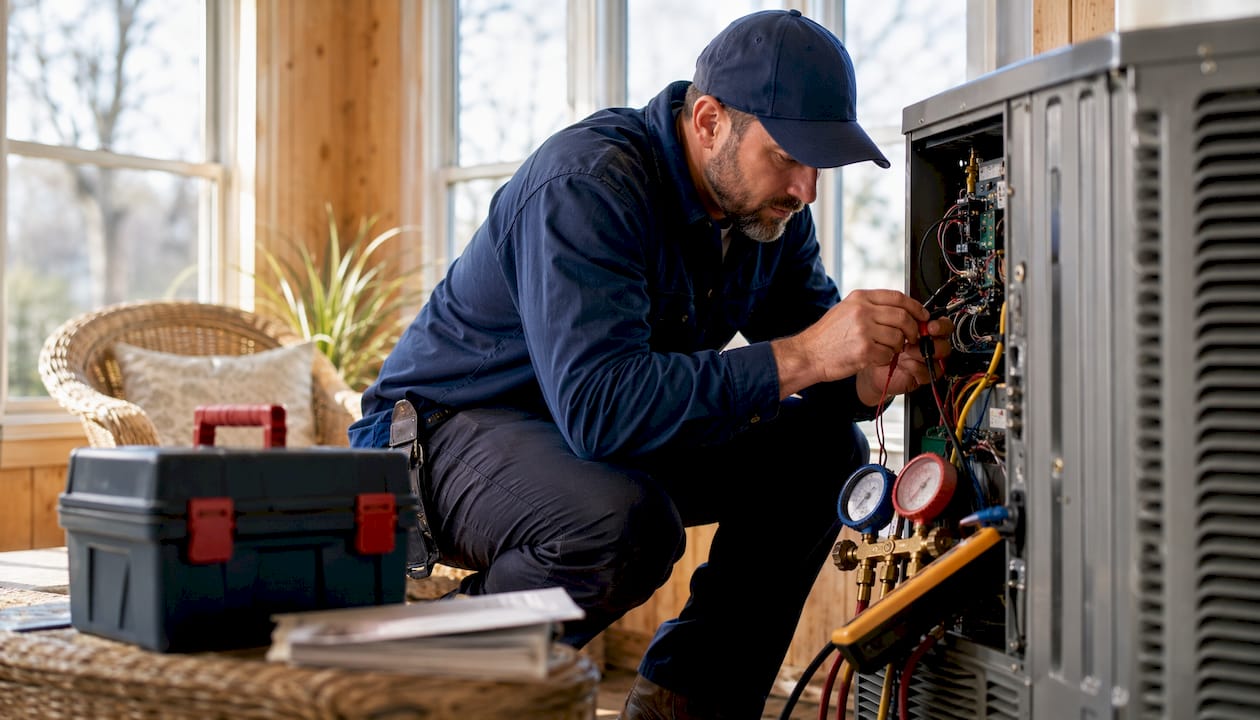
If you’ve just received a quote for an HVAC repair or replacement, getting a second opinion is the right call whenever the number is large, the pressure feels high, or the explanation feels thin. The short answer: yes, get one. Keep the written quote, snap photos of your outdoor unit and indoor equipment, and contact a trusted local provider for a hands-on diagnostic review. For homeowners in St. Louis and Jefferson County, Ricottaheatingandair offers free second opinions on written replacement estimates with no sales pressure attached.
A second opinion isn’t about doubting the first technician’s honesty. Think of it the way you’d think of a second medical opinion before surgery: it’s standard due diligence on a major investment. Industry guidance frames it exactly that way — an insurance policy on one of the largest capital purchases a homeowner makes. For quotes above a couple thousand dollars, that protection is worth every minute it takes.
- Keep the original written quote or invoice.
- Photograph the outdoor condenser, the indoor air handler or furnace, and the nameplate sticker.
- Note any error codes on the thermostat or control board.
- Request a hands-on diagnostic, not just a phone estimate.
- IMPORTANT: If you suspect a gas leak or carbon monoxide issue, leave the home and call 911 before anything else.
Table of Contents
- What does an HVAC second opinion actually cover?
- How does the second-opinion process normally work?
- What does a second opinion cost, and how long does it take?
- When should you definitely get a second opinion?
- What should you send when requesting a second opinion?
- How do you choose a trustworthy second-opinion provider?
- Why Ricottaheatingandair is a trusted place for a second opinion
- What happens after you get the second opinion?
- Key Takeaways
- The case for always asking
- Get a free second opinion from Ricottaheatingandair
- Useful sources and references
What does an HVAC second opinion actually cover?
A proper HVAC evaluation service is an independent, evidence-based re-evaluation of a prior diagnosis or quote. The key word is independent: a technician visits your home, runs calibrated tests, and delivers a written assessment, rather than glancing at the first quote and confirming it over the phone.
A thorough review should include:
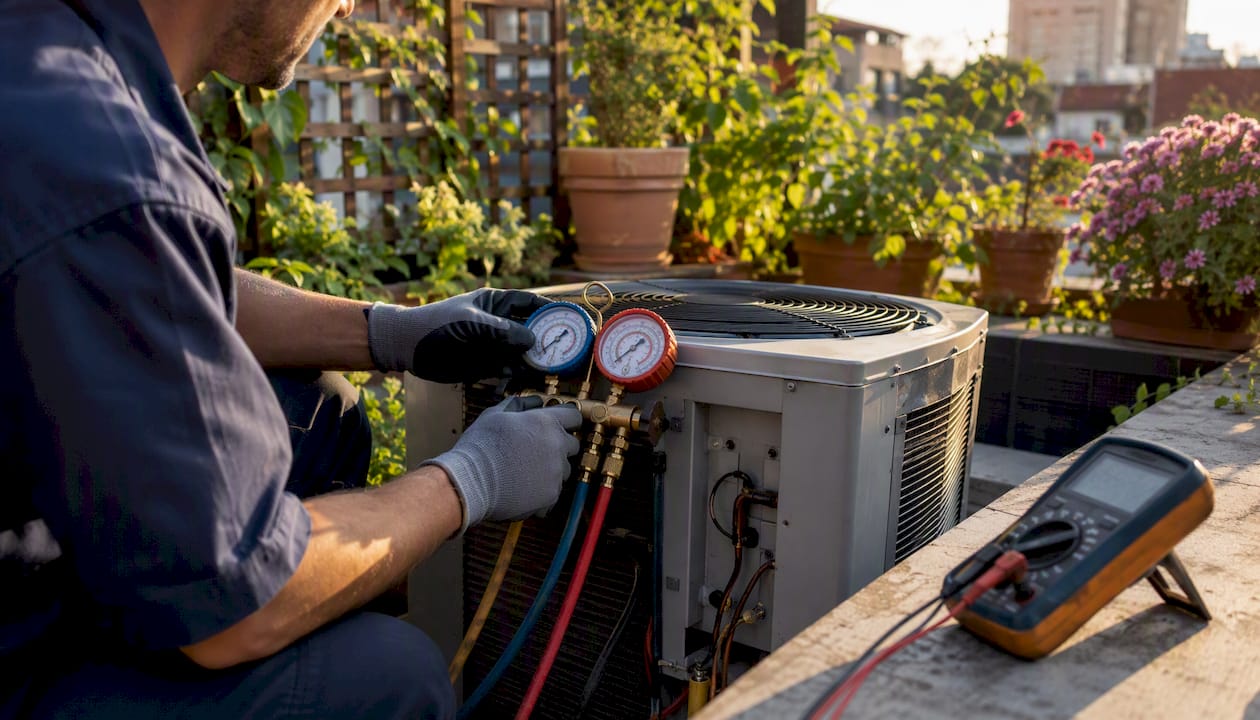
- Refrigerant pressure readings using professional gauges to verify whether a refrigerant issue actually exists.
- Electrical checks with a multimeter to confirm whether components like capacitors, contactors, or control boards have genuinely failed.
- Temperature split measurement across the evaporator coil to assess system performance.
- Visual inspection of the condenser coil, heat exchanger, ductwork connections, and drain pan.
- Itemized written estimate that breaks down parts, labor, and any recommended replacements line by line.
- Repair-vs-replace recommendation with a clear rationale, not just a preference.
- Manual J load calculation for any full-system replacement, which sizes the new unit to your home’s actual square footage, insulation, and window area rather than just copying the old unit’s tonnage.
A hands-on diagnostic using professional probes and gauges is the baseline. A phone estimate without physical testing is a sales estimate, not a diagnosis. Systems covered typically include central air conditioners, heat pumps, gas furnaces, ductwork, and indoor-air-quality components like whole-home filters and humidifiers.
How does the second-opinion process normally work?
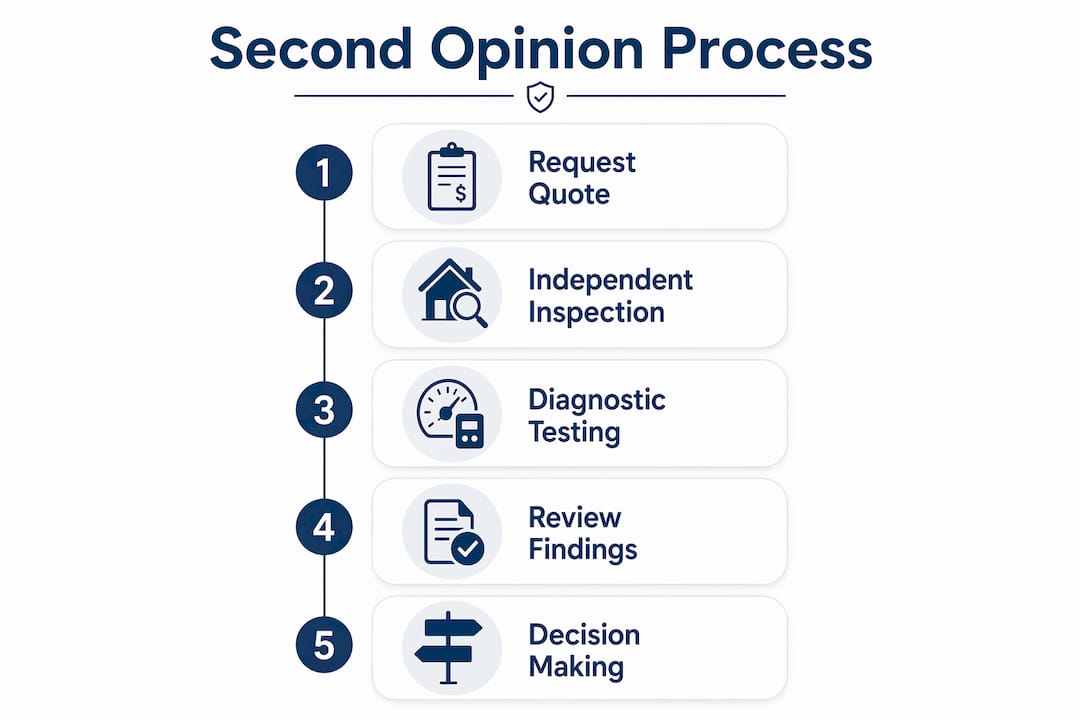
The process is straightforward, and knowing the steps ahead of time helps you stay in control.
- Submit your quote and photos. Contact the second provider by phone, web form, or email. Share the original written estimate, photos of your equipment, model and serial numbers, and a brief repair history. This lets the technician prepare the right tools before arriving.
- Remote pre-review (if offered). Some providers do a quick document review to flag obvious discrepancies before scheduling. This step takes minutes and can surface major scope differences right away.
- In-home diagnostic. A licensed technician visits, runs independent tests with calibrated instruments, and inspects the equipment physically. This is the non-negotiable core of any legitimate HVAC diagnosis review.
- Written assessment and itemized quote. You receive a documented scope of work with line-item pricing, a repair-vs-replace recommendation, and notes on sizing or efficiency options if replacement is warranted.
- Next-step options, no pressure. A reputable provider walks you through the findings and lets you decide on your own timeline.
Turnaround varies by season. During slower months, same-day or next-day appointments are common. In peak summer or winter demand, expect a few days. Emergency situations may be accommodated faster, sometimes with a higher service fee.
Pro Tip: Let the second technician run a fully independent diagnostic before you show them the first quote. A blind comparison gives you a much cleaner verification. Once they’ve finished their own assessment, share the original estimate for a line-by-line comparison. This approach, recommended by practitioners in the field, removes the anchoring effect that can unconsciously shape a technician’s findings.
For a deeper look at how a residential repair visit unfolds from the technician’s side, the HVAC repair workflow guide from Lucas Air is a useful reference.
What does a second opinion cost, and how long does it take?
The cost depends on what you’re asking for and who you call.
| Scenario | Typical Cost | Typical Turnaround |
|---|---|---|
| Second opinion on a written replacement quote | Free at many local shops | Same day to 48 hours |
| Fresh diagnostic inspection (no prior quote) | a diagnostic fee in the typical industry range | a few days; same-day possible |
| Fee waived if you proceed with the repair | Common practice | Confirmed at booking |
| Emergency second opinion | Higher service fee may apply | Same day |
Many providers waive the diagnostic fee entirely when you present a written replacement estimate, because the scope of work is already partially defined. What “free” typically includes: the in-home visit, the diagnostic readings, and a written assessment. What it does not always include: a full Manual J calculation, which may carry a separate fee.
One caution worth noting: a “free” second opinion that skips the hands-on testing and jumps straight to a sales pitch is not a genuine evaluation. Always confirm upfront what the visit includes before you schedule.
Can a second opinion delay an urgent repair? Usually not. If your system poses a safety risk, address that first. A second opinion is for judgment calls, not emergencies.
When should you definitely get a second opinion?
Some situations make a second opinion optional. Others make it necessary. Here’s how to tell the difference.
Red flags that should trigger a second look:
- The quote is above a couple thousand dollars, or the repair cost exceeds 30–50% of what a new system would cost.
- The technician claims a part is unavailable but can’t name the specific part or show you the failed component.
- You’re offered a discount that expires the moment the technician walks out the door.
- The estimate is a lump sum with no itemized breakdown.
- A full replacement is recommended without any mention of a load calculation or sizing rationale.
- The diagnosis was delivered verbally with no written documentation.
Common sales tactics to recognize:
The “exploding offer” is the most common: a price reduction that disappears when the tech leaves, designed specifically to prevent you from seeking a second opinion. Commission-driven upsell language (“your whole system is on its way out”) without supporting test data is another signal. Fear-based claims about safety, without showing you the specific reading or failed component, deserve scrutiny too.
Sizing matters more than most homeowners realize. Contractors who rely on rule-of-thumb sizing rather than a proper Manual J calculation risk installing a unit that’s too large or too small for your home — leading to short-cycling, humidity problems, and premature equipment failure. A second opinion that includes proper sizing verification protects you from that outcome.
Pro Tip: Ask the technician to show you the failed part and the actual test reading. “The capacitor failed” is a claim. A capacitor reading of 2 µF on a component rated for 45 µF is evidence. Reputable technicians will show you both without hesitation.
What should you send when requesting a second opinion?
Getting organized before you reach out makes the review faster and more accurate. Here’s a practical checklist:
- Original written quote or invoice from the first company, including any itemized scope if provided.
- Photos of the outdoor unit (condenser), showing the full unit and the model/serial number nameplate sticker.
- Photos of the indoor unit (air handler, furnace, or coil), including the data plate and any visible damage or corrosion.
- System age and brand, which you can find on the nameplate or in your original installation paperwork.
- Recent repair history, including any parts replaced in the last two to three years.
- Error codes or thermostat messages that appeared before or after the first technician’s visit.
- The specific diagnosis the first technician gave, even if it was verbal.
For photos, aim for clear shots of the condenser coil fins, the refrigerant line connections, and any component the first tech flagged as failed. A well-lit photo of the nameplate sticker lets the second technician look up the exact specifications before arriving, which means they bring the right gauges and parts. When you share documentation transparently, the second technician can perform a more rigorous, line-by-line evaluation of the original scope.
How do you choose a trustworthy second-opinion provider?
Not every company that offers a “free second opinion” is running a genuine evaluation service. Here’s what separates a trustworthy provider from a sales-first shop.
Trust signals to look for:
- Licensed and insured technicians in your state.
- NATE certification or equivalent industry credential, which signals tested technical competence.
- Transparent, itemized written estimates as standard practice.
- A clear no-pressure policy on second opinions, stated upfront.
- Visible customer reviews on Google or the BBB, with responses to negative feedback.
Questions to ask before or at arrival:
- Will you perform a hands-on diagnostic with gauges and a multimeter, or is this a visual-only visit?
- Will you run a Manual J load calculation if replacement is recommended?
- Is the visit free if I already have a written replacement quote?
- Can you show me the failed component and the test reading that confirms it failed?
For a full list of questions to prepare before any HVAC evaluation, the homeowner installation questions checklist from Lucas Air covers the key points worth raising.
| Behavior | Red Flag | Green Flag |
|---|---|---|
| Pricing | Lump-sum, no line items | Itemized written estimate |
| Urgency | “This price expires today” | Quote valid for a reasonable window |
| Diagnosis | Verbal only, no readings shown | Written findings with test data |
| Sizing | Matches old unit by default | Manual J calculation performed |
| Pressure | Pushes decision before you leave | Encourages you to compare options |
| Credentials | Unlicensed or unverified | Licensed, insured, NATE-certified |
Two opinions are usually enough to make a confident decision. For very high-dollar installations, a third quote helps you spot outliers in both directions.
Why Ricottaheatingandair is a trusted place for a second opinion
Ricottaheatingandair is a family-owned business with 50 years of local expertise serving homeowners in St. Louis and Jefferson County. That kind of tenure means the team has seen nearly every failure mode, every sales tactic, and every sizing mistake in the book.
What Ricottaheatingandair brings to a second opinion:
- numerous five-star Google reviews from local homeowners, reflecting consistent, honest service.
- Licensed and insured technicians who carry calibrated diagnostic tools on every visit.
- Service across all major brands, including Trane, Carrier, Lennox, and Rheem, so your equipment is never outside their scope.
- Free review on written replacement quotes, with a documented assessment and no-obligation follow-up.
- Transparent pricing, including a clear diagnostic fee policy when a fresh inspection is needed.
- Full service range: diagnostics, emergency repairs, system replacements, load calculations, indoor air quality checks, and maintenance plans in Jefferson County.
The no-pressure ethos isn’t a marketing line. It’s built into how the business operates: technicians are not commission-driven, and the written assessment you receive is yours to use however you choose, including going back to the original contractor.
What happens after you get the second opinion?
Three outcomes are most common, and each has a clear next step.
- The second opinion confirms the first quote. That confirmation has real value. You now have two independent assessments pointing the same direction, which means you can proceed with confidence. Compare the itemized scopes to see if there are any differences in parts quality or warranty terms before signing.
- The second opinion finds a less costly repair. Get the repair recommendation in writing, compare it line by line against the original quote, and ask both providers to explain the difference. If the second technician’s diagnosis is supported by test data, that documentation gives you solid ground for a conversation with the first company.
- The second opinion recommends replacement but with different sizing, brands, or warranty options. Use the Rule of 5000 as a quick gut-check: multiply the system’s age by the repair cost, and if the result exceeds 5,000, replacement is typically the more economical path. Then compare the replacement proposals on efficiency ratings, warranty length, and included rebates.
Additional next steps worth taking:
- Check for utility or state rebates on high-efficiency equipment before committing to a brand or model.
- Ask whether a permit is required for the replacement in your municipality, and confirm the contractor will pull it.
- If safety is cited as a reason for urgency, prioritize the fix and document everything in writing.
- For very large installs, allow 24–48 hours to gather one more comparison before signing.
Key Takeaways
Getting an HVAC second opinion is standard due diligence on any high-ticket repair or replacement, and many local providers offer it free when you have a written quote in hand.
| Point | Details |
|---|---|
| When to get one | Any quote above roughly $2,000, or when you see urgency pressure, vague pricing, or no load calculation. |
| What to send | Written quote, equipment photos, model/serial numbers, error codes, and recent repair history. |
| Expected cost and time | Free for written replacement quotes at many shops; $80–$200 diagnostic fee for fresh inspections; 24–72 hour turnaround in peak season. |
| Top red flag | An “exploding offer” discount that expires when the technician leaves is designed to stop you from seeking a second opinion. |
| Ricottaheatingandair | Offers free second opinions on written replacement estimates in St. Louis and Jefferson County, with licensed technicians and no-pressure written assessments. |
IMPORTANT: If you suspect a carbon monoxide leak, gas smell, or any immediate safety hazard, leave the home immediately and call 911. A second opinion is for financial decisions, not emergencies.
The case for always asking
There’s a version of conventional wisdom that says getting a second opinion is somehow rude or implies distrust. That framing benefits contractors who rely on urgency, not homeowners who are protecting a several-thousand-dollar decision.
The more honest framing: reputable contractors expect second opinions and welcome them. A technician who pressures you to decide before they leave the driveway is telling you something important about how they operate. A technician who hands you a written, itemized assessment and says “take your time” is telling you something equally important.
What most homeowners underestimate is the sizing problem. Even when two contractors agree that replacement is necessary, they often disagree on the correct tonnage, because one ran a Manual J and one matched the old unit. That difference, a half-ton or a full ton in either direction, affects your comfort, your energy bills, and your equipment’s lifespan for the next 15 years. A second opinion that catches a sizing error pays for itself many times over, even if the diagnostic fee isn’t waived.
The goal isn’t to find a contractor who tells you what you want to hear. It’s to find one whose findings you can verify.
Get a free second opinion from Ricottaheatingandair
You’ve done the research. Now the fastest next step is straightforward: send Ricottaheatingandair your written quote and a few photos, and get a documented, no-pressure assessment from a licensed local technician.
Ricottaheatingandair serves homeowners across St. Louis and Jefferson County with free second opinions on written replacement estimates. Here’s how to reach the team:
- Phone: Call to describe your situation and schedule a same-day or next-day visit when available.
- Web form: Submit your quote and photos directly through the Mehlville service page or the main site for a quick response.
- What you’ll receive: An in-person diagnostic with calibrated tools, a written itemized estimate, and a clear repair-vs-replace recommendation with no obligation to book.
If the second opinion confirms you need a new system, Ricottaheatingandair handles AC installation and maintenance plans for Jefferson County homeowners, with transparent pricing and many five-star reviews backing every job. Licensed, insured, and family-owned for 50 years. No commission pressure. Just honest answers.
Useful sources and references
These resources help you verify technical points, understand sizing standards, and check cost expectations before or after your second-opinion appointment.
- When to Get a Second Opinion on an HVAC Quote — OnPoint Service Company: Practical guidance on the $2,000 threshold, the exploding-offer tactic, and what a legitimate second-opinion visit includes. Good starting point for understanding your rights as a homeowner.
- HVAC Second Opinion Guide — HVACDatabase: Covers diagnostic fee ranges ($80–$200), when fees are waived, and how to vet whether a “free” offer is genuine. Useful for cost benchmarking.
- Rule of 5000 Repair-or-Replace Calculator — Picture Rock Cooling: A quick heuristic for deciding whether repair or replacement makes financial sense. Multiply system age by repair cost; above 5,000 generally favors replacement.
- Manual J and Sizing Basics — BulletProof Air: Explains why rule-of-thumb sizing leads to problems and how to insist on a proper load calculation during any replacement evaluation.
- Why Choose a NATE-Certified Technician — NATE (North American Technician Excellence): The industry’s primary technician certification body. Use this to verify what NATE certification means and why it matters when selecting a second-opinion provider.
- BBB Contractor Verification — Better Business Bureau: Check any HVAC contractor’s complaint history and accreditation status before booking. A quick search takes under two minutes and surfaces patterns a single Google review might miss.
Always favor documented diagnostic results with test readings over verbal claims. A written assessment you can compare line by line is the whole point.