
60% Indoor Humidity in St. Louis: Check the Dryer Vent First
If your home feels muggy, sticky, or smells faintly musty, your relative humidity is probably above the EPA’s recommended ideal range of 30% to 50%, and levels above the EPA recommended upper threshold increase the risk of mold. Grab a hygrometer and check a few rooms first. If outdoor humidity is lower than what you’re reading indoors, crack some windows and run exhaust fans; if it’s not, run a dehumidifier or your air conditioner instead.
TL;DR:
- Most homes in humid climates like St. Louis need to keep indoor relative humidity below 60% to prevent mold growth and mold-related health issues.
- Common sources of excess humidity include indoor activities like showering and cooking, improperly vented appliances, and leaks that increase moisture levels inside walls or foundations.
- Improving air sealing, adjusting HVAC system sizing, and using portable or built-in dehumidifiers are key steps for long-term control of indoor moisture.
- Regular maintenance of HVAC systems, including filter changes, duct sealing, and drain line checks, is essential to sustain effective humidity management.
- Immediate measures such as running exhaust fans, reducing indoor moisture sources, and monitoring humidity levels can mitigate high humidity before seeking professional help.
Table of Contents
- How Do I Know If My House Has High Humidity?
- What’s Actually Causing the Humidity in Your House?
- What Can I Do Right Now to Lower Humidity in My House?
- What Long-Term Fixes Actually Solve Chronic Humidity Problems?
- Why Is My Basement So Humid, and What Fixes It?
- When Should I Call an HVAC Professional for Humidity Problems?
- What Local Factors Affect Humidity in St. Louis Homes?
- How Do I Keep My Dehumidifier and HVAC System Working Right?
- A Homeowner’s Take: Triage Before You Spend
- Ready to Fix Your Home’s Humidity for Good?
- Sources
- FAQ
How Do I Know If My House Has High Humidity?
Your nose and your windows are telling you something before your thermostat ever will. A $10 to $50 hygrometer takes the guesswork out, and every homeowner dealing with a muggy house in St. Louis County or Jefferson County should own one before spending a dime on equipment.
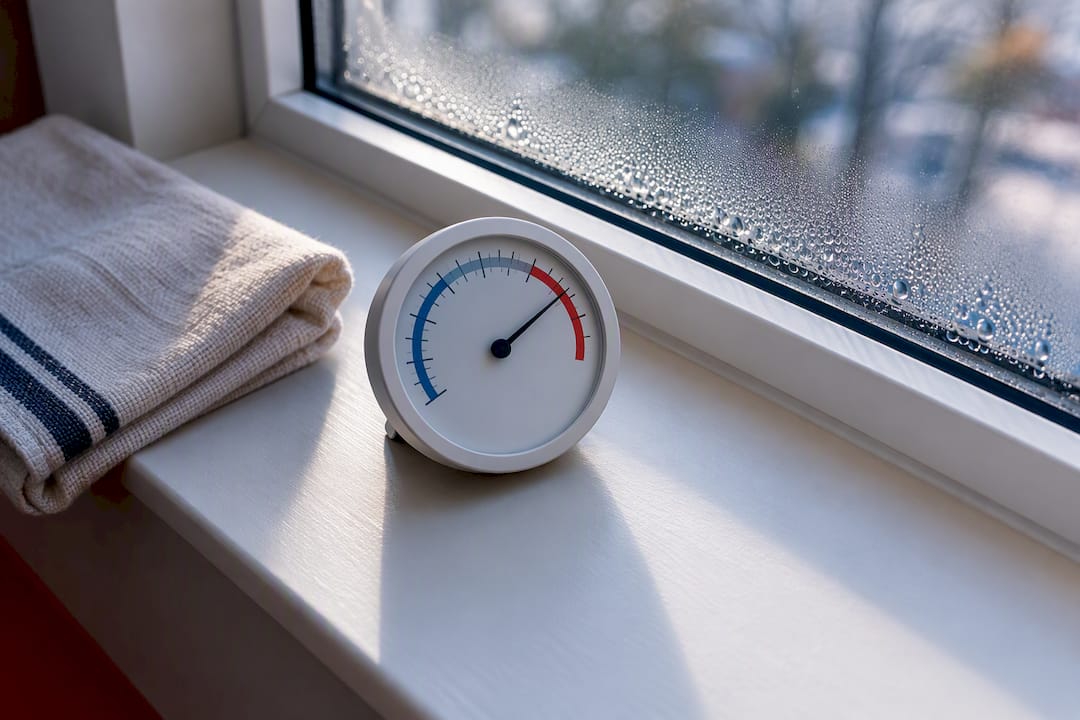
Place the hygrometer at chest height, away from bathrooms, kitchens, and exterior doors, and let it sit for at least 15 minutes before you trust the reading. The EPA’s guidance is your benchmark: 30% to 50% relative humidity is ideal, and once you cross 60%, dust mites and mold have everything they need to thrive. Between 50% and 60% is a gray zone. It’s not an emergency, but it’s worth watching, especially in a basement or an older home with a less airtight envelope.
Your house also gives you clues without any instrument at all:
- Condensation beading on the inside of windows, especially in the morning
- A musty or “basement” smell that lingers even after cleaning
- Visible mold or mildew on grout, window sills, or closet walls
- Wood doors and trim that stick, warp, or feel swollen
- Laundry, towels, or firewood that take noticeably longer to dry than they used to
Health signals matter just as much as the physical ones. The World Health Organization’s indoor air quality guidance ties dampness indoors to asthma flare-ups, wheezing, coughing, and general upper respiratory irritation. If anyone in your house has asthma, allergies, or is very young or older, humidity above 60% deserves faster attention than it would in a household without those risk factors.
Run through a quick room by room check before you decide on a fix:
- Bathrooms right after a shower, with the exhaust fan off and then on
- The kitchen during and after cooking a meal that involves boiling water
- The basement or lowest level of the house, checked at a different time of day than the rest
- Bedrooms, particularly any with windows that fog up overnight
- Any room near the laundry area or the dryer vent
Write the numbers down. A single reading tells you where you stand today. Three or four readings over a week tell you whether you have a chronic problem or a temporary one tied to weather or a one-time event like a heavy rain.
What’s Actually Causing the Humidity in Your House?
Most high-humidity houses aren’t fighting one problem. They’re fighting three or four small ones stacked on top of each other, and figuring out which one is doing the heavy lifting saves you from throwing money at the wrong fix.
Start with the obvious moisture generators, because they’re the easiest to control. A family of four showering daily, cooking on the stovetop, running a humidifier, and drying laundry indoors can add several gallons of water vapor into the air every week. Houseplants and decorative water features contribute too, though usually in smaller amounts than most homeowners assume.
Ventilation failures compound the problem fast. A bathroom fan that vents into the attic instead of outdoors is doing nothing but relocating moisture. Newer, tightly sealed homes trap what older, leakier houses would have let escape, which is why some newer construction in St. Louis County actually struggles with humidity more than the 1960s ranch next door.
Your HVAC system is often the real culprit, and it’s frequently misdiagnosed. An air conditioner that’s oversized for the square footage will cool the air quickly and shut off before it has time to pull enough moisture out. That’s short cycling, and it leaves you with a house that feels cold and clammy at the same time. The Department of Energy notes that correct sizing and adequate runtime are essential for real dehumidification, not just cooling. A clogged coil or a drip pan that’s not draining properly adds moisture right back into the system it’s supposed to be removing.
Then there are the culprits homeowners rarely suspect:
- A clothes dryer vented into the attic, crawlspace, or a disconnected duct instead of outdoors
- Plumbing leaks inside walls or under slabs that never show up as an obvious puddle
- Foundation cracks or grading issues letting groundwater seep into a basement
- A building envelope with gaps around windows, doors, or attic penetrations that lets humid outdoor air infiltrate in summer
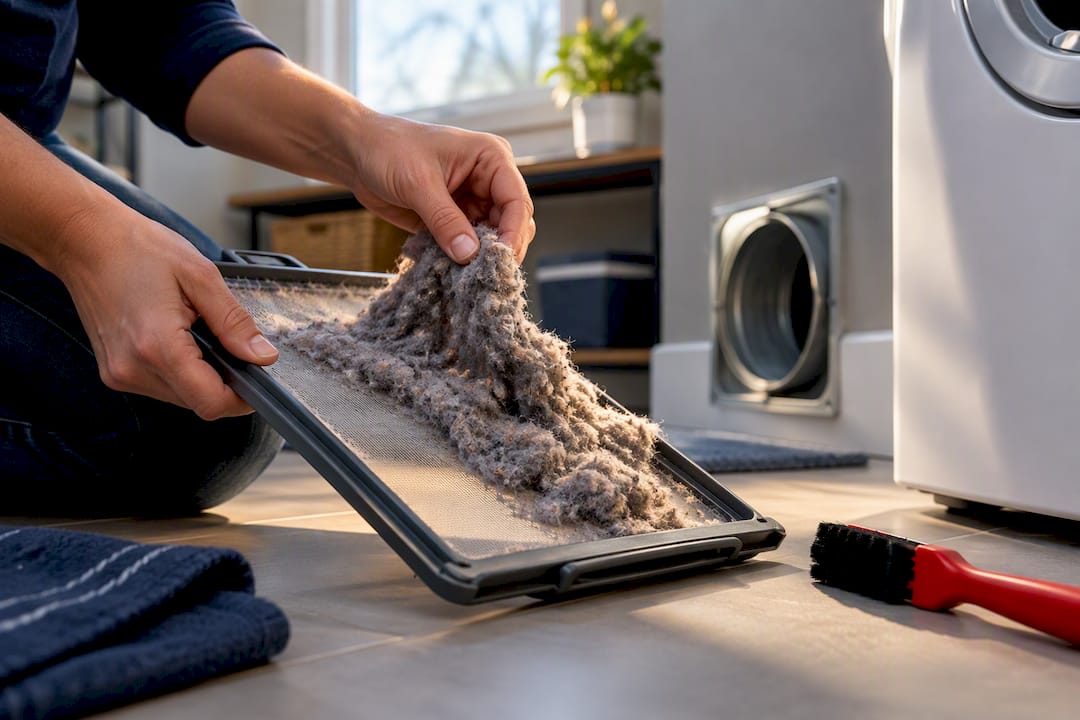
Dryer venting deserves its own callout. It’s a frequent, non-obvious source of chronic indoor moisture, especially in older homes where ductwork has degraded or was never routed outside in the first place. Homeowners blame the AC for months before anyone checks the dryer vent.
Seasonality changes which fix makes sense. In St. Louis’s humid summers, your AC and mechanical dehumidification do most of the work. In winter, indoor humidity often drops too low, which is a different problem worth its own troubleshooting than the one this guide is solving. Spring and fall, when the AC runs less, are when ventilation habits matter most.
What Can I Do Right Now to Lower Humidity in My House?
You don’t need a contractor on the phone today. Start with what’s already in your house or available for under $200, then reassess with your hygrometer in a week.
- Run a portable dehumidifier in the worst room first. Size it to the square footage and existing dampness level. A small 30-pint unit handles a bedroom or bathroom; a basement or a persistently damp main floor usually needs 50 pints or more.
- Empty and clean the dehumidifier’s tank and filter weekly. ENERGY STAR notes that dehumidifiers need regular maintenance, or the appliance itself becomes a source of mold and musty odor instead of a fix.
- Set your AC’s fan to “auto,” not “on.” Running the fan continuously recirculates moisture back into the air between cooling cycles instead of letting it drain away through the condensate line.
- Turn on bathroom and kitchen exhaust fans during and for 20 minutes after showers or cooking. Confirm they vent outside, not into the attic. If you’re not sure, that’s worth a five-minute flashlight check.
- Check your dryer vent for lint buildup, disconnected sections, or a termination point inside the house. This is the fix most homeowners skip and the one that solves the most stubborn cases.
- Only open windows if the outdoor humidity is genuinely lower than indoors. Opening windows on a soupy St. Louis July afternoon adds moisture; it doesn’t remove it.
Pro Tip: Keep a $15 hygrometer in the room where you noticed the problem first, and check it at the same time each day for a week. If numbers stay above 60% no matter what you try, that’s your signal you’re dealing with a source problem, not just a habits problem.
If your AC has been running for hours and the house still feels damp, that’s not normal. It usually means the system is struggling with humid air it can’t keep up with, whether from sizing, refrigerant, or airflow issues that a portable dehumidifier can mask but not fix.
What Long-Term Fixes Actually Solve Chronic Humidity Problems?
Quick fixes buy you comfort this week. Long-term humidity control comes from sealing the house and matching your HVAC equipment to what it’s actually being asked to do.
Air sealing and insulation come first, and in that order. Gaps around attic penetrations, recessed lighting, and duct chases let humid outdoor air infiltrate all summer long, no matter how hard your AC works. A well-insulated attic acts like a thick blanket that keeps your conditioned air where it belongs instead of leaking warm, moist air into your living space. Before you spend thousands on new HVAC equipment, check your building envelope and dryer venting first. Larger equipment installed on top of a leaky envelope just runs constantly and still dehumidifies poorly.
HVAC equipment selection matters more than most homeowners realize. A variable-speed compressor runs longer at lower capacity, which pulls significantly more moisture out of the air than a single-stage unit that blasts cold air and shuts off. Some systems also offer dedicated dehumidification modes or heat pump based dehumidification that separate cooling from moisture removal entirely, which is worth discussing if you’ve got a chronically sticky house even with a properly sized AC.
Mechanical ventilation, specifically an energy recovery ventilator or heat recovery ventilator, brings in fresh outdoor air while managing the energy and moisture exchange, rather than just cracking a window. These make the most sense in tightly sealed newer homes, or after a major air-sealing project that’s reduced natural airflow enough to trap indoor pollutants and moisture together.
- Seal visible duct gaps and joints, particularly in unconditioned attics or crawlspaces
- Confirm the condensate drain line isn’t clogged or draining somewhere it shouldn’t
- Replace HVAC filters on schedule so airflow and dehumidification performance don’t degrade
- Have ductwork tested for leakage if rooms far from the air handler never seem to cool or dry out properly
Pro Tip: Ask whoever services your HVAC system to log the actual runtime and airflow, not just check the refrigerant charge. A system that’s low on airflow will short cycle and leave humidity behind even with a full charge and no leaks.
Why Is My Basement So Humid, and What Fixes It?
Basements and crawlspaces sit at the bottom of every humidity problem in the house, literally and figuratively. Below-grade spaces stay in contact with cooler soil and foundation walls, so warm, humid air condenses on those cold surfaces the same way it does on a glass of iced tea.
Older housing stock across St. Louis County and Jefferson County often has stone or block foundations that were never designed with vapor barriers in mind, which makes this worse than it would be in newer construction.
A dehumidifier built for basement conditions, rated to work efficiently in cooler temperatures than a standard unit, is usually the first line of defense. Place it away from walls, empty condensate regularly or run a direct drain line, and expect it to run more in summer than winter.
Encapsulation and venting solve different problems, so the choice depends on your crawlspace’s specific situation:
- Encapsulation seals the crawlspace with a vapor barrier and often conditions the space, which works well where soil moisture and humidity are the dominant issue
- Venting relies on passive airflow and tends to underperform in humid climates, since it can pull in more moisture than it removes during St. Louis summers
Exterior water management belongs on the same checklist. Grading that slopes away from the foundation, clean gutters, and downspouts extended several feet from the house keep groundwater from ever becoming an indoor problem. A basement humidity problem in St. Louis almost always starts outside, even when the symptoms show up inside.
When Should I Call an HVAC Professional for Humidity Problems?
Some signs mean it’s time to stop troubleshooting solo. Persistent readings above 60% that don’t respond to a dehumidifier and better ventilation habits, visible mold growth, recurring window condensation despite your best efforts, or any sign of actual water intrusion all warrant a professional visit.
A legitimate diagnostic doesn’t start with a sales pitch. It starts with data:
- Multi-room relative humidity logging over several days, not just a single spot check
- HVAC runtime and airflow measurements to catch short cycling or undersized ductwork
- Inspection of the condensate line and drip pan for clogs or improper drainage
- Duct leakage testing, especially in older homes with attic or crawlspace ductwork
- A building envelope check for the air leaks that let humid outdoor air in
The right order of operations matters. Fix the moisture source first, whether that’s a dryer vent or a foundation leak. Then address ventilation. Only after those are handled does HVAC tuning or upgrading make sense, and any technician who wants to skip straight to a new system without measuring anything first deserves a second opinion. Ask for written before-and-after humidity readings and a clear scope of work before you approve anything.
What Local Factors Affect Humidity in St. Louis Homes?
Older housing stock across St. Louis County and Jefferson County tends to have less insulation, leakier building envelopes, and basements or crawlspaces that were never built with moisture control in mind. That combination means the same humidity problem shows up faster and more severely here than it would in newer construction elsewhere.
Local HVAC companies with deep experience have spent decades working inside these homes, and that local pattern recognition shows up in the diagnostic checklist above. Similar expertise is often reflected in positive customer reviews and specialized blog content covering exactly these kinds of humidity and air-quality questions.
The services that map most directly to what’s covered here are indoor air quality assessments, AC tune-ups, duct sealing, and dehumidifier installation.
How Do I Keep My Dehumidifier and HVAC System Working Right?
Equipment that controls humidity only keeps controlling it if you maintain it. A neglected dehumidifier or a dirty HVAC system doesn’t just underperform. It can start adding contaminants back into your air.
For portable dehumidifiers, empty and rinse the water tank weekly, even if it hasn’t filled, since standing water breeds bacteria. Clean or replace the air filter monthly during heavy use, following the manufacturer’s schedule. ENERGY STAR’s maintenance guidance specifically calls out drip tray cleaning as a step homeowners skip more than any other, and it’s the one most likely to turn a helpful appliance into a source of odor.
For your HVAC system, a few habits go a long way toward sustained humidity control:
- Change or clean air filters every one to three months. A clogged filter is like breathing through a pillow, and it chokes airflow enough to hurt both cooling and dehumidification.
- Have the condensate drain line checked each season so it’s not backing up or growing algae.
- Schedule an annual AC tune-up before peak summer heat, since coil buildup reduces moisture removal even when the system still cools fine.
- Keep outdoor condenser units clear of leaves, grass clippings, and mulch, which restrict airflow over time.
A simple seasonal HVAC maintenance schedule keeps all of this from becoming a once-a-year scramble, and it’s the cheapest insurance you’ll ever buy against a humid house.
A Homeowner’s Take: Triage Before You Spend
Measure first, fix cheap problems second, and only then think about equipment. Most humid houses I’ve seen get better from stopping a leak or fixing a dryer vent, not from a new AC.
Document your humidity readings before and after every change, and ask any contractor for written before-and-after numbers, not just a verbal “it’s better now.” Fix moisture sources before you replace equipment. That order saves money and actually solves the problem.
— Alan Ricotta
Ready to Fix Your Home’s Humidity for Good?
If you’ve tried a dehumidifier and cleared out the dryer vent lint and your house still feels muggy, the problem is probably in your HVAC system itself, not your habits. HVAC service providers specializing in honest diagnostics can give you a straight answer about whether you need a repair, a tune-up, or nothing at all, without pressure to buy equipment you don’t need.

A service visit typically starts with a diagnostic: technicians check your system’s runtime, airflow, coil condition, and condensate drainage, then walk you through what they found before recommending any work. If indoor air quality issues are contributing to the humidity, that gets flagged too. Ask for a before-and-after hygrometer reading so you can see the actual improvement, not just take someone’s word for it.
Whether the fix turns out to be an AC tune-up or repair, a duct sealing job, or a Maintenance Plan that keeps your system dialed in year round, the next step is simple: schedule a diagnostic visit and get a clear, written scope of work before anything gets replaced.
Sources
For homeowners who want to dig deeper, the EPA’s mold and moisture control guidance covers ventilation and appliance venting in detail. The WHO’s indoor air quality guidelines address dampness and respiratory health. ENERGY STAR’s dehumidifier basics page explains sizing and upkeep.
This article is general information, not a substitute for advice from a qualified doctor. Consult a qualified healthcare professional about your own circumstances before acting on anything here.
- A brief guide to mold, moisture, and your home
- WHO Guidelines for Indoor Air Quality: Dampness and Mould
- Advanced HVAC humidity control in hot-humid climates
FAQ
Why Is My House at 70% Humidity?
Readings that high usually point to more than one cause stacking together, such as an undersized or short-cycling AC combined with a poorly vented dryer or bathroom fan. Start by isolating rooms with a hygrometer, since 70% in a basement points to different fixes than 70% throughout the whole house.
What Do I Do If My House Is Too Humid?
Measure with a hygrometer first, then run a dehumidifier or your AC on “auto” fan mode while checking that bathroom and dryer vents actually discharge outdoors. The EPA recommends keeping relative humidity between 30% and 50%, and if levels stay above 60% after a week of these fixes, it’s time to call an HVAC professional.
How Bad Is 80% Humidity in a House?
Eighty percent is a serious problem, well past the mold-risk threshold, and it usually means active water intrusion, a major ventilation failure, or HVAC equipment that isn’t removing moisture at all. At this level, dampness is strongly linked to respiratory symptoms like wheeze and asthma flare ups, so treat it as urgent rather than a habit to adjust.
Is 77% Humidity in a House Bad?
Yes. Dry any visibly wet surfaces within 24 to 48 hours to prevent mold from taking hold, then work through source repairs, ventilation, and HVAC checks in that order.