
St. Louis Homeowners: Keep Winter Humidity Near 50%, Measure First
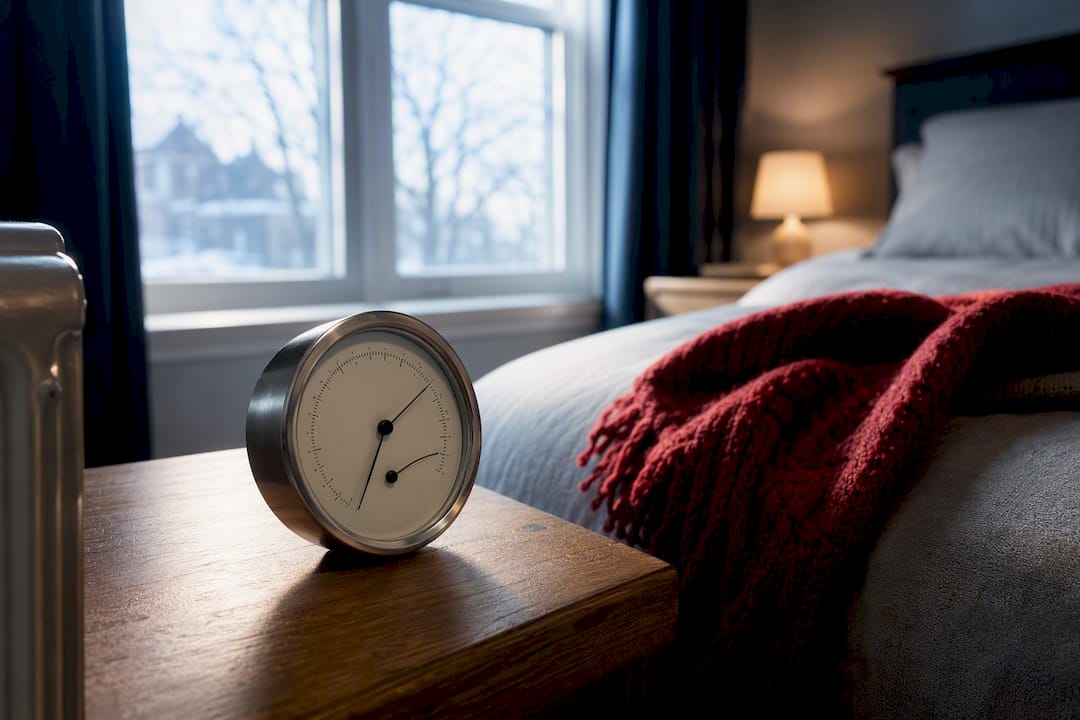
Yes, your indoor air really does get drier in winter, because cold outdoor air holds very little moisture, so heating it indoors raises temperature but not moisture content, lowering relative humidity. Grab a hygrometer, check your relative humidity, and aim for a moderate range that most health guidance recommends, typically between 40% and 60% relative humidity. If a room humidifier and a few simple fixes don’t get you there, or you’re seeing mold or heavy window condensation, that’s your cue to call an HVAC professional.
TL;DR:
- Maintaining indoor humidity between 40% and 60% is essential to prevent mold growth and avoid respiratory discomfort, especially if readings exceed 50%.
- Larger, newer homes with less ventilation and higher thermostat settings tend to have even lower winter humidity levels, often dropping below 10%.
- Dry indoor air can significantly thin airway mucus, increasing inflammation and worsening throat irritation, cough, and respiratory symptoms, particularly in vulnerable groups.
- Using a hygrometer to monitor humidity and employing small fixes or humidifiers can help achieve and maintain optimal moisture levels without promoting mold growth.
- When humidity remains low despite these measures or if issues like condensation or mold appear, hiring an HVAC professional for whole-home solutions is recommended.
Table of Contents
- Why Winter Air Feels Dry: The Physics and Common Home Contributors
- How Dry Indoor Air Affects Your Health and Comfort
- How to Check Your Indoor Humidity and Spot the Warning Signs
- Practical Solutions: Room Fixes, Humidifiers, and Whole-Home Options
- Humidifier Safety and Maintenance: Don’t Trade One Problem for Another
- When to Call an HVAC Pro (and What They’ll Actually Do)
- Measured Fixes Beat Quick Fixes
- Get Your Home’s Humidity Checked by Ricotta Heating & Air
- Sources
- FAQ
Why Winter Air Feels Dry: The Physics and Common Home Contributors
Cold air simply cannot hold much water vapor. Air at negative 20 degrees Celsius carries only about 1 gram of moisture per cubic meter, but that same air heated to a comfortable 22 degrees indoors could hold roughly 20 grams per cubic meter if it were saturated, according to NASA’s Jet Propulsion Laboratory. Your furnace raises the temperature but adds none of that missing moisture, so the relative humidity in your home can drop to very low levels, sometimes below 10%, even though the air outside felt merely “cold,” not “dry.”
Your heating system plays a bigger role than most homeowners realize. Furnaces and heat pumps that cycle warm, dry air through the house without any humidification source will pull moisture out of your skin, your furniture, and your houseplants just to try to reach equilibrium. A handful of home factors make this worse:
- Bigger, newer homes hold more air volume but often generate less moisture per square foot from cooking, showering, and breathing.
- Air leakage around windows, doors, and attic penetrations constantly swaps your humidified indoor air for dry outdoor air.
- Reduced ventilation habits in winter, like sealed-up bathroom fans running less, mean less humid air gets replaced with anything better.
Building-science research on dry indoor climates points to this same pattern: larger living spaces and higher thermostat settings have quietly pushed winter humidity lower over the past several decades.
How Dry Indoor Air Affects Your Health and Comfort
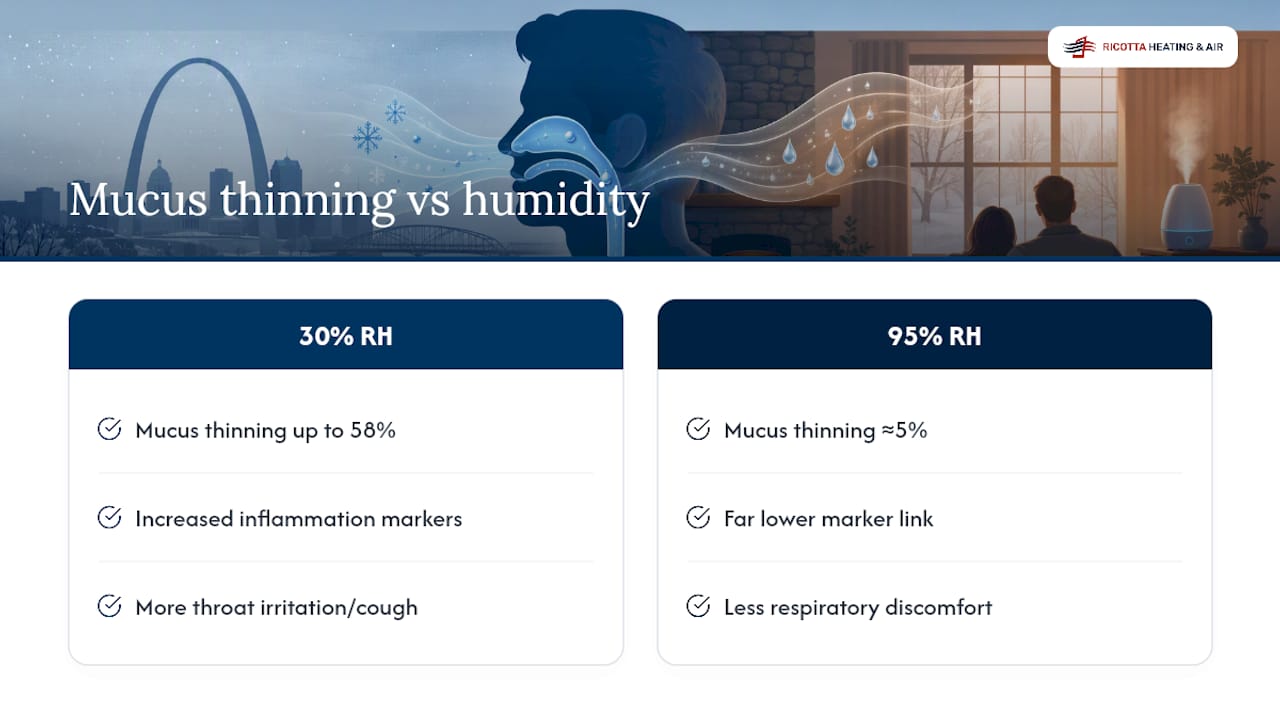
Dry air doesn’t just feel uncomfortable. It changes how your airways function. A 2025 study found that airway mucus thinned by up to 58% when exposed to 30% relative humidity, compared to just 5% thinning at 95% humidity, and that thinner mucus layer was tied to increased inflammation markers, according to Johns Hopkins Medicine.
The takeaway: cutting your indoor humidity roughly in half can nearly double the thinning of the protective mucus layer that helps your airways trap dust, allergens, and viruses.
That mechanism helps explain a pattern doctors have noticed for years: dry air correlates with more throat irritation, dry cough, and general respiratory discomfort in winter. Comfort issues show up everywhere else too. Skin cracks and flakes, eyes feel gritty, static electricity zaps you at the doorknob, and wood floors or trim can shrink slightly, opening small gaps. People with asthma, COPD, infants, and older adults tend to feel these effects first and worst, since their airways have less margin for extra dryness or inflammation. Reviews of humidity and respiratory illness suggest the picture is still evolving. Evidence for reduced infection transmission at moderate humidity is promising but not yet conclusive, while the comfort and mucosal benefits are much better supported.
How to Check Your Indoor Humidity and Spot the Warning Signs
You cannot reliably feel humidity the way you feel temperature. Research on human perception shows that people frequently confuse dust, odors, and drafts with “dry air,” which is exactly why guessing is a bad strategy. A cheap digital hygrometer, or a smart thermostat with a humidity sensor, gives you an actual number to work from.
- Place your hygrometer in a living space away from direct sunlight, vents, and exterior walls, about waist height, for the most representative reading.
- Check the number over a few days, since humidity swings with outdoor temperature, cooking, and how often your furnace runs.
- Compare your reading to the 40% to 60% target range that health researchers cite for reducing dry-skin and respiratory symptoms while keeping mold risk low.
- Watch for the ceiling, not just the floor. Exceeding about 50% relative humidity indoors in winter can lead to condensation and increased mold risk.
If indoor humidity is very low and you experience symptoms like static shocks or dry skin, consider using a portable humidifier. If humidity stays low no matter what you try, or swings wildly room to room, that points to a bigger issue worth a professional look.
Practical Solutions: Room Fixes, Humidifiers, and Whole-Home Options
Start small, then scale up based on what your hygrometer tells you. The simplest fixes cost nothing: set out a few bowls of water near a heat vent, add a couple of leafy houseplants, or hang laundry to dry indoors instead of running it through the dryer. Cracking a bathroom door during a hot shower lets steam drift into the hallway. IMPORTANT: never rely on a stove top kettle left unattended as a humidity source, since that’s a fire and burn risk, not a home comfort strategy.
Portable humidifiers are the next step up:
- Evaporative (wick) humidifiers are self-regulating and low-maintenance, good for a single bedroom or office.
- Ultrasonic humidifiers run quiet and mist-free but need distilled water to avoid spraying minerals across your furniture.
- Console or tower units cover larger open spaces like a living room or finished basement.
Size the humidifier to the room rather than the entire house to avoid excessive humidity levels, and that overshoot is exactly what drives mold growth on nearby windows.
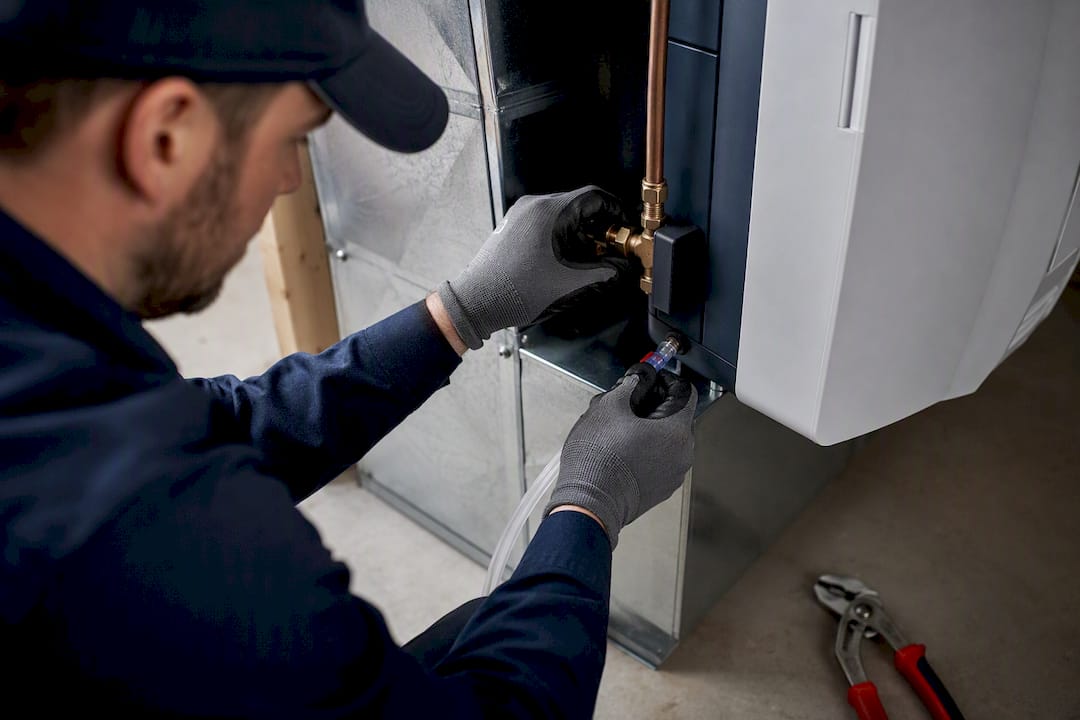
Whole-home humidifiers integrate with your HVAC system and humidistat to maintain consistent humidity throughout the house, automatically adding moisture as air circulates, so every room gets the same treatment without you refilling tanks weekly. Bypass and steam-style units both work; steam humidifiers tend to handle larger homes better since they don’t depend on furnace airflow to evaporate water.
Pro Tip: Before you buy a second or third portable humidifier, get your home’s air leakage checked. Sealing obvious drafts around windows, attic hatches, and rim joists often does more for stable humidity than another appliance ever will.
Humidifier Safety and Maintenance: Don’t Trade One Problem for Another
A poorly maintained humidifier can make your air quality worse, not better. The EPA’s humidifier guidance warns that ultrasonic and cool-mist units can disperse minerals and microorganisms from standing water directly into the air you breathe.
Follow these basics to keep your humidifier working for you instead of against you:
- Use distilled or demineralized water whenever possible to cut down on mineral dust and bacterial growth in the tank.
- Clean the tank every two to three days during heavy use, and dry it out completely between fills.
- Replace filters and wicks on the schedule your manufacturer lists, not just when they look visibly dirty.
- Keep an eye on your hygrometer and stop adding moisture once you’re near 50%, since window condensation is an early warning sign you’ve overshot.
- Replace the unit if you notice a musty smell, visible mold inside the tank, or mineral buildup that won’t scrub off.
When to Call an HVAC Pro (and What They’ll Actually Do)
Some dry air problems are bigger than a portable humidifier can fix. Call a professional when a room unit doesn’t move the needle after a few days, when humidity varies wildly from room to room, or when you’re seeing condensation, frost on windows, or musty smells that hint at a moisture imbalance somewhere in the system.
A qualified technician typically handles:
- Whole-home humidifier installation integrated with your furnace or heat pump and controlled by a humidistat.
- Air sealing diagnostics to find where warm, humidified air is escaping and dry outside air is sneaking in.
- Ventilation balancing so exhaust fans aren’t pulling more air out of the house than your system can replace.
A local HVAC company with decades of experience has served homeowners across St. Louis County and Jefferson County, with a strong track record of positive customer reviews from neighbors dealing with dry-winter frustrations. If you want a second opinion beyond your indoor air quality setup, a diagnostic visit can pinpoint whether the fix is a new humidifier, better sealing, or something in the ductwork itself.
Measured Fixes Beat Quick Fixes
Buying three humidifiers because one felt insufficient is a guess, not a solution. Measure first, adjust in small steps, and don’t chase a number past 50% just because dry skin feels urgent. If simple measures fail to improve indoor humidity, seek professional assessment rather than repeatedly buying humidifiers.
— Alan Ricotta
Get Your Home’s Humidity Checked by Ricotta Heating & Air
A straightforward alternative to guessing your way through winter dry air with mismatched portable units is to have technicians run diagnostics on your ductwork, furnace, and air sealing to find out why humidity keeps dropping, then recommend a fix that solves it for the whole house, not just one bedroom.

Services are offered to homeowners throughout St. Louis County and Jefferson County, with a diagnostic-first approach to provide honest answers before any equipment recommendation, and without pressure to buy more than needed. If your winters bring cracked skin, static shocks, and a furnace that never seems to keep up, start with a home indoor air quality assessment. From there, we can talk through whether a whole-home humidifier, better sealing, or a maintenance plan makes the most sense for your specific setup. If your system is due for a broader check anyway, our furnace and AC service covers that too. Reach out today to schedule a visit and stop guessing about what’s making your air feel so dry.
Sources
The findings in this guide draw on public health and building-science research, not guesswork:
- Air and water (NASA/JPL)
- Global warming can lead to inflammation in human airways (Johns Hopkins news release, 2025)
FAQ
Does opening a window help with dry air?
Usually not in winter. Outdoor air holds so little moisture at cold temperatures that opening a window typically lowers your indoor humidity further rather than raising it.
Does air conditioning work better in dry or humid air?
Air conditioners are designed to remove humidity as they cool, so they perform more efficiently in already-humid conditions and don’t address winter dryness at all, since they’re not running during heating season.
What are the signs of dry air in a home?
Common signs include cracked or itchy skin, static shocks, dry throat or nosebleeds, shrinking wood trim or floor gaps, and a hygrometer reading below 30% relative humidity.
Is dry air bad for your health?
Yes, particularly for airways. Research shows relative humidity around 30% can thin the airway’s protective mucus layer by up to 58%, which raises inflammation and can worsen symptoms for people with asthma or COPD.