
Fix a Too Humid Basement in St. Louis: Start by Stopping Water
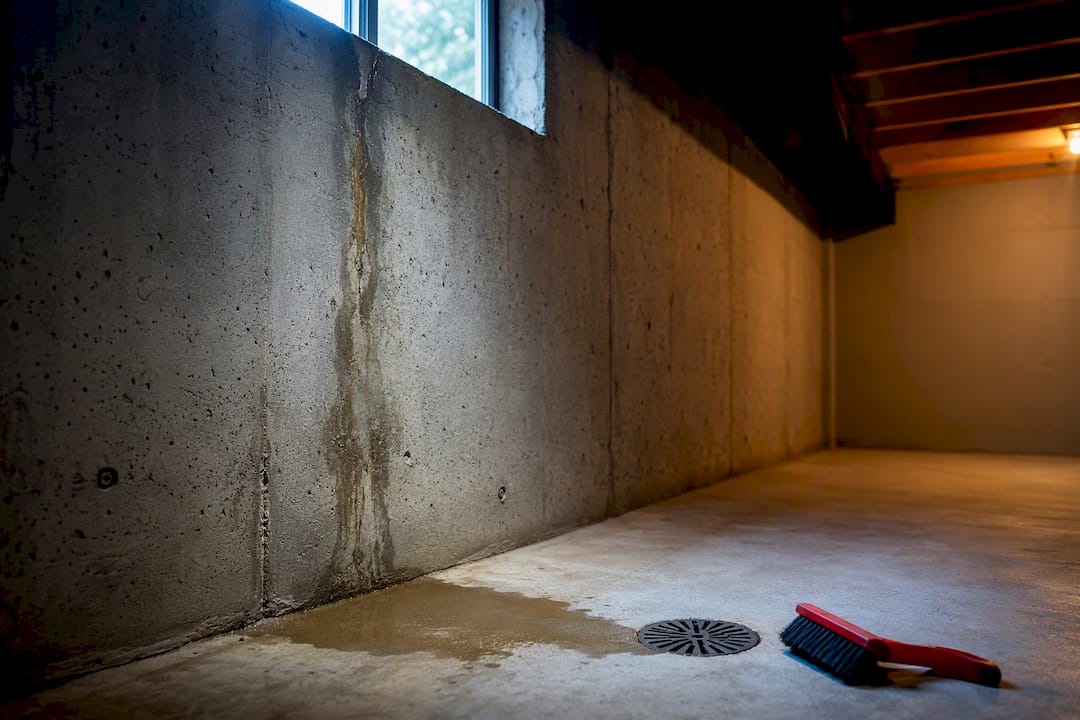
Keep basement relative humidity between 30% and 50%, and treat anything past 60% as a problem that needs action, per EPA guidance. Start with a $10 digital hygrometer to confirm the number, then stop bulk water at the source, gutters, downspouts, grading, before you touch a dehumidifier. If you see standing water or mold covering more than 10 square feet, skip the DIY phase and call a professional.
TL;DR:
- Controlling outdoor water flow through gutters and proper grading is crucial before investing in dehumidifiers, especially in homes with ongoing seepage issues.
- For spaces under 1,000 square feet with minor moisture concerns, a 30 to 50 pint per day dehumidifier is usually sufficient, while larger or wetter basements may require whole-house systems.
- Mold growth over 10 square feet, persistent seepage, or active water standing after storms indicates the need for professional assessment rather than DIY solutions.
- Regularly inspecting appliances, storage habits, and ventilation systems helps prevent humidity from exceeding recommended levels during seasonal changes.
- Basement humidity above 60% sustained over time often results from groundwater pressure or vapor migration, requiring structural repairs or advanced moisture control measures.
Table of Contents
- Signs Your Basement Humidity Level Is Too High
- Fixing a Basement That’s Too Humid: The Cheapest Steps First
- Sizing and Placing a Dehumidifier for Your Basement
- Finding the Real Source: Condensation, Vapor, or Seepage
- Keeping Basement Humidity in Check Year-Round
- Mold in the Basement: What to Check Before You Call Someone
- Ventilation Options: Fans, Air Exchangers, and HRVs
- How Laundry and Cooking Add Humidity to Your Basement
- A Step-by-Step Way to Diagnose Your Basement’s Humidity Problem
- A Local HVAC Pro’s Take on Basement Humidity
- How Ricotta Heating & Air Helps With a Damp Basement
- Authoritative Resources
- Sources
- FAQ
Signs Your Basement Humidity Level Is Too High
Your nose usually knows before your eyes do. A musty smell, the kind that clings to cardboard boxes and old carpet, is often the first tip-off that basement humidity control has slipped. Beyond smell, watch for these physical clues:
- Condensation beading on cold water pipes, windows, or the foundation walls
- A white, chalky residue on concrete called efflorescence, which is mineral salt left behind as moisture evaporates
- Wood trim, doors, or shelving that warp, swell, or stick
- Visible mold, especially in corners, behind furniture, or along the sill plate
- Rust forming on tools, appliances, or metal shelving faster than it should
A digital hygrometer settles the guesswork. Set it on a shelf away from vents and exterior walls, at roughly chest height, and check it after 24 hours. In St. Louis summers, expect basement humidity to run higher than the rest of the house simply because below-grade concrete stays cooler than the air around it, which is exactly the setup that produces condensation. Two quick DIY tests help separate condensation from water actually pushing through the wall: tape a square of foil or clear plastic to the concrete for 24 hours. Moisture on the outside face means condensation from room air; moisture trapped underneath means the wall itself is wet. Also walk the basement during or right after a heavy rain and check the sump pit and floor for pooling. That single check tells you more than a week of guessing.
Fixing a Basement That’s Too Humid: The Cheapest Steps First
Most basement moisture problems get solved from the outside in, not the inside out. The EPA’s moisture control guidance is blunt about this: control liquid water first, then worry about airflow and vapor. Work through these in order.
- Clean gutters and extend downspouts. Clogged gutters dump water right against your foundation. Extend downspouts 4 to 6 feet away from the house so water actually leaves the area instead of soaking back in.
- Regrade soil near the foundation. Soil should slope away from the house at roughly an inch per foot for the first several feet. If mulch beds or old landscaping have flattened that slope, water is pooling exactly where you don’t want it.
- Vent clothes dryers outdoors, never into the basement. A single load of laundry can push several pints of water vapor into the air. That’s one of the interior moisture sources the University of Minnesota Extension points to as an easy fix homeowners overlook.
- Run bathroom and kitchen exhaust fans, and clear out damp cardboard, old carpet, or fabric stored directly on a concrete floor.
- Seal visible cracks. Use hydraulic cement for active seepage points and a masonry sealant for hairline cracks in the slab or the cove joint where the wall meets the floor. Hydraulic cement expands as it cures and can stop a small active leak; masonry sealant is more of a long-term patch for cracks that are dry but letting vapor through.
Pro Tip: Do the gutters and grading before you buy anything. Homeowners often install a dehumidifier first and wonder why the basement stays damp; nine times out of ten, water is still getting in from outside, and no appliance can out-run that.
These fixes should meaningfully drop your basement humidity level within a week or two if condensation and minor seepage were the cause. If humidity stays above 60% after all five steps, or water keeps showing up after storms, you’re likely dealing with groundwater pressure that needs a structural fix, not a checklist.
Sizing and Placing a Dehumidifier for Your Basement
A dehumidifier pulls water vapor out of the air. It does not stop water from entering through a cracked wall or a failing footing drain, and running one in an actively wet basement just shortens the unit’s life while the real problem festers, according to the UMN Extension. Think of it as cleanup crew, not construction crew.
For sizing, match capacity to square footage and add for below-grade conditions:
- Under 500 sq ft, damp basement: a 30 pint/day unit is usually enough
- 500 to 1,000 sq ft, or noticeably musty: step up to 50 pints/day
- Over 1,000 sq ft, or a basement with a history of seepage: 70 pints/day or a whole-house dehumidifier tied into the HVAC system
A practical rule of thumb is to add roughly 5 pints/day to whatever the room-size chart recommends, since below-grade spaces run wetter than the manufacturer’s above-ground test conditions account for.
Louis basements usually mean an oversized unit running nonstop and a higher power bill. A working target under 55% RH is far more achievable and still keeps mold and mildew in check, per Humidity Logic’s sizing research.
Skip the bucket if you can. A gravity drain to a nearby floor drain or a small condensate pump running to a sink or sump pit means you’re not emptying a tray every day. For basements over 1,500 square feet or homes that fight humidity all season, a whole-house dehumidifier tied into the ductwork runs continuously and handles the load without a portable unit cycling nonstop in the corner.
Finding the Real Source: Condensation, Vapor, or Seepage
Every basement moisture problem traces back to one of three sources, and mixing up which one you have wastes both money and time, according to the UMN Extension.
- Liquid water (rain and groundwater pushing through the foundation): fixed with gutters, grading, and if that’s not enough, interior drain tile or exterior waterproofing.
- Vapor migration through concrete itself, moisture wicking up from the soil even without visible cracks: addressed with vapor barriers, proper drainage layers, and sometimes a vapor-permeable coating on interior walls.
- Interior sources like unvented dryers, long showers, or firewood stacked against a wall: solved with venting and small habit changes, no construction required.
Some situations call for a professional opinion instead of another trip to the hardware store:
- Standing water on the floor after any rain
- Seepage that keeps recurring through the same wall or crack
- Mold covering more than roughly 10 square feet, the threshold most remediation guides use to draw the line between DIY and professional cleanup
- A sump pump that’s running constantly, or one that isn’t running at all when it should be
A proper inspection maps humidity readings room by room, runs the foil test against multiple walls, and checks the sump pit, footing drains, and grading together rather than in isolation.
Ricotta Heating & Air approaches every basement humidity call the same way: diagnose first, recommend second. Fifty years of working on homes across St. Louis County and Jefferson County has taught us that a dehumidifier is rarely the whole answer, and we’d rather tell you that upfront than sell you equipment that treats a symptom while the real leak keeps going.
Keeping Basement Humidity in Check Year-Round
A basement that’s dry today can slide back into trouble by August if nobody’s watching it. Build a short checklist into your routine.
Monthly:
- Glance at the hygrometer reading
- Check that the dehumidifier drain line or pump isn’t clogged
- Confirm the sump pump cover is seated and the pump kicks on when tested
- Clear debris from downspout extenders
Seasonally:
- Clean gutters in spring and fall
- Walk the foundation after winter thaw to check grading hasn’t settled or eroded
- Test the dehumidifier and sump pump before humid season hits, not during the first big storm
Storage habits matter more than most homeowners realize. Raised shelving and plastic bins keep stored items off a slab that’s always slightly cooler and damper than the room air. Skip wall-to-wall carpet in an unfinished or partially finished basement, and if you do finish the walls, use vapor-permeable paint or finishes rather than sealing moisture inside where it can’t evaporate.
Pro Tip: *Write your hygrometer reading on a sticky note by the thermostat once a month.
Mold in the Basement: What to Check Before You Call Someone
Mold needs three things to grow: moisture, a food source like drywall or wood, and time. Basements provide all three more readily than any other room in the house, which is why even a basement holding steady around 50% RH can still develop spotting in a poorly ventilated corner.
Look for mold in predictable spots first: behind furniture pushed against exterior walls, along the bottom of drywall near the floor, inside closets with no airflow, and on the underside of carpet or carpet pad. Color isn’t a reliable way to identify severity. Black, green, and white mold can all indicate the same underlying moisture problem, and testing to identify the exact species rarely changes the remediation approach.
Small, isolated patches on a hard, nonporous surface like concrete or tile can often be cleaned with a stiff brush and a household cleaner labeled for mold, followed by thorough drying. Porous materials are a different story. Moldy drywall, insulation, or carpet pad usually needs to be removed and replaced rather than cleaned, because mold grows into the material, not just on the surface.
The threshold that should send you to a professional is straightforward: mold covering more than about 10 square feet, mold that keeps coming back after cleaning, or any mold near an HVAC return where it could spread spores through the whole house. At that point, cleaning the surface without fixing the humidity source just buys you a few months before it returns.
Ventilation Options: Fans, Air Exchangers, and HRVs
Basements are notorious for stale, stagnant air because they typically have the fewest windows and the least natural airflow in the house. Waterproofing’s research.](https://www.uswaterproofing.com/learning-center/how-does-basement-air-quality-affect-your-health/).
A simple box fan aimed to move air across the room, combined with a dehumidifier, handles mild cases. For a more permanent fix, an energy recovery ventilator (ERV) or heat recovery ventilator (HRV) continuously swaps stale basement air for fresh outdoor air while recovering most of the heating or cooling energy in the process, so you’re not paying to condition brand-new air from scratch every time it runs. These systems work especially well in basements that get used as living space, offices, or bedrooms, where opening a window simply isn’t an option most of the year.
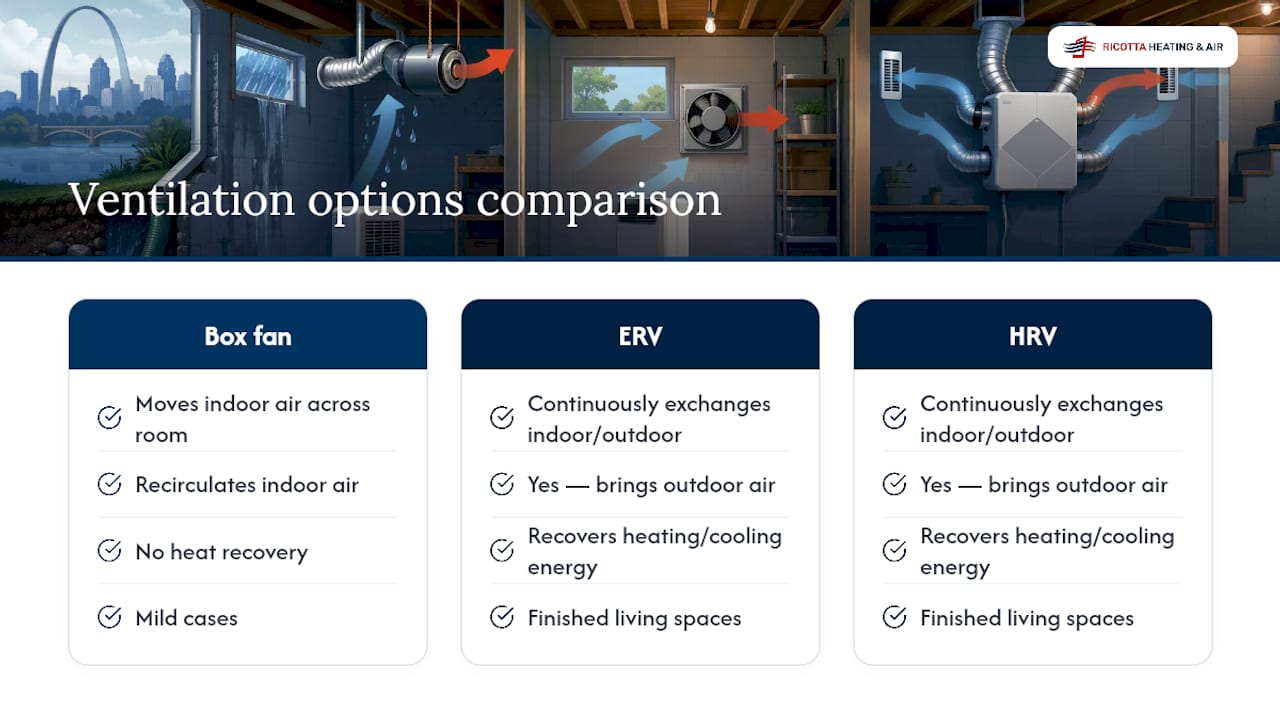
If your basement already fights humidity every summer despite good drainage and grading, tying ventilation into your existing HVAC system rather than running a standalone box fan tends to produce steadier, more even results across the whole space. That’s a call worth making with a technician who can look at your ductwork and your basement’s layout together rather than guessing at airflow from a single vent.
How Laundry and Cooking Add Humidity to Your Basement
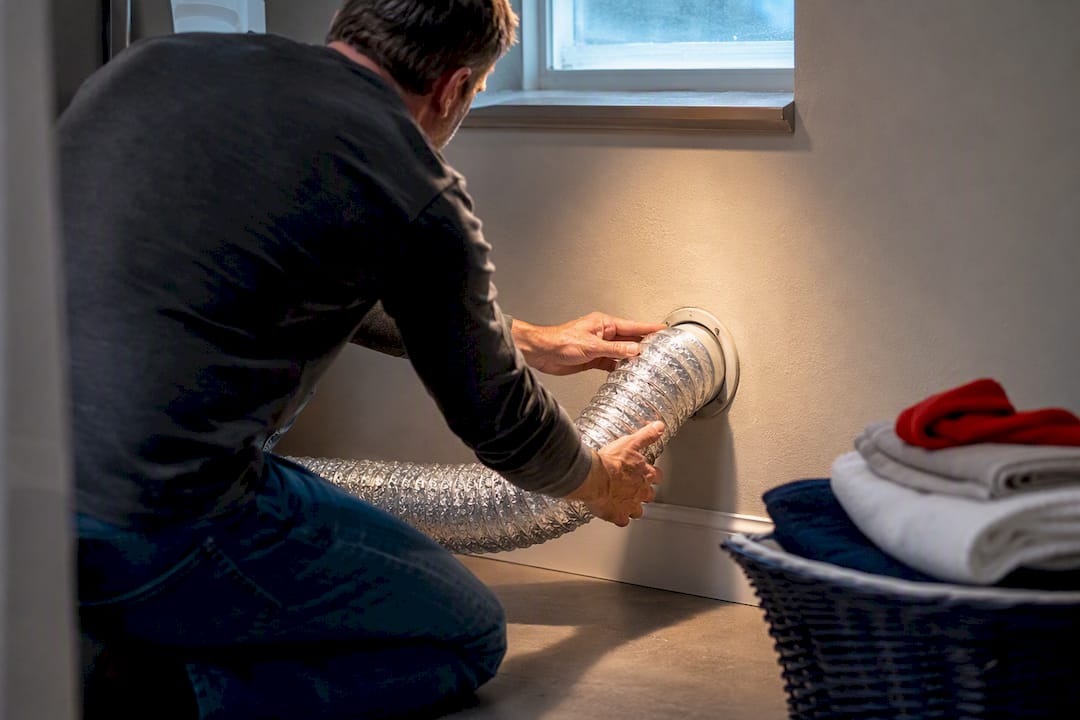
If your washer and dryer live in the basement, they’re likely one of your biggest humidity contributors, and it has nothing to do with the appliances being broken. A dryer vented indoors, or one with a damaged or disconnected outdoor vent hose, pushes several pints of hot, moist air directly into the basement with every load. Multiply that by a family doing laundry several times a week, and you’ve got a steady humidity source that no amount of gutter cleaning will fix.
Check the dryer vent hose behind the machine right now if you haven’t in a while. Flexible foil ducting sags and disconnects more often than homeowners expect, especially after a machine gets bumped during cleaning.
Cooking matters too, though less directly. Steam and heat from an upstairs kitchen migrate through the house via stack effect, the same air movement pattern that pulls basement moisture upward. A kitchen exhaust fan that vents outside, rather than just recirculating air through a charcoal filter, cuts down on how much of that moisture ends up settling into cooler parts of the house, basements included.
Showers and long baths function the same way if bathroom fans aren’t used or aren’t vented outdoors. Louis summer, they can tip a marginal basement from manageable into genuinely damp.
A Step-by-Step Way to Diagnose Your Basement’s Humidity Problem
Work through this sequence before spending money on equipment or repairs:
- Measure first. Place a hygrometer in the basement for 24 to 48 hours and note the average reading, not just one spot check.
- Check for bulk water. Walk the basement during and after a rainstorm. Standing water or wet spots along the base of a wall point to liquid water intrusion, not condensation.
- Run the foil test. Tape foil or plastic to a suspicious wall for 24 hours. Moisture on top means condensation; moisture underneath means the wall itself is wet.
- Inspect the exterior. Look at gutters, downspout extensions, and grading slope while you’re already thinking about water.
- Audit interior sources. Confirm the dryer vents outdoors, bathroom fans work and vent outside, and nothing damp is stored directly against a wall.
- Check the sump pit and floor drain, if you have one, for signs of frequent cycling or standing water.
- Score the severity. Mild (musty smell, occasional condensation, RH in the 55 to 60% range) usually responds to DIY fixes. Severe (standing water, seepage after storms, mold over 10 square feet) needs a professional evaluation.
This order matters because each step rules something out before you spend money ruling in something else.
A Local HVAC Pro’s Take on Basement Humidity
The most common mistake we see is a homeowner installing a dehumidifier before ever checking their downspouts. It’s an understandable instinct. A dehumidifier feels like doing something, while cleaning gutters feels like a chore. St. Louis County and Jefferson County homes, many built decades ago on clay-heavy soil, often have grading that’s settled unevenly over the years, which sends more water toward the foundation than most owners realize. Working the fixes in order, cheapest and most obvious first, saves money and usually solves the problem before you need anything more complicated.
— Alan Ricotta
How Ricotta Heating & Air Helps With a Damp Basement
If you’ve worked through the checklist and your basement is still holding above 55% to 60% RH, or you’d rather have someone check the whole picture at once, Some HVAC companies offer diagnostic-first visits that look at HVAC systems, ductwork, and humidity levels together instead of guessing at one piece.

A typical HVAC service visit may include a room-by-room humidity check, an inspection of how an existing HVAC system is handling moisture, and a set of prioritized recommendations with transparent pricing and no high-pressure sales. Our indoor air quality services cover whole-house dehumidification, ventilation upgrades, and humidity control tied directly into your existing system, and our maintenance plans keep that equipment checked before humid season hits every year. If the issue turns out to be your AC system adding moisture rather than removing it, we handle that directly too. Many homeowners in the St. Louis and Jefferson County areas appreciate HVAC services that provide honest, no-upsell diagnoses. Schedule a visit and get a clear answer on what your basement actually needs.
Authoritative Resources
For the original guidance behind the numbers in this article: the EPA’s indoor air quality guide sets the 30 to 50% RH target, UMN Extension explains basement moisture sources in technical detail, and the EPA’s moisture control document covers building-level remediation thresholds.
Sources
- Care for Your Air: A guide to indoor air quality | U.S. EPA
- Moisture in basements: causes and solutions | UMN Extension
- Basement humidity: Causes, targets, and fixes — Humidity Logic
- Basement Humidity Guide 2026: Levels, Measurement, and Solutions | The Basement Guide
FAQ
How Do I Decrease the Humidity in My Basement?
Start by fixing exterior water sources: clean gutters, extend downspouts, and check that soil grading slopes away from the foundation.
Is 70% Humidity Too High for a Basement?
Yes. The EPA sets 60% as the threshold above which mold growth and dust mites become likely, so 70% is well past the point where action is needed. At that level, check for active water intrusion in addition to running a dehumidifier.
Is It Normal for a Basement to Be More Humid Than Upstairs?
Yes, to a degree.
Can Mold Grow at 50% Humidity?
Localized trouble spots, like a corner with no airflow or a cold wall with regular condensation, can still develop mold even when the room average reads acceptable, so spot-check areas that don’t get much air circulation.