
Homeowners: Heat Pump Maintenance Checklist for DIY vs Pro
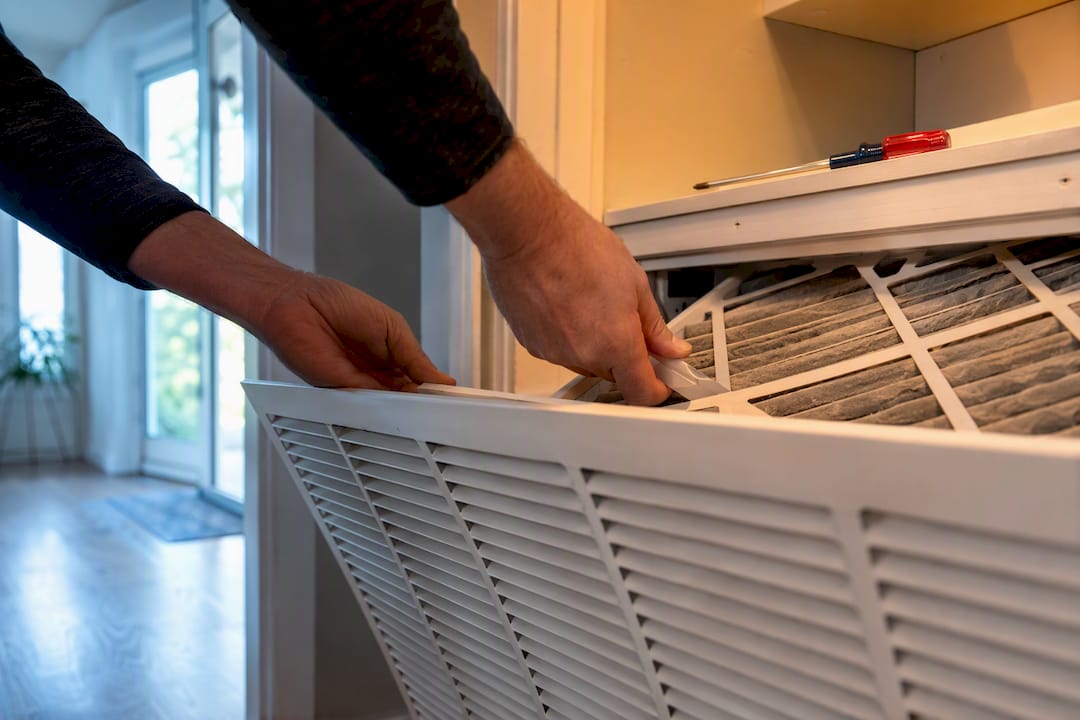
Check the filter monthly, keep at least two feet of clearance around the outdoor unit, and book a professional tune-up once a year at minimum, ideally in spring and fall. DIY tasks cover filters, debris, and thermostat settings; refrigerant checks and electrical testing belong to a licensed technician. Following this heat pump maintenance checklist protects efficiency, stretches the equipment’s lifespan, and keeps your warranty intact.
TL;DR:
- Regular filter checks should be frequent enough to prevent airflow restrictions, with MERV 8 to 11 filters recommended for most homes.
- Seasonal professional tune-ups, ideally in spring and fall, include coil cleaning, defrost cycle testing, and clearance checks to maintain efficiency and prevent damage.
- Homeowners can handle monthly tasks like outdoor debris removal and thermostat verification, but refrigerant and electrical inspections require a licensed technician.
- Warning signs such as ice buildup outside of normal defrosting, strange noises, or persistent system faults demand immediate professional attention.
- Investing in a maintenance plan ensures scheduled inspections, measured value reports, and can help avoid costly repairs while maintaining warranty coverage.
Table of Contents
- Your At-a-Glance Heat Pump Maintenance Schedule
- What You Can Safely Check Every Month
- Spring and Fall: The Two Visits That Matter Most
- What a Licensed Technician Actually Checks During a Tune-Up
- Warning Signs That Mean Stop Waiting and Call a Pro
- What a Tune-Up Actually Costs and How Long It Takes
- Questions to Ask Before You Hire Anyone
- Why Skipping Maintenance Costs More Than It Saves
- Ricotta’s Maintenance Plans Take the Guesswork Off Your Plate
- Sources
Your At-a-Glance Heat Pump Maintenance Schedule
A heat pump maintenance routine works best when you know exactly what falls to you and what falls to a technician. Here’s the full sequence, broken down by how often each task needs attention.
- Monthly (DIY): Check and replace the air filter if it’s dirty.
- Monthly (DIY): Inspect the outdoor unit for leaves, grass clippings, or ice buildup.
- Monthly (DIY): Confirm your thermostat setpoints and mode still match the season.
- Seasonal, spring (DIY + pro): Rinse the outdoor coil, test the cooling mode, and book a pre-summer tune-up.
- Seasonal, fall (DIY + pro): Test the heating and defrost cycle, and book a pre-winter tune-up.
- Annual minimum (pro): Refrigerant pressure check, electrical inspection, and full performance test.
Filter intervals depend on your household and filter type, so this item should be repeated more often than the rest of this heat pump service checklist.
What You Can Safely Check Every Month
Most heat pump upkeep tips start here, because the monthly tasks catch small problems before they turn into service calls. None of this requires tools beyond a flashlight and a garden hose on low pressure.
- Pull the filter and hold it up to a light. If light barely gets through, replace it. Trane recommends MERV 8 to 11 filters for most homes, since higher ratings can choke airflow on systems not designed for them.
- Walk the outdoor unit and clear leaves, grass, mulch, or ice within two feet on all sides.
- Rinse the outdoor coil gently with a garden hose (never a pressure washer) to knock off dust and pollen buildup.
- Check every supply register in the house to confirm none are closed or blocked by furniture or rugs.
- Look at the condensate drain line for standing water or a musty smell, both signs of a clog forming.
Pro Tip: Keep a simple log, paper or a phone note, with the date of every filter change and outdoor inspection. When something goes wrong later, that log tells a technician exactly what’s already been ruled out.
Think of a dirty filter the way you’d think of breathing through a pillow: the system still runs, it just works twice as hard to move the same amount of air.
Spring and Fall: The Two Visits That Matter Most
Heat pumps don’t get a season off. The same equipment that cools your house in July is heating it in January, which is exactly why EnergyStar and most manufacturers recommend at least one professional visit a year, with many pros advising two, timed around each mode switch. Here’s what that seasonal push should include:
- Before cooling season (spring): Book the visit before the first heat wave, not during it, when technicians are booked solid.
- Coil rinse and inspection: A deeper clean than your monthly hose-down, checking for bent fins or corrosion.
- Defrost cycle test: Confirm the system clears frost properly, since a stuck defrost cycle in winter can ice over the outdoor coil entirely.
- Elevation and clearance check: Trane recommends the outdoor unit sit 4 to 8 inches above ground level so melting snow and rain drain away instead of pooling around the base.
- Thermostat schedule update: Adjust setpoints for the new season, especially if you’re running a programmable or smart model.
What a Licensed Technician Actually Checks During a Tune-Up
A real professional tune-up goes well beyond a visual look-over, and understanding what’s on that list helps you tell a thorough visit from a rushed one. The Department of Energy’s maintenance guidance points to ducts, filters, blower components, and the indoor coil as core inspection points, on top of the technical checks only a technician is equipped and certified to run.
- Refrigerant pressure checks in both heating and cooling modes, since a heat pump’s pressures shift depending on which way it’s running, as explained in this diagnostic maintenance resource.
- Leak testing on refrigerant lines, work that legally requires EPA Section 608 certification, so homeowners should never attempt this step themselves.
- Tightening electrical connections and testing the capacitor and contactor for wear.
- Blower motor inspection and amp draw measurement.
- Reversing valve and defrost control test, the components that let the system switch between heating and cooling.
- Indoor and outdoor coil cleaning, plus condensate drain servicing.
- Airflow measurement and a final performance test with recorded values.
That last item is the one homeowners overlook most. Bryant’s own maintenance guidance points out that a heat pump needs performance verification in both operating modes, not just one, since a system can check out fine in cooling mode and still have a heating-side problem. A technician should write actual numbers on your invoice, temperatures, pressures, amp draws, not just a checkmark next to “inspected.”
Warning Signs That Mean Stop Waiting and Call a Pro
Most problems on a heat pump inspection guide are small and preventable. A handful are not, and pushing through them risks real damage or a safety hazard.
- Ice building up on the outdoor unit outside of a normal, brief defrost cycle.
- Grinding, screeching, or banging noises from either unit.
- The system running constantly or short cycling, turning on and off in rapid bursts.
- Air blowing cold while the thermostat is set to heat mode.
- A sudden, unexplained spike in your electric bill with no change in usage.
- Oily residue or visible refrigerant staining around fittings or the outdoor coil.
Any of these point toward compressor strain, an electrical fault, or a refrigerant leak, and all three carry real risk if a homeowner tries to chase them down without training or the right equipment. This is the line where preventive maintenance for heat pumps ends and a service call starts.
What a Tune-Up Actually Costs and How Long It Takes
Budgeting for maintenance is easier once you know the real numbers instead of guessing. A standard visit typically runs $75 to $300 depending on your region and what’s included, with coil cleaning or a refrigerant recharge pushing costs toward the higher end.
- Expect the visit itself to take 60 to 90 minutes for a full inspection and test.
- Booking in late spring or early fall, ahead of peak demand, often means faster scheduling and steadier pricing than calling during a heat wave or cold snap.
- EnergyStar’s annual minimum is the floor, not the target. Because a heat pump runs both seasons, most contractors treat twice-yearly service as the real heat pump maintenance schedule worth following.
If your last AC service left you with vague answers about condition or cost, our breakdown of typical AC tune-up pricing covers what a fair invoice actually looks like.
Questions to Ask Before You Hire Anyone
Not every “tune-up” on the market is the same visit. A few pointed questions separate a genuine heat pump service checklist from a 15-minute filter swap billed at full price.
- Ask whether the technician holds NATE certification or equivalent heat pump experience, and whether refrigerant work is handled by an EPA Section 608 certified tech.
- Request an itemized checklist with measured values, not a generic “system checked” line.
- Confirm the visit satisfies your manufacturer’s warranty documentation requirements, since skipped maintenance can void coverage.
- Watch for red flags: no written scope of work, high-pressure pitches for full replacement during a routine visit, or refusal to provide recorded numbers.
Pro Tip: Save every tune-up invoice in one folder. If you ever file a warranty claim, that paper trail of documented service dates is often the difference between an approved claim and a denied one.
Why Skipping Maintenance Costs More Than It Saves
Homeowners tend to treat maintenance as optional until something breaks, then wonder why the repair bill is three times what a tune-up would have cost. That math almost never works in the homeowner’s favor. A neglected filter forces the blower motor to work harder for months, a dirty coil cuts efficiency gradually enough that you barely notice the creeping utility bill, and a refrigerant issue caught early is a simple top-off instead of a compressor replacement. The pattern holds across nearly every heat pump problem I’ve seen discussed in service data: the failures that cost the most were visible for weeks before anyone called for help.
— Alan
Ricotta’s Maintenance Plans Take the Guesswork Off Your Plate
You’ve got the checklist now, but running it every month on your own calendar is where most homeowners fall behind. Maintenance plans can handle the scheduling side for you: priority booking, a documented checklist with real measured values on every visit, and no pressure to buy a new system when your current one just needs a tune-up.

Experienced technicians know these systems well enough to catch small issues before they become expensive ones. Our service agreements cover the seasonal visits this checklist recommends, spring and fall, with straightforward invoices instead of vague summaries. If your heat pump is overdue for a look, you can also start with our heat pump service page to see what a visit includes, or reach out to get a maintenance plan set up before the next season shift.