
Emergency AC Repair Checklist | Jefferson County, MO
Table of Contents
- Is Your AC Problem Actually an Emergency?
- AC Not Cooling: Troubleshooting Steps Before You Call
- Emergency AC Repair Cost: What to Expect
- Same-Day AC Repair: How to Schedule Urgent Service
- What to Expect During an Emergency Service Visit
- Repair Versus Replacement: Making the Right Call
- Protecting Your System After an Emergency Repair
- Frequently Asked Questions
Is Your AC Problem Actually an Emergency?
Not every cooling problem requires an emergency call. For homeowners in Hillsboro and throughout Jefferson County, the deciding factors are safety, indoor temperature, and whether running the system could cause more damage.
Missouri's humid summers can make a home uncomfortable quickly when the AC stops. A minor cooling issue may wait for a scheduled visit, but dangerous heat, electrical trouble, or an active indoor leak needs prompt attention.
Signs Your AC Needs Urgent Repair
Call for urgent service when your AC creates a safety concern or the problem is getting worse:
- No cooling during extreme heat. Rising indoor temperatures can be dangerous, especially for young children, older adults, and people with certain health conditions. Move to an air-conditioned location if your home becomes unsafe. Don't wait for a repair appointment if someone shows signs of heat illness.
- A burning smell or visible smoke. These may indicate an electrical fault. Stop using the system if you can do so safely. If you see smoke or fire, leave the home and call 911.
- Water pooling indoors. A blocked condensate drain, frozen coil, or another drainage problem may be responsible. Continued leaking can damage walls, ceilings, and floors. Outdoor puddles alone do not establish a refrigerant leak.
- Sparking, grinding, or unusually loud compressor noise. Sparking is an electrical hazard; grinding may indicate mechanical damage. Shut the system off if it is safe to do so.
- A circuit breaker that trips repeatedly. Leave it off and call for service. Repeatedly resetting it can be dangerous.
When to Turn Off an Air Conditioner Immediately
Stop operating the system if you notice any of these problems:
- A burning smell or smoke. Shut the system off only if you can do so safely. Do not approach smoking or sparking equipment. Leave and call 911 if there is smoke or fire.
- Water actively leaking indoors. Turn off the system to limit damage. Stay away from wet electrical equipment.
- A suspected refrigerant leak. Hissing or oily residue can be clues, but a technician must confirm the cause. Avoid contact with suspected refrigerant and leave repairs to a professional.
- Sparking, popping, or electrical arcing. Stop using the system. Shut off power only from a safe, dry location.
- Grinding or metal-on-metal noise. Turn off the system to avoid further mechanical damage.
If you're unsure whether the equipment is safe to run, leave it off and ask for guidance. If the house is getting too hot, arrange a cooler place to stay while you wait.
AC Not Cooling: Troubleshooting Steps Before You Call
If there are no safety warning signs, try these basic checks before scheduling emergency service. You may find a simple setting or airflow problem. If not, you'll have useful details to share when you call.
Check Your Thermostat Settings
Start at the thermostat. An incorrect setting can make a working system seem broken:
- Verify that the thermostat is set to cooling mode, not heating or fan-only operation.
- Set the temperature below the current room temperature.
- Check the fan setting. With the fan set to "On," air may circulate even when the system isn't actively cooling. "Auto" runs the fan as needed.
- Look for a hold, schedule, or vacation setting that may be overriding your preferred temperature.
- If the thermostat uses batteries and the display is blank or shows a low-battery warning, replace them according to its instructions.
Allow for any built-in startup delay before deciding the system isn't responding.
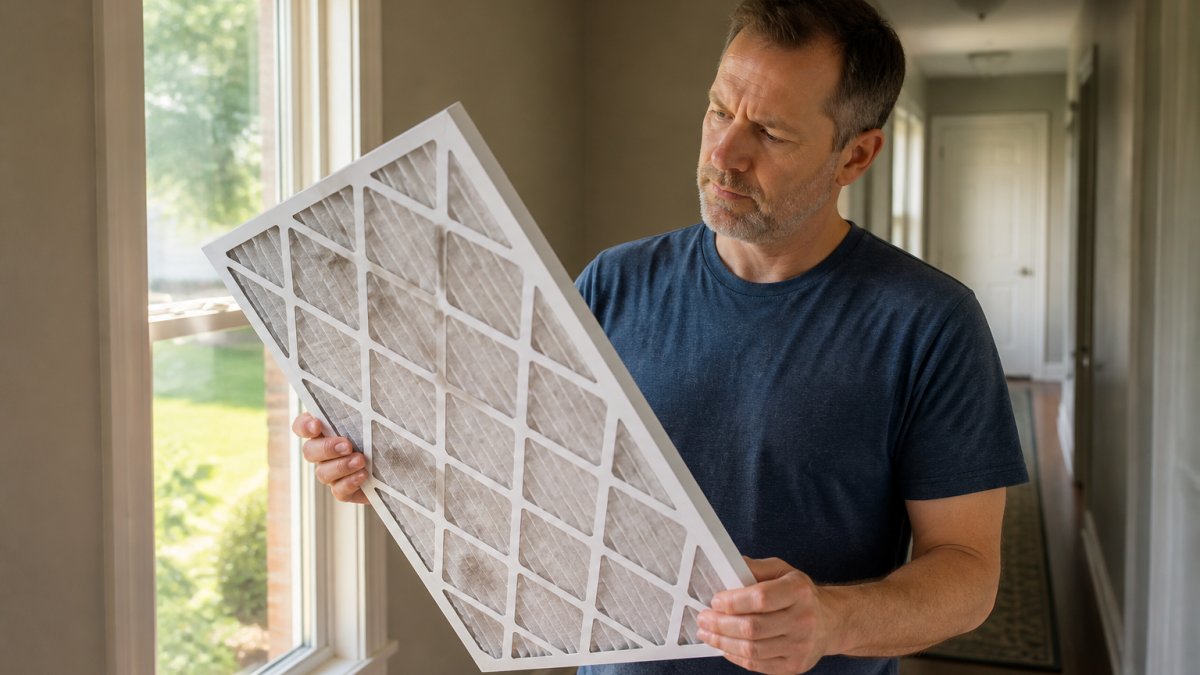
Inspect Your Air Filter and Airflow
A clogged filter restricts airflow and can contribute to frozen coils. Here's what to check:
- Turn the system off before removing the filter. Look near the indoor equipment or behind a return-air grille.
- Inspect the filter for accumulated dust and debris. Follow the manufacturer's replacement guidance; a light-through-the-filter test isn't reliable for every filter type.
- Check the size printed on the filter frame.
- Replace a dirty disposable filter with the correct size and an equipment-compatible type. Point the airflow arrow toward the blower.
- Make sure supply vents and return grilles are open and aren't blocked by furniture. If there is no ice or other warning sign, restart the system and check whether airflow improves.
A fresh filter may improve airflow, but it won't fix every cooling problem. If the system still blows warm air or has ice buildup, call for diagnosis.
Look for Visible System Problems
Check the outdoor unit from a safe distance without opening panels or reaching inside:
- Look for debris. With the system off, remove loose leaves or grass clippings around the cabinet. Leave coil cleaning and bent fins to a technician if you're unsure how to handle them.
- Check for ice. Ice on refrigerant lines or the indoor coil can result from restricted airflow or a refrigerant problem. Turn cooling off, let the ice thaw completely, and arrange service. Do not chip it away.
- Look for water pooling. Note where it is coming from. Outdoor water may be unrelated to the AC; indoor leakage needs attention. Water is not proof of a refrigerant leak.
- Listen for unusual noises. Grinding, squealing, or persistent rattling warrants professional attention.
- Observe the condenser fan. If the outdoor unit hums but the fan isn't turning during a cooling call, shut the system off and call. Do not try to push the blades or remove an obstruction yourself.
A unit can look normal and still have an internal problem. If these checks don't explain the loss of cooling, leave further testing to a technician.
Emergency AC Repair Cost: What to Expect
The repair cost depends on the failed component, labor, parts availability, and when service is requested. An online HVAC repair cost guide is no substitute for an estimate based on your equipment.
Items that can affect the estimate:
- After-hours or weekend service. Ask whether additional service charges apply.
- Refrigerant work. The technician should identify why the charge is low rather than simply adding refrigerant without addressing the cause.
- Compressor replacement. This can be a major repair. Ask how it compares with replacement of the system.
- Electrical repairs. Capacitors, contactors, wiring, and related components require professional testing. Building-wiring problems may also need an electrician.
Before approving work:
- Ask for a written estimate.
- Confirm whether the diagnostic fee is included or separate.
- Ask which parts and labor are included and what could change the estimate.
- Clarify any emergency trip charge and what it covers.
When contacting Ricotta Heating & Air about a repair in Jefferson County, describe the symptoms and ask about current availability and diagnostic charges.
Same-Day AC Repair: How to Schedule Urgent Service
If you need urgent cooling repair, call to ask about availability. Same-day service depends on scheduling, the problem, and available parts. Don't assume an appointment request means a technician is on the way.
Contact Options and Response Time
Use a contact method the service provider actively monitors:
- Phone. For an urgent problem, call and explain the safety concerns first. Check the provider's contact page for available contact methods rather than assuming after-hours coverage.
- Online requests. A request form may be useful for nonurgent service, but wait for confirmation of the appointment.
- Text or chat. Use these only if offered, and ask whether your request has been scheduled.
Be specific: tell the person answering whether you have no cooling, an indoor leak, a burning smell, or unusual noises. Mention anyone in the home who is particularly vulnerable to heat.
Ask for the current arrival window and what to do while you wait. Scheduling can change during heavy demand.
What to Have Ready When You Call
Have these details handy if you can gather them safely:
- Your system's approximate age and brand.
- When the problem started and whether it appeared suddenly or developed gradually.
- What you've checked, including thermostat settings, filter condition, and whether a breaker has tripped. Do not repeatedly reset a tripped breaker.
- Your address and best callback number.
- Whether someone will be home to provide access.
- The model and serial number, if visible without opening equipment panels.
These details help the service team understand the problem before the visit.
What to Expect During an Emergency Service Visit
A service visit should start with diagnosis, not a guess at which part to replace.
Diagnosis:
Depending on the symptoms, the technician may check thermostat operation, airflow, temperature differences, drainage, refrigerant conditions, and electrical components. They'll look for causes such as frozen coils, leaks, electrical faults, and mechanical wear.
The explanation:
Ask the technician to explain what failed, what likely caused it, and which repair options are available.
The estimate:
Request a written estimate showing the proposed work, included parts and labor, and expected schedule. Ask questions before approving the repair.
The repair:
Timing depends on the diagnosis and parts availability. Some problems can be addressed during the visit; others require a return appointment.
Before the technician leaves, ask what was tested and whether any follow-up work is needed.
Repair Versus Replacement: Making the Right Call
Age alone doesn't decide whether an AC should be replaced. Condition, repair history, refrigerant type, and the scope of the current failure all matter. Treat general AC repair and replacement guidance as background, not a diagnosis of your system.
Repair may make sense if:
- The system is in otherwise sound condition.
- The proposed repair is reasonable compared with replacement options.
- Maintenance has been consistent and the problem is limited to one component.
Replacement may be worth considering if:
- The equipment is aging and breakdowns are becoming frequent.
- A major repair would be a substantial investment in an already worn system.
- Refrigerant leaks keep recurring or involve a badly deteriorated coil.
- Your energy bills have risen and a professional assessment points to equipment performance rather than weather, utility rates, or changes in use.
For a Hillsboro home, replacement should be based on the home's cooling needs and the condition of the ductwork—not simply the size of the old unit.
Ask for a clear comparison of repair and replacement so you can make the decision without pressure.
Protecting Your System After an Emergency Repair
Once cooling is restored, a few routine habits can help catch trouble earlier.
Check your filter regularly. Replace it according to the equipment and filter manufacturer's guidance, sooner if it becomes dirty. Pets, dust, and heavy use can affect replacement frequency.
Schedule seasonal maintenance. In Jefferson County, Missouri's humid summers and cold winters put both cooling and heating equipment to work. Have cooling equipment checked before hot weather and heating equipment checked before winter.
Watch thermostat batteries. If your thermostat uses them, replace them when the low-battery indicator appears or as directed by the manufacturer.
Use this checklist to decide what to check safely and when to stop running the system.
| Problem | Quick Check | When to Call | Urgency |
|---|---|---|---|
| No cooling | Check thermostat settings and filter condition | If basic checks don't restore cooling | Urgent if indoor heat is unsafe |
| Weak airflow | Check the filter and unblock vents | If airflow stays weak | Schedule service; shut cooling off if ice appears |
| Indoor water leak | Turn off the system; avoid wet electrical equipment | Promptly for an active leak | High |
| Burning smell or smoke | Shut off only if safe; leave if there is smoke or fire | Call 911 for smoke or fire; arrange repair once safe | Critical |
| Tripped breaker | Leave it off; do not repeatedly reset it | Before restarting if it trips repeatedly or shows signs of damage | High |
| Grinding noise | Turn off the system | Before running it again | High |
| Frozen coils | Turn cooling off and allow ice to thaw completely | Arrange diagnosis of the cause | Prompt service; keep cooling off |
Frequently Asked Questions
What should I check before calling for emergency AC repair?
If there are no safety warning signs, check that the thermostat is set to cool and below room temperature. Inspect the filter, clear blocked vents, and look for ice or debris without opening equipment panels. Note whether a breaker has tripped, but don't repeatedly reset it. Call if cooling doesn't return. Skip troubleshooting if you see smoke, sparks, or wet electrical equipment.
How much does emergency AC repair cost?
The cost depends on the problem, required parts, labor, and any after-hours charges. Ask about diagnostic and trip fees when scheduling, then request a written repair estimate before approving work.
Can an HVAC technician repair an air conditioner the same day?
Sometimes, but it depends on appointment availability, the diagnosis, and whether the needed parts are available. Ask about the current schedule when you call. An appointment for diagnosis does not necessarily mean the repair can be completed that day.
When should I turn off my air conditioner?
Stop using the system if you notice a burning smell, sparking, grinding, an active indoor water leak, or ice buildup. Shut it off only if you can do so safely, and don't restart a system with a suspected electrical fault. If there is smoke or fire, leave the home and call 911. Arrange professional diagnosis once everyone is safe.
This article was written with AI assistance and edited for Hillsboro and Jefferson County homeowners by Ricotta Heating & Air. For advice about your own system, call (314) 333-5900.