
AC Repair Assistance for Seniors | Jefferson County, MO
Quick Summary
If an older homeowner's air conditioner fails during hot weather, getting somewhere cool comes first. If it is safe to stay briefly, check the thermostat and air filter before calling a technician. Jefferson County homeowners can ask local aging services, community action agencies, utility assistance offices, and nonprofit repair groups about help paying for repairs. Coverage and funding vary.
- Eligibility may depend on age, household income, homeownership or occupancy, and the repair needed.
- Ask which documents you need, such as proof of age, income records, ownership documents, utility bills, and written repair estimates.
- Check whether the program covers cooling repairs or replacement and whether it pays the contractor directly.
- Get written approval before authorizing work if you are relying on assistance. Some programs will not pay for work already started.
- A properly installed window or portable unit may cool one room while you arrange repairs.
Table of Contents
- Why AC Repair Gets Harder for Older Homeowners
- Free or Low-Cost HVAC Assistance for Seniors: Where to Look
- Air Conditioning Assistance for Seniors: Eligibility and Applications
- What to Do When an Older Adult's AC Fails in the Heat
- Repair, Replace, or Use a Temporary Cooling Option
- Window AC Repair for Older Homeowners: When It Makes Sense
- Finding a Trustworthy Local AC Repair Company
- Scheduling Service With Ricotta Heating & Air
- Frequently Asked Questions
Why AC Repair Gets Harder for Older Homeowners
Missouri's humid summers can make a home uncomfortable quickly when the AC stops working. For an older adult living alone, heat can also become a serious health concern. Paying for an unexpected repair on a fixed income adds another worry.
An older home may have aging equipment, worn wiring, or ductwork problems that complicate a repair. The Harvard Joint Center for Housing Studies discusses the challenges of maintaining aging homes.
Home repair needs can also compete with other household expenses. For more background, see this University of Missouri–St. Louis research brief on older homeowners' repair needs.
Even a straightforward AC repair can strain a tight budget. Looking into assistance before the system fails gives you time to ask questions without making a rushed decision in the heat.
Free or Low-Cost HVAC Assistance for Seniors: Where to Look
Help may be available, but there is no single program that covers every homeowner or repair. Start with organizations that serve your address.
Places to ask include:
- Your local Area Agency on Aging
- Community action agencies and nonprofit home repair programs
- County or city senior services offices
- Utility company assistance programs
- Churches and faith-based charities with repair ministries
Ask whether each organization offers repair assistance or referrals. Utility bill assistance does not necessarily cover equipment repairs. Confirm what the program covers, whether funding is available, and how long an application may take.
Air Conditioning Assistance for Seniors: Eligibility and Applications
Programs may consider age, household income, homeownership or occupancy, and the type of repair needed. Ask about these requirements before gathering paperwork.
Age and household status. Programs for older adults may have a minimum age requirement. Some programs also serve people with documented disabilities.
Income. A program may compare household income with area median income or federal poverty guidelines. Ask which income sources count and what records it accepts.
Homeownership or occupancy. Some repair programs require you to own and live in the home. Renters should contact their landlord about equipment repairs and ask assistance offices about renter eligibility.
Type of repair. Ask whether the program repairs or replaces cooling equipment, has a funding limit, or requires an estimate from an approved contractor.
Documents to Gather Before You Apply
- Photo identification and any required proof of age
- Social Security or SSI benefit letters, pension statements, or recent pay stubs
- A recent federal tax return or benefit eligibility letter, if requested
- A deed, mortgage statement, or property tax bill showing ownership
- Recent utility bills for the service address
- A written description of the AC problem and any technician's diagnosis
- Written repair estimates that meet the program's requirements
Realistic Timelines
Processing times vary. Ask when you can expect a decision and whether there is a separate process for urgent cooling needs. Do not wait in an overheated home while an application is pending.
If You Are Denied or the Program Is Out of Funds
Ask why the application was denied, whether you can correct or appeal it, and whether the office can suggest another program. A missing document or incorrect income record may be something you can address. A repair outside the program's coverage may require a different source of help.
If funding has run out, ask about a waiting list, the next funding period, and any emergency assistance options. Keep copies of your paperwork and notes from each conversation.
Before authorizing a repair, confirm the approval process in writing. Some programs will not cover work that has already started.
What to Do When an Older Adult's AC Fails in the Heat
Make sure the person has a safe, cool place to stay first. If conditions allow a quick check, confirm that the thermostat is set to cool and the temperature setting is below room temperature. Check an accessible filter and replace it if needed, following the equipment instructions. You can look for a tripped breaker without opening the electrical panel, but do not repeatedly reset it. Leave electrical testing and equipment repairs to a technician.
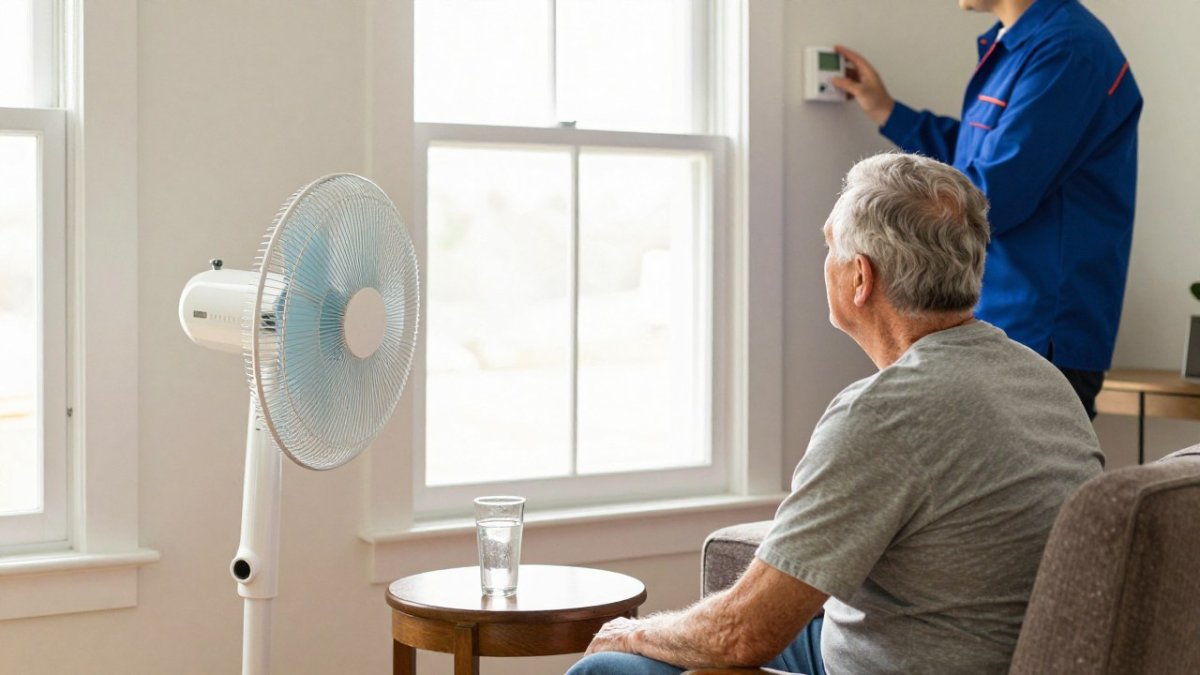
If the AC still is not cooling, turn it off and call a technician. You can request an AC repair visit and ask about current availability.
For more on urgent cooling problems, read our emergency air conditioning repair guide.
Staying Safe While You Wait for Help
Close blinds on sun-facing windows and avoid using the oven. Fans may help with comfort, but do not rely on them to prevent heat illness in extreme heat. Move to an air-conditioned home or an open cooling center if the house is getting too hot.
Drink water regularly unless a clinician has told you to limit fluids, and arrange frequent check-ins. Dizziness, nausea, or unusual weakness can be signs of heat illness and need prompt attention. Call 911 for confusion, fainting, or suspected heatstroke, and begin cooling the person while help is on the way.
Repair, Replace, or Use a Temporary Cooling Option
A heat wave is a tough time to make an equipment decision. Once everyone has a cool place to stay, work through the diagnosis and estimates before approving a major repair or replacement.
Step 1: Get a Written Diagnosis Before You Decide
Ask the technician to identify the failed component, include its part number when available, and explain whether another problem caused the failure. A capacitor or contactor replacement is different from a failed compressor or a refrigerant leak. The location of the problem and the condition of the rest of the system matter.
Step 2: Weigh Age and Repair History
Consider the system's condition, previous repairs, and parts availability—not just its age. Ask what the proposed repair will fix and what concerns would remain afterward. A single failed part does not automatically mean you need a new system.
Step 3: Compare Repair and Replacement Quotes
Request an itemized repair estimate showing parts, labor, refrigerant if needed, and any diagnostic fee. If replacement is worth considering, request a separate quote with a clear scope of work. You can ask about an installation or replacement estimate and confirm any estimate fees before scheduling.
Step 4: Consider Temporary Cooling
A properly sized window or portable unit may keep one room comfortable while you arrange repairs. It will not necessarily cool the whole house. Follow the manufacturer's installation and electrical instructions, and have someone help with lifting and securing the equipment. An open community cooling center is another option if you cannot keep a room safely cool.
Questions to Ask Any HVAC Contractor
- Do you meet the licensing requirements for work at my address, and can you provide proof of insurance?
- Will you provide a written estimate before work begins?
- Is there a diagnostic fee, and is it credited toward an approved repair?
- What parts or labor coverage, if any, is included in writing?
- Is financing available, and what are the interest rate, fees, and repayment terms?
- Can you explain the diagnosis and show me the failed part or test results?
Pressure to sign immediately, unexplained cash demands, or refusal to provide a written estimate are reasons to pause and seek another opinion. Our heating repair overview explains what to expect during a service visit. The same questions about diagnosis and written approval apply when heating fails during Missouri's cold winters.
If replacement looks reasonable, request an HVAC replacement estimate and compare the scope of work with the repair quote.
Use these checkpoints to keep the decision organized:
| Step | What to Do | When |
|---|---|---|
| Get a written diagnosis | Ask which component failed and why | Before approving work |
| Weigh condition and repair history | Discuss previous repairs, parts availability, and remaining concerns | Before choosing repair or replacement |
| Compare the quotes | Review itemized repair and replacement estimates | Once the diagnosis is clear |
| Arrange temporary cooling | Use a safely installed room unit or move to an air-conditioned location | Whenever the home cannot stay safely cool |
Window AC Repair for Older Homeowners: When It Makes Sense
A window unit can be useful for cooling a bedroom or living area. Whether an existing unit is worth repairing depends on the fault, its condition, parts availability, and the repair estimate. Ask whether the contractor services window units before arranging a visit.
If you use one while the central AC is down, choose a unit suited to the room and window opening. Make sure the unit—not just the window—is securely supported. Follow the electrical instructions, avoid extension cords, and get help moving or installing heavy equipment.
Finding a Trustworthy Local AC Repair Company
When comparing local companies, ask about applicable licensing, insurance, and experience with your equipment. A technician should explain what was tested, what failed, and what the proposed repair includes.
Get payment terms and the estimate in writing. If the recommendation is unclear or you feel rushed, ask a trusted family member to review it with you or seek a second opinion. You should understand what you are approving before work starts.
Scheduling Service With Ricotta Heating & Air
Ricotta Heating & Air serves homeowners in Jefferson County and South St. Louis County. Contact us to discuss your cooling problem, ask about scheduling and diagnostic fees, and arrange the next step. If you plan to apply for repair assistance, check the program's contractor and approval requirements before authorizing work.
Frequently Asked Questions
What is the senior HVAC assistance program?
There is no single HVAC assistance program for all seniors. Your local Area Agency on Aging, community action agency, or nonprofit repair organization may offer help or referrals. The Low Income Home Energy Assistance Program (LIHEAP) helps eligible households with energy costs, but bill assistance is not the same as equipment repair coverage. Ask the administering office what help is available for your situation.
Can seniors get a free air conditioner from the government?
Some programs may help eligible households obtain cooling equipment, but age alone does not qualify someone, and equipment is not guaranteed. Ask about income and residency requirements, available funding, covered equipment, and approval timelines before relying on a program.
How can older homeowners get help paying for AC repairs?
Start with your local Area Agency on Aging or community action agency and ask about cooling repair assistance. Nonprofit repair groups may also be worth contacting. Get a written diagnosis and itemized estimate, then confirm the assistance program's approval requirements before authorizing work.
What should an older adult do if the AC stops working during a heat wave?
Move to an air-conditioned location if the home is getting too hot. Close blinds, avoid heat-producing appliances, and arrange regular check-ins. Do not rely on fans alone in extreme heat. Drink water unless a clinician has restricted fluids. Seek prompt medical help for heat illness symptoms, and call 911 for confusion, fainting, or suspected heatstroke. Arrange AC service once the person is safe.

This article was written with AI assistance and edited for Hillsboro and Jefferson County homeowners by Ricotta Heating & Air. For advice about your own system, call (314) 333-5900.