
Heating Repair: What to Expect | Jefferson County, MO
Quick Summary
Heating repair in Jefferson County starts with checking for safety problems and finding the cause of the trouble. A technician should explain what failed, what a repair involves, and whether replacement is worth considering. If you smell gas or a carbon monoxide alarm sounds, leave the house and call for help from outside.
- Leave immediately if you smell gas or a carbon monoxide alarm sounds. Call your gas utility or 911 from a safe location.
- Request urgent service if temperatures will stay below freezing or someone in the home is especially vulnerable to cold.
- If there are no safety concerns, check the thermostat setting, batteries, and furnace power switch.
- Ask for a written estimate that separates parts, labor, and any diagnostic charge.
- Verify applicable local licensing and insurance before hiring a contractor.
Table of Contents
- Signs Your Heating System Needs Repair Now
- When Furnace Repair Is an Emergency
- What a Heating System Diagnostic Includes
- Heating Repair Versus Replacement: Weighing Your Options
- Furnace Replacement Estimates and What Affects Them
- Choosing a Heating Repair Provider in Jefferson County
- Schedule Your Heating Inspection With Ricotta Heating & Air
- Frequently Asked Questions
Signs Your Heating System Needs Repair Now
Heating problems often start with a change in how the system runs. A furnace that takes longer to warm the house, runs in short bursts, or makes unfamiliar noises needs attention. Having it checked early may keep a small problem from getting worse.
Watch for these warning signs:
- The house takes noticeably longer to warm up, or some rooms stay cold.
- The system turns on and off in short cycles.
- You hear banging, squealing, rattling, or grinding during operation.
- A burning smell persists or returns after startup.
- Heating bills climb without a clear change in weather or household use.
- The pilot light, if your furnace has one, keeps going out, or the burner flames look unusual.
A brief dusty smell at the first startup of the season can happen, but a persistent burning odor needs attention. Shut the system off if you can do so safely and call for service. If you smell gas, see smoke or fire, or hear a carbon monoxide alarm, leave immediately and call for emergency help from outside.
If the furnace simply will not start and there are no safety warning signs, check the thermostat batteries and furnace switch. If that does not solve the problem, leave further troubleshooting to a qualified HVAC technician.
When Furnace Repair Is an Emergency
Missouri's cold winters can turn a loss of heat into an urgent problem. When you call for service, explain whether the furnace has stopped completely, how cold the house is getting, and whether anyone needs extra protection from the cold. Ask about current appointment availability rather than assuming immediate service is available.
Use these warning signs to decide what to do next:
- Leave immediately if you smell gas, a carbon monoxide alarm sounds, or anyone has possible carbon monoxide symptoms such as headache, dizziness, or nausea. From outside, call 911 or your gas utility's emergency line. Do not operate switches or use a phone inside if you suspect a gas leak. Soot, scorch marks, unusual flames, or sustained rumbling also require prompt professional attention; stop using the furnace until it has been checked.
- Request urgent service if temperatures will remain below freezing, pipes may freeze, or the home has infants, older adults, or someone with a medical condition affected by cold. Explain these concerns when you call, and arrange a warm place to stay if needed.
- Schedule service promptly if the system is short-cycling, noisy, or heating unevenly but has no immediate safety warning signs. Some heat does not necessarily mean the furnace is safe to keep running. Describe the symptoms and ask whether to shut it off.
If there are no signs of a gas leak, fire, or carbon monoxide problem, you can take these steps while waiting:
- Confirm that the thermostat is set to Heat and above room temperature. Check its batteries and the furnace switch. Note whether the breaker has tripped, but do not repeatedly reset it.
- Check the filter with the system turned off. Replace it if it is clogged, using the size and type recommended for your equipment. Restricted airflow can cause the furnace to shut down.
- Keep supply and return vents clear. Never use a gas oven, outdoor grill, or generator indoors to heat the house.
- If pipes may freeze, open sink cabinet doors to let warmer air reach plumbing on exterior walls. Follow local utility guidance on letting faucets drip, and keep household chemicals away from children and pets.
Give your address and nearby cross streets when you call so the office can confirm coverage and discuss scheduling.
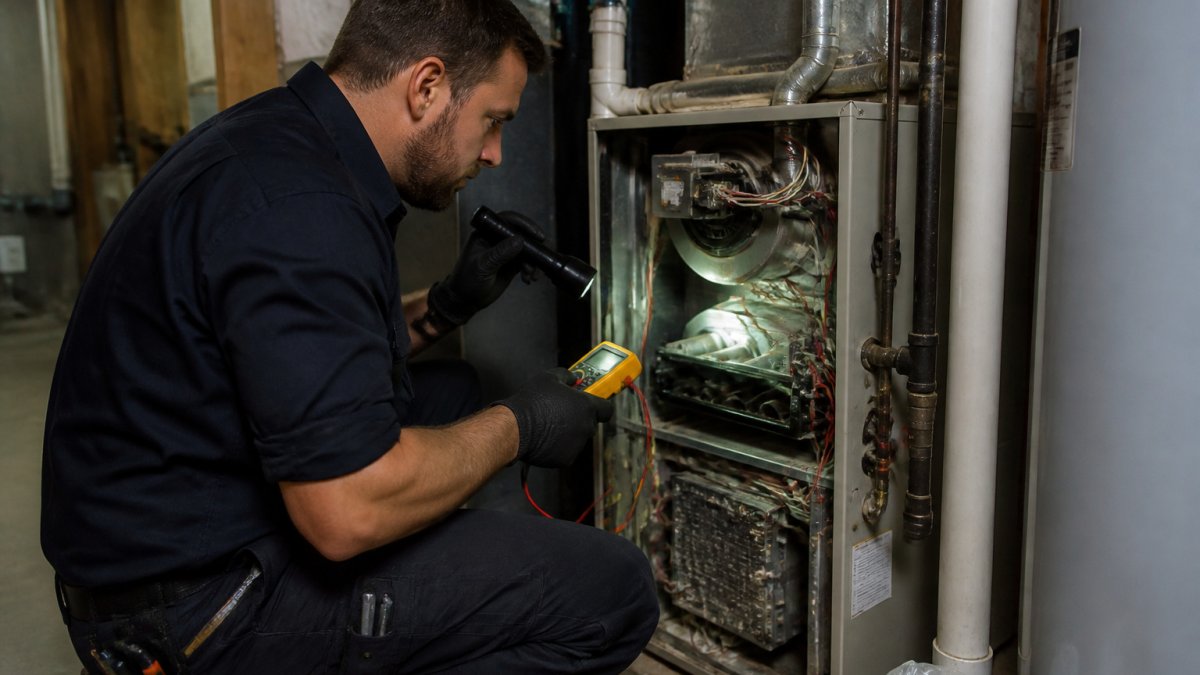
For a service request, contact Ricotta Heating & Air about emergency furnace repair. Describe the symptoms and any safety concerns. A repair appointment is not a substitute for calling emergency services when there is an immediate hazard.
What a Heating System Diagnostic Includes
A diagnostic visit starts with questions. When did the problem begin? Does it happen every time the furnace runs? Was there a recent power outage, filter change, or thermostat replacement? Those details help the technician narrow down the cause.
For a gas furnace, the inspection may include the ignition system, burners, flame sensor, blower motor, filter, venting, heat exchanger, and safety controls. Depending on the symptoms, the technician may check gas pressure, electrical components, airflow, and thermostat operation. Heat pumps and electric heating systems need different checks.
Ask what the diagnostic visit covers and whether there is a fee before scheduling. Once the cause is found, request an explanation and a written estimate before approving repairs.
Heating Repair Versus Replacement: Weighing Your Options
Not every furnace problem calls for replacement. The decision depends on the system's condition, repair history, safety, and the work needed to get it running properly.
When a Repair Is the Right Call
Repair is worth considering when the problem is limited to one component, such as an ignition control or blower motor, and the rest of the equipment is in good shape. Ask whether the repair addresses the cause of the failure, not just the symptom.
When Replacement Makes More Sense
Replacement deserves a closer look when the system needs frequent repairs, has a serious safety problem, or requires a major repair that is difficult to justify against a new installation. Parts availability and the condition of the remaining components matter, too. Ask for both options in writing when repair is feasible.
If you are replacing equipment that shares a blower or ductwork with your air conditioner, ask how the new system will work with your cooling equipment. That pairing matters during Missouri's humid summers as well as heating season.
Furnace Replacement Estimates and What Affects Them
A replacement estimate depends on the home's heating needs, equipment efficiency, installation access, ductwork condition, and applicable permit requirements. Ask how the contractor determined the equipment size and whether the estimate includes any needed venting, electrical, or duct changes.
Utility rebates or assistance programs may be available, but eligibility and funding can change. Confirm current requirements before counting on an incentive. Request a replacement estimate to discuss your home's needs and compare options.
These factors can affect the replacement quote:
| Factor | Effect on Cost | What to Ask |
|---|---|---|
| Equipment size and efficiency | Affects equipment cost | How was the system sized for the home? |
| Installation complexity | Affects labor and materials | What changes are included? |
| Ductwork condition | May require repairs or modifications | Will the existing ducts support proper airflow? |
| Local permit requirements | May add permit and inspection fees | Are required permits included? |
| Utility rebates and assistance | May reduce out-of-pocket cost if eligible | Which programs are currently available? |
Choosing a Heating Repair Provider in Jefferson County
Look for a contractor who asks questions, explains the diagnosis, and puts the proposed work in writing. Experience with homes like yours can be helpful, especially when older ductwork or tight equipment spaces complicate the job.
Verify credentials before work begins:
- Ask which contractor licenses or registrations apply to your address and confirm them with the local building department.
- Request proof of insurance, including applicable liability and workers' compensation coverage.
- If refrigerant work is involved, ask about the required EPA Section 608 certification. For gas work, confirm that the contractor meets applicable local requirements.
- Read recent reviews from more than one source, paying attention to how the company handles follow-up visits and complaints.
Compare the scope of work, not just the total:
- Request a written estimate separating parts, labor, and any diagnostic charge.
- Ask whether the diagnostic charge applies toward an approved repair. Do not assume it does.
- Ask for any applicable parts and labor coverage in writing, including exclusions and claim requirements.
- Ask the contractor to explain the repair-versus-replacement recommendation. If replacement is the only option offered, ask why repair is not suitable.
Check coverage and scheduling:
- Confirm that your address is within the regular service area and ask whether a travel charge applies.
- Ask about current availability, after-hours service, and any additional charges before booking.
- Ask whether needed parts are available or must be ordered. A diagnosis does not always mean the repair can be completed during the same visit.
Watch for missing details: If one quote is much lower than another, compare the equipment, materials, permits, and labor included. A lower total alone does not tell you whether the proposed work is equivalent.
Learn what to ask before hiring an HVAC contractor, or contact Ricotta Heating & Air with questions about service coverage and the estimate process.
Schedule Your Heating Inspection With Ricotta Heating & Air
Ricotta Heating & Air is a family-owned HVAC company based in Hillsboro, MO. If your furnace is noisy, short-cycling, or no longer heating, contact us to request an inspection. Tell us what you have noticed so we can discuss the next step.
Frequently Asked Questions
Who should I call when my furnace stops working?
Contact a qualified HVAC contractor that services your type of heating equipment. Ask about availability, diagnostic charges, and applicable local licensing. If you smell gas or a carbon monoxide alarm sounds, leave the home first and call your gas utility or 911 from outside.
What affects the cost of a heating repair?
The cause of the problem, replacement parts, equipment access, and labor all affect the estimate. Ask about diagnostic charges before scheduling, then get the proposed repair in writing before approving it. For a major repair, ask whether comparing replacement options makes sense.
How often should I schedule heating maintenance?
Schedule heating maintenance annually, preferably before cold weather, and follow your equipment manufacturer's recommendations. For a gas furnace, maintenance typically includes checking burners, ignition components, the heat exchanger, safety controls, and airflow. These checks can help identify problems before the system stops heating.

This article was written with AI assistance and edited for Hillsboro and Jefferson County homeowners by Ricotta Heating & Air. For advice about your own system, call (314) 333-5900.