
HVAC Repair for Older Homes | Jefferson County, MO
Table of Contents
- Why HVAC Repair for Older Homes Takes a Different Approach
- Common HVAC Problems in Older Homes
- Understanding Ductwork Repair in Older Homes
- HVAC Repair vs. Replacement: Making the Right Call
- Fixing Uneven Heating and Cooling in Older Homes
- HVAC Maintenance for Older Homes: Prevention and Planning
- What to Expect From an Honest HVAC Contractor
- Frequently Asked Questions
Why HVAC Repair for Older Homes Takes a Different Approach
HVAC repair in an older Jefferson County home starts with understanding the house, not just the equipment. The original layout, later additions, insulation, and ductwork all affect how well your furnace and air conditioner keep rooms comfortable.
Older homes may have leaky ducts, uneven insulation, or heating systems installed before the current layout took shape. Changes to room use, air sealing, and thermostat placement can affect comfort even when the equipment still works.
A boiler that cycles frequently needs a careful check of its controls, water flow, and operating condition. A furnace that struggles to heat a back bedroom may have an airflow problem rather than a failed component. Checking the whole system helps separate equipment trouble from problems elsewhere in the house.
Before deciding what to fix, separate urgent safety concerns from comfort improvements and future replacement needs. Regional coverage such as this St. Louis Public Radio article about older-home repairs is no substitute for an inspection of your own home.
Common HVAC Problems in Older Homes
Age, wear, and past remodeling can leave a home with heating and cooling problems that aren't obvious at first glance.
Thermostat placement and performance can affect the whole system. A thermostat near a draft, sunny window, or heat source may not reflect the temperature in the rest of the house. It can shut the system off before other rooms are comfortable.
Ductwork deterioration can reduce airflow where you need it. Joints may separate, metal may corrode, and insulation can loosen or deteriorate. Some older ducts were never properly sealed or insulated.
Furnace and boiler age raises questions about condition, safety, and parts availability. Age alone doesn't tell you whether equipment needs replacement. The repair history and inspection findings matter, too.
Uneven heating and cooling can come from leaky ducts, restricted airflow, poor insulation, or equipment problems. An addition or converted room may also need more airflow than the original system can deliver.
Understanding Ductwork Repair in Older Homes
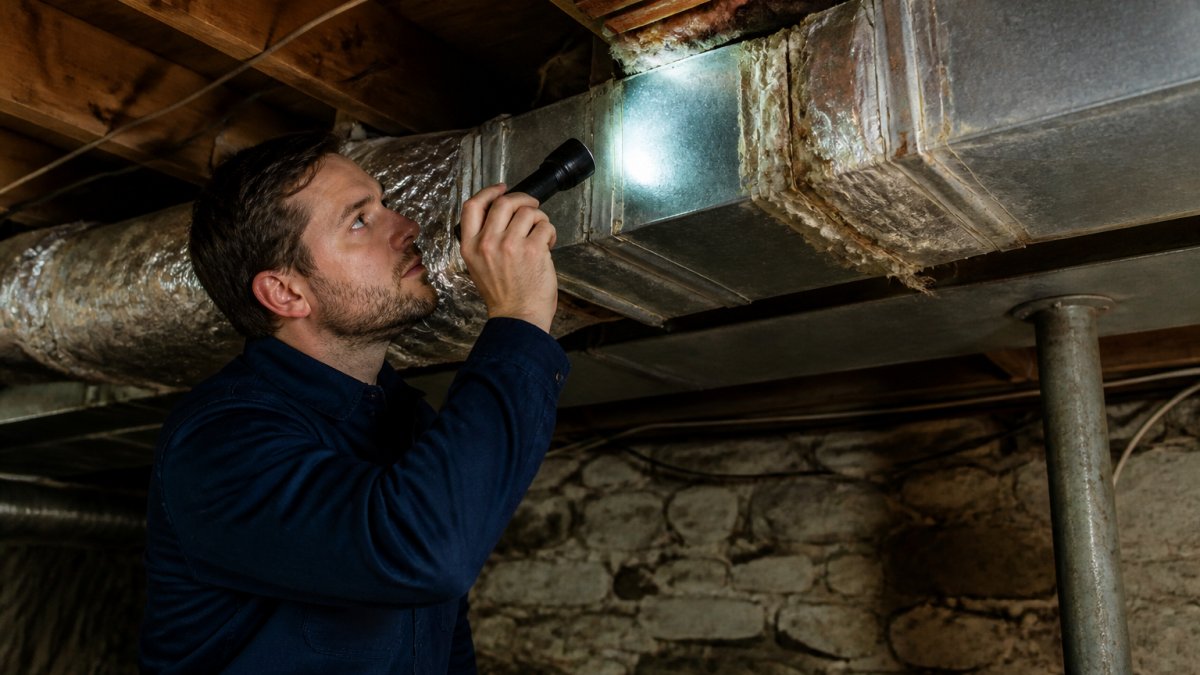
Ductwork in an older Hillsboro home may reflect several rounds of remodeling. Branches get added, rerouted, or patched as rooms change, sometimes without checking how those changes affect airflow throughout the house.
The first step is identifying the duct material and its condition. Rigid metal ducts can develop rust or loose seams, while flexible ducts can tear, sag, or become disconnected. Older duct insulation may contain asbestos. Don't disturb suspicious wrapping; it needs assessment by a qualified asbestos professional before duct repairs proceed.
Common ductwork problems include:
- Separated joints that leak air
- Crushed or kinked sections that restrict airflow
- Missing or damaged insulation in unconditioned spaces
- Holes or tears in flexible ducts
- Undersized ducts that contribute to noise and poor airflow
Sealing accessible leaks can help more heated or cooled air reach the rooms it serves. Duct insulation also matters where ducts pass through spaces outside the home's conditioned area.
Damaged or poorly sized sections may need replacement. Before agreeing to replace all the ductwork, ask whether sealing, insulation, or targeted repairs would address the problem. The goal is adequate airflow and safe operation, not replacing sound ducts simply because they're old.
HVAC Repair vs. Replacement: Making the Right Call
System age and condition belong in the same conversation. An older unit with a minor fault may be worth repairing, while equipment with serious safety problems or repeated major failures may need replacement.
Repair cost versus replacement cost should be based on written estimates for your home. Online resources, including this regional HVAC cost overview, cannot account for your equipment, ductwork, electrical needs, or installation access.
Repair frequency matters. Repeated breakdowns are a reason to compare the next repair with replacement rather than considering each service call in isolation.
Energy efficiency is another factor, but age alone doesn't establish a system's efficiency. Compare the existing equipment's rating and condition with the proposed replacement. Installation quality, duct leakage, insulation, and thermostat settings also affect energy use.
Your comfort and reliability needs matter, especially through Missouri's humid summers and cold winters. Let the technician know if anyone in the home is particularly vulnerable to heat or cold. Never keep operating equipment that has been identified as unsafe.
Ask for an assessment of the system's condition, available repair options, parts availability, and replacement choices. A technician can discuss likely concerns, but cannot predict exactly how long an older unit will last.
Fixing Uneven Heating and Cooling in Older Homes
If the living room feels comfortable but the bedroom stays cold, the thermostat reading doesn't tell the whole story. Room temperatures depend on airflow, insulation, drafts, sun exposure, and how each room is used.
A technician should check those conditions along with equipment operation. A larger furnace or air conditioner isn't automatically the answer.
Diagnosis often starts with airflow. Duct size, length, and turns affect which rooms get enough air. Where balancing dampers are installed, a technician can adjust them while checking that the system still has adequate overall airflow.
Room-to-room temperature differences may improve with these steps:
- Adjusting balancing dampers to distribute airflow more evenly
- Cleaning return-air grilles and moving furniture away from vents
- Sealing air leaks around windows, doors, and basement rim joists
- Improving attic insulation where needed
- Relocating the thermostat or using compatible remote sensors when its current location gives misleading readings
Some homes benefit from zoned heating and cooling, with separate controls for different areas. Zoning requires compatible equipment and careful duct design; it isn't simply a matter of adding thermostats.
Ceiling or portable fans can help people feel cooler while airflow problems are addressed. If you use a portable heater temporarily, follow its safety instructions, keep it away from combustible materials, and never leave it running unattended.
HVAC Maintenance for Older Homes: Prevention and Planning
Regular maintenance helps identify wear and operating problems before they become harder to manage. It doesn't eliminate every breakdown, but it gives you a clearer picture of your equipment's condition.
Basic maintenance tasks include:
- Checking the air filter regularly and replacing it according to its condition and the manufacturer's instructions
- Having the furnace professionally inspected and serviced before heating season
- Having the air conditioner serviced before cooling season
- Checking thermostat batteries, settings, and temperature readings
- Keeping debris and vegetation clear of the outdoor unit
- Checking accessible ductwork for visible damage without disturbing old insulation
If you're considering a maintenance plan, ask what inspections and service tasks it includes. Read the terms rather than assuming it covers repairs or special scheduling.
For Jefferson County homeowners, early fall and spring are sensible times to schedule heating and cooling maintenance. That leaves time to address concerns before the system is needed regularly.
What to Expect From an Honest HVAC Contractor
A useful service visit should leave you understanding the problem and your options.
Look for a thorough diagnosis. The technician should ask about comfort problems, test equipment operation, and check airflow or ductwork as the symptoms require.
Expect plain-language explanations of what failed, what the inspection found, and what the proposed repair will address.
Ask for a written estimate that explains the work, parts, labor, and any exclusions. Clarify how additional work would be approved if another problem is found.
A contractor should respect your timeline and budget while clearly identifying safety concerns. Ask whether a repair is a reasonable option and what its limitations would be.
Discuss follow-up questions before work begins. Find out whom to contact if symptoms return and what documentation you'll receive after the repair.
Ricotta Heating & Air is a family-owned company based in Hillsboro, Missouri, serving Jefferson County and South St. Louis County.
Need HVAC service for your older home? Schedule an estimate with Ricotta Heating & Air to discuss your equipment, comfort concerns, and repair options.
The right repair starts with finding the cause. Whether you're dealing with a cold room, damaged ducts, or aging equipment, schedule an estimate to help decide your next step.
| Issue | Possible Cause | Repair Approach After Diagnosis |
|---|---|---|
| Uneven heating or cooling | Duct imbalance or leaks | Airflow balancing and duct sealing |
| Furnace cycles frequently | Thermostat problems, restricted airflow, or equipment faults | Check controls, airflow, and safety limits; repair the identified fault |
| Cold rooms in winter | Undersized or leaking ducts, drafts, or poor insulation | Duct repairs, airflow balancing, air sealing, or insulation improvements |
| High energy bills | Equipment problems, air leaks, or changing usage | Check operation and usage; consider maintenance, sealing, or replacement as needed |
| Furnace won't start | Control, power, ignition, or fuel-supply problems | Diagnose the fault and repair the affected component |
| Noisy operation | Loose ductwork or worn moving parts | Secure ducts or service affected components |
Frequently Asked Questions
When should you repair or replace HVAC equipment in an older home?
Consider safety, equipment condition, repair history, parts availability, and the scope of the repair. Age alone isn't enough to decide. Ask a technician to explain the inspection findings and compare repair with replacement for your home.
What HVAC problems are common in older homes?
Common problems include leaky ducts, weak airflow, uneven room temperatures, thermostat issues, and aging equipment. Additions and changed room layouts can also strain the original duct design. An inspection should look at the house and airflow as well as the furnace or air conditioner.
How do you know if an older home's ductwork needs repair?
Weak airflow, disconnected ducts, visible damage, and persistent temperature differences are reasons to have the ducts checked. These symptoms can have other causes, so visual inspection and airflow testing help identify the right repair. Don't disturb old duct wrapping that may contain asbestos.
Can you install central air in an older home?
Often, yes, but the home needs an assessment first. Existing heating ducts may need changes to handle cooling airflow, and homes with radiators or baseboard heat may have no ducts at all. A contractor should check cooling needs, duct routes, electrical capacity, and installation access. Ductless mini-splits may be an alternative when adding ducts isn't practical.
This article was written with AI assistance and edited for Hillsboro and Jefferson County homeowners by Ricotta Heating & Air. For advice about your own system, call (314) 333-5900.