
HVAC Maintenance Before Selling a Home | Hillsboro, MO
Quick Summary
Yes—HVAC maintenance is a sensible step before selling your Hillsboro home, especially if service is overdue. A professional tune-up can uncover problems before the buyer's inspection and give you a written record of the equipment's condition. Schedule it early enough to allow time for repairs.
- Home inspectors generally check operation and visible concerns, such as leaks, rust, and damaged wiring.
- Book service before listing and request a written report.
- Homeowner tasks include checking the filter, clearing debris around the outdoor unit, and checking thermostat settings.
- Weigh repair and replacement estimates against the system's condition and repair history.
- Keep dated photos of completed maintenance with your service invoices.
Table of Contents
- Why HVAC Maintenance Before Selling a Home Helps
- Your Pre-Listing HVAC Maintenance Checklist
- What a Pre-Listing HVAC Inspection Covers
- HVAC Service Records: What to Hand Over
- Repair or Replace Your HVAC Before Selling?
- Handling HVAC Findings in a Buyer's Inspection
- Schedule Your Pre-Listing HVAC Assessment
- Frequently Asked Questions
Why HVAC Maintenance Before Selling a Home Helps
A pre-listing service visit gives you time to address heating and cooling problems before a buyer raises them. It cannot guarantee a sale price or a clean inspection report, but it can help you make informed decisions.
Buyers want to know whether the equipment works and whether repairs may be coming. Service records help explain its history, though they cannot predict future repair costs.
What Buyers and Inspectors Actually Look For
Home inspectors generally check accessible equipment, thermostat operation, and visible conditions. They may note dirty filters, corrosion, drainage problems, or damaged wiring. The inspection's scope and outdoor temperature can limit what they test.
A home inspection is not the same as an HVAC diagnostic visit. If the report raises a concern, have a technician evaluate it rather than assuming the system needs replacement.
Your Pre-Listing HVAC Maintenance Checklist
Start with simple homeowner tasks, then leave internal equipment checks to a qualified technician. Our heat pump maintenance checklist explains which jobs you can handle and which need professional service.
DIY Tasks: Start Safely
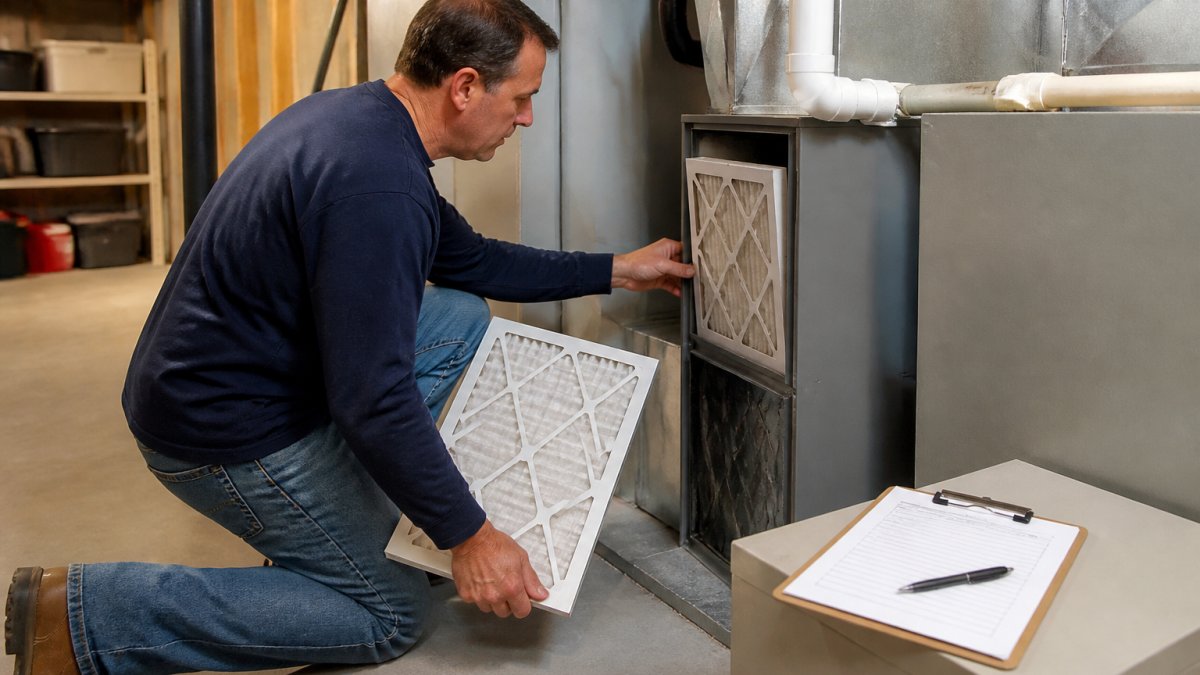
- Turn the system off before checking the filter. Replace it if needed, using the correct size and type, and record the date.
- Clear loose leaves and grass clippings from around the outdoor unit. Follow the manufacturer's clearance requirements and do not open equipment panels.
- Make sure supply vents and return grilles are not blocked by furniture or rugs.
- Check thermostat settings and note any trouble reaching the set temperature. Do not force cooling operation in cold weather or rapidly switch between modes.
- Look for water stains, rust, soot, or scorch marks without opening service panels. Report concerns to a technician.
- Note unusual banging, screeching, or repeated clicking during normal operation.
Leave refrigerant work, gas piping, combustion testing, and electrical repairs to qualified professionals. If a carbon monoxide alarm sounds or you smell gas, leave the home and contact emergency services or your gas utility from outside.
System-Specific Notes
- Gas furnace: Ask about combustion-safety testing, heat-exchanger inspection, venting checks, and carbon monoxide measurements. Request the findings in writing.
- Heat pump: Have the technician check heating, cooling, and defrost controls as weather and manufacturer procedures allow.
- Central air conditioner: Have a technician assess airflow and refrigerant performance when conditions permit. Ice on a refrigerant line needs diagnosis, not simply more refrigerant.
- Older single-stage equipment: Ask the technician to assess the capacitor, contactor, blower motor, and other components appropriate to the system.
Seasonal Timing
Missouri's humid summers and cold winters make both heating and cooling checks worthwhile. Before a warm-weather listing, focus on cooling performance, coil condition, and drainage. For a fall or winter listing, prioritize heating operation and furnace safety. Ask the technician to document any checks that outdoor conditions prevent.
A Practical Pre-Listing Timeline
If your schedule allows, use this timeline as a planning example—not a requirement. Address safety concerns immediately, regardless of your listing date.
- Six weeks out: Book service and request a written report.
- Four to five weeks out: Complete recommended nonurgent repairs.
- Three weeks out: Gather service records, equipment paperwork, and model numbers.
- Two weeks out: Confirm agreed repairs are complete and organize receipts.
- One week out: Check the filter, vents, and outdoor unit again.
Starting early gives you more room to arrange parts and follow-up work if needed.
Here is the same schedule at a glance:
| Timing | What to Do |
|---|---|
| Six weeks out | Book service and request a written report. |
| Four to five weeks out | Complete recommended nonurgent repairs. |
| Three weeks out | Gather service records, equipment paperwork, and model numbers. |
| Two weeks out | Confirm repairs are complete and organize receipts. Do not wait to address safety issues. |
| One week out | Check the filter, vents, and outdoor unit. |
What a Pre-Listing HVAC Inspection Covers
A pre-listing HVAC inspection is a technician's assessment of your heating and cooling equipment. Inspection, maintenance, and repair are different services, so confirm what the visit includes before booking.
Depending on the equipment and service scope, the work may include:
- Testing heating and cooling output when conditions allow.
- Inspecting coils, burners, and drain lines and cleaning them as agreed.
- Checking refrigerant performance and electrical connections.
- Inspecting an accessible furnace heat exchanger for signs of damage.
- Checking airflow and blower operation.
- Securing connections and lubricating components where the manufacturer requires it.
Ask for a written summary of what was tested, any limitations, parts replaced, and recommended repairs.
HVAC Service Records: What to Hand Over
Service records give buyers a clearer picture of the equipment's history. Keep them organized so buyers do not have to piece together what was done.
Prepare a folder or digital file with:
- Installation records and equipment model numbers.
- Service dates and work performed at each visit.
- Filter replacement notes.
- Any existing warranty paperwork, without assuming coverage transfers.
- Repair estimates and completed-work invoices.
If records are missing, be honest about what you know. Discuss known equipment problems and disclosure requirements with your real estate agent or a qualified legal professional.
Repair or Replace Your HVAC Before Selling?
There is no single repair-cost cutoff that works for every home. Compare the equipment's condition, repair history, parts availability, and written estimates. Your agent can help you consider how each option fits the sale.
Comparing Repair and Replacement
Start with a written diagnosis and repair estimate. If the repair is substantial, request a replacement estimate with a clear scope of work. Then consider:
- An isolated repair on otherwise sound equipment: Repair may be reasonable if the rest of the system checks out.
- A major repair on worn equipment: Compare replacement before committing to work that leaves other problems unresolved.
- A repair estimate close to replacement: Review what each option includes, including installation requirements and related work.
- Repeated failures: Ask whether the problems share an underlying cause and whether the proposed repair addresses it.
Age alone does not settle the question. An older system with a failed capacitor needs a different assessment than equipment with a serious heat-exchanger problem.
Age, Efficiency, and Refrigerant
Ask the technician to identify the equipment's age, refrigerant type, and parts availability. Older refrigerants and hard-to-find components can affect repair options. If refrigerant is low, have the cause assessed rather than treating a recharge as a complete repair.
What Buyers Actually Expect
Buyer expectations vary with the home's condition, listing, and contract. A working older system does not automatically need replacement before a sale. Describe the equipment accurately and provide the records you have rather than promising how long it will last.
When to Consider Replacement
Replacement deserves a closer look when a major repair would leave you with other significant concerns, parts are difficult to obtain, or failures keep recurring. Ask the technician to explain both options in writing. New equipment does not guarantee a higher sale price or a return on the installation cost.
If replacement makes sense, contact Ricotta Heating & Air for an estimate. Learn more about AC installation and replacement in Jefferson County, MO.
Handling HVAC Findings in a Buyer's Inspection
Before agreeing to repairs or a credit, understand exactly what the inspection report says. A system that did not operate during an inspection needs diagnosis; that finding alone does not establish the cause or repair scope.
Take these steps:
- Read the inspector's exact wording and any testing limitations.
- Have a qualified technician evaluate the flagged item.
- Address safety concerns promptly.
- Discuss repair requests or credits with your real estate agent.
- Document completed repairs and share the relevant invoices.
Some findings involve routine maintenance; others need repairs. Do not dismiss a tripped breaker or repeatedly reset it without having the cause checked.
Schedule Your Pre-Listing HVAC Assessment
A pre-listing assessment helps you understand the equipment's condition before showings begin. You can plan repairs and gather records without waiting for the buyer's report.
Ricotta Heating & Air is a family-owned company based in Hillsboro, serving Jefferson County and South St. Louis County.
To discuss service before listing, use the Schedule an Estimate option. You can also visit our AC repair page for more information.
Frequently Asked Questions
Should you service your HVAC system before selling your home?
Yes, especially if maintenance is overdue or you have noticed operating problems. A service visit can identify issues before the buyer's inspection and provide a record of the equipment's condition. If the system was serviced recently, ask whether any additional checks are needed before listing.
Should sellers rely on an HVAC repair-or-replace rule of thumb?
Not by itself. A simple cost or age cutoff leaves out equipment condition, repair history, parts availability, and installation requirements. Get a written diagnosis and compare repair and replacement estimates before deciding.
What HVAC issues can come up during a home inspection?
An inspector may note dirty filters, visible drainage problems, damaged ductwork, corrosion, or equipment that does not respond to thermostat controls. Suspected refrigerant leaks, combustion problems, and heat-exchanger damage need evaluation by an HVAC professional. Weather and access may limit inspection testing.
What HVAC records should you give a home buyer?
Share installation records, model numbers, service reports, repair invoices, filter replacement notes, and any existing equipment paperwork. Include maintenance-plan records if available. Ask your technician to document what was checked, what could not be tested, and any recommended work.
Preparing to list? Contact Ricotta Heating & Air to discuss an HVAC assessment and give yourself time to address any findings before the buyer's inspection.

This article was written with AI assistance and edited for Hillsboro and Jefferson County homeowners by Ricotta Heating & Air. For advice about your own system, call (314) 333-5900.