
AC Repair Financing Options | Jefferson County, MO
Quick Summary
AC repair financing lets Jefferson County homeowners spread a repair bill over time. Interest, fees, payment schedules, and approval requirements depend on the lender. Start with a written diagnosis, then compare the full repayment cost—not just the monthly payment.
- Get a written diagnosis and estimate before choosing financing.
- For urgent repairs, confirm when funds will be available without overlooking rates and fees.
- Check any existing equipment warranty, home warranty, or insurance coverage before borrowing.
- Compare APR, repayment term, fees, and total payments.
- Avoid a repayment term that could outlast the useful life of the repair.
Ricotta Heating & Air is a family-owned HVAC company based in Hillsboro, MO. Contact us to discuss your repair or replacement needs.
Table of Contents
- How AC Repair Financing Works and When It Makes Sense
- AC Repair Payment Plans Through Contractors
- Personal Loans and Home Equity Options for HVAC Work
- HVAC Financing With Poor Credit: What Lenders Look At
- No-Credit-Check HVAC Financing: Convenience at a Cost
- HVAC Loan vs. Credit Card: Comparing Total Borrowing Cost
- Checking Insurance, Warranties, and Service Plans Before You Borrow
- Schedule an Estimate and Match the Financing to the Repair
- Frequently Asked Questions
How AC Repair Financing Works and When It Makes Sense
AC repair financing lets you pay for a repair over time instead of covering the full bill upfront. Depending on the arrangement, a lender may pay the contractor directly or provide funds for you to pay the bill.
You then repay according to the agreement. Some plans have fixed monthly payments; others have variable rates or promotional terms.
Financing may make sense when the repair is necessary, the payment fits your budget, and the total borrowing cost is manageable. Missouri's humid summers can make an AC breakdown hard to put off, but urgency is not a reason to skip the fine print.
Match the Financing to the Scope of Work
The financing should fit the work you actually need. A small repair and a full replacement call for different borrowing decisions.
Step 1: Get a written diagnosis and estimate. Ask what failed, what the repair includes, and whether other problems could affect the decision.
Step 2: Identify the scope of the job. AC work generally falls into these categories:
- Urgent repair on an otherwise sound system. A failed capacitor or blower motor may be worth repairing if the rest of the equipment is in good condition. Compare available payment plans and loans, including funding time and total cost.
- Major repair on an aging system. A compressor failure or significant refrigerant leak deserves a closer look. Get repair and replacement estimates before financing either option.
- Full system replacement. A larger project may require a longer repayment term. Personal loans and home equity options are worth comparing, but longer terms can add interest, and borrowing against your home carries additional risk.
Step 3: Match the term to the expected life of the work. Ask the technician about the system's condition. No one can promise how long a repair will last, so avoid taking on debt that may remain after the equipment needs replacing.
Step 4: Confirm that the payment fits before you sign. Leave room in your budget for other repairs and seasonal utility bills, including heating during Missouri's cold winters. A lender's approval limit is not a household budget.
Urgent Repair vs. Full System Replacement
Replacement may be worth considering when a system is aging, needs repeated repairs, or has a major component failure. A failed compressor alone does not settle the decision. Equipment condition, repair scope, and any applicable coverage matter too.
Our guide on when to replace your AC explains what to look for. Compare written estimates for both options rather than choosing solely by the monthly payment.
Check What Is Already Covered Before You Borrow
Before borrowing, check whether an existing policy or contract could cover part of the work.
- Equipment warranty. If you have one, confirm whether the failed part is covered and whether labor, diagnostic work, or other charges are excluded. Get the applicable terms in writing.
- Home warranty or service contract. Contact the provider before authorizing work. Ask about approval requirements, contractor restrictions, and service fees.
- Homeowners insurance. Normal wear is generally excluded. Damage from a covered event may qualify, depending on your policy and deductible. Ask your insurer about the claim process.
Some contracts require approval before repairs begin. Check first so you do not accidentally lose eligibility for reimbursement.
AC Repair Payment Plans Through Contractors
Some HVAC contractors offer payment plans directly or through a third-party lender. Ask who provides the financing and who handles billing questions.
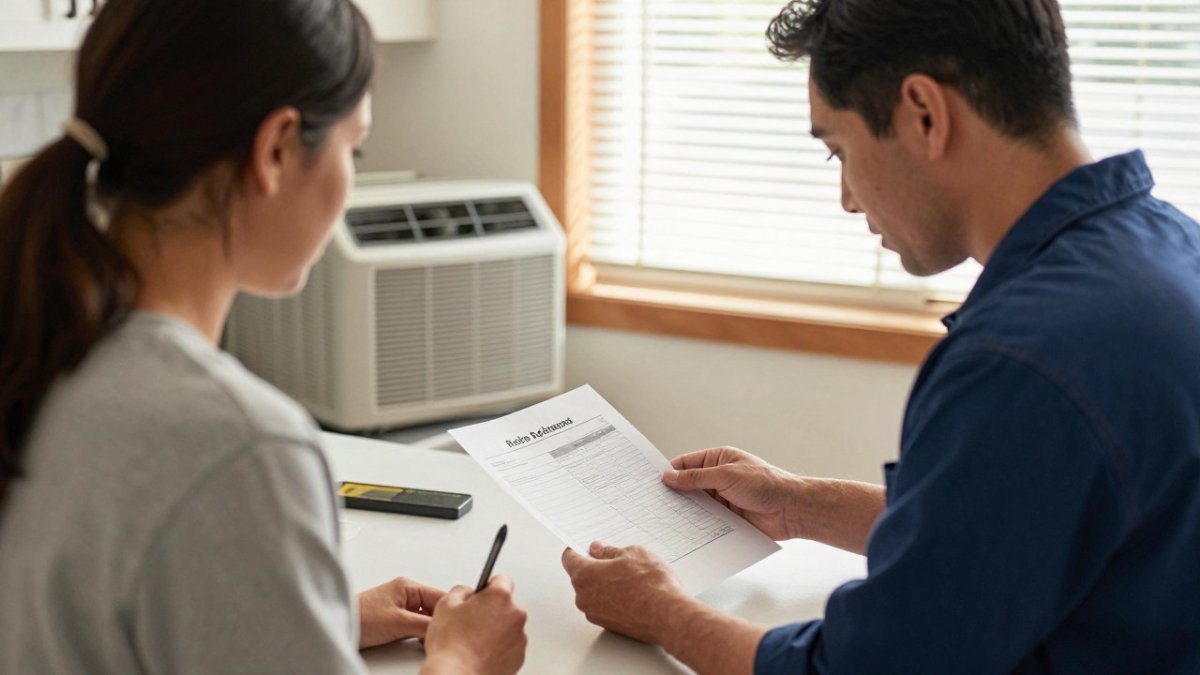
Applying through the contractor can be convenient, but approval and funding times vary. Confirm whether the repair can proceed before funds are released.
Read promotional terms carefully. A deferred-interest offer may charge interest dating back to the purchase if you do not pay the balance in full by the deadline. Late payments can also affect promotional terms.
Our list of questions to ask about HVAC financing can help you review the agreement before signing.
Personal Loans and Home Equity Options for HVAC Work
A personal loan or home equity product keeps the borrowing separate from the repair company. Confirm the funding schedule before committing to work.
Many personal loans are unsecured, meaning they do not require collateral. Approval, rates, fees, and terms depend on the lender and your financial situation. A fixed-rate loan offers predictable payments, but not every loan has a fixed rate.
Home Equity Loans and HELOCs
A home equity loan provides a lump sum secured by your house. The Consumer Financial Protection Bureau explains the basics here: What is a home equity loan?
A home equity line of credit, or HELOC, lets you borrow against an approved credit limit during a draw period. Rates are often variable, and repayment requirements can change later. See What is a home equity line of credit (HELOC)?
Both put your home at risk if you cannot repay. Compare closing costs, rates, and repayment rules. For a smaller repair, that risk and the application process may outweigh any benefit.
HVAC Financing With Poor Credit: What Lenders Look At
Lenders may review your payment history, income, existing debt, and credit use—not just your score. Limited credit history is different from a history of missed payments, though either can affect your options.
Poor credit can mean higher rates or a smaller approved loan. A down payment or qualified cosigner may help, depending on the lender. A cosigner also becomes responsible for repayment.
Ask whether prequalification is available and whether it uses a soft credit inquiry. Do not assume every application leaves your credit unaffected.
PO Box 142, Hillsboro, MO 63050
View mailing address on mapNo-Credit-Check HVAC Financing: Convenience at a Cost
Some lease-to-own and buy-now-pay-later programs advertise no traditional credit check. Others still review credit or use alternative approval criteria. Ask what the application involves.
These arrangements can carry substantial fees or a high total repayment cost. Confirm whether the program covers repairs, replacement equipment, or both. For lease-to-own equipment, also ask who owns it during the agreement and what happens if you miss payments.
HVAC Loan vs. Credit Card: Comparing Total Borrowing Cost
The monthly payment tells you whether an offer might fit your budget. The total repayment amount tells you what the financing will cost. You need both.
Four Numbers to Compare
Get these details in writing for each offer:
- Amount financed. The repair or replacement amount you are borrowing after any down payment.
- APR. The annual percentage rate reflects interest and certain financing charges. It helps you compare offers, but you should still review all fees.
- Term. How long you will make payments. At the same rate and loan amount, a longer term generally means more total interest.
- Fees. Ask about origination charges, closing costs, late fees, and early-payoff penalties. Confirm which charges are included in the APR and total repayment figure.
A shorter loan may have a higher monthly payment but a lower total cost. Compare actual written offers rather than assuming contractor financing, a bank, or a credit union will always be cheaper.
How the Repayment Term Changes the Cost
Compare the same borrowing amount and rate over different terms:
- A shorter term generally raises the monthly payment but reduces total interest. A longer term generally lowers the payment but adds interest.
Use a repayment calculator with the terms you were offered. Include fees, and remember that a variable rate can change future payments and total cost.
When a Credit Card Makes Sense—and When It Does Not
A credit card may work for a repair you can repay quickly. If your card offers a purchase grace period and you qualify for it, paying the full statement balance by the due date can avoid purchase interest. Check the agreement, especially if you already carry a balance.
An introductory interest-free offer may also be useful if you can clear the balance before it ends. Confirm the regular APR, fees, and whether the promotion uses deferred interest. Do not rely on minimum payments to clear a promotional balance by the deadline.
Side-by-Side Comparison
| Option | When to Consider It | Main Trade-Off | What to Verify in Writing |
|---|---|---|---|
| Contractor payment plan | Applying through the repair company | Promotional terms may be costly if requirements are not met | Lender, APR, funding timing, fees, and deferred-interest rules |
| Personal loan | Keeping financing separate from the contractor | Rate and approval depend on your finances and the lender | APR, origination fee, payment schedule, and prepayment penalty |
| Home equity loan or HELOC | Larger projects when the risks and costs are acceptable | Your home secures the debt | Closing costs, fixed or variable rate, draw period, and repayment rules |
| Credit card | Repairs you can repay quickly | Carrying a balance can be expensive | Grace period, regular APR, promotional deadline, and deferred-interest terms |
| Lease-to-own | Equipment purchases when other financing is limited | Total payments may be high; ownership terms vary | Total payments versus cash price, early purchase options, and missed-payment consequences |
The Comparison Checklist
Before choosing, ask these questions about every offer:
- What is the APR, and which fees does it include?
- What is the total of all payments and upfront charges?
- Is the rate fixed or variable? If variable, how and when can it change?
- Can I make extra payments or pay off the balance early without a penalty?
- What happens when any promotional period ends?
- What are the late fees, and can a missed payment change the rate or promotional terms?
A promotional “no interest if paid in full” offer is not necessarily the same as an introductory interest-free loan. With deferred interest, failing to meet the payoff deadline can trigger interest dating back to the purchase.
If you are weighing repair against replacement, get both estimates in writing first. Choose the work based on the equipment's condition before choosing how to pay for it.
Checking Insurance, Warranties, and Service Plans Before You Borrow
Review any existing coverage before financing the full bill. Ask the provider which parts, labor, and other charges are eligible, and keep written approval with your repair estimate.
A maintenance plan is not the same as repair insurance or a warranty. Its benefits depend on the contract. Regular service may help identify developing problems, but it cannot prevent every breakdown. Check whether your plan includes anything that applies to the current work.
Schedule an Estimate and Match the Financing to the Repair
Start with a diagnosis and a written estimate. Ask whether there are diagnostic or estimate charges, what the proposed work includes, and what could change the final bill.
If your system is down, request an AC repair appointment and confirm availability. You can also book a service call online. If replacement is worth considering, request an HVAC replacement estimate so you can compare the work and financing side by side.
Ricotta Heating & Air serves Jefferson County and South St. Louis County. Contact us about your AC or heating problem, and ask which repair or replacement options fit your system's condition.
An AC breakdown is stressful enough. A written estimate and a clear repayment plan can help you make the decision without guessing.
Frequently Asked Questions
Can you finance an AC repair instead of paying the full bill upfront?
Yes, depending on the lender, contractor, and your eligibility. Options may include contractor payment plans, personal loans, or credit cards. Compare the APR, fees, repayment term, and total payments. Confirm that the financing covers the specific work you need.
What credit score do you need to finance an AC unit?
There is no single requirement across all lenders. Approval can depend on credit history, income, existing debt, and the amount requested. Ask whether you can prequalify with a soft credit inquiry, then compare written terms before submitting a full application.
Is an HVAC loan or a credit card better for a repair bill?
It depends on the terms and how quickly you can repay. A card may work if you can avoid interest under its grace-period or promotional rules. A fixed-rate loan may be easier to budget for when repayment will take longer. Compare fees and total repayment costs for both.
Can I get no-credit-check HVAC financing, and what are the trade-offs?
Some programs advertise no traditional credit check, but approval rules vary. The trade-offs may include higher total costs, fees, or equipment ownership restrictions. Confirm whether the offer covers repairs or only replacement equipment, and read the missed-payment and early-payoff terms.

This article was written with AI assistance and edited for Hillsboro and Jefferson County homeowners by Ricotta Heating & Air. For advice about your own system, call (314) 333-5900.