
When to Replace Your AC: Clear Signs and Next Steps
If your central air conditioner is 15 years old or older and you’re facing a repair bill over $1,000, replacing it is almost always the smarter financial move. Here’s what to do right now:
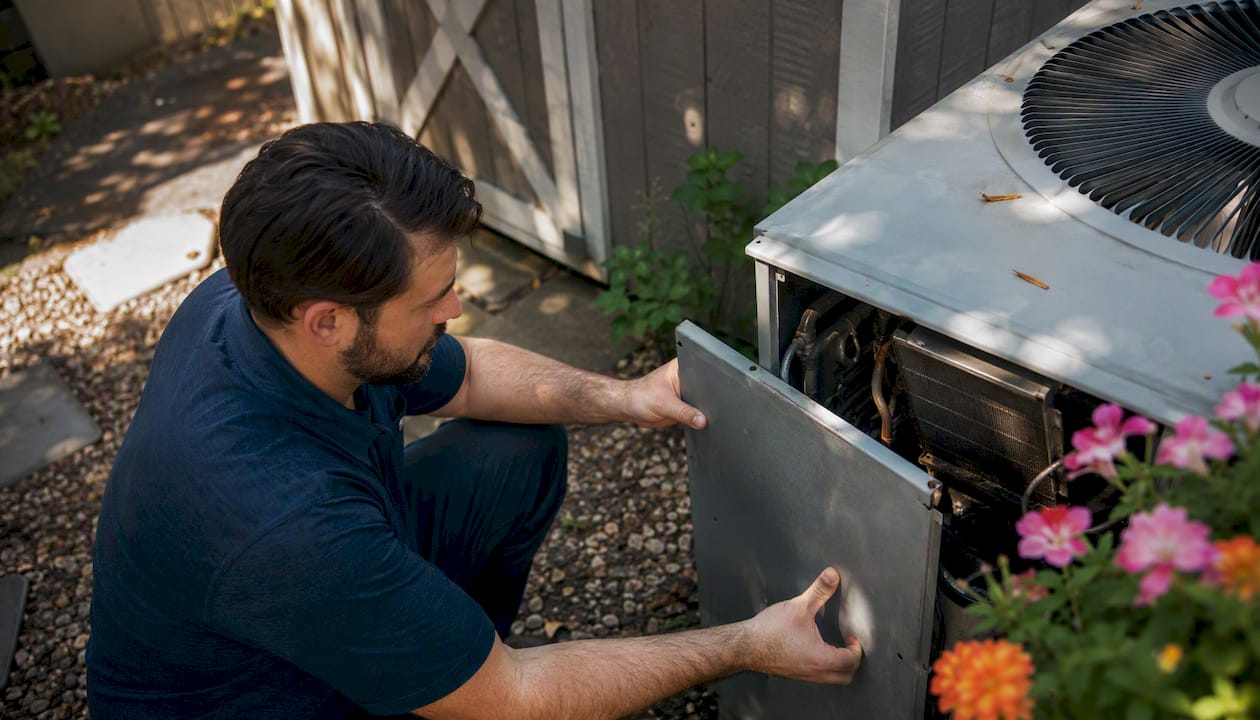
- Step 1: Find the metal data plate on your outdoor condenser unit and note the manufacture date. That date, not your installation paperwork, tells you the unit’s true age.
- Step 2: Apply a quick cost check before authorizing any repair. If the repair quote is more than half the cost of a new system, or if the unit’s age multiplied by the repair cost exceeds $5,000, start planning for replacement rather than another fix.
Key Takeaways
| Point | Details |
|---|---|
| Age benchmark | The median AC replacement age is 15.3 years; plan proactively once your unit passes 15. |
| 5,000 rule | Multiply system age by repair cost; if the result exceeds $5,000, replacement is the stronger choice. |
| Off-season scheduling | Book replacement in spring or fall to avoid peak-summer delays and higher installation pricing. |
| Always ask for Manual J | Require a written Manual J load calculation from any contractor before agreeing to a replacement. |
| Ricottaheatingandair | Provides honest diagnostics, Manual J sizing, and full AC installation across St. Louis and Jefferson County. |
Table of Contents
- When should you replace your AC unit?
- How long does an AC last, and what affects its lifespan?
- Should you repair or replace? A practical decision framework
- When is the best time to schedule AC replacement?
- How do you choose the right replacement system and contractor?
- What maintenance steps extend your AC’s life?
- How Ricottaheatingandair supports homeowners through the replacement decision
- What most homeowners get wrong about AC replacement
- Ready for a replacement? Here’s what to expect with Ricottaheatingandair
- Sources
When should you replace your AC unit?
Most homeowners wait too long. The warning signs below are the ones technicians see most often, and each one tells you something specific about where your system stands.
- Age over 15 years. The median residential AC replacement age is 15.3 years. Once your unit crosses that threshold, every repair is a gamble on a system that’s statistically near the end of its useful life.
- Frequent or costly repairs. One repair every few years is normal. Two or more repairs in a single season, or any single repair topping $800–$1,000 on an older system, signals a pattern of decline rather than a one-off problem.
- Rising energy bills without a change in usage. When a compressor loses efficiency or refrigerant charge drops, the system runs longer to hit the same setpoint. If your summer electric bills have climbed noticeably over two or three years and your usage habits haven’t changed, the unit is working harder than it should.
- Uneven cooling or poor airflow. Rooms that never quite cool down, or airflow that feels weaker than it used to, often point to a failing compressor or deteriorating ductwork. If a duct inspection rules out the ducts, the equipment itself is usually the culprit. You can run through some quick cooling checks before calling a technician.
- Grinding, banging, or squealing noises. A healthy AC runs with a steady hum. Grinding suggests worn motor bearings. Banging often means a loose or broken component inside the compressor. These aren’t sounds to monitor; they’re sounds to act on.
- Burning smells or musty odors. A burning smell can indicate overheating electrical components. Persistent musty odors after the system has run for a few minutes often point to mold in the evaporator coil or drain pan, which affects indoor air quality and can signal a deeper moisture problem.
- R-22 refrigerant. If your system uses R-22 (Freon), the EPA’s phase-out has made that refrigerant scarce and expensive. A refrigerant leak on an R-22 system is often the tipping point that makes replacement the only practical choice.
- Frozen evaporator coils or visible rust and corrosion. Ice on the indoor coil usually means restricted airflow or low refrigerant. Rust or pitting on the coil or cabinet suggests the unit has been fighting moisture for years and structural integrity is compromised.
Pro Tip: Don’t rely on your installation paperwork to confirm the unit’s age. Contractors sometimes install older stock units years after manufacture. The metal data plate on the outdoor condenser shows the actual manufacture date. That’s the number that matters when you’re running the repair-vs-replace math.
How long does an AC last, and what affects its lifespan?
The honest answer is: it depends on where you live and how well the system has been maintained. Industry data puts the median replacement age for residential air conditioners at 15.3 years, with the 25th percentile at 10.6 years and the 75th percentile at 21 years. That wide spread reflects real-world variation driven by climate, usage, and installation quality.
The median residential AC replacement age is 15.3 years — but homeowners in hot, humid climates often see systems fail closer to 10–12 years, while those in cooler, drier regions can push well past 20. Where you fall in that range depends heavily on how hard your system works and how consistently it’s been maintained.
Climate and usage are the biggest variables. In St. Louis and Jefferson County, summers run hot and humid from May through September, which means your compressor is cycling hard for five or more months a year. That kind of sustained load shortens the gap between installation and replacement compared to a home in a milder climate. Carrier’s guidance notes that maintenance quality and installation sizing are nearly as important as climate, because an oversized or undersized unit short-cycles constantly and wears out faster than a properly matched system.
Installation quality matters more than most homeowners realize. A system installed without a proper Manual J load calculation, or one that was charged with the wrong refrigerant amount from day one, will underperform and fail earlier regardless of brand.
Should you repair or replace? A practical decision framework
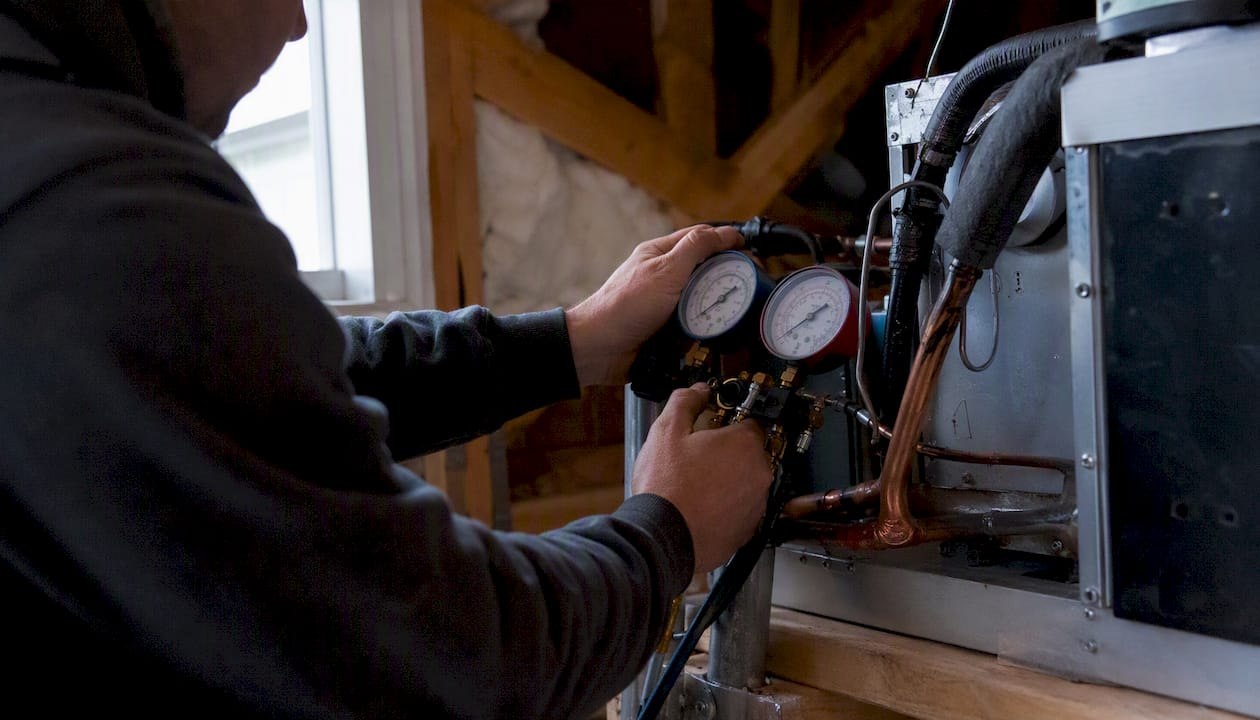
This is the question every homeowner faces when the technician hands over a repair estimate. Here’s a straightforward way to work through it.
Age-band defaults:
- Under 10 years old: Repair almost always makes sense unless the damage is catastrophic (compressor failure on a system with no warranty). A well-maintained unit in this range has years of life ahead.
- 10–15 years old: Evaluate each repair carefully using the heuristics below. The system is in its middle-to-late stage; major component failures here often signal a broader decline.
- 15+ years old: Default toward replacement. You’re likely past the median lifespan, and ENERGY STAR guidance is clear that at this stage, the long-term efficiency gains from a new system usually outweigh the cost of continued repairs.
Two heuristics to run on any repair estimate:
The 5,000 rule: Multiply the system’s age (in years) by the repair cost (in dollars). If the result exceeds $5,000, replacement is the better financial choice. For example, a 14-year-old unit facing a $400 repair scores 5,600, which tips toward replacement. A 6-year-old unit with the same repair scores 2,400, which favors repair. HVACChecker documents this rule as a standard contractor heuristic, though it works best as a starting point rather than a hard rule for every situation.
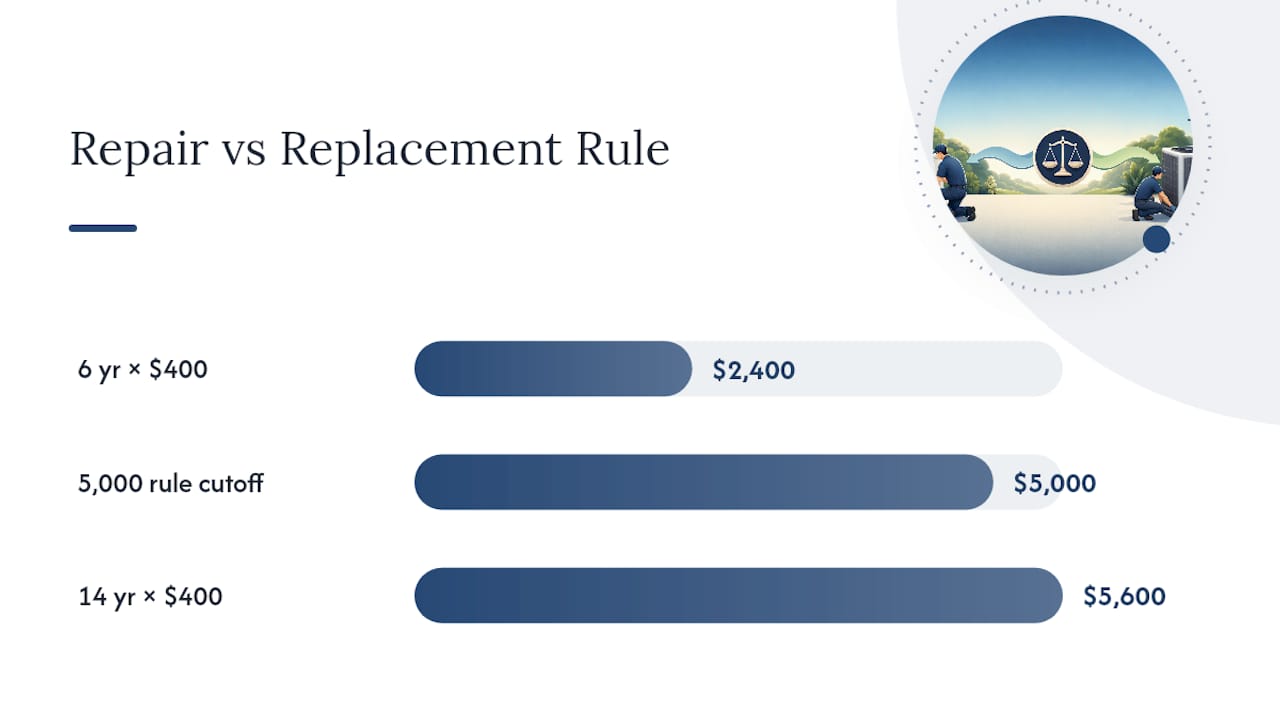
A $2,500 repair on a system where replacement runs $5,000 is a coin flip at best, and you’re still left with an aging unit afterward.
Decision checklist to run through during a service call:
- Confirm the manufacture date from the data plate, not the paperwork.
- Ask whether the system uses R-22. If yes, factor in the scarcity premium on any refrigerant repair.
- Check whether any parts are still under manufacturer warranty. A compressor warranty can change the math significantly.
- Count how many repairs the system has needed in the past three years. Two or more major repairs is a pattern.
- Ask the technician directly: “What’s the next likely failure on this system?” If the answer involves the compressor or heat exchanger, replacement is usually the better path.
Smart questions to ask your technician:
- What is the manufacture date on the data plate?
- Does this repair address the root cause, or is it a temporary fix?
- What SEER rating would a replacement system carry, and what would my estimated energy savings be?
- Are there any rebates or federal tax credits available for a replacement right now?
- Is the replacement warranty transferable if I sell the home?
You can also review a repair-vs-replace checklist to cross-check your thinking before committing to either path.
When is the best time to schedule AC replacement?
Timing your replacement well saves money and stress. The worst time to replace an AC is July, when every HVAC contractor in St. Louis is fully booked and you’re making decisions in 95-degree heat. The best time is spring (March through May) or fall (September through October).
HomeCostLab’s guidance is direct on this: off-season scheduling gives you better contractor availability, more competitive pricing, and time to research equipment and rebates without pressure. In Missouri, waiting until peak summer can mean multi-week installation delays.
Statistic to keep in mind: Scheduling in the off-season can meaningfully reduce both installation costs and wait times compared to peak-summer bookings, when demand spikes and contractors prioritize emergency calls.
Typical replacement timeline:
- Week 1: In-home diagnostic and Manual J load calculation
- Week 1–2: Equipment selection, written estimate, permit application
- Week 2–3: Equipment arrives, installation day scheduled
- Installation day: Old system removed, new system installed and commissioned (typically 4–8 hours)
- Post-install: System startup, refrigerant charge verification, homeowner walkthrough, warranty paperwork
Cost ranges for a central AC replacement vary by system size, SEER rating, ductwork condition, and local labor rates. For the St. Louis area, a straightforward replacement of a central AC condenser and air handler typically runs from roughly $4,000 on the low end to $8,000 or more for larger homes or high-efficiency systems. Ductwork repairs or upgrades add to that figure.
Rebates and incentives to check:
- Federal tax credits for qualifying high-efficiency HVAC equipment (check IRS guidance for current eligibility)
- Missouri utility rebates through Ameren Missouri or Spire for ENERGY STAR-rated systems
- Manufacturer rebates on specific equipment models
- ENERGY STAR’s rebate finder at energystar.gov for local utility programs
How do you choose the right replacement system and contractor?
Getting the right equipment installed correctly is as important as the equipment itself. A high-efficiency unit, installed poorly, will underperform for its entire service life.
Equipment selection checklist:
- Correct sizing via Manual J. This is non-negotiable. A Manual J load calculation accounts for your home’s square footage, insulation, window area, orientation, and local climate. Oversizing causes short-cycling; undersizing means the system runs constantly and never dehumidifies properly.
- SEER rating appropriate for your climate. The minimum federal standard is 14 SEER2 in the South/Southwest. For St. Louis, a 16–18 SEER2 unit typically offers a good balance of upfront cost and long-term energy savings.
- R-410A or R-454B refrigerant. Avoid any system still using R-22. Newer systems use R-410A or the newer R-454B, which is lower in global warming potential.
- Single-stage vs. variable-speed. Variable-speed compressors run at partial capacity most of the time, which improves humidity control and comfort. They cost more upfront but often pay back through lower energy bills and longer compressor life.
- Ductwork inspection. Ask the contractor to inspect ducts for leaks, insulation gaps, or sizing mismatches before installing new equipment. New equipment on leaky ducts is money left on the table.
- Warranty details. Look for at least a 10-year parts warranty and confirm whether it requires registered installation and annual maintenance to stay valid.
Contractor vetting checklist:
- Ask for a Manual J printout, not just a verbal sizing estimate.
- Confirm the contractor is licensed in Missouri and carries liability insurance.
- Ask whether any technicians hold NATE certification (North American Technician Excellence), the industry’s primary field credential.
- Request a written scope of work and a change-order policy before work begins.
- Ask how permits are handled and whether the contractor pulls them on your behalf.
- Get at least two written estimates for comparison.
Common mistakes to avoid:
- Accepting a sizing estimate based on square footage alone, with no Manual J
- Skipping the permit (it protects you legally and ensures inspection)
- Choosing the lowest bid without verifying credentials
- Ignoring ductwork condition when replacing the equipment
What maintenance steps extend your AC’s life?
Think of annual AC maintenance the way you think about oil changes. Skip them long enough and the damage compounds quietly until something expensive fails. Energy identifies filter changes, coil cleaning, and annual professional tune-ups as the core actions that keep a system running efficiently and extend its service life.
Seasonal and annual maintenance checklist:
- Monthly: Check and replace the air filter. A clogged filter forces the blower to work harder, restricts airflow over the evaporator coil, and can cause the coil to freeze. Think of it like breathing through a pillow — the system strains with every cycle.
- Spring (before cooling season): Schedule a professional tune-up. A good AC tune-up includes coil cleaning, refrigerant charge check, electrical connection tightening, motor lubrication, and condensate drain flushing.
- Spring/Summer: Keep the outdoor condenser clear of grass, leaves, and debris. Maintain at least 18–24 inches of clearance around the unit.
- Annually: Confirm the condenser pad is level. A tilted unit stresses the compressor over time.
- Annually: Check the condensate drain line for clogs. A blocked drain causes water backup and can damage the air handler or surrounding structure.
- Every 2–3 years: Have a technician verify refrigerant charge. Slow leaks are common and go unnoticed until efficiency drops significantly.
Thermostat habits matter more than most homeowners expect. Keeping your setpoint at 76–78°F during the day rather than 70°F reduces compressor runtime substantially. Every degree closer to the outdoor temperature means less work for the compressor. A programmable or smart thermostat that raises the setpoint while you’re away can add years to compressor life by reducing total runtime over the cooling season. You can also explore air conditioning reliability tips for additional maintenance practices that apply across climates.
Pro Tip: Reducing your thermostat setpoint by just 2–3 degrees during peak afternoon hours, or using a programmable schedule that lets the home warm slightly while you’re at work, can cut compressor runtime by a meaningful amount over a full summer. Less runtime means less mechanical wear, and less wear means a longer compressor life.
How Ricottaheatingandair supports homeowners through the replacement decision
Ricottaheatingandair has served homeowners in St. Louis and Jefferson County for 50 years, and the replacement decision is one of the most common conversations the team has with customers. The process starts with an honest diagnostic, not a sales pitch.
What Ricottaheatingandair offers:
- Diagnostic assessments that identify the root cause of performance problems before recommending repair or replacement
- Manual J load calculations to confirm correct system sizing for your specific home
- Transparent written estimates with no pressure to upsell
- Full AC and heat pump installation services for Jefferson County and St. Louis County
- HVAC maintenance plans that keep your system tuned and your warranty valid
- Smart thermostat setup and indoor air quality services
- Service across Affton, Mehlville, and Jefferson County communities
With 150+ five-star Google reviews and a family-owned approach that prioritizes honest recommendations, Ricottaheatingandair is the kind of local partner that tells you when a repair makes sense just as readily as when replacement is the right call. You can see local service coverage for Mehlville and surrounding areas on the website.
What most homeowners get wrong about AC replacement
The biggest mistake I see in local installs isn’t choosing the wrong brand. It’s making the replacement decision under pressure, in the middle of a heat wave, with no time to compare quotes or verify sizing. That’s when homeowners end up with an oversized system that short-cycles, or a contractor who skips the Manual J because the customer just wants cold air by tomorrow.
The second mistake is treating the repair-vs-replace decision as purely financial. Plan ahead. Get three quotes. Ask every contractor for a Manual J printout, and walk away from anyone who sizes by square footage alone.
Ready for a replacement? Here’s what to expect with Ricottaheatingandair
When your system has crossed the line from “repair and monitor” to “time to replace,” Ricottaheatingandair makes the process straightforward. The team starts with an in-home diagnostic and a Manual J calculation to confirm the right system size for your home, then provides a written estimate with no hidden fees.

On installation day, the crew handles permit coordination, removes the old equipment, installs and commissions the new system, verifies refrigerant charge, and walks you through the new equipment before they leave. Warranty paperwork is handled on-site. For homeowners who want to protect their new investment, maintenance plan options are available to keep the system tuned and the manufacturer warranty intact year after year.
If your AC is showing any of the warning signs above, the best next step is a professional diagnostic before the summer heat arrives. Schedule an in-home estimate with Ricottaheatingandair and get a clear answer on whether repair or replacement is the right call for your home.
Sources
These are the primary sources used throughout this guide. Check them directly to verify data, review current rebate programs, or read deeper technical guidance.
- ENERGY STAR — Replace heating and cooling
- Major home equipment average lifespan | State of the Trades
For the most current federal tax credit eligibility and local utility rebate amounts, check IRS.gov and your utility provider’s website directly, as program details and dollar amounts change annually.