
HVAC Repair: Avoid Unneeded Work in Jefferson County, MO
Table of Contents
- How to Avoid Unnecessary HVAC Repairs: A Step-by-Step Process
- What You'll Need Before Calling a Technician
- Signs of Dishonest HVAC Repair Tactics to Watch For
- Questions to Ask an HVAC Technician During Diagnosis
- Getting an HVAC Repair Second Opinion
- HVAC Maintenance Checklist to Prevent Costly Repairs
- Common Mistakes to Avoid When Managing HVAC Repairs
- Conclusion
- Frequently Asked Questions
How to Avoid Unnecessary HVAC Repairs: A Step-by-Step Process
When your air conditioner quits during one of Missouri's humid summers, it's tempting to approve whatever gets it running again. But an unexpected repair estimate deserves a clear explanation. For homeowners in Hillsboro and throughout Jefferson County, knowing what to ask can make that decision less stressful.
Ricotta Heating & Air is a family-owned HVAC company based in Hillsboro, MO. You don't need technical training to understand your repair options. Start with a written diagnosis, ask what supports it, and consider a second opinion before approving major work.
Why Verification Matters
Your HVAC system has electrical, mechanical, and airflow components that work together. Most homeowners can't diagnose those problems themselves, and that's fine. Your job is to ask questions, not take the equipment apart.
Verification helps separate necessary repairs from optional improvements. Poor cooling, for example, doesn't automatically mean the compressor has failed. The technician should check the possible causes and explain the test results. Adding refrigerant isn't a substitute for diagnosing a low charge and addressing its cause.
The goal isn't to distrust technicians. It's to make a decision based on evidence rather than pressure.
What You'll Need Before Calling a Technician
Before calling, gather a few details about your equipment and the problem. Don't delay a call for an urgent safety concern just to find paperwork.
Basic Tools and Information to Have Ready
Locate your system's documentation. Find the owner's manual, installation paperwork, and service records. Note the brand and model number if you can read the label without removing equipment panels.
Note your system's age. Write down the installation year if you know it. Age matters when comparing repair and replacement, but so do the equipment's condition, maintenance history, and availability of parts.
Document recent behavior. Before the technician arrives, write down what you've noticed:
- When did the problem start?
- Is the system making unusual noises?
- Are some rooms cooler or warmer than others?
- Has your energy bill increased unexpectedly?
- Did the problem follow a power outage or extreme weather?
Keep a notepad ready. Record the technician's findings and ask for unfamiliar terms to be explained. Those notes will help if you compare repair options later.
Signs of Dishonest HVAC Repair Tactics to Watch For
A high estimate or an unexpected finding doesn't automatically mean someone is being dishonest. The concern is a recommendation without supporting evidence, clear terms, or your approval.
Red Flags in Estimates and Recommendations
Pressure to decide immediately. Ask why the work is urgent and whether the equipment is safe to operate while you decide. A real safety hazard may require shutting the system off, but that doesn't mean you must approve a replacement on the spot.
No written estimate. Request a written scope of work with the parts, labor, applicable fees, and total before authorizing repairs.
Vague descriptions of the problem. A statement that the system has a leak needs follow-up. Ask what testing confirmed it, whether the location is known, and whether further diagnostic work is needed.
Recommending replacement without discussing repair. Ask whether repair is practical and how the options compare. Equipment condition, recurring problems, and parts availability matter more than a blanket replacement rule.
Common Pressure Tactics and Overcharging Methods
A low quote followed by unexplained additions. Hidden problems can turn up during a repair. Ask for an explanation and a revised estimate before approving additional work.
Diagnostic fees that weren't disclosed. Ask about service-call and diagnostic charges before booking. Also ask whether any fee is credited toward repairs; don't assume it is.
Expensive parts without an explanation. Ask why a particular part is recommended and whether other compatible options are available. The least expensive part isn't always suitable for your equipment.
Unexplained labor differences. Estimates can vary because the scope, access, or billing method differs. Ask what the labor charge covers before treating a higher estimate as overcharging.
Questions to Ask an HVAC Technician During Diagnosis
Clear questions help you understand what was tested, what failed, and what needs attention. A useful answer connects the recommendation to specific findings.
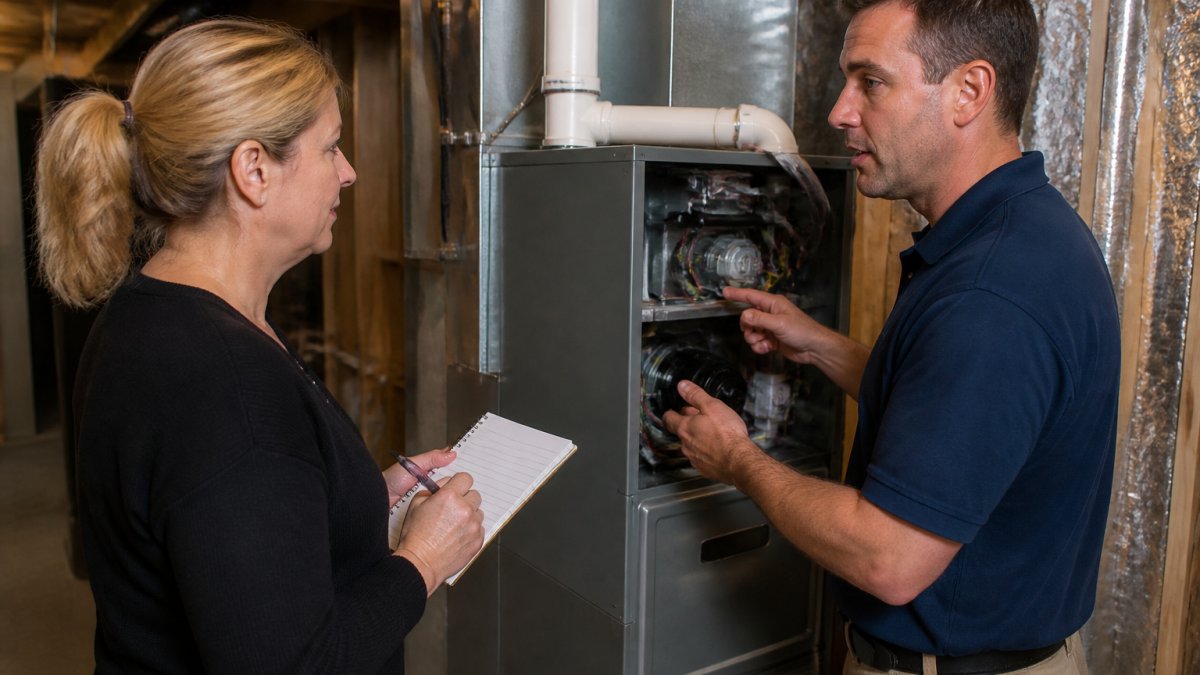
Getting Clear Answers on System Performance
Ask what failed and how it was tested. The technician should explain the diagnostic results and, when practical, show you the evidence.
Ask whether the repair is urgent. Find out what could happen if you wait and whether the system should remain off in the meantime.
Ask how the rest of the system looks. No one can predict an exact remaining lifespan. Still, the equipment's overall condition can help you weigh repair against replacement.
Ask for the full repair cost. Confirm what is included, from parts and labor to service-call fees and other charges.
Understanding Repair Estimates and Written Documentation
Request the estimate before work begins. Read the scope carefully and ask about anything that isn't clear.
Ask about any repair coverage. If coverage is offered, request the written terms, exclusions, and separate details for parts and labor. Don't assume every repair has the same terms.
Ask what isn't included. Find out whether more testing could be needed and how additional work would be approved.
Ask to see the findings. A damaged part, photo, or test reading may help explain the diagnosis. Appearance alone doesn't prove that a part has failed, and some components aren't safely accessible during a visit.
Getting an HVAC Repair Second Opinion
A second opinion can help Jefferson County homeowners sort through conflicting explanations or major replacement recommendations. Ask about diagnostic fees before arranging another visit.
When a Second Opinion Makes Sense
You're facing a major repair. Another evaluation may help you decide whether the proposed work addresses the problem.
The diagnosis doesn't make sense. Ask for clarification first. If the explanation still doesn't match the symptoms or test results, another assessment may help.
You're being pushed toward replacement. Have another technician evaluate whether repair is practical, especially if the equipment hasn't had recurring trouble.
Your questions were dismissed. You should understand the recommendation before authorizing work. Look for someone willing to explain the findings plainly.
How to Compare Estimates from Multiple Technicians
Get more than one written estimate. Confirm each company's diagnostic process and fees before scheduling.
Check whether the diagnoses match. A failed compressor and a low refrigerant charge are different findings, though problems can coexist. Ask what evidence supports each diagnosis.
Compare the same scope of work. Check the proposed parts, labor, fees, exclusions, and any written coverage terms.
Look for supporting evidence. Agreement between technicians can be reassuring, but matching recommendations alone don't prove a diagnosis. Test results and a clear explanation still matter.
HVAC Maintenance Checklist to Prevent Costly Repairs
Maintenance can catch developing problems and help keep equipment operating properly. It can't prevent every failure. Missouri's humid summers and cold winters make it worth checking your cooling and heating equipment before you rely on it every day.
Seasonal Tasks Homeowners Can Handle
Spring: Prepare your air conditioning system.
- Remove loose leaves and branches from around the outdoor unit without opening panels or reaching inside.
- Look for a shifted pad or a unit that appears tilted; have a technician address it.
- Check visible refrigerant-line insulation for damage without disturbing the lines.
- Check the air filter and replace it as needed, following the manufacturer's instructions.
Summer: Monitor your system's performance.
- Notice whether rooms cool evenly.
- Listen for grinding, squealing, or rattling.
- Check whether the system reaches the thermostat setting.
- Keep vegetation and stored items away from the outdoor unit.
Fall: Prepare your heating system.
- Check the air filter and replace it if needed.
- Keep the furnace area clear, especially of combustible materials.
- Check the thermostat settings.
- Test the heating system on a mild day.
Winter: Watch for problems.
- Listen for unusual furnace noises.
- Notice whether heat reaches rooms evenly.
- Check that the system responds to thermostat adjustments.
- Keep supply vents and return grilles clear of furniture and curtains.
Leave electrical testing, refrigerant work, and combustion checks to a qualified technician. If you smell gas or a carbon monoxide alarm sounds, leave the home and call emergency services or your gas utility from a safe location.
| Task | Frequency | Difficulty | What to Check |
|---|---|---|---|
| Replace air filter | Check regularly; follow manufacturer guidance | Homeowner task if safely accessible | Correct size, type, and airflow direction |
| Clear around outdoor unit | Seasonally and after storms | Homeowner task | Loose debris and blocked airflow |
| Check thermostat | At seasonal changes and when problems arise | Homeowner task | Mode, schedule, and batteries if applicable |
| Professional inspection | Follow the equipment's maintenance schedule | Technician task | Safety, operation, and equipment condition |
When to Schedule Professional Maintenance
Follow the recommended maintenance schedule. Professional service may include cleaning components, checking electrical connections, and testing system operation. The work should match your equipment and the manufacturer's instructions.
Plan ahead of heavy use. Schedule cooling maintenance in spring and heating maintenance in fall. That gives you an opportunity to address findings before extreme temperatures arrive.
Don't rely on comfort alone. A system can still heat or cool while a problem develops. Routine checks can identify issues you wouldn't notice at the thermostat.
Common Mistakes to Avoid When Managing HVAC Repairs
A few habits can make repair decisions easier.
Ignoring changes in operation. New noises, weak airflow, or repeated shutdowns deserve attention. Record what happens and arrange service rather than waiting for the system to stop completely.
Skipping the written estimate. Get the proposed work and charges in writing before approving repairs.
Leaving questions unanswered. Ask for an explanation you understand, including what is necessary and what is optional.
Accepting a major recommendation without evidence. Review the findings and consider another evaluation when the diagnosis is unclear.
Putting off maintenance indefinitely. Follow the equipment's service schedule. Maintenance isn't a guarantee against breakdowns, but neglect can allow problems to go unnoticed.
Conclusion
Avoiding unnecessary HVAC repairs starts with clear questions, written estimates, and regular maintenance. When a major recommendation isn't well explained, a second opinion can help. If equipment has been shut down for safety, leave it off until the concern is resolved.
Ricotta Heating & Air serves homeowners in Jefferson County and South St. Louis County. If you're weighing a repair, have your equipment details, symptoms, and any existing estimate ready when you contact us.
Frequently Asked Questions
What can I check before calling an HVAC technician?
Check the thermostat mode, temperature setting, and batteries if applicable. Inspect an accessible air filter and replace it if needed. Make sure vents and return grilles are open and unobstructed, and look for loose debris around the outdoor unit. Note unusual noises or changes in operation. Don't remove equipment panels or attempt electrical, gas, or refrigerant repairs.
How can I tell if an HVAC repair is really necessary?
Ask what failed, which tests support the diagnosis, and what could happen if the repair is delayed. Request a written estimate that separates necessary repairs from optional upgrades. Photos, measurements, or an explanation of test results can help you understand the findings. If the diagnosis remains unclear, consider a second opinion. Keep equipment off if a technician has identified an unresolved safety hazard.
What are common signs of dishonest HVAC repair tactics?
Watch for pressure to approve major work without an explanation, refusal to provide a written estimate, undisclosed fees, or additional work performed without your approval. A higher price or a newly discovered problem isn't proof of dishonesty. Ask for supporting findings and a clear explanation of any change in the scope or cost.
Should I get a second opinion on an HVAC repair?
Consider a second opinion for a major repair, a replacement recommendation, or a diagnosis you don't understand. Ask about diagnostic fees before booking. Compare the written findings and proposed work, not just the totals. If the recommendations differ, ask each technician what testing supports their conclusion.
This article was written with AI assistance and edited for Hillsboro and Jefferson County homeowners by Ricotta Heating & Air. For advice about your own system, call (314) 333-5900.