
Emergency HVAC Repair Timing in Jefferson County, MO
Quick Summary
Emergency HVAC repair time depends on the problem, the parts needed, and technician availability. Some repairs can be completed during the first visit; others require a return trip. For homeowners in Hillsboro, MO, the total wait includes dispatch, travel, diagnosis, and repair—not just the time spent replacing a part.
- Replacing a clogged filter is simpler than replacing a heat exchanger, but the technician still needs to check for related problems.
- Do not keep restarting a system that trips a breaker or blows a fuse. An unresolved electrical fault can damage equipment or create a safety hazard.
- If you smell gas, leave the house, do not flip switches or use your phone inside, and call your gas utility and 911 from a safe distance outside.
- A problem that returns after a repair needs further diagnosis, not another round of resets.
- Spring AC and fall furnace maintenance can help catch small problems before they cause a breakdown.
Table of Contents
- Emergency HVAC Repair Time: Dispatch, Arrival, Diagnosis, Repair
- Signs of an HVAC Emergency That Need Prompt Attention
- Emergency HVAC Response Time: What Affects Arrival
- How Long Does an HVAC Repair Take After the Technician Arrives?
- Repair Times by Fault: Simple vs. Complex Repairs
- What to Do While Waiting for HVAC Repair
- When the Repair Can't Be Finished in One Visit
- Request Emergency HVAC Service
- Frequently Asked Questions
Emergency HVAC Repair Time: Dispatch, Arrival, Diagnosis, Repair
When your heat or AC quits, you want to know how soon it can be working again. The answer depends on four stages: dispatch, arrival, diagnosis, and repair. A technician needs to find the cause before giving you a useful repair estimate. For additional background, see this overview of an emergency repair visit.
Dispatch and travel time are separate from repair time. Even a straightforward repair can mean a longer wait if the available technician is finishing another job or a replacement part needs to be picked up.
Here's what affects each stage and what you can do while you wait.
Signs of an HVAC Emergency That Need Prompt Attention
Not every HVAC problem is an emergency. These symptoms deserve prompt attention, though the right response depends on whether there is an immediate safety hazard:
- No heat when outdoor temperatures are below freezing
- No cooling during a heat wave, especially with infants or older adults at home
- A persistent burning smell or smoke from the unit
- A gas smell near the furnace
- Water pooling around the indoor unit, particularly near electrical components
- A system that runs but produces no airflow
If you smell gas, leave immediately without operating switches or using a phone inside. Call your gas utility and 911 from a safe distance outside. If you see smoke or fire, get everyone out and call 911. Do not wait for HVAC service.
For a no-heat situation in Jefferson County, request emergency furnace repair and ask about current availability.
Emergency HVAC Response Time: What Affects Arrival
Response time is the gap between your call and a technician arriving at your home. It does not include diagnosing or repairing the equipment.
Several things can affect that wait:
- Call volume. Missouri's humid summers and cold winters can put heavy demand on heating and cooling equipment—and service schedules.
- Existing appointments. A technician may need to finish another repair before heading your way.
- After-hours and weekend availability. Ask whether a technician is available when you call.
- Travel distance. Arrival depends partly on where the nearest available technician is working.
Check our HVAC service areas for Jefferson County and South St. Louis County, then call to confirm availability at your address.
How Long Does an HVAC Repair Take After the Technician Arrives?
There is no single repair window that fits every breakdown. An accessible failed component may be replaced during the first visit if the right part is available. Intermittent electrical problems, refrigerant leaks, and major component failures can take more troubleshooting or require a return visit. This overview of an emergency HVAC visit provides more background.
A service visit generally follows these steps:
- System inspection. The technician checks the thermostat and the heating or cooling equipment involved.
- Troubleshooting. Testing may include electrical components, airflow, and refrigerant checks, depending on the symptoms.
- Diagnosis. The technician explains what failed and whether other problems contributed.
- Repair estimate and approval. Review the proposed work and ask questions before authorizing the repair.
- Repair and testing. After the repair, the technician checks system operation.
Have questions about the initial service charge? Read about the HVAC diagnostic fee and confirm current charges when you book.
Repair Times by Fault: Simple vs. Complex Repairs
A filter replacement and a compressor replacement are very different jobs. Access, testing, equipment condition, and parts availability all affect the schedule. Use the table below to understand what may be involved—not as a promised completion time.
| System | Fault | Repair Timing Considerations | What Can Extend the Job |
|---|---|---|---|
| Furnace | Blown fuse or tripped breaker | The cause must be found before restoring operation | Tracing an underlying electrical fault |
| Furnace | Failed igniter or dirty or failed flame sensor | May be handled during the first visit if parts are available | Intermittent faults or additional control-board testing |
| Furnace | Clogged filter | Straightforward replacement, followed by an airflow check | Related blower or overheating problems |
| Furnace | Failed blower motor | Depends on motor availability and access | Ordering the correct motor and checking related controls |
| Furnace | Cracked heat exchanger | Major repair; keep the furnace off until it is safe to operate | Part availability, replacement options, and safety testing |
| AC | Failed capacitor | May be completed in one visit with the correct part | Access, wiring checks, and related motor problems |
| AC | Clogged condensate drain | Depends on blockage location and drain access | Drain cleaning, pan inspection, and flow testing |
| AC | Refrigerant leak | Requires locating the leak and determining the repair | Leak access, replacement parts, and refrigerant service |
| AC | Failed compressor | Major repair that may require a return visit | Compressor availability, installation, and system testing |
| Both | Thermostat replacement | Depends on compatibility and existing wiring | Wiring changes, setup, and operation checks |
| Both | Electrical fault | Troubleshooting time varies with the fault | Tracing wiring and reproducing intermittent symptoms |
Having the correct part on hand can make a first-visit repair possible. Special-order parts can require a return appointment. For more background, see this emergency HVAC service overview.
If the same problem keeps returning, ask what is causing it. Further testing may uncover a related fault. Repeated breakdowns can also justify discussing repair versus replacement, but they do not automatically mean you need a new system.
What to Do While Waiting for HVAC Repair
Focus on keeping everyone safe, not on getting the equipment to restart. Do not repeatedly reset a tripped breaker or replace a blown fuse without addressing the cause.
If you smell gas or suspect a leak: leave immediately. Do not operate switches or use your phone inside. Call your gas utility and 911 from a safe distance outside, and stay out until emergency personnel say it is safe to return.
If you see smoke or fire: get everyone outside and call 911. Do not delay evacuation to shut down the equipment. For a persistent burning smell without smoke or fire, turn the system off at the thermostat if safe and call for service.
If you see water pooling around the indoor unit: turn the system off at the thermostat if you can reach it safely. Stay away from wet electrical equipment, and move valuables only if doing so is safe.
If the indoor temperature becomes unsafe: move everyone, especially infants, older adults, and pets, to a safely heated or cooled location. Fans are not a substitute for cooling in dangerous heat. Use space heaters only as directed, away from flammable materials, and never leave them unattended. Never heat your home with an oven, grill, or outdoor heater.
If the system is simply not keeping up: try these safe checks rather than repeatedly restarting it:
- Check the filter. With the system off, inspect an accessible filter and replace it according to the equipment instructions if it is dirty.
- Note the breaker position. Tell the technician if it has tripped. Do not open electrical panels or attempt wiring repairs.
- Clear the area. Leave a safe path to the furnace, air handler, and outdoor unit.
- Protect vulnerable pipes. During freezing weather, open sink cabinet doors where safe and consider letting exposed faucets drip. Keep household chemicals away from children and pets.
- Keep children and pets away from malfunctioning equipment.
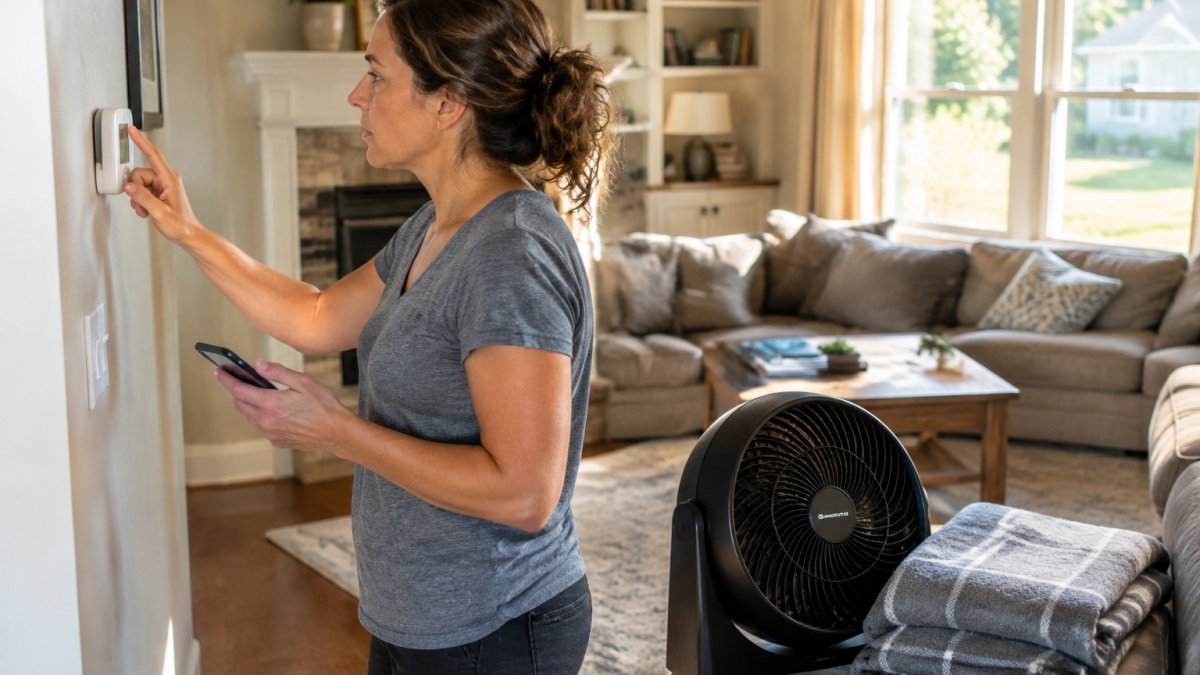
For more safety steps, read what to do when your HVAC fails.
When the Repair Can't Be Finished in One Visit
Sometimes the first visit ends without a working system. A part may need to be ordered, an intermittent fault may require more testing, or the equipment's condition may make replacement worth considering.
Before the technician leaves, ask:
- Is any temporary operation safe? Do not assume the system can run while you wait for parts.
- What is the expected parts timeline? Ask when availability can be confirmed and how a return visit will be scheduled.
- Does repair or replacement make more sense? Have the technician explain the condition of the equipment and the work each option involves.
Regular maintenance cannot prevent every breakdown, but it can help identify developing problems. Ask about a maintenance plan and seasonal AC and furnace checks.
Request Emergency HVAC Service
The total time for emergency HVAC repair includes more than the repair itself. Technician availability, diagnosis, and parts all affect when your system can safely run again.
If your heat or AC has stopped working, contact Ricotta Heating & Air, a family-owned company based in Hillsboro and serving Jefferson County. Describe the symptoms, mention any safety concerns, and ask about current service availability.
Have your equipment model number handy if it is safely accessible. Knowing what happened and when it started helps the technician prepare.
Frequently Asked Questions
How long does an HVAC repair take from the moment I call?
Your total wait includes dispatch, travel, diagnosis, repair, and testing. Ask about arrival availability when you call. A repair timeline is easier to estimate once the technician identifies the problem and checks parts availability.
Is emergency HVAC service more expensive than a scheduled visit?
Charges depend on the service and scheduling arrangements. Ask about diagnostic charges and any after-hours fees before dispatch, then review the repair estimate before authorizing work.
Can emergency HVAC repairs be completed in one visit?
Some can. A failed capacitor or clogged condensate drain may be addressed during the first visit if the needed parts and tools are available. Major component failures, special-order parts, or problems that need more testing can require another appointment.
What should I do while waiting for an HVAC technician?
If you smell gas, leave without operating switches and call your gas utility and 911 from outside. For smoke or fire, evacuate and call 911. Otherwise, turn malfunctioning equipment off at the thermostat if safe, keep children and pets away, and note the symptoms. Move to a safely heated or cooled location if indoor temperatures become unsafe.

This article was written with AI assistance and edited for Hillsboro and Jefferson County homeowners by Ricotta Heating & Air. For advice about your own system, call (314) 333-5900.