
Furnace Repair or New System? | Jefferson County, MO
Quick Summary
Furnace repair costs depend on what failed, how much work is needed, and whether the right parts are available. For Jefferson County homeowners, a written diagnosis and an itemized estimate are more useful than a statewide average.
- Compare estimates for the same repair, not just the bottom-line totals.
- Ask whether travel, diagnostic work, or after-hours service adds to the bill.
- A dirty flame sensor may need cleaning rather than replacement.
- A suspected cracked heat exchanger needs professional evaluation before the furnace runs again.
- Weigh the repair against the furnace's condition, repair history, and a written replacement estimate.
Contact Ricotta Heating & Air to discuss your furnace problem and request an estimate.
Request a Furnace EstimateTable of Contents
- What Affects Furnace Repair Costs in Missouri
- Repair Costs by Failed Part
- What a Furnace Repair Estimate Should Include
- Furnace Repair vs. Replacement: How to Decide
- Emergency Furnace Repair and Seasonal Pricing
- Furnace Repair Financing When the Bill Is Unexpected
- Request a Furnace Repair Estimate
- Frequently Asked Questions
What Affects Furnace Repair Costs in Missouri
Two furnaces with the same symptom can need very different repairs. A furnace that blows cold air might have an ignition problem, an airflow restriction, or a control issue. The symptom alone does not tell you what the work will cost.
A useful estimate explains the diagnosis, the parts needed, and the labor involved. Without that detail, it is hard to know whether two contractors are proposing the same fix.
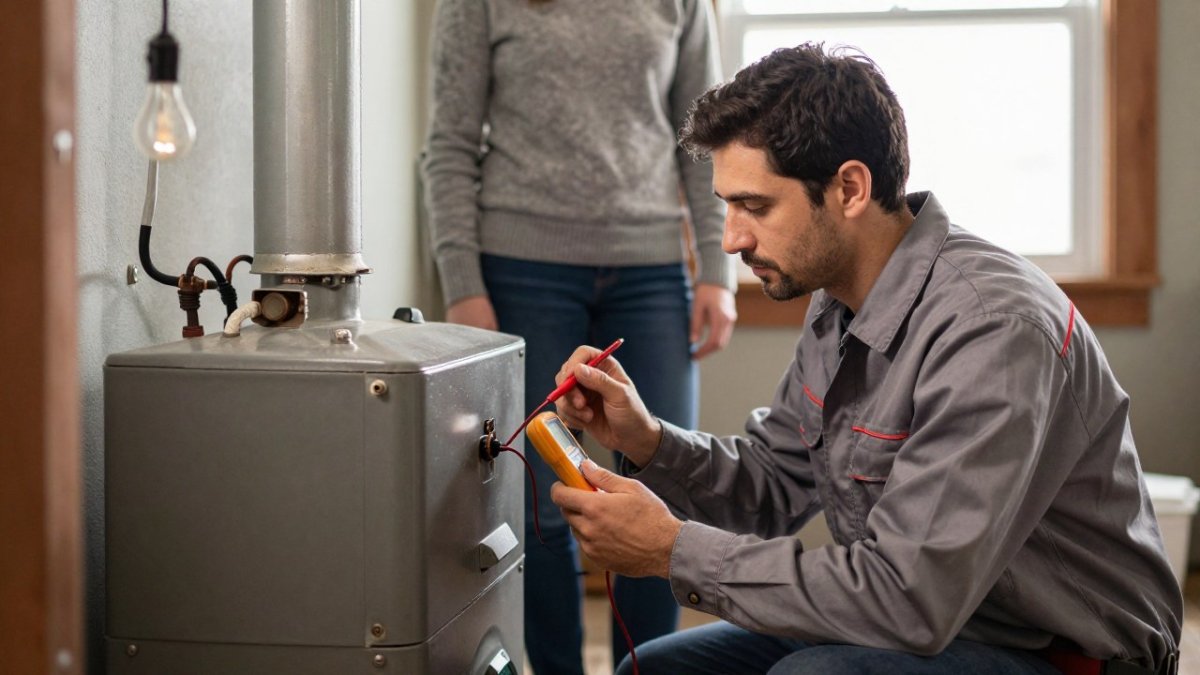
Comparing Repair Estimates Across Missouri
A repair estimate from another Missouri city may not reflect the work your home needs. Labor, access, travel, equipment condition, and parts availability can all affect the total. Location alone is not enough to predict the bill.
| Area | How to Compare | Estimate Detail to Request | Factors to Check |
|---|---|---|---|
| St. Louis metro | Compare the same diagnosis and repair scope | Parts and labor breakdown | Equipment access and diagnostic work |
| Jefferson County and South St. Louis County | Use an estimate for your address and equipment | Any travel or service-call charges | Travel requirements and furnace condition |
| Kansas City metro | Do not assume another metro area's quote applies | Exact replacement part and labor scope | Equipment model and parts availability |
| Springfield and southwest Missouri | Compare the work included, not a regional average | Diagnostic and repair charges | Service area and appointment type |
| Columbia and Jefferson City | Check whether quotes cover the same work | Testing and additional work included | System condition and installation access |
| Rural Missouri | Confirm service availability for the address | Any trip charges or return-visit fees | Travel and parts delivery requirements |
A difficult-to-reach furnace or a problem that takes more testing can require more labor. Ask the contractor to explain those details rather than relying on a published average.
What a Repair Estimate Includes
Before comparing quotes, confirm that each includes the diagnosis, required parts, labor, and any additional fees. Ask whether the diagnostic charge is separate or applied toward the repair.
A single total is not automatically a problem, but it needs a clear description of the work. Get that scope in writing before approving the repair.
Emergency, Weekend, and Seasonal Pricing
Missouri's cold winters can make a furnace breakdown urgent, and demand may rise during a hard freeze. Ask about scheduling and any after-hours charges before booking. Planning maintenance in early fall gives you a chance to address problems before heating season, but it does not guarantee a lower bill or prevent every breakdown.
If your heat stops working, contact Ricotta about furnace repair availability. Describe the symptoms and ask what to do safely while waiting for service.
Repair Costs by Failed Part
The failed component is a major part of the estimate. Cleaning a sensor is different work from replacing a motor or heat exchanger. The furnace model, access, and testing needed also matter.
| Component or Problem | Possible Work | What the Estimate Should Clarify | What Affects the Bill |
|---|---|---|---|
| Flame sensor | Clean or replace the sensor after testing | Why cleaning or replacement is needed | Sensor condition, access, and testing |
| Hot-surface igniter | Replace a failed igniter | The correct part for the furnace | Part availability and burner-compartment access |
| Thermocouple on a standing-pilot furnace | Replace a failed thermocouple | Findings from pilot-system checks | Part availability and pilot assembly condition |
| Thermostat | Repair wiring or replace the thermostat | Whether the problem is in the thermostat or wiring | Thermostat type, compatibility, and wiring condition |
| Loose connection or damaged wiring | Repair the connection or wiring and test operation | The location and cause of the fault | Diagnostic time and extent of damage |
| Pressure switch | Check the draft system; replace the switch if it has failed | Whether venting or drainage is causing the fault | Testing, vent condition, and required parts |
| Draft inducer motor | Replace the failed motor or assembly | Which components are included | Part availability and access |
| Blower motor | Replace the failed motor or related component | Motor type and any related airflow problems | Motor design, access, and setup requirements |
| Control board | Replace a failed board after testing | How the board failure was confirmed | Board availability and related electrical faults |
| Heat exchanger | Evaluate replacement of the exchanger or furnace | Evidence of damage and required safety checks | Part availability, labor, and overall furnace condition |
Keep these differences in mind when reviewing the estimate:
- Sensors and igniters: Ask what testing confirmed the failure and whether cleaning is appropriate.
- Motors and control boards: Part selection matters. Ask whether related electrical or airflow problems also need attention.
- Heat exchangers: A crack can create a carbon monoxide hazard. Do not run the furnace until a qualified technician has evaluated it and confirmed it is safe to operate.
A general repair average combines very different jobs. Your written estimate should reflect the actual failure, not a broad category labeled “furnace repair.”
How the Failed Part Affects the Decision
A major component failure deserves a closer look at the whole furnace. Ask whether the rest of the equipment is in sound condition and whether replacement parts are readily available. An isolated problem on a well-maintained furnace is a different decision from another major failure on a worn system.
On systems that use the furnace blower for air conditioning, blower problems can also affect comfort during Missouri's humid summers. Consider the shared equipment when comparing repair and replacement options.
What a Furnace Repair Estimate Should Include
The estimate should state the diagnosis, the parts needed, the labor involved, and the total, including applicable fees. It should also explain what testing will be done after the repair.
Ask the technician to show you the findings behind the recommendation. A fault code can point toward a problem, but it does not always prove that the named part has failed.
If you are unsure whether you need service, our guide to the 7 warning signs your furnace needs repair explains symptoms worth calling about.
PO Box 142, Hillsboro, MO 63050
View mailing address on mapFurnace Repair vs. Replacement: How to Decide
Start with safety, then consider the furnace's condition, repair history, and the work each option includes. Age matters, but it should not be the only reason to replace a furnace.
Use these questions to guide the discussion:
- Repair: Is the problem isolated, and is the rest of the furnace in good condition? A targeted repair may make sense.
- Consider replacement: Are major components damaged, failures recurring, or parts difficult to obtain? Compare a repair estimate with a complete installation estimate.
- Plan ahead: If the furnace is safe and the current problem is minor, repairing it may give you time to plan a replacement. Do not postpone an unresolved safety issue.
Replacement involves more than the furnace itself. Equipment size, fuel type, efficiency, venting, and installation work all affect the scope. If you read an outside furnace replacement cost guide, use it to prepare questions—not as a quote for your home.
You can request an HVAC replacement estimate and compare the proposed work with the repair option side by side.
Emergency Furnace Repair and Seasonal Pricing
Weekend, holiday, and after-hours service may have different charges from a regular appointment. Ask about those charges and the diagnostic fee before scheduling. Do not assume every contractor uses the same pricing policy.
If the house is losing heat, explain whether anyone is especially vulnerable to the cold. Ask about current availability and safe temporary heating options. Never use an oven, outdoor grill, or generator indoors for heat.
If you smell gas or a carbon monoxide alarm sounds, leave the building immediately. Call the gas utility or emergency services from outside, and do not reenter until responders say it is safe.
Furnace Repair Financing When the Bill Is Unexpected
If financing is available, compare the annual percentage rate, repayment term, fees, and total amount repaid—not just the monthly payment. Check whether a promotional offer involves deferred interest and whether early repayment carries a penalty.
If you are considering replacement, our guide to choosing financing for HVAC system replacement explains what to look for in the terms.
Request a Furnace Repair Estimate
Ricotta Heating & Air is a family-owned company serving Jefferson County and South St. Louis County. When you contact us, describe what the furnace is doing, any fault code you can see without removing panels, and whether the problem has happened before.
You can request furnace repair service and ask about scheduling, diagnostic charges, and the estimate process.
A furnace that repeatedly starts and stops or blows cold air needs a diagnosis before you spend money on parts. Ask what failed, what caused it, and how the proposed repair addresses the problem. That gives you a sound basis for deciding whether to repair now or plan a replacement.
Frequently Asked Questions
How much does furnace repair typically cost in Missouri?
There is no single useful price for every repair. The failed part, furnace model, labor, access, and appointment type all affect the bill. Ask for a written estimate that explains the work and separates parts, labor, and additional charges.
Is it cheaper to repair or replace a furnace?
An isolated repair may cost less upfront than replacement, but the furnace's condition and repair history matter. For a major failure, compare both options in writing. A cracked heat exchanger requires a safety evaluation and a discussion of exchanger or furnace replacement—not continued operation while you decide.
Can I finance an unexpected furnace repair?
Ask whether financing is available for the proposed work and what approval requirements apply. Compare the interest rate, fees, repayment term, and total repayment amount. Read any promotional terms carefully before signing.
How do I know if a furnace repair estimate is reasonable?
Look for a documented diagnosis, a clear repair scope, and an explanation of parts, labor, and fees. Compare another estimate for the same work if you are unsure. If replacement is recommended without evidence of the problem, ask for the findings or get a second opinion.
Does homeowners insurance cover furnace repairs?
Coverage depends on your policy and the cause of the damage. Ordinary wear and mechanical breakdown are generally excluded from standard homeowners coverage, while damage from a covered event may be treated differently. Ask your insurer about your policy, exclusions, and any applicable endorsements before assuming a repair is covered.

This article was written with AI assistance and edited for Hillsboro and Jefferson County homeowners by Ricotta Heating & Air. For advice about your own system, call (314) 333-5900.