
Furnace Not Heating? 5 Quick Checks for Homeowners
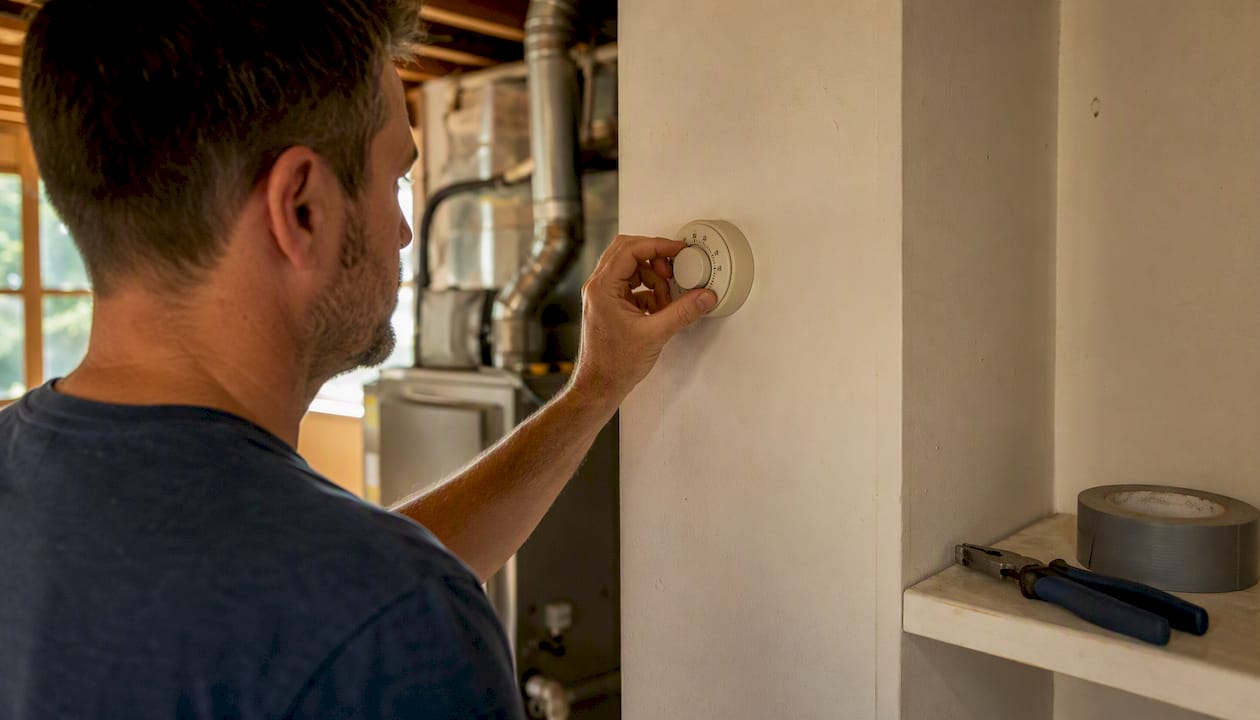
If your furnace isn’t heating, start here: check your thermostat mode and setpoint, confirm the furnace power switch is on, inspect your air filter, verify the gas shutoff valve is open, and look for error codes on the control board. According to Carrier, these five checks resolve the majority of no-heat calls before a technician ever needs to show up.
Run through this checklist first — most steps take under two minutes each:
- Thermostat: Set to HEAT mode, setpoint at least 3°F above current room temperature, fan set to AUTO.
- Power switch: The wall switch near your furnace (looks like a light switch) must be ON.
- Circuit breaker: Check your panel for a tripped breaker labeled “furnace” or “air handler.”
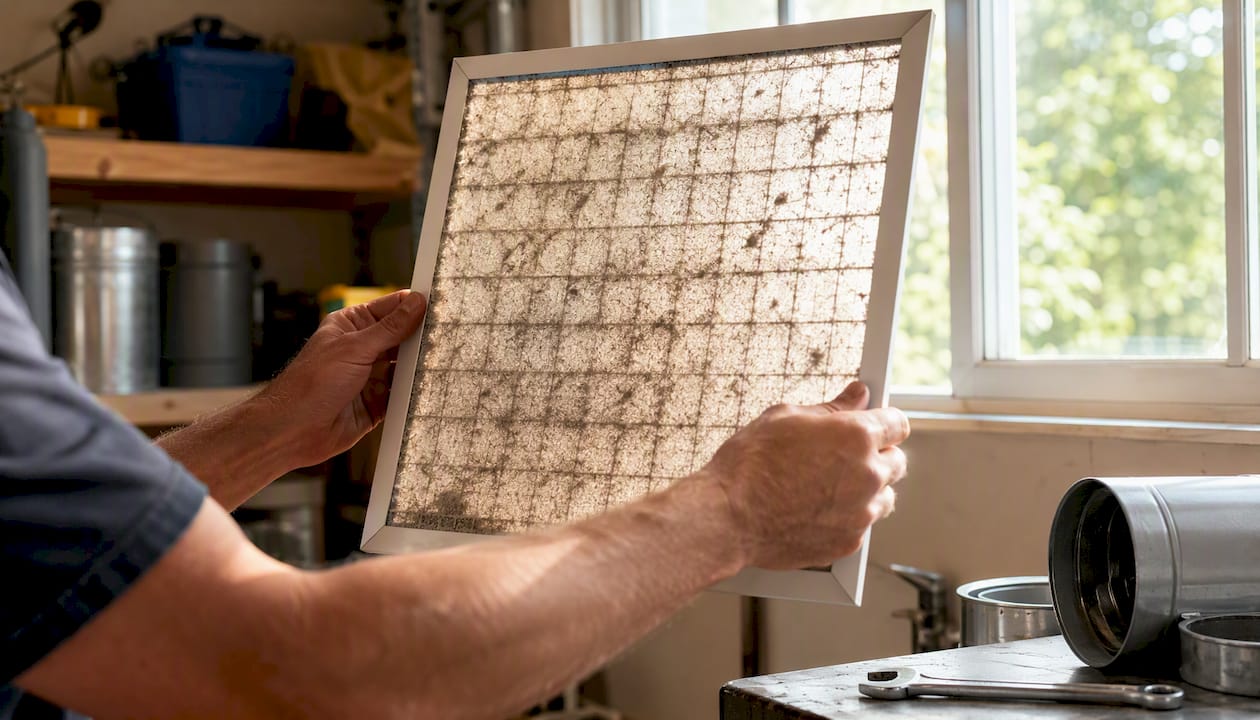
- Air filter: Pull it out. If it’s gray and clogged, replace it before anything else.
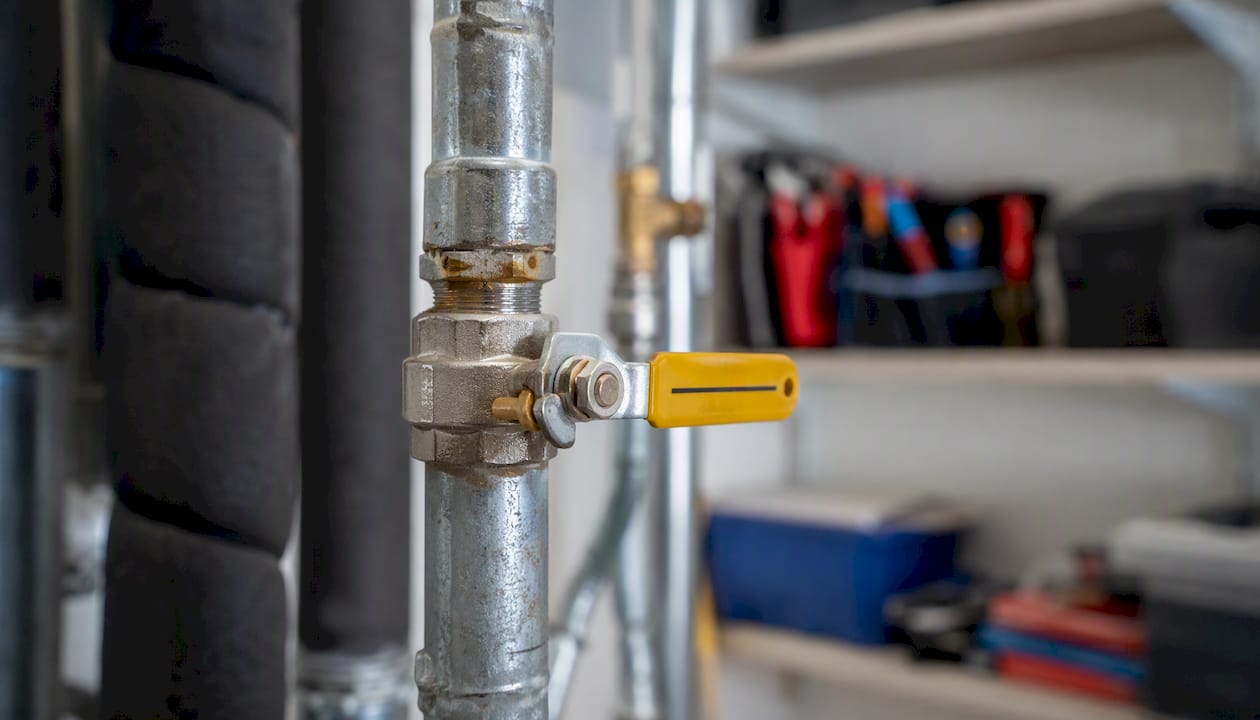
- Gas valve: The handle on the gas line should be parallel to the pipe, not perpendicular.
- Error codes: Look at the small LED on your furnace’s control board — blink patterns are your first diagnostic clue.
IMPORTANT SAFETY RULE: If you smell gas or your carbon monoxide alarm sounds, do not touch the furnace. Leave the house immediately, leave the door open, and call 911 or your gas utility from outside. Do not re-enter until emergency services clear the home.
Organizations like ASHRAE set indoor air quality and comfort standards that depend on a functioning heating system. Brands like Carrier and Trane build diagnostic tools directly into their control boards to help homeowners and techs identify faults fast. Ricottaheatingandair has handled these exact calls across St. Louis and Jefferson County for 50 years — and the five checks above are where every service visit starts.
Key Takeaways
A furnace not heating almost always traces back to one of five causes: thermostat settings, a power interruption, a clogged filter, a gas supply issue, or a component failure that a technician can diagnose from your error codes.
| Point | Details |
|---|---|
| Start with the basics | Check thermostat mode, power switch, breaker, and filter before anything else — these fix most no-heat calls. |
| Gas or CO alarm = evacuate | If you smell gas or a CO alarm sounds, leave immediately and call 911; never troubleshoot under these conditions. |
| Dirty filter is the top cause | A clogged filter trips the limit switch and shuts burners down; replace it before calling for service. |
| One reset is fine; two means call | A single power cycle clears lockouts, but repeated lockouts signal an underlying fault needing a technician. |
| Ricottaheatingandair for St. Louis | Ricottaheatingandair serves St. Louis and Jefferson County with same-day emergency furnace repair and no-upsell diagnostics. |
Table of Contents
- Why your furnace isn’t heating: safe checks you can do right now
- Key furnace parts that commonly fail — and how to spot them
- When to stop troubleshooting and call a professional
- Ricottaheatingandair’s 6-step diagnostic order
- How to check and test your blower motor and belts
- Why a clogged condensate drain stops your high-efficiency furnace
- How your filter type affects heating efficiency
- What most homeowners get wrong about preventing no-heat emergencies
- Ricottaheatingandair is ready when your furnace isn’t
- Sources and further reading
Why your furnace isn’t heating: safe checks you can do right now
Most homeowners can resolve a no-heat situation in 5–15 minutes without any tools beyond a screwdriver. Here’s how to work through each check methodically.
Thermostat
Your thermostat is the most overlooked culprit. Confirm the mode reads HEAT (not COOL or OFF), and set the target temperature at least 3–5°F above what your room thermometer reads. If the display is dim or blank, swap the batteries — a dead thermostat won’t call for heat no matter what. Also check the fan setting: if it’s set to ON instead of AUTO, the blower runs continuously and pushes unheated air through your vents, which feels exactly like a heater not heating. Switching fan to AUTO often fixes this complaint immediately.
Pro Tip: Don’t place a lamp, TV, or space heater near your thermostat. Heat sources nearby trick the sensor into thinking the room is warmer than it is, so the furnace never gets the signal to run.
Power
Locate the furnace power switch — it’s usually mounted on the wall near the unit or on the furnace itself and looks like a standard light switch. Make sure it’s flipped ON. Then check your electrical panel for a tripped breaker. A tripped breaker sits in the middle position between ON and OFF; push it fully to OFF first, then firmly back to ON. Carrier notes that a tripped breaker or an off power switch is one of the most common causes of a completely unresponsive furnace.
Also check the door interlock switch — a small plastic button on the furnace cabinet that cuts power when the access panel is open or not seated properly. Press the panel firmly until it clicks.
Air filter
Pull your filter out and hold it up to a light. If you can’t see light through it, it’s overdue for replacement. A clogged filter is like trying to breathe through a pillow — your furnace strains for airflow, overheats, and trips a safety switch called the limit switch, which shuts the burners down. The Cooling Company confirms that a dirty filter is the single most common homeowner-fixable cause of no-heat complaints. Filters are affordable and easily available at hardware stores.
Gas supply
Find the gas shutoff valve on the supply line leading to your furnace. When the handle is parallel to the pipe, gas is flowing. When it’s perpendicular (crosswise), it’s shut off. If someone closed it for maintenance and forgot to reopen it, that’s your answer.
Reset the furnace
A simple power cycle clears many control-board lockouts. Turn the furnace power switch OFF, wait 30 seconds, then turn it back ON. Carrier confirms this is an acceptable first step. If the furnace locks out again within a few minutes, there’s an underlying fault — don’t keep resetting. That’s the signal to call a pro.
What to check when the blower runs cold
- Short cycling: — If the furnace lights, runs for 30–60 seconds, then shuts off and repeats, that’s short cycling. Common causes include a dirty flame sensor, a clogged filter, or an overheating limit switch.
Trane’s troubleshooting guidance confirms that blower-running/no-heat situations most often trace back to fan settings, airflow restrictions, or ignition and flame-sensing failures.
DIY vs. pro line: Checking the fan setting, replacing a filter, and reading error codes are all safe DIY steps. Cleaning a flame sensor is within reach for a confident homeowner with the right instructions. Replacing a hot surface igniter, testing a gas valve, or diagnosing a cracked heat exchanger requires a licensed technician.
SAFETY: Yellow, lazy, or flickering flames — instead of a crisp blue flame — can indicate incomplete combustion or a cracked heat exchanger. Soot around the burner area is another red flag. Shut the furnace off and call a pro immediately.
Key furnace parts that commonly fail — and how to spot them
Understanding what each component does makes troubleshooting faster and helps you describe the problem clearly when you call for service.
| Component | Common symptom | DIY check |
|---|---|---|
| Air filter | Short cycling, weak airflow, limit-switch trips | Inspect and replace — DIY |
| Thermostat | No call for heat, wrong mode, blank display | Check settings, replace batteries — DIY |
| Hot surface igniter | No ignition, no flame, error code | Visual inspection through sight glass — DIY; replacement = pro |
| Flame sensor | Burner lights then shuts off in seconds | Cleaning with fine steel wool — DIY if comfortable; replacement = pro |
| Inducer motor | Loud humming or no startup sound | Listen for startup — pro diagnosis |
| Pressure switch | Furnace won’t start, error code | Check for blocked condensate or cracked hose — DIY visual; replacement = pro |
| Limit switch | Short cycling, furnace shuts off before reaching setpoint | Check for dirty filter first — pro if filter is clean |
| Blower motor / capacitor | Weak or no airflow, humming without spinning | Listen and feel at vents — pro diagnosis |
| Gas valve | No flame, gas smell | Visual valve position only — pro diagnosis |
| Control board | Multiple faults, no response, LED codes | Note blink pattern — pro diagnosis |
Pro Tip: A dirty flame sensor is the most common paid service call for a furnace that lights briefly then shuts off. The sensor is a metal rod that sits in the burner flame; carbon buildup insulates it from detecting the flame, so the control board shuts the gas off as a safety measure. If you’re comfortable working around the furnace with the power off, you can gently clean the rod with fine steel wool or a dollar bill. Many homeowners skip a service call entirely with this one step.
When to stop troubleshooting and call a professional
Some situations require a licensed HVAC technician — not because the repair is complicated, but because the risk of getting it wrong is too high.
Emergency red flags — stop and call now
If you smell gas or your CO alarm activates, leave the house immediately and call 911 or your gas utility from outside. Other immediate red flags include visible soot around the furnace, yellow or orange lazy flames, smoke, or a breaker that trips every time you reset it.
Call within 24–48 hours
- Ignition failure (furnace attempts to start but never lights after one reset)
- Blower motor running but no heat after filter replacement and fan-setting check
- Error codes that don’t clear after a single power cycle
- Furnace short cycling more than 3–4 times per hour
Monitor and schedule routine service
- Slightly reduced heat output with a clean filter and correct thermostat settings
- Occasional error codes that clear on their own and don’t repeat
Typical repair cost ranges
These are national ballpark figures to help you budget — actual costs vary by market, brand, and labor rates.
| Repair | Typical range |
|---|---|
| Flame sensor cleaning | $75–$150 |
| Hot surface igniter replacement | $150 |
| Blower motor replacement | $300 |
| Control board replacement | $300 |
| Gas valve replacement | $200 |
| Condensate drain cleaning | $75–$200 |
Repair vs. replace: If your furnace is over 15–20 years old, requires a repair costing more than half the price of a new unit, or has had multiple component failures in a single season, replacement often makes more financial sense. A new high-efficiency furnace (AFUE 95%+) can cut heating costs meaningfully compared to an aging 80% AFUE unit.
Pro Tip: Ask your technician for the AFUE rating of your current furnace before approving a major repair. If it’s below 80%, the math on replacement often wins — especially in St. Louis winters.
Ricottaheatingandair’s 6-step diagnostic order
This is the exact sequence Ricottaheatingandair technicians follow on every no-heat call in St. Louis and Jefferson County. Running through it yourself before calling saves time and gives the dispatcher useful information.
- Thermostat check — (2 minutes) — Confirm HEAT mode, setpoint 3–5°F above room temp, fan on AUTO, fresh batteries. Note the thermostat model and any error messages displayed.
- Note error codes and call Ricottaheatingandair — Write down or photograph the LED blink pattern. When you call, report: what you heard, what you saw, which step failed, and the blink code. This cuts diagnostic time significantly.
Ricottaheatingandair brings 50 years of local experience and 150+ five-star Google reviews to every service call in St. Louis and Jefferson County. For urgent situations, the emergency furnace repair line is available for same-day dispatch.
Pro Tip: Take a short video on your phone of the furnace attempting to start. The sound of the inducer, the glow of the igniter, and any error-code blinks are all visible in a 30-second clip — and it gives your technician a head start before they arrive.
How to check and test your blower motor and belts
The blower motor pushes heated air through your ducts. When it fails or weakens, you get little to no airflow even if the burners are firing normally.
Start with a simple test: hold your hand over a supply register when the furnace is running. Weak or barely detectable airflow points to the blower, not the burners. A humming sound from the furnace cabinet without airflow often means the motor is trying to run but the start capacitor has failed — the capacitor gives the motor its initial torque. Capacitor replacement is a relatively low-cost repair ($75–$200 in most markets) but requires a technician because capacitors store a dangerous electrical charge even when power is off.
Older furnaces (pre-2000s) sometimes use belt-driven blowers with a rubber belt connecting the motor to the blower wheel. Inspect the belt through the access panel: a cracked, frayed, or snapped belt is visible and is a straightforward replacement. Newer furnaces use direct-drive motors with no belt to check.
If the motor runs but airflow is still weak, the blower wheel itself may be caked with dust. A dirty wheel loses efficiency the same way a fan blade coated in grime does. Cleaning the wheel is a DIY task with the power off, though it requires removing the blower assembly on most units.
Why a clogged condensate drain stops your high-efficiency furnace
If your furnace has an AFUE rating of 90% or higher, it’s a condensing furnace — it extracts so much heat from combustion gases that those gases cool and condense into water inside the heat exchanger. That water drains out through a condensate line, usually a white PVC pipe running to a floor drain or utility sink.
When the condensate line clogs (algae, debris, or a frozen outdoor section in winter), water backs up into the furnace. A float switch or pressure switch detects the backup and shuts the furnace down to prevent water damage. The furnace simply stops heating — no dramatic failure, no error code on some models, just no heat.
Clearing a condensate drain is a DIY task. Locate the drain line, disconnect it at the furnace, and flush it with a mixture of warm water and a small amount of white vinegar. A wet/dry shop vac pulled over the drain outlet clears most clogs in under a minute. If the line runs outdoors and temperatures have been below freezing, the outdoor section may be frozen solid — wrapping it with pipe insulation prevents this from recurring.
Check the condensate trap (a U-shaped section of the drain line) as well. It can dry out in summer and crack in winter, causing a pressure switch fault that mimics other failures.
How your filter type affects heating efficiency
Not all filters are equal, and the wrong choice can cause the same no-heat symptoms as a dirty one.
Fiberglass filters (MERV 1–4): Thin, inexpensive, and designed to protect the blower from large debris. They do almost nothing for air quality but create minimal airflow restriction. Change monthly.
Pleated filters (MERV 8–13): The standard recommendation for most homes. They capture dust, pollen, and pet dander without significantly restricting airflow. A MERV 11 pleated filter is a solid balance between filtration and furnace performance. Change every 60–90 days.
High-MERV and HEPA-style filters (MERV 14–16+): These capture very fine particles but create significant airflow resistance. Many residential furnaces aren’t designed for filters above MERV 13 — forcing a high-MERV filter into a standard system can cause the exact same overheating and limit-switch trips as a clogged filter. Check your furnace manual or ask your HVAC technician before upgrading to a high-MERV filter.
Electronic air cleaners: These use electrostatic charge to capture particles and require periodic cleaning of the collection plates rather than filter replacement. When the plates are dirty, airflow drops and heating efficiency suffers.
The single most important filter habit: set a recurring phone reminder to check your filter every 30 days. A filter that looks fine in October can be completely clogged by December if you have pets or run the system heavily.
What most homeowners get wrong about preventing no-heat emergencies
The conventional wisdom says “get a tune-up every fall” — and that’s true, but it misses the real reason most emergency calls happen. The homeowners who call at 10 PM on a January night aren’t the ones who skipped their annual service. They’re the ones who ignored a small warning sign for weeks: a furnace that was short cycling, a filter they hadn’t checked since last spring, or a thermostat with batteries that had been flashing “low” for a month.
The dirty flame sensor is a perfect example. It’s a $0 fix if you catch it early — a few minutes with fine steel wool. Left alone, it causes repeated lockouts, which stress the control board, which eventually fails. A $0 cleaning becomes a $400 board replacement because the warning signs weren’t acted on.
The other thing homeowners underestimate is thermostat placement. A thermostat on an exterior wall, near a drafty window, or in a hallway that never gets direct heat will misread your home’s actual temperature. The furnace either runs too long or not enough, and neither situation is comfortable or efficient. Moving a thermostat — or upgrading to a smart model that averages readings from multiple sensors — is one of the highest-return HVAC improvements most homes can make.
Preventive maintenance isn’t just about catching worn parts. It’s about a technician noticing that your condensate line has algae starting to build, or that your blower wheel is 30% coated in dust, before either one causes a midnight failure. Ricottaheatingandair’s maintenance plans exist precisely for this reason.
Ricottaheatingandair is ready when your furnace isn’t
When the five-minute checklist doesn’t solve it, you need a technician who will tell you exactly what’s wrong — not sell you a part you don’t need.
Ricottaheatingandair has served St. Louis and Jefferson County homeowners for 50 years with honest diagnostics and no-pressure recommendations. Whether you need same-day emergency furnace repair or a scheduled diagnostic visit, the team arrives knowing what to look for — especially when you’ve already run through the checklist above and can tell them exactly what you observed. With 150+ five-star Google reviews and service across the St. Louis area, Ricottaheatingandair is the local team that shows up, diagnoses accurately, and fixes it right. Call now or schedule online to get your heat back on.
Sources and further reading
The following sources informed the troubleshooting guidance in this article. Each covers a specific area in more depth if you want to go further.
- Troubleshooting a furnace | Carrier
- Furnace Not Blowing Hot Air? Get Help Now — Trane
- Furnace not turning on? — Carrier
- Why Is My Heat Not Working? 5-Minute Triage Checklist | The Cooling Company
- Furnace Not Heating: Causes, Diagnostic Order, and What to Do First - Thermostat & HVAC Helpers
- Thermostat says heat on but no heat: 14 causes to check | HVAC Base
- Why is heat not coming out of vents? (Troubleshoot Guide) — AllianceServicePros
- No Heat in the House? Troubleshooting Checklist — Heating.live