
Emergency Heating Repair Guide | Jefferson County, MO
Quick Summary
If you smell gas or hear a carbon monoxide alarm, get everyone outside immediately. From a safe distance, call 911 or your gas utility's emergency line. Do not go back inside until emergency responders say it is safe. If you have no heat during freezing weather but no signs of a gas or CO hazard, call for heating service and move somewhere warm if the house becomes unsafe.
- Do not stop to open windows, shut off gas valves, or troubleshoot equipment if you suspect a gas leak.
- Never use an oven, grill, or portable generator indoors for heat.
- Keep space heaters at least three feet from curtains, bedding, and furniture.
- If there are no warning signs, check the thermostat, filter, and furnace power switch before calling.
- Ask about diagnostic fees and get a written repair estimate before approving work.
Table of Contents
- How to Spot a True Heating Emergency Before You Call
- What to Do Safely While You Wait for the Technician
- No Heat in the House: Simple Furnace Checks
- After-Hours Furnace Repair: What to Ask Before Booking
- Furnace Repair Cost: What Affects the Bill
- How to Choose and Verify a Local Emergency Heating Contractor
- Contact Ricotta Heating & Air About Emergency Heating Repair
- Frequently Asked Questions
How to Spot a True Heating Emergency Before You Call
A gas smell or carbon monoxide alarm calls for evacuation and emergency help, not just a furnace appointment. Losing heat can also become urgent when indoor temperatures drop, especially if infants, older adults, or people with medical needs are home.
Ricotta Heating & Air is a family-owned company based in Hillsboro, Missouri, serving Jefferson County and South St. Louis County. During Missouri's cold winters, knowing when to stop troubleshooting matters as much as knowing what to check.
Gas Smells, Carbon Monoxide Alarms, and Other Warning Signs
Some furnace problems are inconvenient. Others can put your household at risk. Do not ignore these signs:
- A rotten-egg or sulfur smell near the furnace or gas line
- A carbon monoxide alarm sounding
- Soot, scorch marks, or an unusually yellow, lazy burner flame
- Repeated clicking followed by a gas odor
- Exhaust, smoke, or persistent burning smells coming from vents
For gas odors or a CO alarm, leave immediately and call for emergency help from outside. Leave and call 911 if you see smoke or signs of fire. For soot, scorch marks, or an abnormal flame without an immediate gas, CO, or fire warning, stop using the furnace and arrange a professional inspection. Do not remove panels to inspect a flame yourself.
The U.S. Consumer Product Safety Commission's guidance on carbon monoxide explains why CO alarms matter: the gas is invisible and odorless. An intermittent chirp may indicate a battery or device problem; check the alarm's instructions only when it is safe. If you cannot tell whether it is a CO warning, leave and call for help.
What to Do Safely While You Wait for the Technician
Safety comes before comfort. If you suspect a gas leak or CO exposure, do not wait inside for a technician. Do not operate switches, use a phone indoors, relight a pilot, or attempt to restart the furnace. Get outside first.
Should You Call Now or Wait Until Morning?
Use the symptoms and indoor conditions to decide your next step:
- Leave and call for emergency help: a gas odor, CO alarm, smoke, or signs of fire. Call from a safe distance outside.
- Stop using the furnace and call promptly: soot, scorch marks, an abnormal burner flame, or exhaust smells. If you suspect gas or CO, leave immediately.
- Call for heating service now: no heat during freezing weather or falling indoor temperatures with vulnerable occupants at home. Arrange a warm place to stay rather than waiting until the house gets dangerously cold.
- Can usually wait for a regular appointment: one chilly room or a minor temperature-control issue, provided the house stays safely warm and there are no warning signs. New loud banging, grinding, or electrical smells should not be left running unchecked.
When in doubt about a gas or CO warning, get outside and call for help.
Safe Steps to Take While You Wait
- Gas or CO warning: get everyone, including pets if you can do so without delay, out of the house. Call 911 or the gas utility's emergency line from a safe distance. Stay out until responders clear the home.
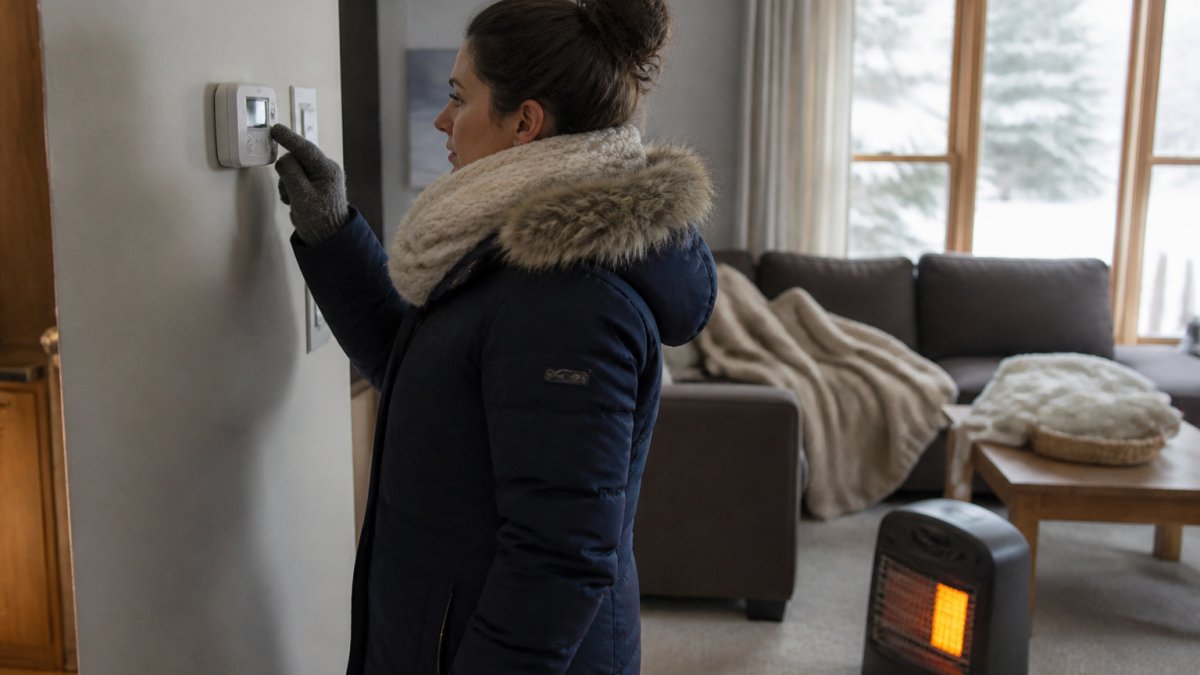
- No heat and no hazard signs: use extra clothing and blankets. Monitor the indoor temperature and arrange somewhere warm to stay if needed.
- Reduce drafts: close windows and exterior doors. Do not block furnace vents, returns, or combustion-air openings. Keep a fireplace damper open while a fire or hot embers remain.
- Protect vulnerable pipes: open sink cabinets along exterior walls to let warmer room air reach plumbing, keeping cleaning products away from children and pets. Follow local utility guidance about dripping faucets during freezing weather.
- Use space heaters carefully: place them on hard, flat surfaces at least three feet from curtains, bedding, and furniture. Plug them directly into wall outlets, not extension cords or power strips. Turn them off when you leave the room or go to sleep.
- Never use an oven or grill for indoor heat. Keep portable generators outdoors, at least 20 feet from doors, windows, and vents, with exhaust directed away from buildings. See the CDC's generator safety guidance.
What to Have Ready When the Technician Arrives
- A description of the problem—no heat, frequent starts and stops, banging, or an odor—and when it began
- Any thermostat error code or a note that the screen is blank
- The furnace make, model, and approximate age, if you already know them
- Details about recent filter changes, power outages, or breaker trips
- A clear path to the equipment and pets secured, once the home is safe to enter
For more guidance, read what to do when your HVAC fails. Never restart equipment after a suspected gas or CO problem until it has been cleared for use.
This table can help you decide what to do next.
| Situation | Urgency | What to Do |
|---|---|---|
| Gas odor or CO alarm | Leave immediately | Call 911 or the gas utility's emergency line from a safe distance outside. |
| Soot, scorch marks, abnormal flame, or exhaust smells | Stop using the furnace and call promptly | Arrange an inspection. Leave immediately if gas, CO, smoke, or fire is suspected. |
| No heat during freezing weather | Call for service now | Monitor indoor conditions and move somewhere warm if necessary. |
| Falling indoor temperature with infants or older adults at home | Call for service now | Arrange a warm place to stay before conditions become unsafe. |
| One room is cold while the rest of the house heats | Can usually wait for a regular appointment | Check for blocked vents and schedule service. |
| Noisy but working furnace | Depends on the noise | Stop using it for new loud banging or grinding. Ask a technician about milder noises. |
| Thermostat does not hold the setting, but heat still runs | Can usually wait if the home stays safely warm | Check settings and schedule service if the problem continues. |
No Heat in the House: Simple Furnace Checks
If there is no gas odor, CO alarm, smoke, or other hazard, start with the thermostat, filter, and power supply. Skip troubleshooting and call for help if anything seems unsafe.
Thermostat, Filter, and Breaker Checks
These checks may help you narrow down the problem:
- Thermostat: Set it to HEAT with the temperature above the room temperature and the fan on AUTO. Replace batteries if your model uses them. A blank screen can also indicate a power or control problem.
- Filter: Turn the system off before checking an accessible filter. Replace it if it is dirty or due for replacement, using the size and type recommended for your equipment. A clogged filter can restrict airflow and trigger a safety shutdown.
- Breaker: Check whether the furnace breaker has tripped, but do not remove the panel cover or touch wiring. If the cause is unknown, or there is heat, buzzing, moisture, or a burning smell at the panel, leave it alone and call a professional. Do not repeatedly reset a tripping breaker.
- Power switch: Check the furnace's nearby service switch, which may look like a light switch. Do not turn it on if someone shut it off for repairs or a safety concern.
If the thermostat stays blank after a battery change, contact an HVAC professional. You can also review thermostat repair and replacement in Jefferson County. For more no-heat checks, see our furnace troubleshooting walkthrough.
After-Hours Furnace Repair: What to Ask Before Booking
Ask whether a technician is available, when they may arrive, and whether the visit includes diagnosis only or possible repairs. An appointment does not necessarily mean the furnace can be repaired that day; parts availability and the cause of the failure matter.
Before booking an after-hours visit, ask about diagnostic charges, additional service fees, and how you will receive updates. Confirm availability directly rather than assuming round-the-clock service.
Furnace Repair Cost: What Affects the Bill
A repair estimate depends on what failed and what it takes to fix it. Ask about the cost of the service visit before booking, then request a written repair estimate after diagnosis.
Three Charges to Ask About
- Diagnostic or trip fee. Ask what the visit includes and whether any diagnostic charge is credited toward an approved repair.
- Parts. Ask which component needs replacement and why. Possible repairs involve parts such as an igniter, flame sensor, control board, blower motor, or gas valve.
- Labor. Ask whether labor is included in the estimate and whether after-hours, weekend, or holiday charges apply.
What Can Affect Repair Costs
- Part type and availability. The failed component and whether it must be ordered can affect the estimate and repair schedule.
- System age and model. Parts availability varies by equipment. Ask whether a compatible replacement is available before deciding on a repair.
- Timing. Some providers charge additional fees outside regular hours. Confirm those charges before booking.
- Access. A furnace in a tight closet, crawl space, or attic may take more time to service safely.
- Equipment condition. Dirt buildup or multiple worn components may require work beyond replacing the first failed part.
Questions to Ask Before You Approve the Work
Ask what failed, how the technician confirmed it, and what the proposed repair includes. Request the diagnostic charge and parts-and-labor estimate in writing. If replacement is recommended, ask why repair is not a reasonable option. A second opinion may help with a major decision, as long as you have a safe place to stay while the heat is off.
How to Choose and Verify a Local Emergency Heating Contractor
Choose a contractor who can explain the diagnosis in plain language. Before booking, ask about applicable local licensing, insurance, experience with your equipment, service availability, and fees.
For a Hillsboro home, confirm that the contractor serves your address and can work on your type of heating system. Have the model number ready if it is safely accessible.
If a contractor recommends replacement, ask, "Can you show me why a repair will not solve this?" You can review our heating and furnace services before contacting us.
Contact Ricotta Heating & Air About Emergency Heating Repair
When your heat stops working, tell Ricotta Heating & Air what happened, whether the indoor temperature is falling, and which safe checks you have already tried. Ask about current availability and what to expect from a service visit.
For a suspected gas leak, CO alarm, or fire, leave and call emergency services first. A heating appointment is not a substitute for emergency help.
Need help with a furnace problem? Request emergency furnace repair and confirm appointment availability.
Frequently Asked Questions
What counts as a heating emergency?
A gas smell, CO alarm, smoke, or signs of fire require immediate evacuation and emergency help. Call from outside at a safe distance. A loss of heat during freezing weather also needs prompt attention, especially with vulnerable people at home.
How soon can a technician arrive for emergency furnace repair?
Availability depends on the provider, workload, weather, and travel conditions. Ask for an arrival estimate and a callback number. Do not assume that emergency service means immediate arrival or a completed repair that day.
What affects the cost of emergency heating repair?
The failed part, labor, access to the equipment, and any after-hours charges can affect the bill. Ask about visit fees before booking and request a written repair estimate after diagnosis.
Can I troubleshoot my heating system before calling a technician?
If there are no hazard signs, check the thermostat settings and an accessible filter. If the furnace still will not run, contact an HVAC professional. Do not attempt gas repairs, bypass safety controls, or repeatedly reset equipment.
A cold house is stressful, but you do not have to guess at the cause. For heating problems in Jefferson County, contact Ricotta Heating & Air to discuss the symptoms and available service appointments. Put safety first, and arrange a warm place to stay if you cannot safely wait at home.

This article was written with AI assistance and edited for Hillsboro and Jefferson County homeowners by Ricotta Heating & Air. For advice about your own system, call (314) 333-5900.