
Furnace Troubleshooting for Winter | Hillsboro, MO
Quick Summary
Common winter furnace problems include no heat, cold air from the vents, constant running, short cycling, and blocked outdoor intake or exhaust pipes. Jefferson County homeowners can check thermostat settings, filters, and airflow, but internal repairs belong to a technician. If you smell gas, a carbon monoxide alarm sounds, or you suspect carbon monoxide exposure, leave immediately without touching switches. Call 911 or your gas utility from outside.
- If there are no safety warning signs, check the thermostat, furnace switch, breaker, air filter, and vents before scheduling service.
- Carbon monoxide has no smell. Headache, dizziness, or nausea affecting several people at once can be a warning sign.
- A furnace that repeatedly shuts off before reaching the thermostat setting may be short cycling.
- Check outdoor intake and exhaust pipes for snow, ice, and debris after winter storms.
- Never thaw a frozen pipe with a torch or heat gun. Shut the furnace off and call a technician.
Table of Contents
- Start With Safety: Warning Signs That Mean Stop Now
- Furnace Troubleshooting: Check the Simple Things First
- Furnace Blowing Cold Air: What Causes It and What to Check
- Furnace Runs Constantly in Winter: Airflow, Filters, and Heat Loss
- Furnace Short Cycling: Why It Starts and Stops
- Winter Checks for Frozen or Blocked Vents and Intake Pipes
- What You Can Check Yourself and When to Call a Technician
- Schedule a Winter Furnace Check With Ricotta Heating & Air
- Frequently Asked Questions
Start With Safety: Warning Signs That Mean Stop Now
Missouri's cold winters put furnaces to work. Before troubleshooting a loss of heat, check for signs that the equipment may be unsafe.
Carbon monoxide has no smell, color, or taste, so you cannot rely on your senses to detect it (CDC). Symptoms can resemble the flu and include headache, dizziness, nausea, and weakness (CDC).
Stop troubleshooting if you notice any of these warning signs:
- A rotten-egg or gas smell near the furnace
- Persistently yellow, flickering, or unstable burner flames
- Soot or dark staining around the furnace or vent
- A carbon monoxide alarm sounding, or people or pets showing possible exposure symptoms
If you smell gas, a carbon monoxide alarm sounds, or you suspect exposure, get everyone outside immediately. Do not operate switches, use a phone indoors, or stop to shut off the furnace. Call 911 or your gas utility from a safe location outside, and do not reenter until responders say it is safe.
Soot or abnormal flames also require professional attention. If there is no gas smell, alarm, or suspected exposure, shut the furnace off and arrange service. Turn the system off before inspecting or replacing its filter.
Furnace Troubleshooting: Check the Simple Things First
If there are no safety warning signs, start with these basic checks. Leave covers over electrical and burner components in place.
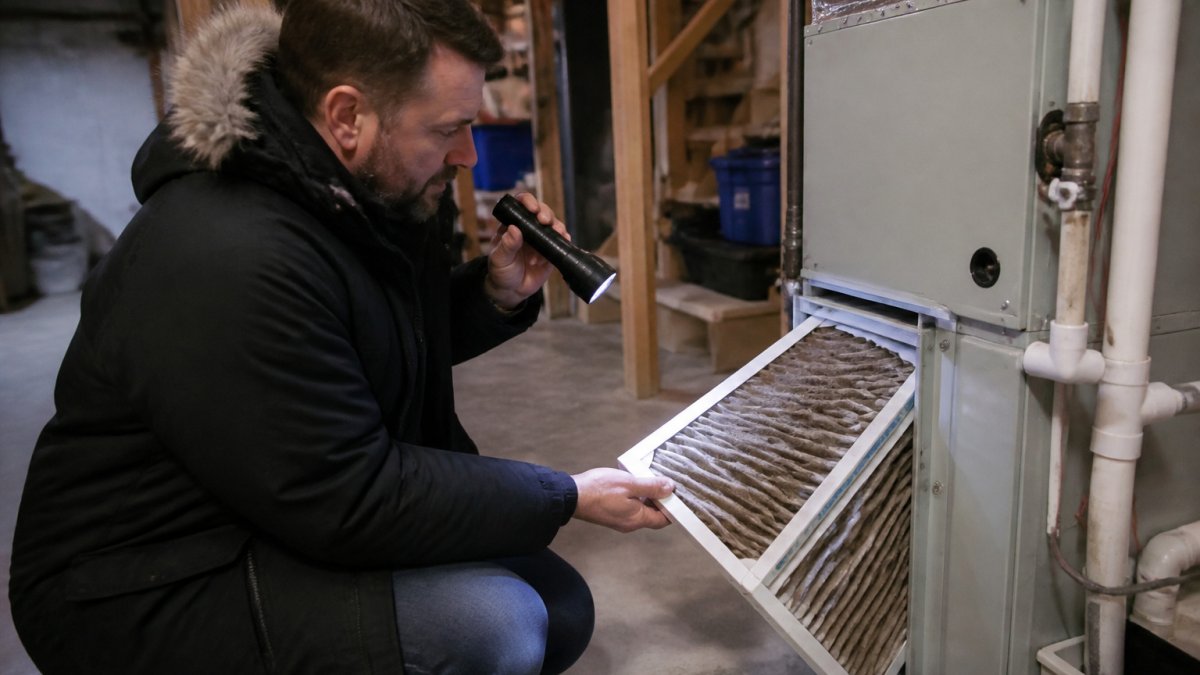
Work through these items in order:
- Check the thermostat. Set it to Heat with the temperature above the current room temperature. Replace the batteries, if applicable, when the screen is dim or blank.
- Check the furnace switch. Look for a switch near the furnace, often in the basement or utility closet. It must be on for the furnace to run.
- Check the breaker. Look for a tripped breaker labeled for the furnace. Do not remove the electrical panel cover or repeatedly reset a breaker.
- Check the air filter. Shut the system off first. Replace a clogged filter with the size and type recommended for your equipment, following the airflow arrow.
- Check the vents. Keep supply registers open and return grilles clear of furniture, rugs, and other obstructions.
A clogged filter restricts airflow and can cause overheating and shutdowns. If the furnace still will not start or keeps shutting off after these checks, schedule service rather than repeatedly restarting it.
Use this checklist to keep track of what you have checked:
| Step | What to Do | Note |
|---|---|---|
| Check the thermostat | Set to Heat, above room temperature | Replace batteries if needed |
| Check the furnace switch | Confirm it is on for operation | Often near the furnace |
| Check the breaker | Look for a tripped furnace breaker | Do not repeatedly reset it |
| Check the air filter | Shut the system off; replace a clogged filter | Use the recommended size and type |
| Check the vents | Open supply registers and clear return grilles | Move furniture and rugs away |
Furnace Blowing Cold Air: What Causes It and What to Check
A brief burst of cool air at startup does not necessarily mean the furnace is broken. Air that stays cool while the thermostat calls for heat needs attention. Learn what causes cold air from a furnace and when to call a technician.
If the air stays cold, check the following without opening burner or electrical compartments:
- Confirm the thermostat is calling for heat. Select Heat and set the temperature above the room temperature. Set the fan to Auto. The On setting runs the blower between heating cycles, which can make the air feel cool.
- Check the air filter. Shut the system off before inspecting it. Restricted airflow can cause the high-limit switch to shut down the burners while the blower continues running.
- Notice whether the burners light. Repeated clicking without ignition, or burners that light and quickly go out, can point to an ignition or flame-sensing problem. Tell the technician what you hear; do not attempt to light the burners yourself.
- Observe flames only through an existing viewing window. Do not remove a burner cover. Persistently yellow or unstable flames need professional inspection, and flame color alone cannot confirm safe operation.
- Look for visible condensate drain problems. A high-efficiency furnace produces water during combustion. A frozen or clogged drain can cause a shutdown. Report visible ice or water leaks to a technician rather than disconnecting the drain.
Burners that light and shut off shortly afterward may have a flame-sensing fault, but a technician needs to test the equipment to identify the cause.
If the thermostat and filter are fine but the air stays cold, schedule service. A technician can test the igniter, flame sensor, limit switch, and gas valve without bypassing safety controls.
Furnace Runs Constantly in Winter: Airflow, Filters, and Heat Loss
During a Jefferson County cold snap, longer heating cycles can be normal. A furnace that runs continuously while the house keeps getting colder needs a closer look.
Possible reasons include:
- A clogged filter restricting airflow
- Closed supply registers or blocked return grilles
- Leaky ducts in unheated attics or crawl spaces
- Heat loss through drafty windows, doors, or gaps around penetrations
Replace a clogged filter with the system off, open supply registers, clear return grilles, and check door weatherstripping.
If the furnace still cannot maintain the set temperature, have a technician check airflow, ductwork, and heating output. Diagnosis should come before any decision about repair or replacement.
Furnace Short Cycling: Why It Starts and Stops
Short cycling means the furnace repeatedly starts and stops before completing a normal heating cycle.
Watch the pattern, not just the clock. Normal run times depend on the equipment, weather, and thermostat settings. Note whether the furnace shuts off before reaching the set temperature and whether the burners or the entire system stop. Share those observations when you call for service.
Possible causes include:
- Overheating from restricted airflow. A dirty filter or blocked return grille can cause the high-limit switch to shut off the burners. The blower may keep running to cool the furnace. Check the filter with the system off and clear blocked grilles.
- Flame sensor problems. If the control cannot confirm a flame, it may shut the burners down shortly after ignition. This can look like short cycling, but it is an ignition-related fault that needs testing.
- Thermostat placement or settings. Direct sunlight, a nearby lamp, or air from a supply register can affect the temperature reading. Check settings against the thermostat manual rather than changing unfamiliar installer settings.
- Oversized equipment. A furnace with more capacity than the house needs may satisfy the thermostat quickly and shut off. A technician should evaluate sizing rather than assuming a replacement part will solve the problem.
If you have a heat pump: Defrost temporarily changes how the system operates. That is different from furnace short cycling, so mention your equipment type when requesting service.
If the furnace continues cycling rapidly after the filter and airflow checks, stop restarting it and arrange an inspection.
Winter Checks for Frozen or Blocked Vents and Intake Pipes
Snow, ice, or debris can obstruct outdoor furnace intake and exhaust openings. A blocked vent can cause a shutdown and create a safety hazard.
After a snowstorm or cold snap, check accessible openings from ground level:
- Gently clear loose snow from around intake and exhaust pipes without damaging or covering them
- Look for frost or ice buildup at the pipe ends
- Check for leaves, debris, or animal nests without reaching into or dismantling the pipes
- Look for visible freezing in accessible condensate drain lines on high-efficiency equipment
If an opening is blocked, a pipe is frozen, or you see damage, shut the furnace off and call a technician. Do not chip ice off the pipes, use a torch or heat gun, or climb onto an icy roof. If you smell gas or suspect carbon monoxide exposure, leave immediately instead of touching equipment.
What You Can Check Yourself and When to Call a Technician
Thermostat settings, filter replacement, and clearing furniture away from vents are homeowner tasks. Gas, electrical, combustion, and internal component repairs are not.
Arrange professional service when:
- The furnace keeps shutting down after you have checked the basics
- You see soot or scorch marks, or hear unusual banging or grinding noises
- The problem involves the igniter, flame sensor, control board, or blower motor
- The furnace needs repeated repairs and you want to compare repair and replacement options
A gas smell, carbon monoxide alarm, or suspected exposure is an emergency—not a routine service call. Leave immediately and call 911 or your gas utility from outside.
For a service visit, note when the problem started, whether it happens constantly or occasionally, and what you have already checked. If an error code is visible without removing a panel, write it down.
Ask the technician to explain the diagnosis and repair options before authorizing work. If replacement is recommended, ask why a repair would not address the problem.
Schedule a Winter Furnace Check With Ricotta Heating & Air
A furnace check before the coldest weather gives you a chance to address problems before relying on the heat every day.
Ricotta Heating & Air is a family-owned company based in Hillsboro, MO, serving Jefferson County and South St. Louis County. If your furnace is showing any of these problems, request service for your heating system.
Missouri's humid summers and cold winters make both cooling and heating upkeep worth planning ahead. Review HVAC maintenance plans and ask how furnace service fits into your yearly schedule. You can also review these winter HVAC preparation steps before cold weather arrives.
Call (314) 333-5900 to discuss scheduling a furnace check.
Frequently Asked Questions
What should I check first if my furnace isn't working?
First, check for safety warning signs. If you smell gas, a carbon monoxide alarm sounds, or you suspect exposure, leave without touching switches and call 911 or your gas utility from outside. Otherwise, confirm the thermostat is set to Heat above room temperature, check its batteries if applicable, and check the furnace switch and breaker. Shut the system off before inspecting the filter. If these checks do not resolve the problem, schedule service.
Why is my heater blowing cold air?
Possible causes include the fan being set to On, restricted airflow from a dirty filter, or an ignition or flame-sensing problem. A brief period of cool air at startup can be normal. If the air stays cold while the thermostat calls for heat, check the settings and filter. If that does not help, shut the system off and schedule service.
Why does my furnace run constantly in winter?
Long heating cycles can be normal in very cold weather. If the house cannot reach the thermostat setting, possible causes include restricted airflow, duct leaks, heat loss, or an equipment problem. Check the filter and keep supply registers and return grilles clear. If the furnace still cannot keep up, contact a technician.
When should I call an HVAC technician for a furnace problem?
Call a technician for repeated shutdowns, ignition failures, soot, scorch marks, unusual noises, or a breaker that repeatedly trips. Leave gas, electrical, and internal component repairs to a professional. If you smell gas, a carbon monoxide alarm sounds, or you suspect exposure, get everyone outside without operating switches and call 911 or your gas utility. Do not wait for a routine service visit.

This article was written with AI assistance and edited for Hillsboro and Jefferson County homeowners by Ricotta Heating & Air. For advice about your own system, call (314) 333-5900.