
Why Your AC Smells Musty (And How to Fix It Fast)
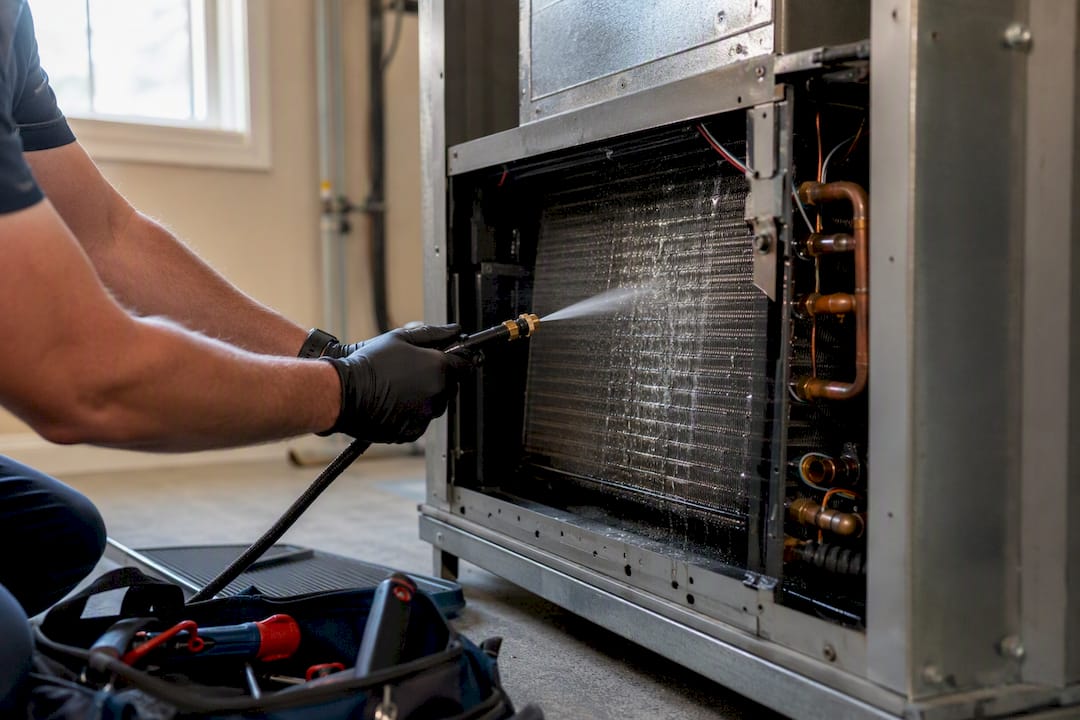
A musty AC smell almost always means mold, mildew, or bacteria feeding on trapped moisture somewhere in the system. Before you assume the worst, try three things: replace or wash the filter, flush the condensate drain line, and empty and clean the drain pan.
Here’s your quick-start checklist:
- Filter: Swap a disposable filter or rinse a washable one if it’s dusty or damp.
- Drain line: Flush the condensate line with a 1:1 mix of distilled white vinegar and water.
- Drain pan: Empty standing water and wipe it down with the same vinegar solution.
Timeline to expect: Improvement often starts within about six hours of finishing these steps. If the smell is still hanging around after a full day of normal operation, you’re likely dealing with something deeper, like a colonized evaporator coil, and it’s time to call in a professional.
Key Takeaways
Most musty AC smells come from trapped moisture feeding mold or bacteria on the coil, filter, or drain pan, and clear up within hours once that moisture is addressed.
| Point | Details |
|---|---|
| Start with the basics | Replace the filter, flush the drain with a vinegar solution, and clean the drain pan first. |
| Watch the timeline | Expect improvement within hours; if the smell lasts past 24 hours, call a professional. |
| Match symptom to cause | Startup-only odor points to the coil; constant house-wide smell often means duct moisture. |
| Don’t ignore red flags | Burning, chemical, or dead-animal smells mean shutting the system off immediately. |
| Prevent recurrence | Ricotta Heating & Air’s maintenance plans cover the quarterly and annual checks that stop odors before they start. |
Table of Contents
- What Causes That AC Smells Musty Feeling in Your Home?
- How Do You Fix a Musty Smell From the Vents Yourself?
- When Should You Call an HVAC Professional?
- Is a Musty AC Smell Actually a Health Risk?
- How Do You Keep Musty Odors From Coming Back?
- What DIY Guides Get Wrong About Musty AC Smells
- Frequently Asked Questions
- Sources
What Causes That AC Smells Musty Feeling in Your Home?
Not every musty smell has the same source, and the timing of the odor tells you a lot. Match your symptom to the likely cause before you start troubleshooting.
- Swampy smell near the indoor unit. This usually points to a clogged condensate drain line and a full drain pan. Standing water breeds mold fast, and it announces itself the moment you walk near the air handler. Flushing the drain typically clears this up.
- Strong musty blast only at startup. That’s classic “dirty sock syndrome,” a nickname HVAC techs use for microbial growth on the evaporator coil. The smell hits hard when the system kicks on, then fades within a few minutes as airflow picks up. This timing pattern is genuinely useful for diagnosis, since it tells you to focus on the coil rather than the ductwork.
- Ongoing dusty, musty scent with weak airflow. A dirty or wet filter is the usual culprit. Think of it like trying to breathe through a damp pillow. Air struggles to pass through, and whatever moisture is trapped in the media starts to smell.
- Persistent, house-wide mustiness. This often means mold or moisture inside the ductwork itself, especially if you’ve noticed damp patches or past water damage nearby.
Rule out anything more serious right away. A burning electrical smell, a sharp chemical or refrigerant odor, or anything resembling a dead animal needs immediate attention, not a DIY weekend project.
How Do You Fix a Musty Smell From the Vents Yourself?
Most musty odors respond well to a few basic DIY steps, as long as you’re consistent and thorough. Here’s the order that works best.
- Check and replace the filter. Pull it out and hold it up to a light. If you can’t see light through it, or if it feels damp, replace it. Washable filters should be rinsed with plain water and fully air-dried before going back in. A wet filter is basically a sponge for mold spores.
- Locate and flush the condensate drain. Find the PVC pipe near your indoor unit, usually capped with a T-shaped fitting. Remove the cap and pour a 1:1 mix of distilled white vinegar and water through it. Let it sit for 30 minutes, then flush with plain water. Do this every few months to keep buildup from forming again.
- Empty and sanitize the drain pan. Wipe out standing water and clean the pan with the same vinegar solution. Check for hairline cracks or rust while you’re at it. A cracked pan won’t hold water properly no matter how clean it is, and it needs replacing.
- Address the evaporator coil, carefully. A manufacturer-approved no-rinse coil cleaner can knock down light microbial buildup. Follow the product directions exactly. If the coil looks heavily coated or the smell doesn’t budge, stop. That’s a job for a pro with the right chemicals and equipment.
- For car AC: Replace the cabin air filter, then run an evaporator cleaner or foam kit through the vents. Finish by running the fan on its own, without the compressor, for several minutes before you park. This dries out the evaporator case and discourages new growth.
Pro Tip: Run your AC on fan-only mode for 10 to 15 minutes after you shut off cooling on hot, humid days. It dries the coil and drain pan before moisture has a chance to sit overnight and turn musty.
When Should You Call an HVAC Professional?
DIY cleaning solves most musty smells, but not all of them. Some situations call for equipment and training that go beyond a vinegar flush.
- The odor is still noticeable after a full 24 hours of normal system operation following your DIY cleaning.
- You can see visible mold growth inside vents, on the coil, or around the air handler.
- The smell is chemical, burning, or otherwise doesn’t match a typical musty or moldy description.
- Your energy bills have spiked alongside the odor, which can signal a bigger airflow or moisture problem.
When a technician shows up, expect a deeper process than what you can do at home. That includes foaming coil cleaners applied under pressure, wet-vac clearing of the drain line, a camera scope through accessible ductwork, and sometimes full drain pan replacement. Severe coil colonization often means the mold has worked its way into corners a household spray bottle simply can’t reach, and leaky ducts pulling in humid air from a crawlspace or wall cavity can keep re-seeding mold no matter how well you clean the unit itself.
Is a Musty AC Smell Actually a Health Risk?
Yes, and it’s worth taking seriously rather than covering up with an air freshener. A musty odor usually signals mold spores and volatile organic compounds circulating through your ductwork, which can aggravate allergies, asthma, and general respiratory irritation, especially in kids, older adults, and anyone with existing lung sensitivity.
If you notice a chemical or burning smell instead of a musty one, turn the system off immediately and ventilate the space. Don’t try to mask any odor with sprays or plug-ins. If anyone in the household develops coughing, wheezing, or headaches that seem tied to the AC running, it’s worth checking with a doctor and temporarily using windows or a portable fan for airflow until the system gets serviced.
How Do You Keep Musty Odors From Coming Back?
Prevention beats troubleshooting every time, and it doesn’t take much effort once it’s a habit. Here’s the schedule that keeps most systems odor-free.
- Monthly to quarterly: Replace your filter every 1 to 3 months depending on the type and how much dust and pet hair your home produces.
- Quarterly: Flush the condensate drain with the vinegar solution and give the drain pan a visual check for cracks or standing water.
- Annually: Schedule a professional coil cleaning and duct inspection, and consider a UV-C light or whole-house dehumidifier if you live somewhere humid.
- Ongoing: Keep indoor humidity between 30% and 50%. A cheap hygrometer from a hardware store will tell you where you stand.
An oversized unit cools too fast and shuts off before it can pull enough moisture out of the air, which sets the stage for the exact microbial growth you’re trying to avoid.* Our guide to humid air from your AC walks through that issue in more detail.
What Ricotta Sees on Musty-AC Service Calls
Ricotta Heating & Air has spent 50 years as a family-owned HVAC company serving St. Louis and Jefferson County, backed by more than 150 five-star Google reviews.
- Most musty-smell calls we run trace back to a clogged drain line or a coil that’s overdue for cleaning.
- Our maintenance plans catch both issues before they turn into a full odor problem or a bigger repair.
- Every visit starts with an honest diagnostic and a clear explanation, no upsell pressure, no guesswork.
What DIY Guides Get Wrong About Musty AC Smells
Most advice on this topic treats every musty smell the same way: flush the drain, change the filter, done. That works often enough to make it the right first move, but it also creates false confidence when the smell doesn’t fully clear.
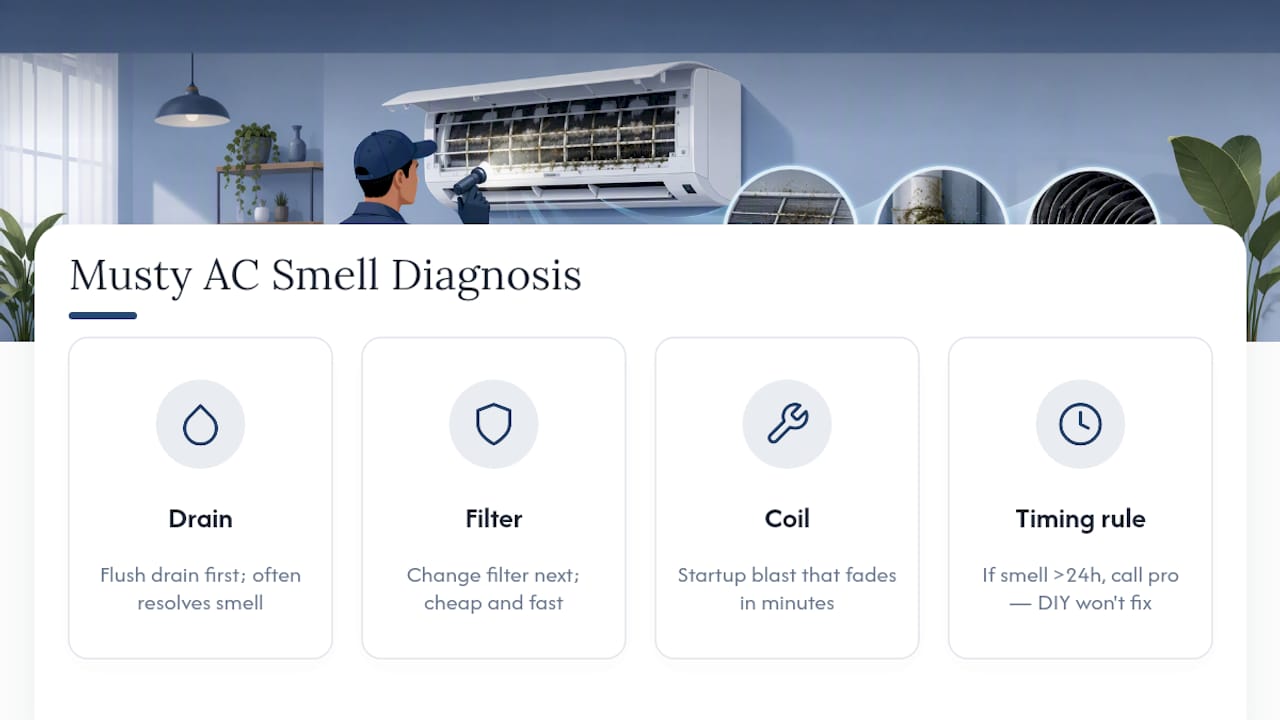
The timing of the odor matters more than most guides admit. A quick blast at startup that fades within minutes is a coil issue, not a duct issue, and no amount of vent cleaning fixes it. Homeowners waste money on duct cleaning services when the real problem sits inside the evaporator cabinet.
The other gap is the 24-hour rule. It’s not a suggestion, it’s a genuine diagnostic line. DIY steps either work within hours or they don’t work at all, because vinegar and a clean filter can’t touch mold that’s colonized deep in a coil or migrated into insulation inside your ductwork. If you’re still smelling it after a full day, you’re not failing at the DIY steps. You’ve just identified a job that needs different tools.
Prioritize the drain and filter first, always. They’re free, fast, and solve the majority of cases. But don’t keep repeating them past the point they’ve proven ineffective.
Book a Diagnostic With Ricotta Heating & Air
If you’ve flushed the drain, cleaned the pan, and swapped the filter and that musty smell is still lingering, it’s time for a technician, not another home remedy. Ricotta Heating & Air runs full diagnostic visits across St. Louis and Jefferson County that pinpoint whether you’re dealing with a colonized coil, a duct moisture problem, or something else entirely, then walks you through the fix with a transparent quote before any work starts.

A typical service call covers coil cleaning, drain-line clearing, and an indoor air quality assessment if humidity looks like the root cause. For homeowners who’d rather not deal with this every summer, our maintenance plans build quarterly drain checks and annual coil inspections right into your schedule, so the smell never gets the chance to come back. Reach out and book a diagnostic visit through our cooling services page to get a technician out to your home.
Frequently Asked Questions
Why does my AC smell like mildew when it first turns on? That startup-only smell is usually dirty sock syndrome, caused by bacterial and fungal growth on the evaporator coil. It tends to fade within a few minutes as air moves across the coil, which is a useful clue that the coil, not the ducts, needs attention.
How long should it take for a musty AC smell to go away after cleaning? Most homeowners notice improvement within about six hours of replacing the filter, flushing the drain, and cleaning the pan. If the odor is still there after a full day of normal use, the problem likely sits deeper in the coil or ductwork.
Can a musty AC smell make you sick? It can aggravate allergies, asthma, and general respiratory irritation, since the smell usually signals mold spores and VOCs moving through your vents. Anyone with existing breathing issues should take a persistent musty smell seriously rather than masking it.
Is a musty smell from a car AC dangerous? It’s generally a nuisance rather than a hazard, and it usually responds well to a new cabin filter and an evaporator cleaner kit. Running the fan without the compressor for a few minutes after each drive helps dry out the system and keeps the smell from returning.
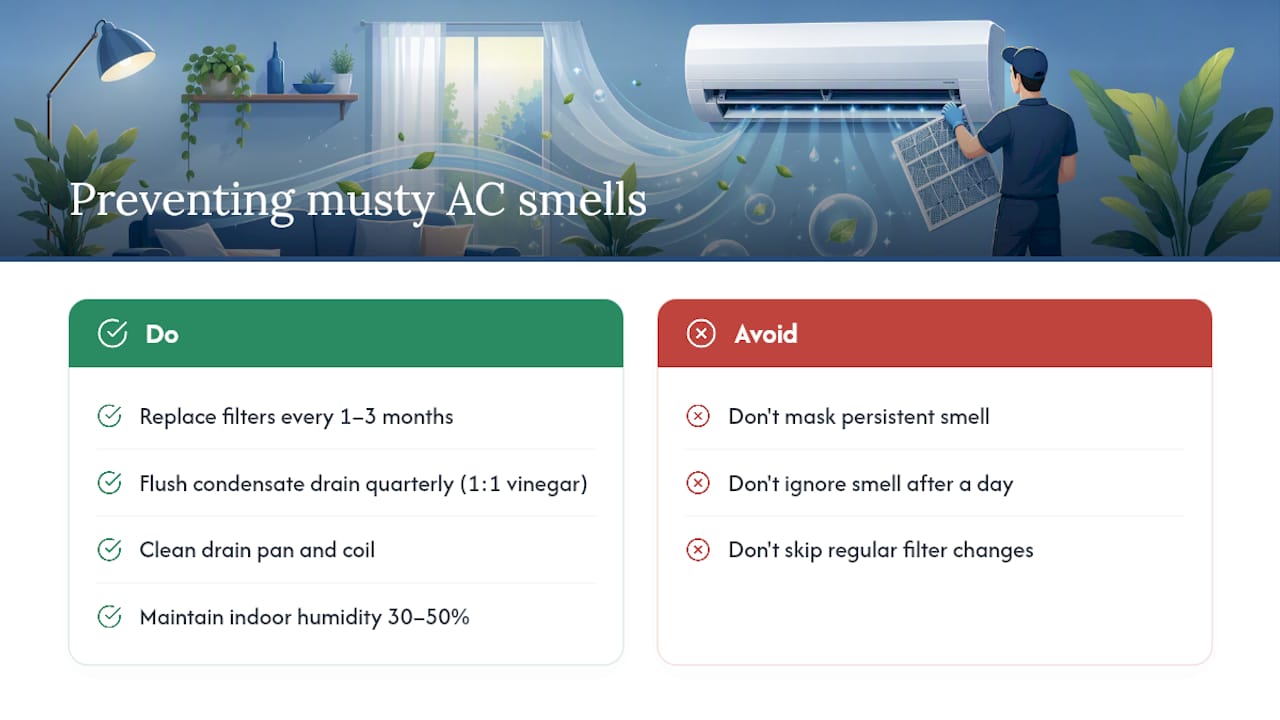
How often should I flush my AC’s condensate drain to prevent odors? Quarterly flushing with a 1:1 vinegar and water solution is the maintenance schedule most HVAC professionals recommend, paired with filter changes every 1 to 3 months. Keeping indoor humidity between 30% and 50% also cuts down on how often mold gets a chance to grow.
Sources
- AC Smelling Musty? Here Are 4 Fixes to Try Before Calling in an HVAC Pro — Apartment Therapy
- Air Conditioner Smells Musty? Here’s How To Solve It — This Old House
- Solved: Why Does My AC Smell Like Mildew When It Turns On? — Mr. Breeze HVAC
- The dangers of mold inside your air conditioning — EagleIH