
AC Repair in Jefferson County, MO: Homeowner’s Guide
Table of Contents
- Signs Your AC Needs Repair
- Air Conditioner Troubleshooting Before You Call a Technician
- Understanding AC Repair Costs in Jefferson County
- AC Repair vs. Replacement: Making the Right Choice
- How to Choose an HVAC Contractor You Can Trust
- What to Expect During an AC Service Visit
- Emergency AC Repair and Same-Day Service Options
- Frequently Asked Questions
Signs Your AC Needs Repair
During Missouri’s humid summers, a struggling air conditioner can leave your Hillsboro home warm and sticky. Catching a change in how it runs can help you address a small problem before it gets worse.
Watch for weak cooling, unusual noises, and water around the indoor unit. If your home no longer reaches the thermostat setting or takes much longer than usual to cool, the system needs attention. Grinding, squealing, or rattling can point to worn parts or loose hardware. Water near the indoor unit may come from a clogged condensate drain or a thawing coil; it does not, by itself, indicate a refrigerant leak.
Common warning signs homeowners miss
A higher electric bill can be a clue, but weather, utility rates, and thermostat settings also affect energy use. Musty odors may indicate moisture in the system or ductwork. Short cycling—frequent starts and stops before the home cools—also deserves a closer look.
Do not ignore ice on refrigerant lines, uneven temperatures, or unusual smells. Note when each symptom happens so you can describe it to your technician.
When to call right away versus scheduling an appointment
If your system still cools but performs poorly, schedule service. If it stops cooling during dangerous heat, call to ask about urgent availability and arrange a cool place to stay. Oily residue around refrigerant connections may indicate a leak and should be checked by a technician; do not touch or try to repair the connections.
For a burning or electrical odor, shut the system off if you can do so safely and call for service. If you see smoke or fire, leave the home and call emergency services. General HVAC industry information cannot tell you a local contractor’s availability, so ask directly when calling.
Air Conditioner Troubleshooting Before You Call a Technician
Start with these simple checks. Leave electrical testing, refrigerant work, and internal repairs to a technician.
Check your thermostat settings
Make sure the thermostat is set to cool and the temperature setting is below the current indoor temperature. Check that a schedule or hold setting is not overriding your selection.
If the display is blank or dim and your thermostat uses replaceable batteries, replace them according to the manual. Allow for the system’s startup delay. For a smart thermostat, check the wall control as well as the app; a Wi-Fi problem does not necessarily mean the AC has stopped working.
Inspect your air filter and vents
A dirty filter restricts airflow and can reduce cooling performance. Check it regularly and follow the filter and equipment manufacturers’ replacement instructions. Pets, dust, and heavy use may require more frequent checks.
The filter may be at a return grille or in the furnace or air-handler cabinet. Turn the system off before removing it, and use the correct size and type. Keep supply vents open and clear furniture, curtains, and dust from supply and return grilles.
Look for visible ice buildup or leaks
Ice on a refrigerant line or visible coil can result from restricted airflow or a refrigerant problem. Turn cooling off and call for guidance. Do not chip away ice, apply heat, or open equipment panels to inspect the coil.
Water pooling around the indoor unit may indicate a blocked drain, a drain-pan problem, or melting ice. Outdoor moisture has other possible causes, so note where you see it rather than assuming it is a leak.
Understanding AC Repair Costs in Jefferson County
The repair needed depends on what failed and why. A capacitor replacement is a different job from replacing a compressor or evaporator coil.
General home-service FAQs can provide background, but they cannot replace an on-site diagnosis and written estimate for your equipment.
What affects repair pricing
The failed component, parts availability, equipment access, and troubleshooting involved all affect the estimate. Older equipment may have parts that are harder to source.
Ask about diagnostic fees and any additional charges for after-hours service before booking. Do not assume those terms are the same for every contractor.
Getting a clear diagnosis and estimate
Before approving work, request a written estimate that identifies the problem, proposed repair, parts, labor, and any additional fees. Ask what is included and what could change once work begins.
For a major repair or replacement, consider another estimate. Compare the scope of work, not just the total, and ask for an explanation of any large differences.
AC Repair vs. Replacement: Making the Right Choice
A repair may be all your system needs. Replacement is worth discussing when the equipment has several problems or no longer keeps the home comfortable. Consider condition, repair history, efficiency, and the scope of the current repair together.
How age and efficiency affect the decision
Age alone does not decide whether an air conditioner should be replaced. An older, well-maintained system with a minor fault may still be worth repairing. A system with a major failure and a history of trouble deserves a closer comparison.
Ask about parts availability, refrigerant type, and how replacement equipment would match your existing furnace or air handler. Missouri’s cold winters matter here, too: changes to shared equipment should support both heating and cooling.
Frequent repairs as a replacement signal
Repeated breakdowns are a reason to review the whole system, not automatic proof that it needs replacement. Ask whether the problems share an underlying cause or involve separate aging components.
Bring your service records to the conversation. They help the technician compare another repair with replacement more fairly.
How to Choose an HVAC Contractor You Can Trust
Look for a contractor who explains the findings, answers your questions, and puts the proposed work in writing. You should understand your options before making a decision.
Verify licenses, insurance, and local presence
Confirm that the contractor meets the licensing and permit requirements that apply at your address. Check with the local building department rather than assuming there is one statewide requirement for every HVAC job. Ask for proof of liability insurance and applicable workers’ compensation coverage.
Verify the company’s contact information and service area. Reviews and references can help you evaluate communication and follow-through, but they should not replace checking the proposed work and estimate.
Ask the right questions before approving work
Ask: What failed, and how did you confirm it? What will this repair fix? Are there other problems that could remain afterward? What is included in the estimate? If replacement is recommended, why is repair not the better choice?
A helpful technician separates confirmed findings from possibilities. They should explain any limits to the diagnosis and discuss repair and replacement when both are reasonable options.
Avoid high-pressure sales tactics
Be cautious if someone insists on immediate replacement without explaining the failure, refuses a written estimate, or pressures you to decide on the spot. A safety concern may require shutting equipment down, but that is different from requiring an immediate purchase.
Unexpected problems can turn up during a service visit. Ask the technician to show you the findings and explain why additional work is needed before approving it.
What to Expect During an AC Service Visit
Knowing what a service visit involves helps you prepare and ask useful questions.
The diagnostic process explained
The technician will usually start by asking when the problem began, what you have noticed, and what you have already checked. Mention unusual sounds, odors, leaks, or changes in cooling.
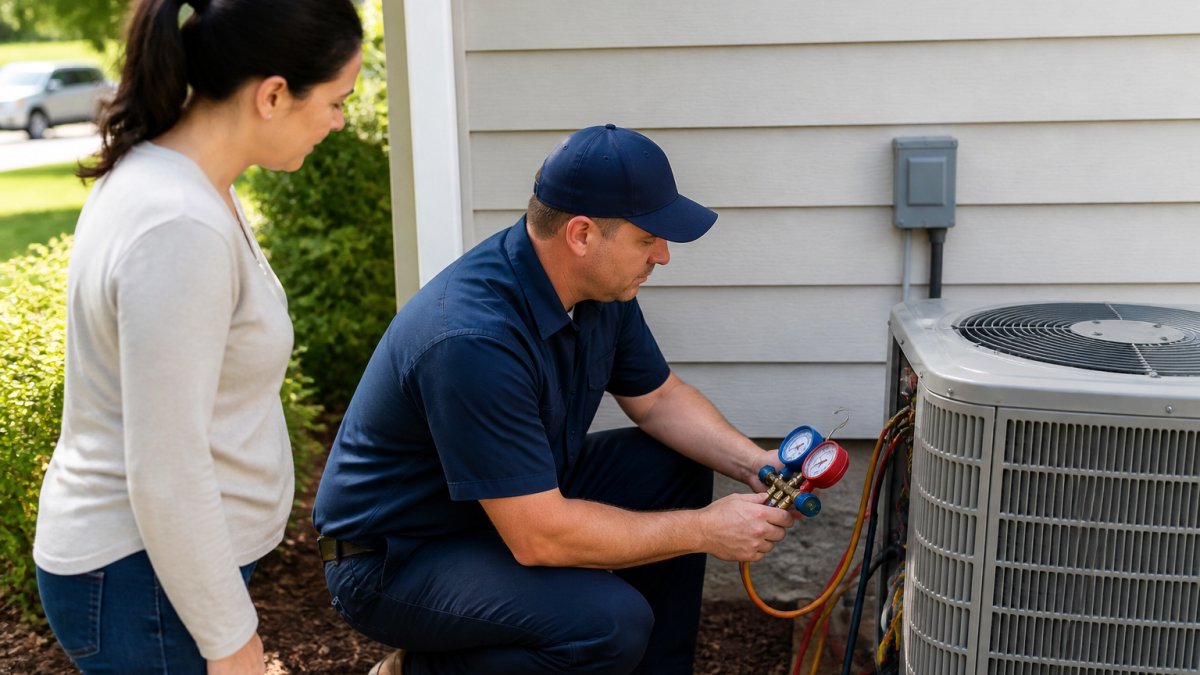
Depending on the symptoms, testing may include airflow checks, temperature measurements, electrical testing, and refrigerant measurements. The goal is to find the cause rather than replace a part based on a symptom alone.
How technicians determine what needs repair
After testing, the technician should explain the findings and show you the problem where practical. The estimate should identify the proposed repair and any related work needed.
Ask which items are necessary to restore operation and which are optional recommendations. Keep the written findings and service record for future reference.
Emergency AC Repair and Same-Day Service Options
An AC failure during a heat wave can make the home unsafe. While arranging service, make a plan to keep everyone cool, especially anyone more vulnerable to heat.
Ask directly about emergency or same-day availability. Scheduling depends on current demand, staffing, and the work involved; a same-day visit does not necessarily mean the repair can be completed that day.
Explain whether the system has stopped cooling completely or is cooling poorly. Mention burning odors, ice, or indoor leaks. Have the model number ready if it is accessible without opening equipment panels.
Ricotta Heating & Air is a family-owned company based in Hillsboro, serving Jefferson County and South St. Louis County. If your AC needs attention, schedule an estimate to discuss the problem and your options.
| Decision Point | Consider Repair | Compare Replacement |
|---|---|---|
| System Age and Condition | Otherwise sound equipment with an isolated fault | Aging equipment with several worn components |
| Repair Scope | A straightforward repair with available parts | Major work or difficult-to-source parts |
| Repair Frequency | An occasional problem with a clear cause | Recurring breakdowns despite repairs |
| Efficiency and Comfort | A correctable airflow or maintenance issue | Persistent problems after other causes are checked |
| Component Failure | One failed part in an otherwise healthy system | Multiple major components failing |
Frequently Asked Questions
What should I check before calling an AC repair technician?
Confirm that the thermostat is set to cool below the current indoor temperature. Check the filter and clear obstructions from vents and returns. Look for visible ice or indoor water leaks without opening equipment panels. If you find ice, turn cooling off and call for guidance. Do not repeatedly reset a tripped breaker; it may indicate an electrical fault.
How do I know if I should repair my air conditioner or replace it?
Consider the system’s condition, repair history, parts availability, and ability to keep your home comfortable. An isolated failure may be worth repairing. Major failures or recurring problems warrant a repair-versus-replacement comparison. Ask for written options based on your equipment rather than an age cutoff alone.
How much does AC repair typically cost?
The estimate depends on the failed component, parts availability, equipment access, and troubleshooting required. Ask about diagnostic and after-hours fees before booking. Request a written estimate that explains the repair and all included charges before approving work.
How do I choose a reliable AC repair company in the area?
Verify applicable local licensing requirements, insurance, contact information, and service area. Look for clear explanations, written estimates, and room to ask questions without sales pressure. If the problem is urgent, confirm current availability rather than assuming same-day service.
This article was written with AI assistance and edited for Hillsboro and Jefferson County homeowners by Ricotta Heating & Air. For advice about your own system, call (314) 333-5900.