
Licensed HVAC Technicians | Jefferson County, MO Guide
Quick Summary
Before hiring an HVAC contractor, check the credentials required where you live. Missouri handles HVAC licensing primarily at the local level, so requirements can vary. For Jefferson County homeowners, the county or municipal building department is a good starting point. Licensing, insurance, and federal refrigerant certification are separate checks; none replaces a clear diagnosis and written estimate.
- Confirm the contractor's required license or registration with the local authority before work begins.
- Ask for a written estimate that explains parts, labor, and any refrigerant charges.
- Request proof of liability insurance and workers' compensation coverage, where applicable.
- Ask for a written diagnosis and supporting test results before approving a full system replacement.
Table of Contents
- What to Expect From a Licensed HVAC Technician
- Licensed vs. Unlicensed HVAC Work: What It Means for Your System
- How to Verify an HVAC Contractor's License in Missouri
- Signs of Dishonest HVAC Repair Tactics to Watch For
- Questions to Ask an HVAC Technician Before Work Starts
- Older Homes, Maintenance Plans, and Why Experience Still Counts
- Booking an HVAC Technician for Your Next Visit
- Frequently Asked Questions
What to Expect From a Licensed HVAC Technician
HVAC work involves electrical connections, refrigerant, and, in many homes, fuel-burning equipment. Those are good reasons to check who is doing the work. Ricotta Heating & Air is a family-owned company based in Hillsboro, MO. When choosing any contractor, start with the required credentials, then ask how the technician will diagnose and document the problem.
A license alone does not prove someone will do good work. Here is what you should expect from a qualified technician:
- Diagnosis before repair: Testing should identify the cause of the problem rather than rely on guesswork.
- Code-compliant installation: Work must meet applicable gas, electrical, and venting requirements.
- Proper refrigerant handling: Technicians performing covered refrigerant work must meet federal certification requirements (the EPA).
- Documented work: You should receive a clear written estimate and an invoice describing the completed work.
The EPA Section 608 refrigerant handling certification requirements are separate from local contractor licensing. Ask about the appropriate certification when the job involves refrigerant.
Licensed vs. Unlicensed HVAC Work: What It Means for Your System
Licensing requirements depend on the jurisdiction and may apply to the contractor, an individual technician, or both. A technician working under a properly licensed contractor may not need a separate individual license. The question is whether the company and the person doing your work meet the requirements for that job.
Use these checks rather than assuming a license covers everything:
| Factor | Properly Licensed Work | Work Without a Required License |
|---|---|---|
| Credentials | Can be checked against the issuing authority's requirements | Required licensing credentials are missing |
| Insurance coverage | Must be verified separately | Must be verified separately |
| Code compliance | Required; permits and inspections may also apply | Still required; missing credentials warrant further checking |
| Recourse if problems occur | Ask the issuing authority about its complaint process | Ask local officials about enforcement and complaint options |
Licensing gives you a credential to verify, not a promise of workmanship. Check insurance, ask questions, and keep the paperwork even when the license is current.
How to Verify an HVAC Contractor's License in Missouri
Start with the building or permit office responsible for your address. In Jefferson County, that may be a county office or your municipality. Ask which contractor credentials and permits are required for the proposed work rather than looking for a single statewide HVAC license.
Follow these steps before approving the job:
- Ask for the company's legal name, applicable license or registration number, and the technician's name. An email or text is fine.
- Contact the local building or permit office to confirm which authority issues the required credential.
- Check with that authority that the credential is active and matches the company you are hiring.
- Confirm that it covers the proposed work. Check EPA Section 608 certification separately for covered refrigerant work.
- Request proof of liability insurance and workers' compensation coverage, where applicable.
- Ask who will obtain any required permit, and request the permit number once it is issued.
Watch out: A company's license does not tell you everything about the person at your door. Confirm the technician's identity with the company and ask whether any individual credential is required for the work.
What to Do if a License Does Not Check Out
If a required license is expired, suspended, or listed under a different company, pause before signing or paying a deposit. Take these steps:
- Contact the issuing authority to clarify the mismatch or license status.
- If you already paid and suspect misrepresentation, ask your card issuer or bank about your options.
Keep copies of the estimate, invoice, license information, texts, and emails. Those records can help the authority review a complaint.
A Homeowner's Checklist for Reviewing Completed Work
Use this checklist after the visit:
- Permit information: If a permit was required, confirm that it covers the work performed.
- Invoice details: The invoice should describe the repairs, installed parts, and any refrigerant added. Ask for clarification if it says only "system work."
- Refrigerant record: If refrigerant was added, ask how much, why it was needed, and whether a leak check was performed.
- Startup readings: For a replacement, request the startup report and the measurements relevant to your equipment.
- Warranty paperwork: If coverage is offered, request the written terms, exclusions, and any registration requirements.
- Final inspection: If an inspection is required, confirm whether it has been scheduled or completed.
Paperwork helps you review the job, but it does not replace a required inspection or an independent technical assessment if something seems wrong.
Signs of Dishonest HVAC Repair Tactics to Watch For
Pressure to decide immediately, vague paperwork, and unexplained charges are reasons to slow down and ask questions. They do not prove dishonesty on their own, but you should understand the diagnosis and the bill before approving work.
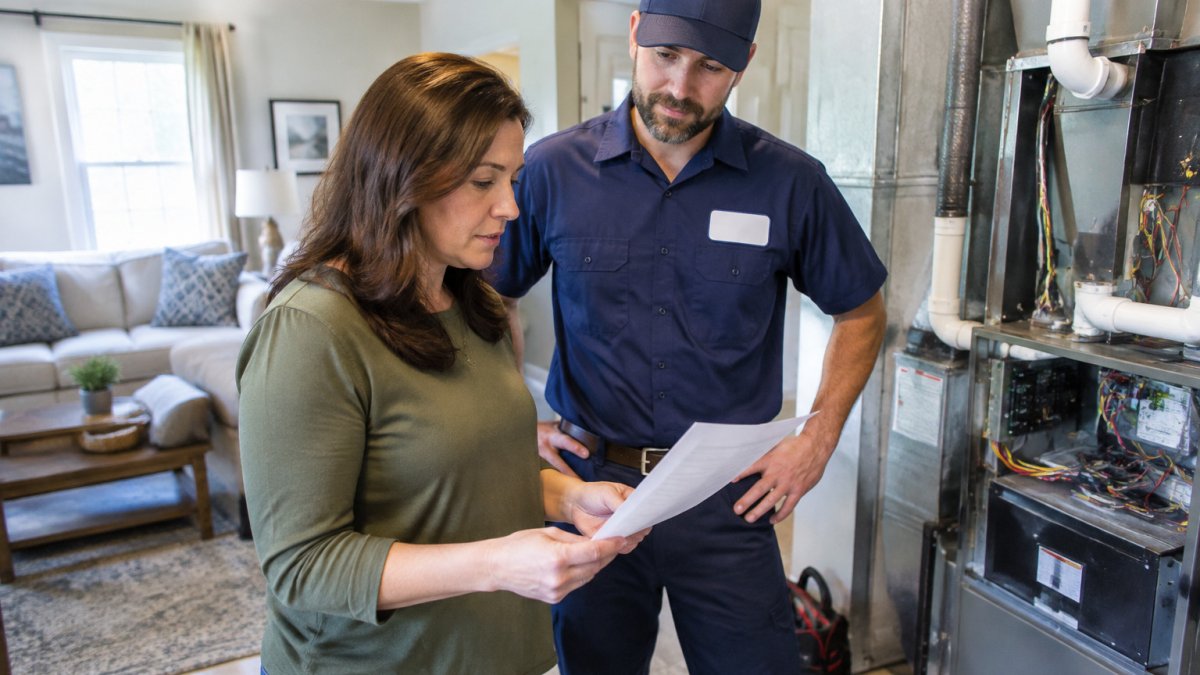
Pressure to Replace a System Without a Clear Diagnosis
A technician should explain what is wrong, show the supporting evidence, and discuss your options. Be cautious about a full replacement recommendation made without an inspection or testing. Ask why repair is not recommended and whether the conclusion is supported by readings, photos, or other findings.
You should have room to consider a major purchase. If the technician identifies an immediate safety hazard, follow the safety instructions and leave unsafe equipment off while you review your options.
Vague Estimates and Hidden Fees
A useful estimate explains the work, the parts involved, and the total charge. Ask whether labor and refrigerant are itemized or included in a flat-rate repair. Confirm any trip, diagnostic, disposal, or permit fees before work begins. If the diagnosis changes, ask for an updated estimate before additional work proceeds.
Refrigerant Overcharge Symptoms
Refrigerant should not be added without measurements showing it is needed. A low charge can indicate a leak or an incorrect initial charge, so ask what caused it. Repeated top-offs without investigating the cause deserve questions.
Too much refrigerant can contribute to high operating pressures, poor cooling, and compressor overheating. Those symptoms can have other causes, too; they do not prove an overcharge or dishonest work. A qualified technician should check airflow and operating conditions and follow the equipment manufacturer's charging procedure.
Signs You May Be Overcharged on Price
Compare written quotes for the same diagnosis and scope of work. Different parts, access conditions, and included services can change the total. If one quote is much higher, ask what accounts for the difference. A clear explanation is more useful than judging the job by price alone.
Unnecessary Maintenance Contracts
A maintenance plan may be useful, but you should understand it before signing. Ask what visits and tasks are included, whether repairs cost extra, and how renewal and cancellation work. Pressure to buy a plan before anyone will explain the problem is a reason to pause. Decline services you do not need.
How to Get a Second Opinion
If a recommendation does not make sense, request the diagnosis and test results in writing. Share them with another qualified contractor and ask what an independent assessment involves. The second company may need its own inspection and may charge a diagnostic fee, so confirm that before booking.
Watch out: Refusing to explain or document the findings is a warning sign. You should be able to understand what was checked and why the technician recommends repair or replacement.
Questions to Ask an HVAC Technician Before Work Starts
Before approving the job, ask:
- What license or registration is required for this work, and is yours active?
- Does the technician have the credentials required for the tasks involved?
- Can you provide proof of applicable insurance coverage?
- What is wrong, and how did you confirm it?
- Can I get a written estimate explaining the parts, labor, and other charges?
- Is any parts or labor warranty offered, and can I review the terms?
Considering replacement? You can request an HVAC replacement estimate from Ricotta Heating & Air. Keep in mind that a replacement estimate and a diagnostic service visit serve different purposes; ask which one fits your situation.
Older Homes, Maintenance Plans, and Why Experience Still Counts
Older homes may have ductwork, electrical service, or venting that needs attention before new equipment is installed. Ask whether the contractor has experience with your type of system and how those existing conditions will be checked. Equipment selection is only part of a sound installation.
Missouri's humid summers and cold winters put both cooling and heating equipment to work. Regular maintenance can help identify developing problems, but it cannot prevent every breakdown. Before buying a plan, compare its listed tasks with your equipment's maintenance needs.
Booking an HVAC Technician for Your Next Visit
Choose a contractor whose required credentials check out and whose recommendations you understand. Ricotta Heating & Air serves Jefferson County and South St. Louis County. If your home lacks ductwork, our ductless mini-split installation page explains an option worth discussing. Contact us to ask about your project and request an estimate.
Frequently Asked Questions
How can I verify an HVAC technician's license?
Ask your local building or permit office which contractor and individual credentials are required. Then get the company's applicable license or registration number and verify it with the issuing authority. Confirm that the name matches your estimate and that the credential covers the proposed work. Check EPA Section 608 certification separately when covered refrigerant work is involved.
Why should I hire a licensed HVAC technician instead of an unlicensed one?
Where a license is required, hiring a properly licensed contractor gives you a credential to verify with the local authority. Requirements may apply to the company, an individual, or both. Licensing does not replace checking insurance, permits, or the technician's diagnosis. HVAC work can involve electrical, gas, and refrigerant hazards, so the qualifications for the specific job matter.
What questions should I ask an HVAC technician before work starts?
Ask what is wrong, how it was confirmed, and what the proposed repair includes. Request a written estimate and clarify diagnostic fees and other charges. Ask whether the problem is urgent, whether the system is safe to operate, and what alternatives are available. If warranty coverage is offered, get the terms in writing.
What are the signs of dishonest HVAC repair tactics?
Warning signs include pressure to buy immediately, refusal to document the diagnosis, unexplained charges, and replacement recommendations without supporting findings. Ask questions and consider an independent opinion before a major purchase. A genuine safety hazard may require shutting equipment down promptly, but that does not mean you must approve a replacement on the spot.

This article was written with AI assistance and edited for Hillsboro and Jefferson County homeowners by Ricotta Heating & Air. For advice about your own system, call (314) 333-5900.