
Whole House Humidifier Cost: What to Budget in 2026
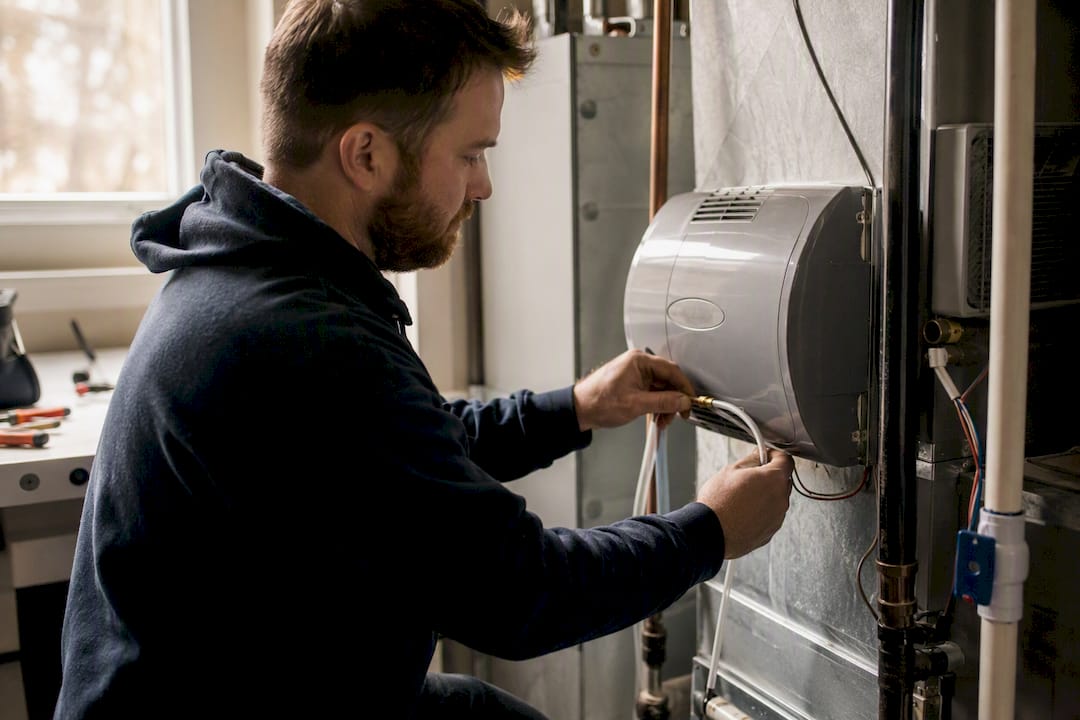
Most homeowners pay between $400 and $2,500 all‑in for a whole house humidifier, with a national average landing around $1,100 once you include the unit and professional installation. That’s the number to anchor your budget around before a contractor ever walks through your door.
Which type fits your home comes down to square footage and how much control you want over humidity:
- Bypass humidifiers work well for most smaller homes and sit at the low end of the price range.
- Fan-powered units suit larger homes that need more moisture output without a full steam system.
- Steam humidifiers make sense for large homes, homes with heat pumps, or anyone who wants precise humidity control regardless of furnace runtime.
Two things to do right now: set a realistic budget using the range above, and request two to three written quotes that break out the unit, water connection, electrical work, and labor separately. That breakdown is where the real cost differences hide.
Key Takeaways
Whole-house humidifier costs depend far more on installation line items like water connections and electrical work than on the base unit price itself.
| Point | Details |
|---|---|
| Set your budget anchor | Plan for $400 to $2,500 installed, with a national average near $1,100. |
| Match type to home size | Bypass suits most homes under 2,500 square feet; steam fits larger homes or heat pumps. |
| Demand itemized quotes | Compare unit, water connection, electrical, and labor as separate line items across bids. |
| Budget ongoing costs | Expect $10 to $30 yearly for pads or $50 to $150 for steam canisters, plus occasional $230 repairs. |
| Choose Ricotta for transparent pricing | Ricotta Heating & Air itemizes every quote and skips the upsell pressure on St. Louis and Jefferson County installs. |
Table of Contents
- Whole House Humidifier Cost by Type: Bypass, Fan-Powered, and Steam
- What Installation Factors Actually Change Your Price
- Annual Maintenance and Repair Costs to Plan For
- Is a Whole House Humidifier Worth the Money?
- How to Choose an Installer Without Overpaying
- Ricotta Heating & Air’s Approach to Humidifier Installs
- Do Brand and Warranty Affect What You’ll Pay?
- Why Humidifier Prices Vary by Region
- Whole House Humidifier Cost vs. Portable Units
- Will a Humidifier Raise Your Water Bill?
- How Long Does a Whole House Humidifier Last?
- What Actually Drives Your Humidifier Bill
- Get a Transparent Humidifier Quote from Ricotta Heating & Air
- Sources
Whole House Humidifier Cost by Type: Bypass, Fan-Powered, and Steam
The type of humidifier you choose swings your final bill more than almost any other decision. Here’s how the three main technologies stack up on installed price.
- Bypass humidifiers ($400–$800 installed). These use your furnace’s blower to push air through a water panel, so there’s no dedicated fan motor to buy. A typical $700 quote covers the unit, a basic saddle valve water tap, and a few hours of labor connecting it to your ductwork. It’s the most budget-friendly option and the reason bypass units dominate cost calculators for average-sized homes.
- Fan-powered humidifiers ($500–$1,200 installed). A built-in fan pushes air across the water panel independently of your furnace blower, which means faster, more even humidification. The fan motor itself adds $100 to $200 over a bypass unit, and installers sometimes recommend a humidistat upgrade to get more precise readings.
- Steam humidifiers ($1,200–$2,800 installed). These heat water into vapor and inject it directly into your duct system, giving you the tightest humidity control of the three. An $1,800 steam quote typically includes the unit, a dedicated 120 volt electrical circuit, and often a condensate drain line, since steam canisters need more plumbing and wiring than the other two types.
The gap between a $700 bypass job and an $1,800 steam job isn’t padding. It reflects real differences in parts, electrical labor, and the precision each system delivers.
What Installation Factors Actually Change Your Price
Two contractors can quote wildly different prices for the same humidifier model, and the reason almost always traces back to a handful of line items.
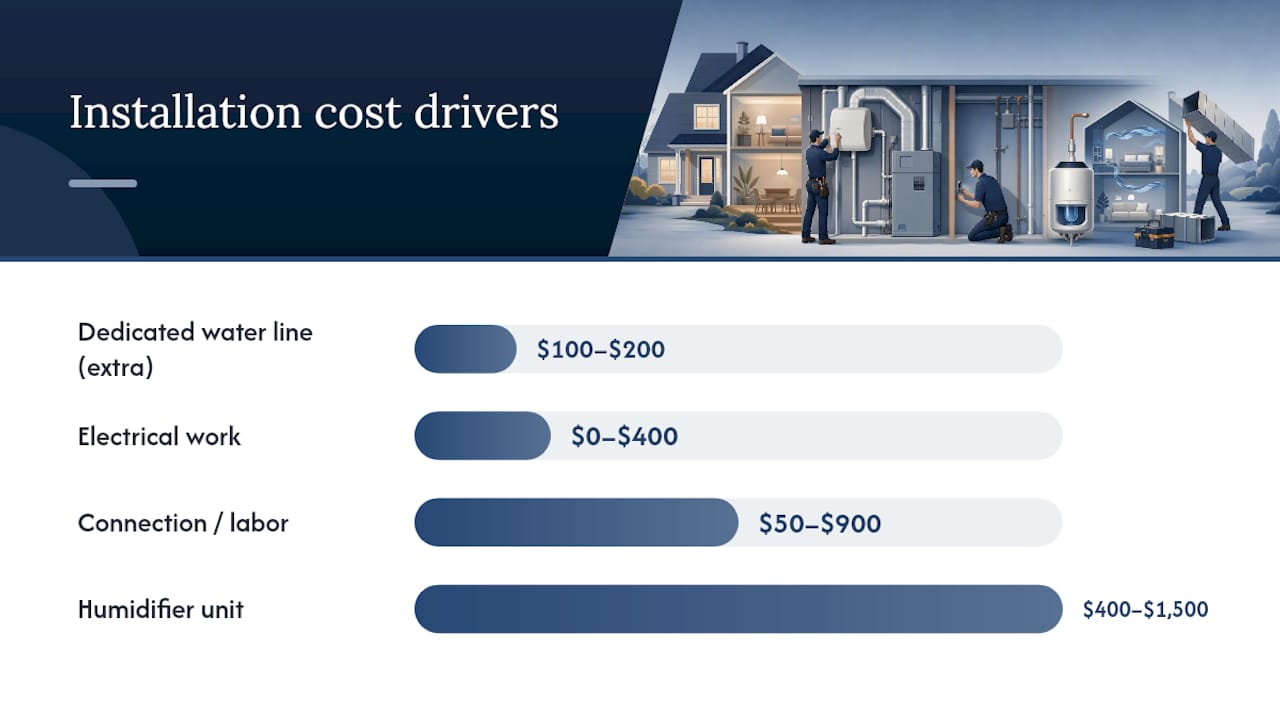
- Water connection type. A saddle valve tap is the cheapest option, but dedicated PEX or copper lines with a proper shutoff cost $100 to $200 more and cause far fewer leaks down the road.
- Electrical work. Steam units need their own circuit, which usually means calling in an electrician. Expect that portion of the job to land anywhere from $0 (if wiring already exists) to $400.
- Duct access. If your ductwork already has room for a sheet-metal adaptor, installation goes fast. If the installer has to cut and fit new metal, labor hours climb.
- Condensate handling. Steam and some fan-powered units generate drainage that may require a small condensate pump, especially in a basement installation without gravity drainage.
- Region and season. Labor rates vary by market, and demand for HVAC work spikes in late fall, which can push quotes higher right before winter.
Quotes generally split into unit cost ($400–$1,500) and connection or labor costs ($50–$900), according to cost breakdowns from HomeAdvisor. A permit is occasionally required depending on your municipality, so ask upfront whether that’s baked into the price.
Pro Tip: Ask every contractor whether they’re using a saddle valve or a dedicated water line. It’s a small cost difference now but a common source of leaks and follow-up service calls later.
Annual Maintenance and Repair Costs to Plan For
Buying the unit is only step one. Whole house humidifiers need regular parts replacement and occasional repairs, and skipping either shortens the system’s life.
- Bypass water panels/pads: $10 to $30 per year, replaced annually.
- Steam canisters: $50 to $150, replaced more often depending on your water hardness.
- Electricity: Steam units draw more power than bypass or fan-powered systems, since they’re actively boiling water.
- Water use: Bypass systems tend to waste more drain water than steam units, which convert nearly all the water they use into vapor.
Repairs run about $230 on average nationally, usually triggered by mineral buildup, a stuck solenoid valve, or a failed humidistat. An annual inspection, often bundled into a maintenance plan, catches most of these issues before they turn into an emergency call.
Is a Whole House Humidifier Worth the Money?
For most homes in a four-season climate, yes. Here’s what you’re actually paying for beyond comfort:
- Reduced static electricity and drier skin complaints, especially noticeable in homes with forced-air heat running all winter.
- Protection for wood floors, trim, and furniture, which crack and gap when indoor air gets too dry.
- Modest heating savings, since properly sized systems let you lower your thermostat by 2 to 4°F while the air still feels just as warm.
- Real relief for sensitive occupants, particularly anyone dealing with dry sinuses, nosebleeds, or aggravated asthma symptoms in winter.
It’s a harder sell in a mild, humid climate where winters rarely dry the air out, for renters who won’t recoup the investment, or in a small condo where a portable unit already does the job. If you’re in a typical Midwest or Northeast home with forced-air heat, the math tends to favor a whole-house system.
How to Choose an Installer Without Overpaying
A good quote reads like an itemized invoice, not a single lump number. Before you sign anything, make sure the estimate covers these points.
- Exact model and unit cost, listed separately from labor.
- Water connection method, specifically whether it’s a saddle valve or a dedicated line.
- Electrical scope, including whether a new circuit is needed and who’s pulling the permit.
- Labor hours, broken out so you can compare bids apples to apples.
- Warranty terms, covering both the manufacturer’s parts warranty and the installer’s labor guarantee.
- Ongoing maintenance cost, so you know what year two and beyond looks like.
Ask directly: How will you connect to my water line? Do you include a humidistat, or is that an upgrade? Where will the humidistat sit, and is that the optimal spot for an accurate reading?
Walk away from any contractor who only offers a saddle valve with no alternative, won’t put the warranty in writing, or pressures you to sign before answering basic questions. That kind of vagueness on labor and materials is exactly what turns a $700 estimate into a $1,200 invoice.
Pro Tip: A transparent installer will explain the “why” behind every line item on your quote without you having to ask twice. If an answer feels rehearsed or evasive, get a second opinion.
Ricotta Heating & Air’s Approach to Humidifier Installs
Ricotta Heating & Air has served homeowners in St. Louis and Jefferson County for 50 years, backed by more than 150 five-star Google reviews. That track record comes from a simple habit: quoting honestly instead of upselling.
- Every humidifier quote lists the unit, water connection method, electrical scope, and labor as separate line items.
- Diagnostics come first, so you’re never pushed toward a bigger system than your home actually needs.
- Maintenance plan options are available for homeowners who want annual inspections built into their routine.
A homeowner who books an inspection can expect a straightforward visit: a technician measures the home, checks your existing ductwork and furnace compatibility, and walks through humidifier options before any number gets written down.
That sequence, inspect first and quote second, is what keeps estimates accurate instead of padded.
Do Brand and Warranty Affect What You’ll Pay?
Brand choice shapes price more through warranty length and parts availability than through any dramatic quality gap between major manufacturers. A humidifier from a well-known HVAC brand often costs a bit more upfront, but it typically comes backed by a longer parts warranty, sometimes five years or more on the water panel or steam canister assembly, and better nationwide parts availability if something fails.
Lesser-known or big-box store units can undercut brand-name pricing by $50 to $150, but shorter warranties (sometimes just one year) shift risk onto you if a solenoid valve or fan motor fails early. Labor warranties matter just as much as parts warranties. A manufacturer’s five-year part warranty means little if your installer only guarantees their workmanship for 90 days, since a leak at the water connection is a labor issue, not a parts issue.
Extended warranties are worth considering mainly for steam units, given their higher electrical and mechanical complexity compared to bypass systems. Before comparing brands side by side, ask each contractor whether they’re an authorized dealer for the models they’re quoting. Non-authorized installs sometimes void manufacturer coverage entirely, which turns a “discount” unit into a costly gamble the moment something goes wrong.
Why Humidifier Prices Vary by Region
Two homeowners with identical homes and identical humidifier models can get quotes $300 or $400 apart simply because of where they live. Labor rates are the biggest driver: contractors in higher cost-of-living metro areas charge more per hour than those in smaller markets, and that difference compounds across a multi-hour install.
Climate plays a role too. Homes in colder, drier regions see more demand for whole-house humidifiers, which can mean either more competitive pricing (more contractors doing the work regularly) or higher demand-driven pricing during peak fall and winter booking season. Local permit requirements add another variable. Some municipalities require an electrical permit for any new circuit, which adds a fee and a bit of scheduling delay that doesn’t exist elsewhere.
Housing stock matters as much as geography. Older homes with narrower ductwork or outdated electrical panels often need more retrofit work to accommodate a humidifier, regardless of what region they’re in. That’s why the same $1,100 national average can look like a $900 job in one neighborhood and a $1,400 job a few miles away, once you factor in duct access and panel capacity. The fix is the same everywhere: get quotes from contractors who actually service your specific area, since a national average is a planning tool, not a guarantee.
Whole House Humidifier Cost vs. Portable Units
A portable humidifier costs far less upfront, usually $30 to $150 for a decent console model, which makes the comparison tempting. But the math changes once you account for what a portable unit doesn’t do.
A single portable humidifier covers one room, maybe two with the door open. A three-bedroom home would need three or four units running simultaneously to match the coverage of one whole-house system, and each of those units needs its tank refilled every one to two days. Multiply that across a winter and the time cost alone adds up fast, plus the recurring cost of replacement wicks or filters on each unit.
Whole-house systems tie into your ductwork and humidistat, so they run automatically and maintain consistent humidity throughout the home without daily refilling. For a small apartment or a single room where dry air is the only issue, a portable unit is genuinely the more sensible buy. For a full-size, multi-room home, the whole-house system’s higher upfront cost usually pays for itself in convenience within the first winter, even before factoring in the comfort and wood-protection benefits a portable can’t deliver evenly across a house.
Will a Humidifier Raise Your Water Bill?
Whole-house humidifiers do use water, but the increase on a monthly bill is usually modest rather than dramatic. Steam units convert nearly all the water they draw into vapor, so very little goes down the drain. Bypass units are the opposite case: they route some water past the evaporator pad and straight to a drain as a built-in flushing mechanism, which is the main reason bypass systems use more water overall than steam or fan-powered types.
The sewer bill side of this matters more than most homeowners expect, since many municipalities calculate sewer charges based on metered water use rather than actual wastewater volume. A bypass system’s drain water gets counted the same way as water that goes down your shower drain, even though none of it touched your plumbing fixtures. If your water and sewer costs are already tight, a fan-powered or steam unit’s lower water waste can matter as much as its higher purchase price over several winters.
How Long Does a Whole House Humidifier Last?
Most whole-house humidifiers last several years with regular maintenance, which affects how you should consider the upfront cost. A $1,100 system that lasts a decade works out to roughly $110 a year before factoring in the comfort and wood-protection benefits, a very different number than the sticker price suggests.
Neglect shortens that lifespan considerably. Mineral buildup from hard water is the most common failure point, since scale accumulates on water panels, steam canisters, and solenoid valves until the unit stops humidifying efficiently or fails outright. Homes on well water or in hard-water regions often see components wear out faster than the 8 to 12 year average unless the pads or canisters get replaced on schedule.
This is where the type you chose earlier in your budgeting circles back around. Steam units have more moving parts (heating elements, canisters, sometimes a fill valve) that can fail, but they’re also easier to descale and service without disassembling ductwork. Bypass units have fewer components to fail but rely on that water panel staying clean, since a clogged pad doesn’t just humidify poorly, it also restricts airflow to your furnace. Either way, the lifespan math only holds up if you’re replacing consumable parts on schedule instead of running the unit until something breaks.
What Actually Drives Your Humidifier Bill
The research here points to one clear conclusion: the unit price you see online is rarely the number that matters. Installation line items, not the humidifier itself, cause most of the price swings between contractor bids. A $600 fan-powered unit paired with a saddle valve and existing ductwork can land near $700 installed, while the same unit needing a new water line and duct adaptor pushes past $1,000 before labor even factors in fully.
Conventional advice tends to fixate on comparing unit prices side by side, as if humidifiers were a commodity you shop for on spec sheets. That’s backwards. The real decision is choosing a contractor who itemizes water, electrical, and labor separately, because that’s where lowball bids hide their eventual change orders.
If you take one thing from this guide, prioritize getting written, itemized quotes over chasing the lowest number you see. A $1,400 quote with a dedicated water line and a two-year labor warranty often beats a $900 quote using a saddle valve and a 90-day guarantee, once you price in the odds of a follow-up service call.
Get a Transparent Humidifier Quote from Ricotta Heating & Air
Ricotta Heating & Air prices humidifier installs the same way this guide recommends you shop for one: unit, water connection, electrical work, and labor listed separately, with no upsell pressure and no vague line items. That transparency is the real advantage over piecing together bids that bury connection costs inside a single number.

If you’re in St. Louis or Jefferson County and ready to compare a real quote against the ranges in this guide, request a maintenance plan or installation estimate online, or call to schedule an inspection. A technician will check your ductwork, electrical panel, and furnace compatibility before recommending a system, so the number you get reflects your actual home instead of a generic estimate.
Sources
- Whole House Humidifier Costs in 2026
- Whole-House Humidifier Cost Calculator (2026)
- How Much Does It Cost to Install a Whole-House Humidifier? 2025 Data
- Whole House Humidifier Cost: 2025 Installation & Buying Guide