
HVAC Maintenance for Older Houses | Hillsboro, MO
Quick Summary
Maintaining an older home's HVAC system means checking more than the furnace and air conditioner. Leaky ducts, limited return airflow, and gaps around the house can affect comfort, too. Have a technician check airflow and equipment condition, address duct leaks, and account for insulation and air-sealing improvements before sizing replacement equipment. Base repair decisions on safety, condition, repair history, and the work your home needs—not age alone.
- Include ductwork and insulation in your maintenance planning.
- Check filters monthly and replace them according to their condition and the manufacturer's instructions.
- Have a technician inspect the furnace heat exchanger before heating season.
- Account for air sealing and insulation when calculating the size of new equipment.
- Compare repair and replacement options when breakdowns become frequent or major components fail.
Table of Contents
- Why Older Homes Need a Different HVAC Maintenance Approach
- Ductwork, Airflow, and Leak Detection in Historic Homes
- An HVAC Maintenance Checklist for Homeowners
- Signs an Old HVAC System Needs Replacement
- The Cost of HVAC Maintenance Plans and What They Cover
- Retrofitting Challenges: Mini-Splits, Insulation, and Preservation Rules
- Repair or Replace? Weighing the Options for Aging Systems
- Schedule a Maintenance Visit for Your Older Home
- Frequently Asked Questions
Why Older Homes Need a Different HVAC Maintenance Approach
In an older Hillsboro home, a newer furnace or air conditioner may still be connected to ductwork designed for a very different system. Additions, enclosed porches, and insulation changes can also affect how the house heats and cools. Maintenance should look at how those pieces work together, not just whether the equipment turns on. For broader home-maintenance planning, see this home maintenance cost report.
Common HVAC Problems in Older Houses
Older duct layouts may not provide the airflow modern equipment needs. Small return ducts can restrict airflow, while leaking joints can lose heated or cooled air into an attic or crawl space. Gaps around windows, attic hatches, and utility openings add to the load. Aging equipment may also use refrigerant that is harder to source.
- Undersized or missing return ducts
- Leaking duct joints in unconditioned spaces
- Aging compressors and failing capacitors
- Older refrigerants with limited availability
Ductwork, Airflow, and Leak Detection in Historic Homes
Duct inspection is a useful starting point when rooms heat or cool unevenly. A technician can look for loose joints, damaged insulation, disconnected runs, and airflow restrictions. Those problems can make properly functioning equipment struggle to keep the house comfortable.
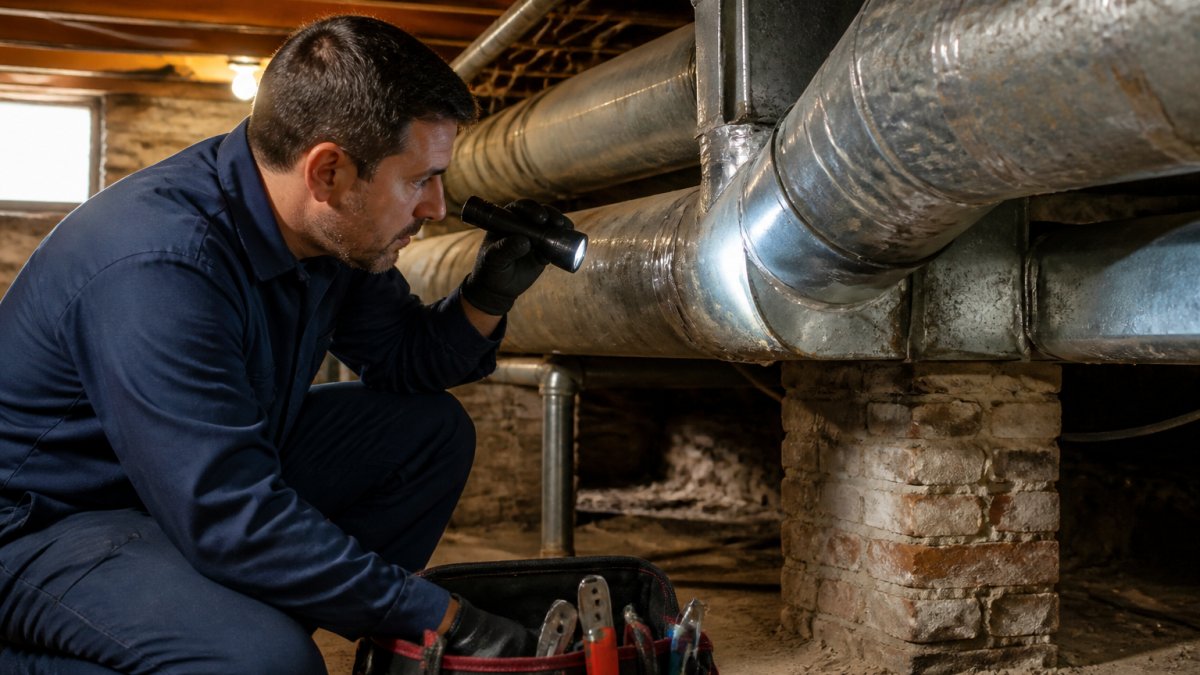
Sealing ducts and balancing airflow may help with hot and cold rooms. The right fix depends on the duct layout and the equipment's airflow requirements. For more detail, see our guide to duct sealing and airflow fixes.
An HVAC Maintenance Checklist for Homeowners
For an older Jefferson County home, a useful checklist covers both the HVAC equipment and the house around it. Use the schedule below as a starting point, then follow the equipment manufacturer's instructions and your technician's recommendations.
| Task | Frequency | Why it matters in an older home |
|---|---|---|
| Check and replace air filters | Check monthly; replace as needed and according to manufacturer instructions | A dirty filter adds resistance to a duct system that may already have limited return airflow. |
| Inspect outdoor coils and clear nearby debris | Before cooling season and periodically during use | Leaves, dirt, and crowded landscaping can restrict outdoor airflow. Have a technician clean coils as needed. |
| Inspect duct joints in unconditioned spaces | Annually | Loose metal joints and damaged flexible ducts can leak air or restrict airflow. |
| Check static pressure and room-by-room airflow | During maintenance as needed, especially for uneven temperatures | Testing can reveal restrictions that a visual inspection misses. |
| Check thermostat accuracy and cycle settings | Annually | Incorrect readings or settings can cause uncomfortable temperatures and unnecessary cycling. |
| Inspect the blower wheel and motor; clean as needed | Annually | Dirt buildup can reduce airflow, while vibration may point to a mechanical problem. |
| Check cooling performance and investigate refrigerant leaks if indicated | Before cooling season | Refrigerant is not normally consumed. A low charge may indicate a leak that needs diagnosis. |
| Inspect the furnace heat exchanger and venting | Annually, before heating season | Heat exchanger damage and venting problems can create carbon monoxide hazards. |
| Check for air leaks around attic hatches, rim joists, and utility openings | Annually and before planning replacement equipment | Air sealing can change the home's heating and cooling needs. Coordinate it with ventilation and combustion-safety checks. |
| Check the condensate drain, pan, and safety switch, if equipped | Before cooling season and as needed during use | A blocked drain can cause water damage, especially around equipment tucked into closets or attics. |
Seasonal Maintenance Tasks That Matter Most
Missouri's humid summers make cooling performance and condensate drainage worth checking before hot weather arrives. Have a technician inspect the coils, blower, drain, and airflow. Before cold winters, schedule a heating inspection that includes the furnace heat exchanger, venting, safety controls, and thermostat operation, or the appropriate checks for your heat pump.
Small problems can add up. A dirty filter, restricted return, and dirty blower wheel may combine to reduce airflow enough to affect heating or cooling. Seasonal inspections give you a chance to address those issues before the system is working hardest.
What to Do Yourself and What to Hand to a Technician
Homeowners can change accessible filters, keep leaves and vegetation away from the outdoor unit, and look for loose or disconnected duct joints. Leave static-pressure testing, refrigerant work, electrical repairs, and furnace safety inspections to a qualified HVAC technician. Do not disturb suspect asbestos-containing duct wrap or insulation. If exterior work may affect a historic property, check approval requirements before making changes.
Signs an Old HVAC System Needs Replacement
Replacement is worth discussing when breakdowns become frequent, major components fail, or needed parts and refrigerant are difficult to obtain. Repeated refrigerant recharges, unusual noises, and rising energy use deserve a diagnosis—not an automatic replacement recommendation. If the system repeatedly trips a breaker, stop using it and have the cause checked rather than repeatedly resetting it. Heat exchanger damage also requires prompt professional evaluation.
The Cost of HVAC Maintenance Plans and What They Cover
Maintenance plan costs depend on the number and type of systems and the services included. Ask for a written scope that explains visit frequency, inspection tasks, cleaning, and exclusions. Do not assume duct testing, refrigerant repairs, or replacement parts are included. Contact Ricotta Heating & Air to discuss maintenance options for your equipment.
Retrofitting Challenges: Mini-Splits, Insulation, and Preservation Rules
Installing modern HVAC equipment in an older house takes planning. Start with the available space, the home's insulation and air leakage, and any restrictions on exterior changes. Those details help determine whether to reuse existing ducts, modify them, or consider a ductless system.
Fitting Modern Equipment Into Nonstandard Spaces
Older homes may have shallow closets, low crawl spaces, or attics with limited access. Equipment needs room not only for installation but also for safe operation and future service. A unit that fits through the opening may still be wrong for the space.
If a home once used a gravity furnace, its original ducts need evaluation before they are paired with modern forced-air equipment. Gravity systems relied on warm air rising rather than a blower. Duct size, layout, leakage, and return-air paths all need to be checked; large old ducts are not automatically suitable or unsuitable.
Insulation and Air Sealing Come First
The building envelope—the walls, ceilings, floors, and openings separating indoors from outdoors—affects how much heating and cooling a home needs. Air sealing and insulation improvements can reduce that load. Size replacement equipment for the improved home, not simply to match the old unit. Oversized equipment can run in short cycles and may struggle to control summer humidity.
Preservation and Historic District Compliance
If your property is in a designated historic district or has a preservation easement, check the applicable rules before installation. Outdoor units, line-set covers, and wall penetrations may require review. Rear or side-yard placement may help reduce visibility, but any screening must preserve required airflow and service clearance. Confirm the proposed layout with the appropriate local office before work begins.
If you are considering ductless cooling and heating, see our mini-split installation service. For a ducted system, review the duct sealing and airflow guide linked above before deciding which existing ducts to keep.
Repair or Replace? Weighing the Options for Aging Systems
Start with a diagnosis and written repair and replacement estimates. Compare the system's condition, safety, repair history, parts availability, and ability to keep the house comfortable. An isolated capacitor failure is a different decision from a major compressor failure on a system with recurring problems. Our repair-or-replace guide explains more of the factors to consider. No age cutoff or simple formula should make the decision for you.
Schedule a Maintenance Visit for Your Older Home
If your system has not been checked this season, schedule a maintenance visit and bring a list of concerns: rooms that never feel comfortable, unusual sounds, frequent cycling, or water near the equipment. Visit our Jefferson County HVAC service page for contact details and help planning the next step.
Frequently Asked Questions
How often should you have your HVAC system maintained in an older home?
Plan a heating check before cold weather and a cooling check before summer, following the equipment manufacturer's maintenance instructions. Between visits, check filters monthly, replace them as needed, and keep the outdoor unit clear of leaves and debris. Ask your technician whether the ductwork, blower, or drainage needs extra attention based on the system's condition.
Is it possible to add central air to an old house without major renovations?
Sometimes. If the house already has suitable ducts, they may be usable after testing and repairs. If there is no practical space for ductwork, a ductless mini-split may provide cooling without installing a conventional central-air system. It still needs refrigerant lines, electrical service, and condensate drainage. An inspection can help establish which option fits the house with the least disruption.
Do repair-or-replace rules of thumb apply to older HVAC systems?
Simple formulas leave out too much to decide on their own. Consider safety, the failed component, previous repairs, refrigerant and parts availability, and overall comfort. Compare written estimates, including any ductwork or electrical changes needed with replacement. Age matters, but it is only one part of the decision.
How can I improve indoor air quality in a home with an older HVAC system?
Start with a properly fitted filter that meets the system's airflow requirements. Ask a technician before switching to a more restrictive filter. Repair return-duct leaks that could draw dust from an attic or crawl space, and address moisture sources directly. Ventilation or dehumidification may help, depending on the home. During maintenance, ask about blower cleanliness, return-air paths, and indoor humidity.
Older-home comfort starts with understanding how the equipment, ductwork, and house work together. Ricotta Heating & Air is a family-owned company based in Hillsboro, MO. Contact us to discuss maintenance, uneven temperatures, or replacement options for your older home.

This article was written with AI assistance and edited for Hillsboro and Jefferson County homeowners by Ricotta Heating & Air. For advice about your own system, call (314) 333-5900.