
HVAC Licensing Requirements in Jefferson County, MO
Quick Summary
Missouri does not issue a statewide HVAC license. For homeowners in Hillsboro, the first step is checking which city or county office oversees work at your address. Local licensing and permit requirements are separate from federal EPA Section 608 certification for covered refrigerant work.
- Find out which city or county office oversees your property.
- Check local requirements for contractor licenses, permits and business registration.
- Ask about EPA Section 608 certification if the job involves refrigerant work.
- Verify the contractor's required local credentials and proof of insurance before hiring.
Table of Contents
- Does Missouri Require a Statewide HVAC License?
- How Local Licensing Works in St. Louis County and Jefferson County
- Technician Versus Contractor: Which Credentials Apply?
- EPA Section 608 Certification for Refrigerant Work
- What NATE Certification Adds to a Technician's Credentials
- How to Verify an HVAC Contractor's License Before You Hire
- Booking HVAC Service for Your Home
- Frequently Asked Questions
Does Missouri Require a Statewide HVAC License?
Missouri does not issue a statewide HVAC technician or contractor license. Licensing requirements depend on the city or county where the work takes place.
That can be confusing when you are comparing contractors. There is no single state HVAC card that covers every job. ServiceTitan's Missouri HVAC licensing overview explains the local approach, but the office responsible for your address is the place to confirm current requirements.
Start with a simple question: which building or licensing department oversees this property? That answer helps you determine which licenses, registrations and permits apply.
How Local Licensing Works in St. Louis County and Jefferson County
Three separate requirements may apply to an HVAC job: local contractor credentials, permits issued by the building department and federal refrigerant certification. Do not assume neighboring towns follow the same process. Confirm the rules for the property's exact address.
Three sets of requirements to check
- Federal refrigerant rules. EPA Section 608 certification applies to technicians performing covered refrigerant work, regardless of local licensing rules. Certain supervised apprentices may qualify for an exemption.
- City or county credentials. Ask whether the work requires a mechanical contractor license, business license, contractor registration or individual trade credential.
- Permits and inspections. Installation, replacement and major repairs may require permits and inspections. The local building department can confirm what is required and who may apply.
What contractors may need to provide
Application requirements vary. Depending on the local office, a contractor may need some of the following:
- Legal business name, business structure and applicable state registration information
- The name of the qualifying individual responsible for the local credential, if required
- A certificate of general liability insurance meeting local requirements
- Workers' compensation coverage or documentation of an applicable exemption
- EPA Section 608 certification information for technicians performing covered refrigerant work
- A completed application, exam registration if required and applicable fees
- Surety bond information, if required
How to check local requirements
Whether you are hiring a contractor or applying for a credential, these four checks can help:
- Search the local government's official website for "mechanical contractor license" and "mechanical permit." If needed, also look for "contractor registration" and "business license."
- Call the licensing or permitting office. Ask which credentials the work requires, who must hold them and how to verify that they are current.
- Ask which permits the job requires, who may obtain them and whether inspections are needed.
- Write down the office name, contact information, date and guidance you receive. Ask for written requirements when available; notes from a call do not replace official approval.
Watch out: A company license and an individual trade credential are not necessarily interchangeable. If a company's license depends on a qualifying individual, ask the licensing office how to confirm that the company is currently authorized to work.
Common licensing mistakes
- Assuming county rules cover every city. An incorporated city may handle its own permits or licensing. Check which office oversees your address.
- Assuming state business registration is enough. Registering a business with the state does not replace a required local mechanical license.
- Assuming a neighboring town's license applies. Ask whether the local office recognizes credentials issued elsewhere.
- Assuming an EPA card covers the contractor. Section 608 certification covers refrigerant work. It is not a contractor license.
For homeowners, the takeaway is straightforward: a local credential, a job permit and an EPA certification are different documents. Ask for each one that applies to your project.
Technician Versus Contractor: Which Credentials Apply?
A technician's qualifications and a company's authority to contract for work are separate issues. Work through all five questions below. More than one requirement can apply to the same job.
Step 1: Does the work involve refrigerant?
Technicians performing work covered by EPA Section 608 need the appropriate certification for the equipment they service, unless a specific exemption applies. Apprentices may be exempt when closely and continually supervised by a properly certified technician. Tasks that do not involve covered refrigerant work may not require this certification, but local trade requirements can still apply.
Step 2: Is the technician an employee of a licensed company?
Depending on local rules, the contractor credential may be held by the employer, a qualifying individual or both. Some places also require individual trade credentials. Ask the company which license or registration covers the job and who holds it. Required refrigerant certification is separate from the employer's contractor credentials.
Step 3: Who is contracting with the homeowner?
The person or business offering the work and signing the agreement must meet applicable contractor requirements. A technician taking side jobs should not assume an employer's license covers that work. Before signing, confirm that the business named in the contract matches the credentials you have checked.
Step 4: Does the job require a permit?
Equipment replacement and major modifications may require a mechanical permit. Routine maintenance or minor component repairs may be treated differently. Ask the local building department which permits apply and who may obtain them rather than relying on assumptions about the size of the job.
Step 5: Is the contractor working across city or county lines?
A contractor who serves several towns needs to check the requirements in each one. A license accepted in one location does not automatically authorize work elsewhere. The local office can confirm whether it recognizes another jurisdiction's credentials.
Quick reference
| Work situation | EPA Section 608 requirement | Local credentials to check |
|---|---|---|
| Employee performing covered refrigerant work | Appropriate certification required unless exempt | Employer, qualifying individual and any required technician credentials |
| Employee not performing covered refrigerant work | Not required for those tasks | Employer, qualifying individual and any required trade credentials |
| Sole proprietor taking homeowner jobs | Required if personally performing covered refrigerant work, unless exempt | Applicable contractor and individual credentials |
| Helper or apprentice | Required for covered work unless a supervised-apprentice exemption applies | Employer credentials and any required apprentice registration |
| Company owner who does not perform refrigerant work | Not required solely for owning the company | Company and qualifying-individual credentials, as locally required |
Watch out: Calling someone a technician rather than a contractor does not remove applicable licensing requirements. Check who is responsible for the contract, permits and completed work.
EPA Section 608 Certification for Refrigerant Work
The EPA's Section 608 technician certification requirements explain which activities require certification and when an apprentice exemption applies. These federal rules apply even where no local HVAC license is required.
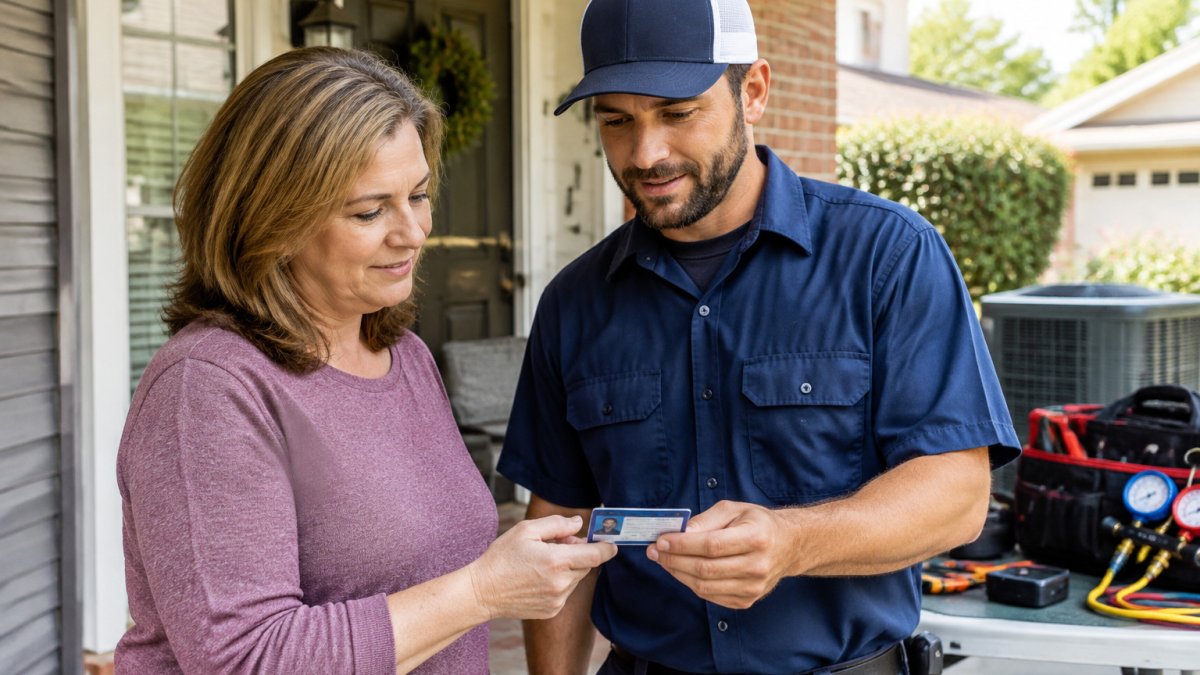
Section 608 addresses refrigerant handling, including recovery practices. The certification must match the type of equipment being serviced. Homeowners can ask to see the technician's certification card before covered work begins.
Use official government sources to verify requirements. Commercial pages, such as FieldPulse's pricing page, are not licensing authorities.
What NATE Certification Adds to a Technician's Credentials
NATE certification is a voluntary industry credential. It reflects tested knowledge in a particular area of heating and cooling, but it does not replace required local licensing or EPA certification.
You can ask whether a technician holds NATE certification and which specialty it covers. Consider it alongside the credentials required for your job, not as a substitute for them.
How to Verify an HVAC Contractor's License Before You Hire
Before hiring, take these steps:
- Ask for the company's applicable local license or registration information.
- Confirm its status with the office that issued it.
- Ask for proof of liability insurance and workers' compensation coverage or an applicable exemption.
- For covered refrigerant work, ask about the assigned technician's EPA Section 608 certification.
- Make sure the written agreement identifies required permits and who will obtain them.
If something does not match, resolve it with the contractor and the local office before work begins.
Booking HVAC Service for Your Home
Missouri's humid summers and cold winters put both heating and cooling equipment to work. Before scheduling a replacement or repair, ask who will perform the work, which credentials apply and how permits will be handled.
Ricotta Heating & Air is a family-owned company serving Jefferson County and South St. Louis County. Learn about properly sized AC installation and replacement, or visit our local AC and furnace service page for service-area information.
Have questions about your system? Contact Ricotta Heating & Air to discuss the work you need and request an estimate.
Frequently Asked Questions
Does Missouri require an HVAC license?
Missouri does not issue a statewide HVAC technician or contractor license. Cities and counties set local requirements, so check with the office responsible for your property's address. Federal EPA Section 608 requirements for covered refrigerant work still apply.
Is EPA Section 608 certification required for HVAC technicians?
It is required for technicians performing covered refrigerant work, not every HVAC task. An apprentice may qualify for an exemption when closely and continually supervised by an appropriately certified technician. Ask who will perform the refrigerant work and which certification covers it.
How can I check whether an HVAC contractor is licensed in Missouri?
Start with the city or county building or licensing office responsible for your address. Ask which credentials the project requires and whether the contractor's license or registration is current. Separately, check the assigned technician's EPA certification if the job involves covered refrigerant work. You can also verify any voluntary certifications the company advertises.

This article was written with AI assistance and edited for Hillsboro and Jefferson County homeowners by Ricotta Heating & Air. For advice about your own system, call (314) 333-5900.